LENHROS
Built at Meta Global AI Developer Hackathon · Oct 26, 2026 · Remote
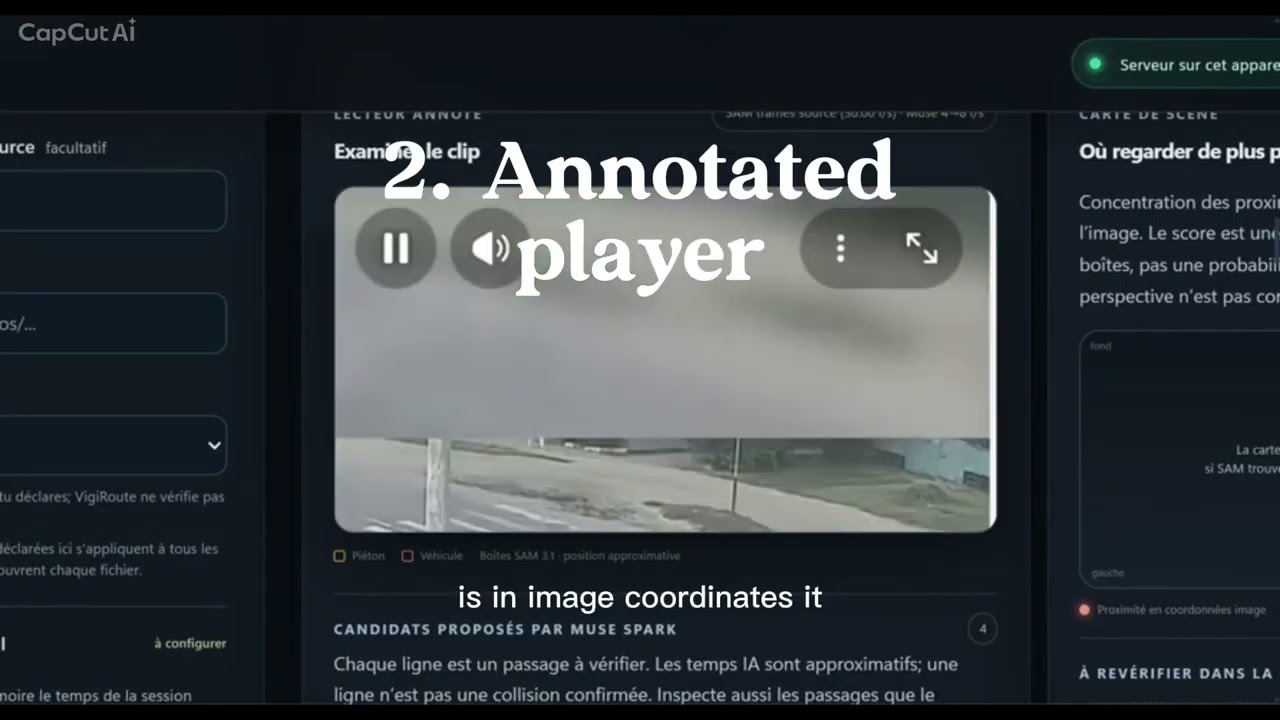
VigiRoute helps road-safety specialists find the traffic interactions that deserve a closer look before a crash happens. The problem: crash data is rare and arrives late, while traffic cameras already record near-misses that nobody has time to watch. Authorities in many countries, including low-resource settings like the one I live in (Benin), must decide which junctions to study or fix with almost no early-warning data. What it does: you load short clips already labelled by site and camera (Site / Camera / clip.mp4) and click once. VigiRoute analyses the clips one after another and returns a report per clip with: candidate events classified as collision, near-miss, possible conflict or routine interaction, with approximate timestamps and the analysis pass that found each one; a player that jumps to the moment and overlays tracked road users; an exploratory proximity map computed from the tracked boxes; contributing-factor hypotheses and possible interventions (infrastructure changes or trained staff) that a human expert keeps, dismisses or marks "to verify on site"; and an export of the report with the expert's review. A second tool scans clips for possible red-light entries, and the expert confirms, rejects or marks each candidate as undetermined. What it deliberately does not do: it does not predict crashes, issue fines or legal findings, read plates or claim real-world distances. Proximities are in image coordinates and uncalibrated, timestamps are approximate, and an empty result never means "safe". Every output is a hypothesis for a person to check. Built for trust: the server runs only on the user's machine (127.0.0.1), the API key stays in memory, each batch requires explicit consent to send video to the provider, and the temporary provider file is deleted after analysis. It has zero npm dependencies and 39 automated tests. Honest status: a working prototype run on real traffic clips. I have not yet measured precision and recall against an independent annotated set. That is the next step, with calibrated geometry and on-device blurring of faces and plates.