Funhouse
Built at Meta Global AI Developer Hackathon · Oct 26, 2026 · Remote
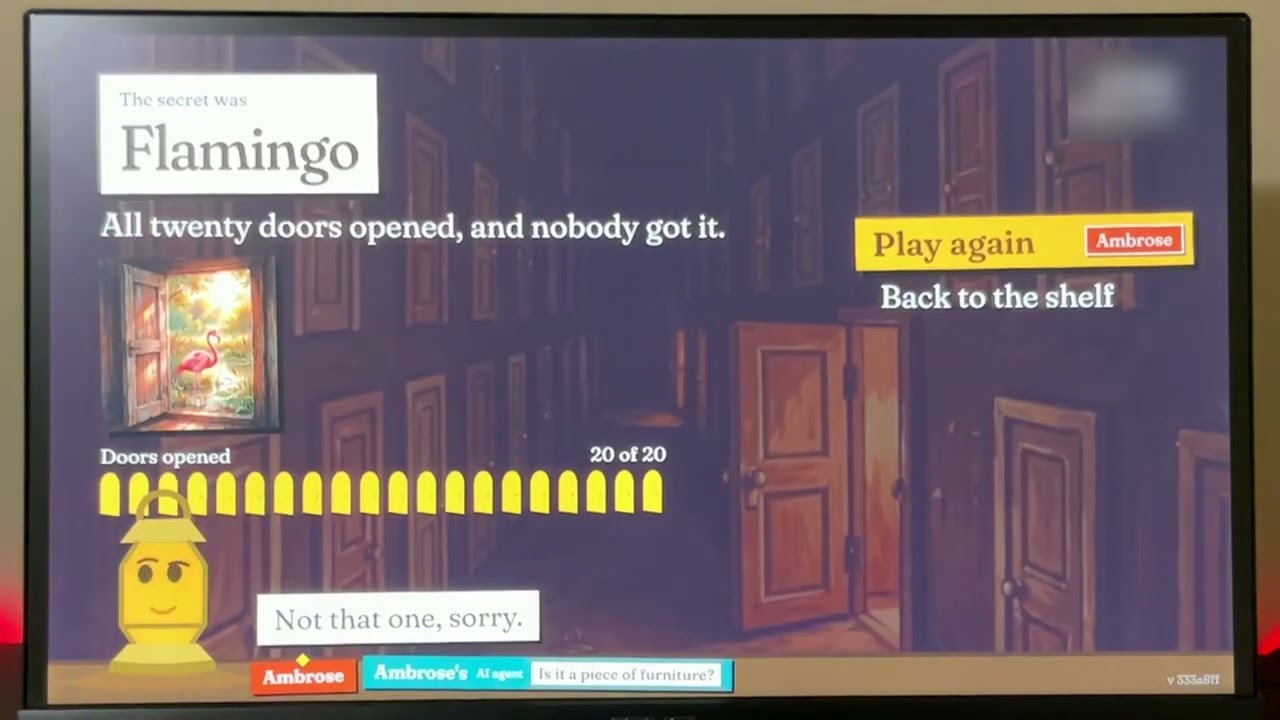
Funhouse is for friends in the same room who want a game night where everyone gets to play. Party games usually need one person to learn the rules, run the game and sit out. In Funhouse an AI host does that job, and the screen becomes something people share, arguing out loud instead of scrolling alone. One person opens funhouse.live on a TV or laptop. Everyone else scans a QR code, and their phone becomes a controller and a microphone. There is nothing to install and no account to make. The host is Marlowe, a brass lantern on the TV. Marlowe talks with the room, hears each player on their own phone, judges free-form answers, paints pictures and keeps secrets. The games: - Twenty Doors: Marlowe holds a secret and you ask yes-or-no questions. Each answer opens one of twenty doors. - Quizmaster: name any topic. Marlowe writes the questions, with four answers to tap or say, reveals the answer and keeps score. - Same Page: Marlowe asks, everyone writes one short answer, and the matching answers score. - Painted Whispers: you write a line and Marlowe paints it. The next person sees only the painting and describes it. - Werewolf: 4 to 10 players get secret roles on their phones, argue out loud by day and vote on their phones. The host is never told who holds which role. It also makes room for people party games leave out. Someone with no microphone, or who would rather not speak, can type. A person short of players can fill Same Page with labelled AI guests, and anyone can give a seat to their own AI agent. The site is for adults, 18 and over. The host never controls the game. The rules are ordinary code: a model can decide what someone meant and how to say it, but code counts doors, scores and votes. Each fact has a visibility scope, so a private fact reaches only its owner's phone and the model is not told what it should not know. Every AI guest reads only its own seat's view and plays through the same paths as a phone. If the voice service fails, the game continues with captions. Built by Ambrose Nilam during the hackathon, with AI coding agents (Claude, Codex) doing much of the implementation under my direction. The first commit is dated Nov 1, 2026. On Nov 2, commit history was edited only to remove private details; dates were unchanged. The code is MIT licensed and can be self-hosted. What is limited today: the host takes a few seconds to reply. It can mishear people and it can be wrong, and quiz questions are not checked by a person. Agents must be able to open a web link or connect over MCP, and can play only Twenty Doors and Same Page. Rooms live in memory, so a server restart ends them. The public site has daily spending limits based on estimated prices: $3 per network address and $40 across the site. Near a limit, voice turns to captions. At the limit, play stops until the daily reset, so a long session or busy day can end early.