Every robot in a real building eventually meets a fire door, a wet floor or a crowd it cannot handle, and a human takes over. Today that takeover is wasted. Tomorrow the robot, and every robot like it, fails the same way. Intervention Zero turns the takeover into the fix. Describe any building in one sentence and we build it as a 3D physics world where a fleet of humanoid robots runs real missions. When a human steps in, a fixer agent proposes one small change, a gate tests it against past incidents and a safety bank, and if it passes, every robot gets it instantly. Robots share what they find, memory carries from one building to the next, and the hard safety limits can never be edited by anyone. MongoDB Atlas is the fleet's memory and guardrail. Raindrop is how the fixer sees what the robots actually did. The result is a fleet that gets better every time it fails, before it ever enters the real store.
More from The Harness Engineering & Model Wrangling #SFTechWeek Hackathon
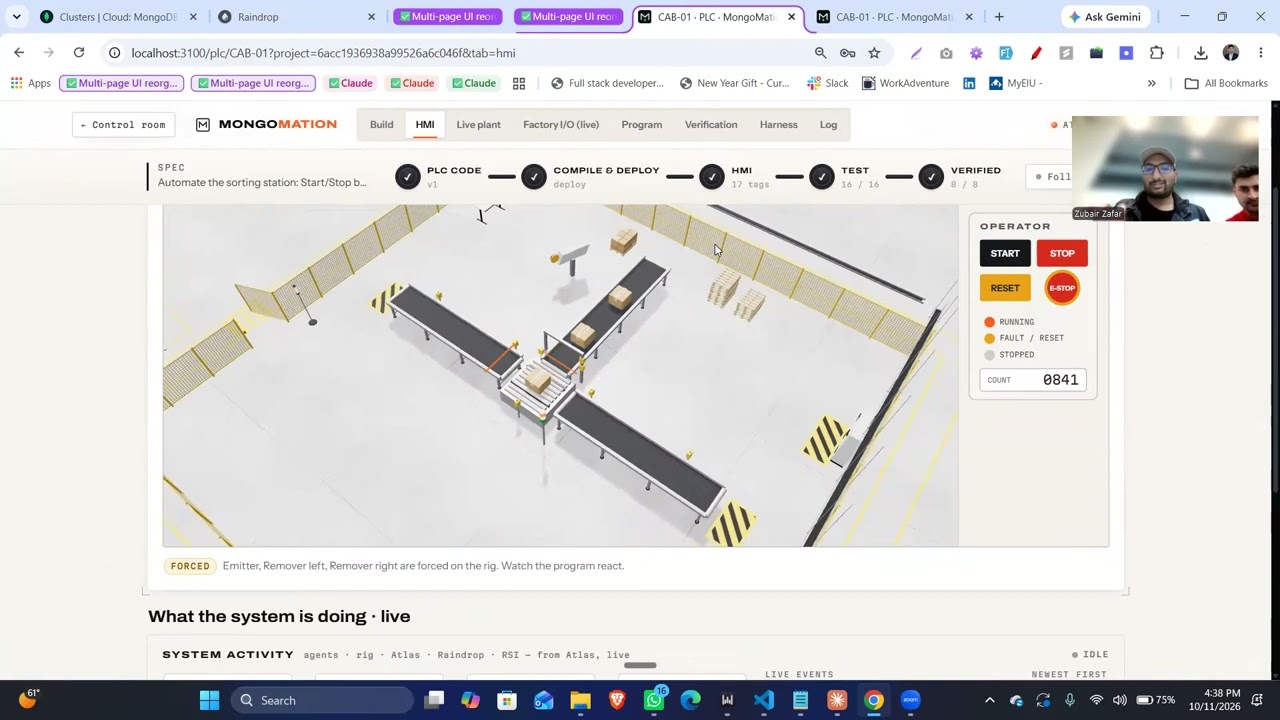
MongoMation is an autonomous PLC engineer. You describe a machine in plain English, and Claude agents write IEC 61131-3 PLC code, compile and deploy it to a…

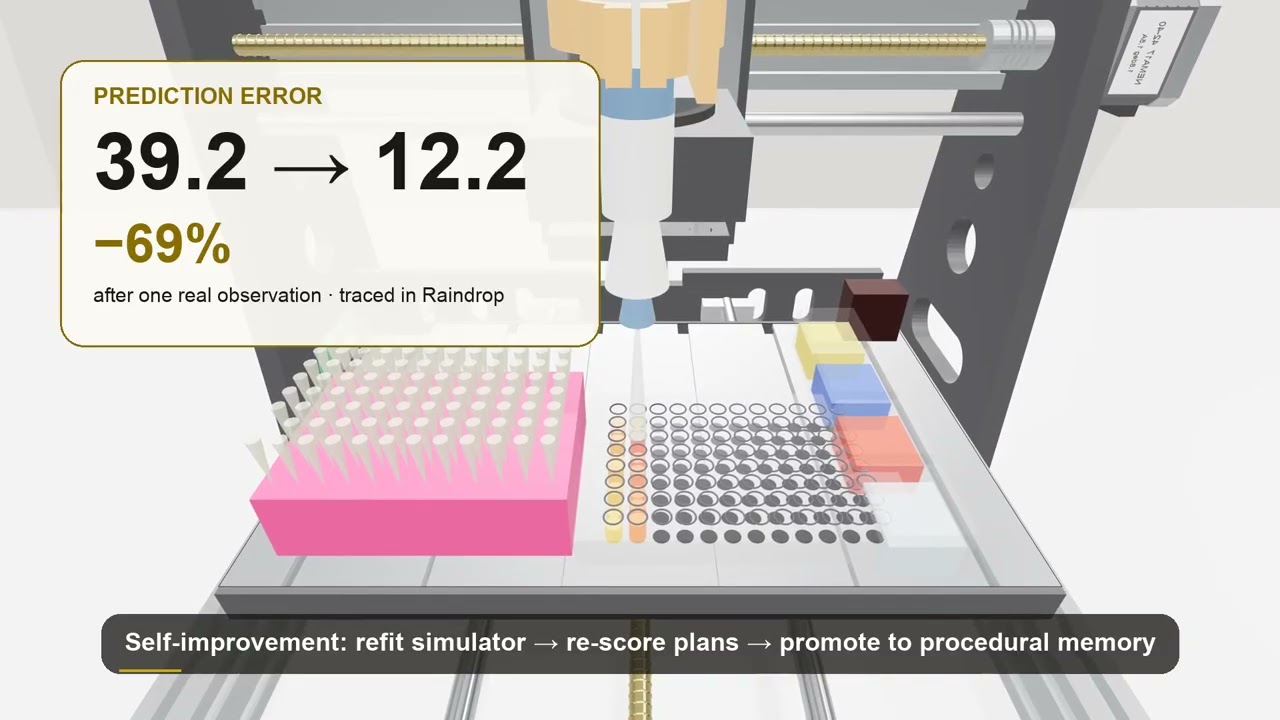
LabRat is a self-improving harness for a physical lab agent, running on a real bench: two SO-101 arms, a 3018 CNC carrying a servo pipette I designed during…

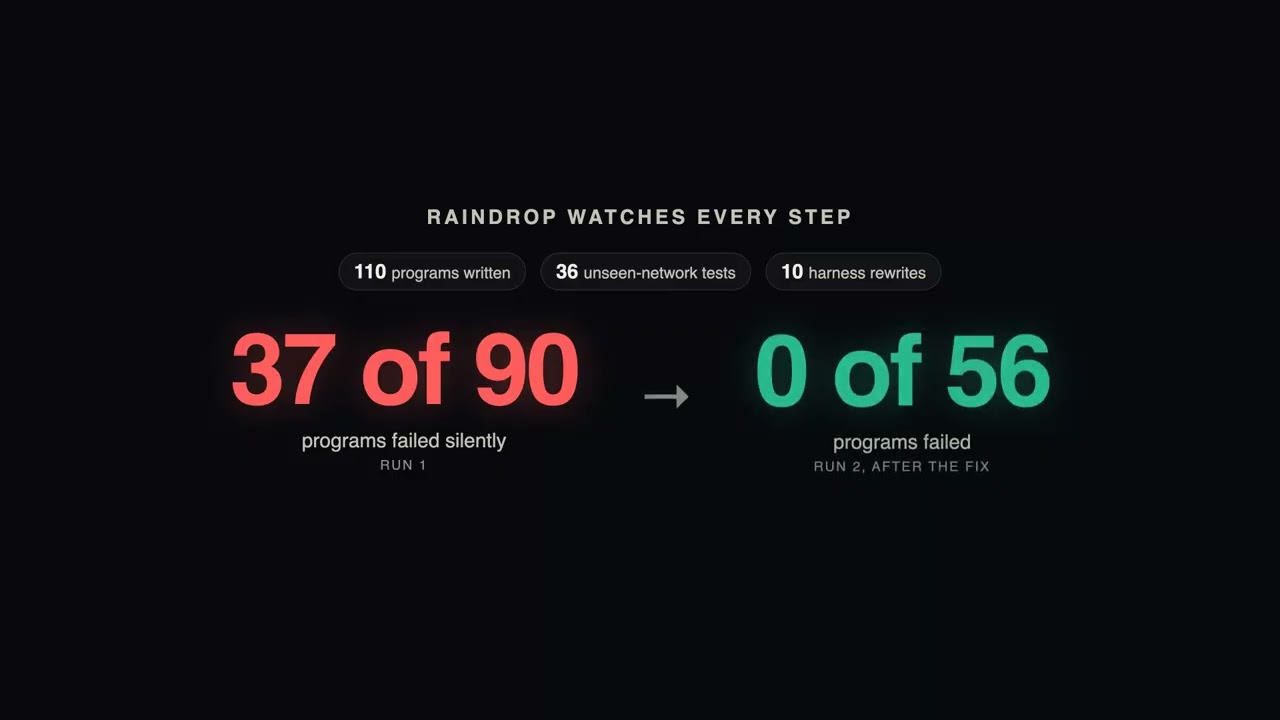
Recursive Harness Scientist: an AI scientist that improves its own scientific method, and must replicate every gain on data it has never seen. Why it…

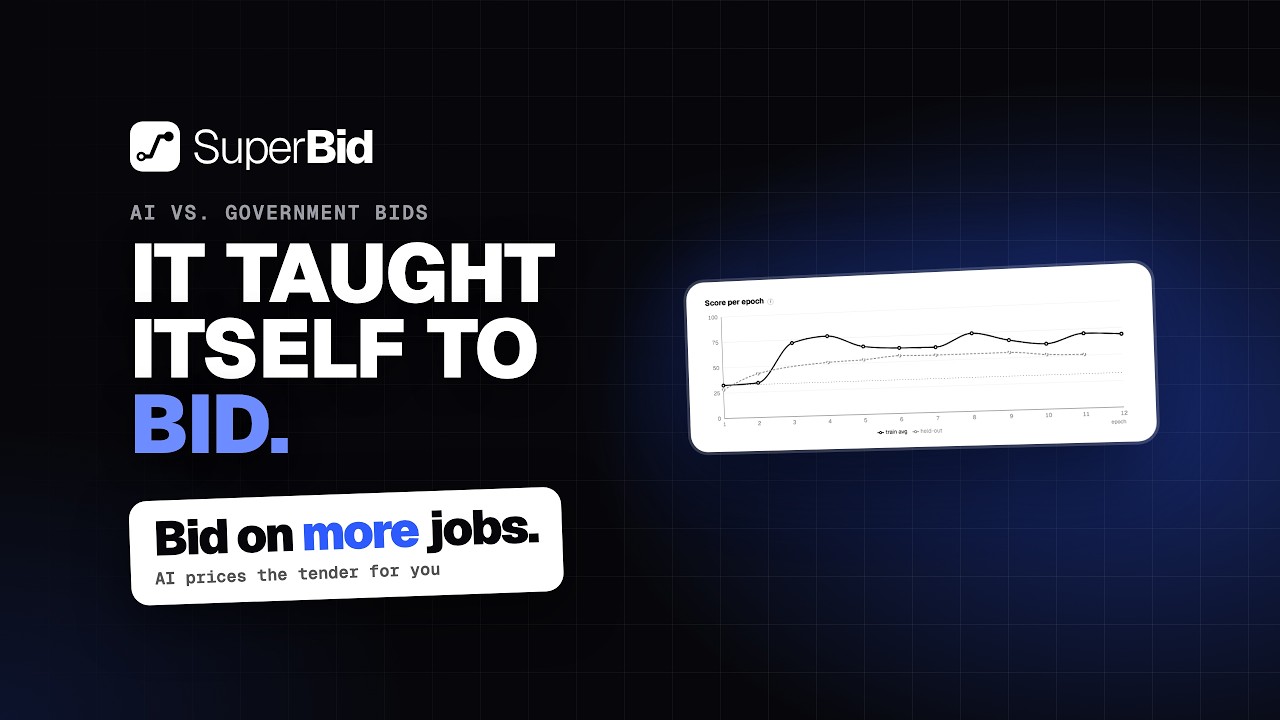
Super Bid is a self-improving AI estimator that teaches itself to price bids the way a specific company would. It practices on the company’s real past bids…

A robot that gets better at handling objects it’s never seen, without retraining. After every round, an AI coach reviews what broke and rewrites the robot’s…
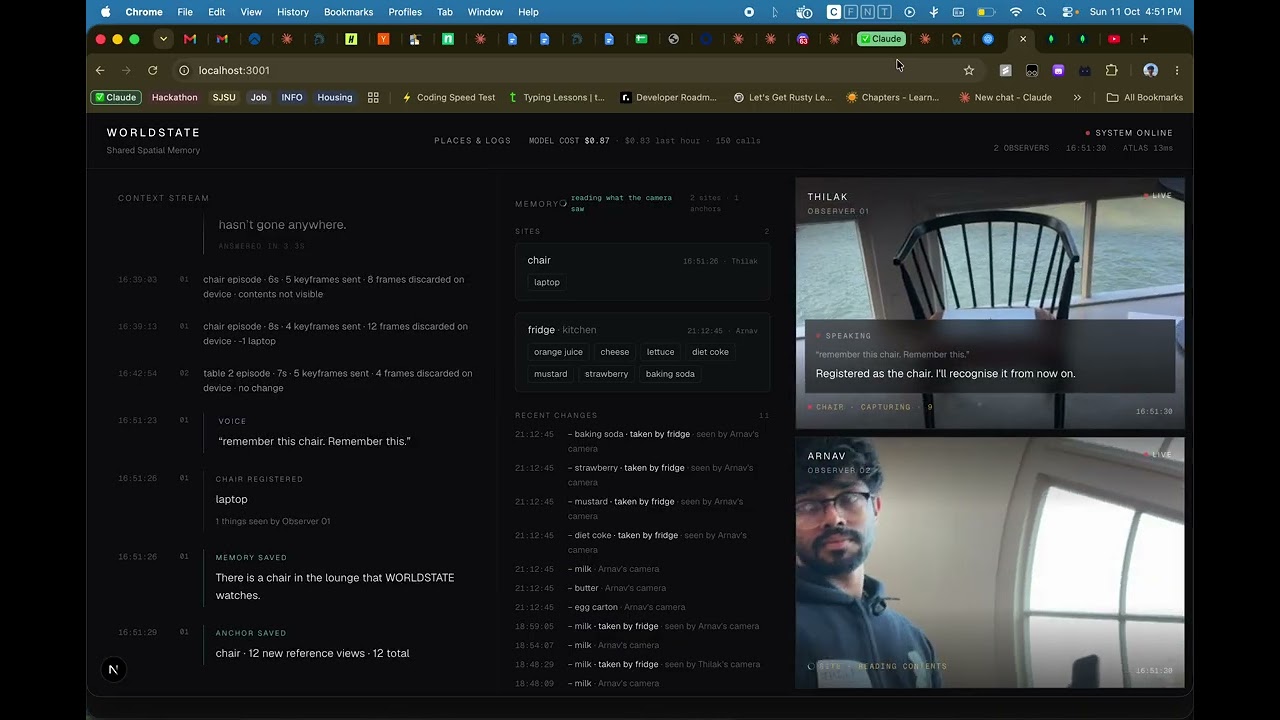
WORLDSTATE gives physical spaces a memory. Any phone becomes an observer: open a link, point the camera, and WORLDSTATE tracks what's inside fridges, shelves…