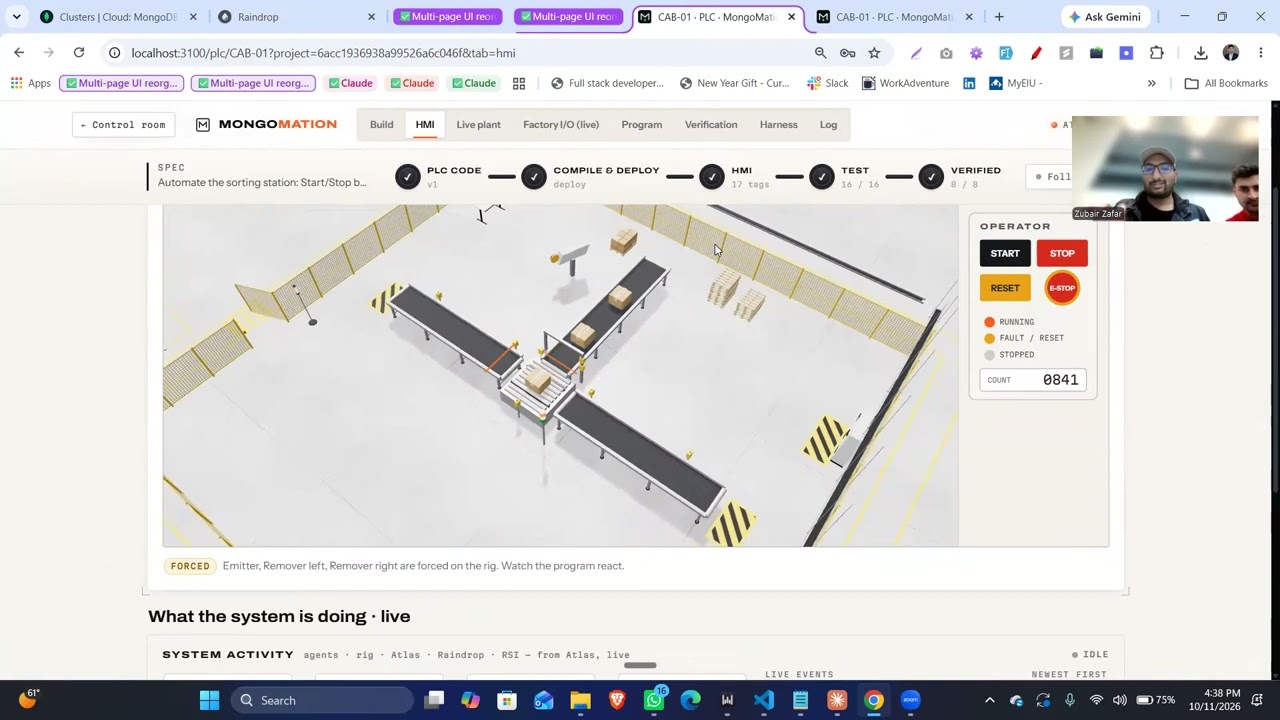
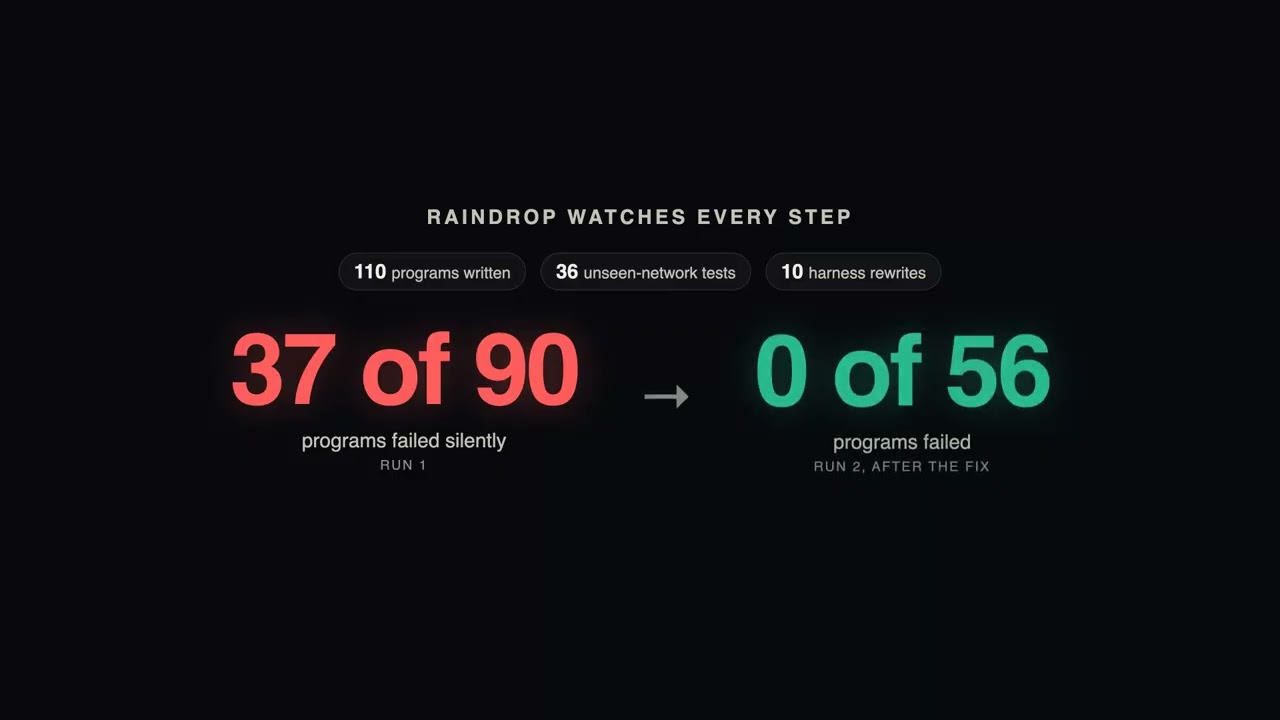
LabRat is a self-improving harness for a physical lab agent, running on a real bench: two SO-101 arms, a 3018 CNC carrying a servo pipette I designed during the hackathon, and an iPhone as the robot's eyes, ears and voice. You give it a goal by voice or chat ("make the most orange well from red and yellow dye"). Claude recalls relevant past runs from typed long-term memory (MongoDB Atlas + Voyage AI), then designs and simulates 16 protocol variants in a 3D digital twin that models motion timing, pipette volumes, tip use, dye mixing and safety checks. The harness enforces one invariant: no real actuation without a passing simulation and explicit human approval, with soft limits, a G-code whitelist and watchdogs enforced by a local USB bridge. After a real run, the iPhone camera measures the result and the harness improves itself: it refits its own simulator parameters (least squares, adopted only if prediction error drops), re-scores past plans, promotes winning protocols into procedural memory, and logs every update to Raindrop. Problem: physical agents today act blind, forget everything between sessions, and never get more accurate. LabRat thinks in simulation, acts with permission, and remembers everything.
Team
Awards