Track: Recursive Harnessing. SwipeHome is a self-improving real-estate recommendation harness built on MongoDB Atlas. Before showing a home, it predicts whether the user will like it and stores that prediction. User actions become measurable feedback that updates persistent preference memory across 36 home traits. After enough interactions, SwipeHome analyzes its prediction failures, proposes constrained changes to its own retrieval, ranking, memory, and exploration policies, and backtests those changes on newer holdout interactions. A new policy is promoted only when it performs better; failed policies are rejected and preserved. MongoDB Atlas stores properties, predictions, interactions, memories, experiments, and policy versions, while Atlas Vector Search powers personalized retrieval. SwipeHome learns not only what homes a user likes, but how its recommendation system should learn that user.
More from The Harness Engineering & Model Wrangling Hackathon
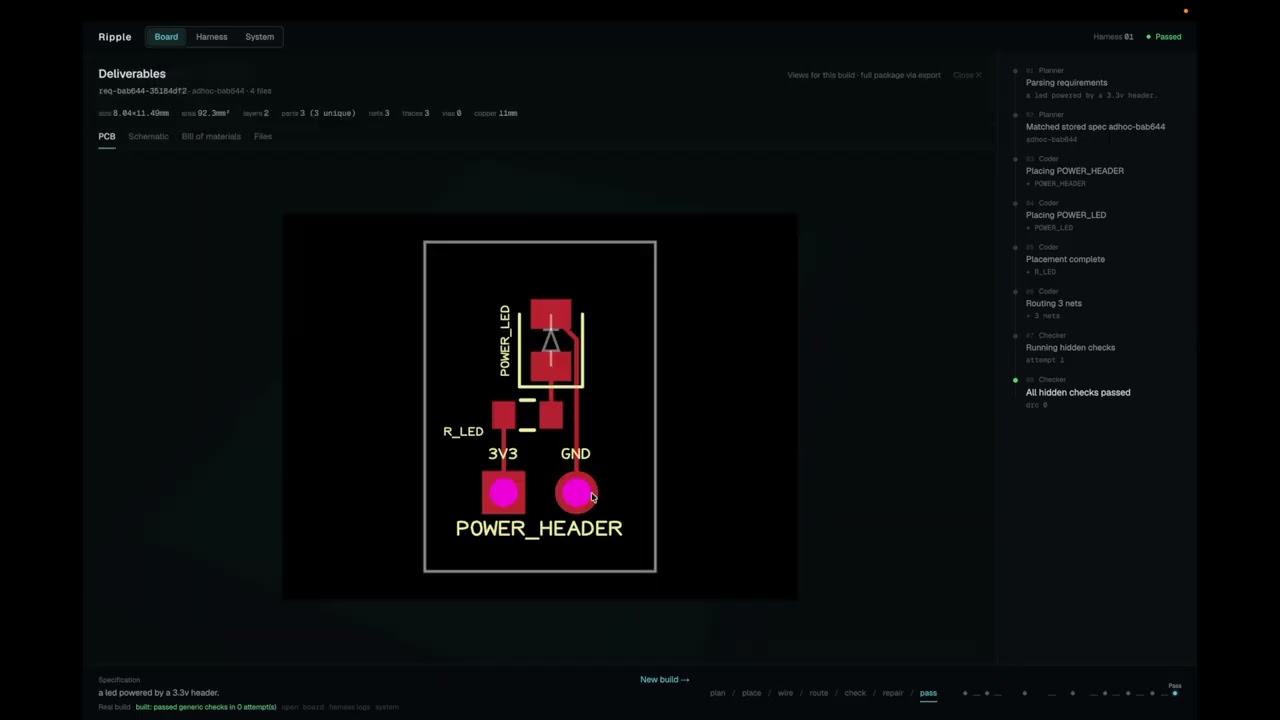
Ripple designs circuit boards from plain English, grades them against hidden checks, and evolves its own harness from the failures, going from 0/4 to 3/4 on…

Offload learns the work you repeat, so next time you can hand it over. Its engine, REM (Replay · Evolve · Merge), is an agent harness with a day/night cycle…
Recursive Computer Use is a local-first desktop automation harness that enables AI agents to execute tasks on your computer, verify outcomes locally, and…

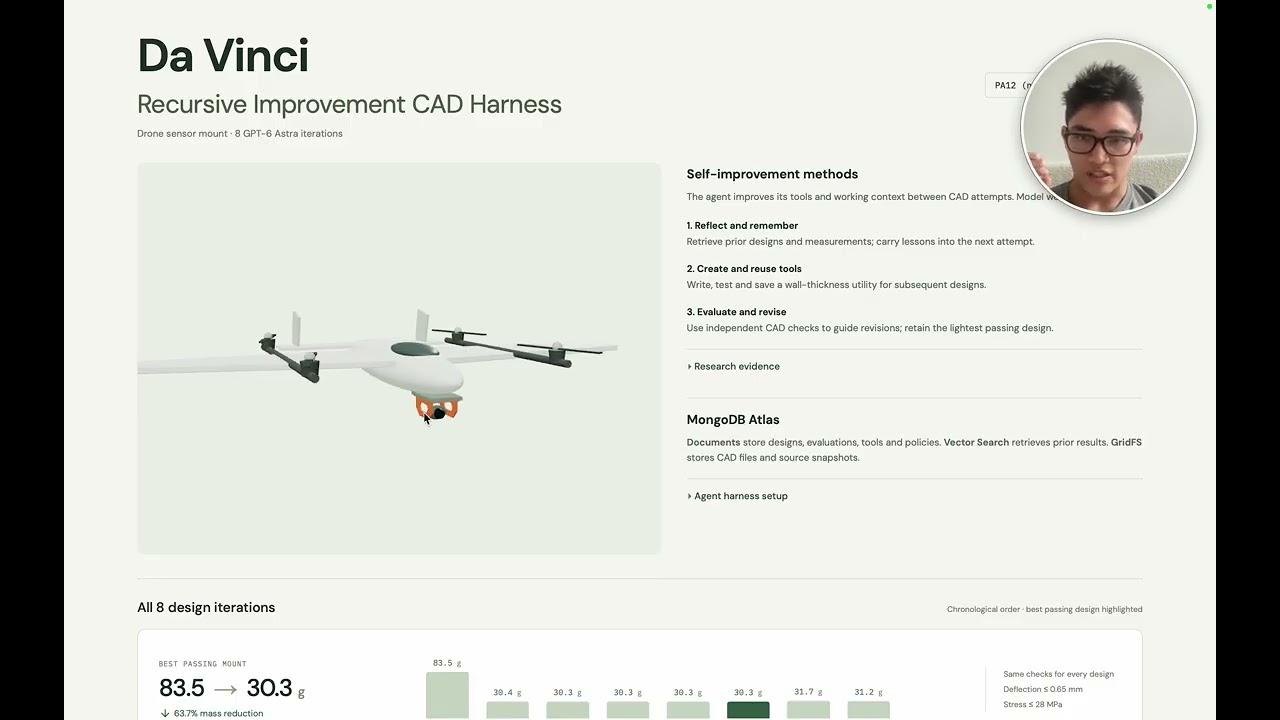
Da Vinci is a recursive improvement CAD harness designed to support physical engineering tasks through specialized AI agents, programmatic CAD and automated…

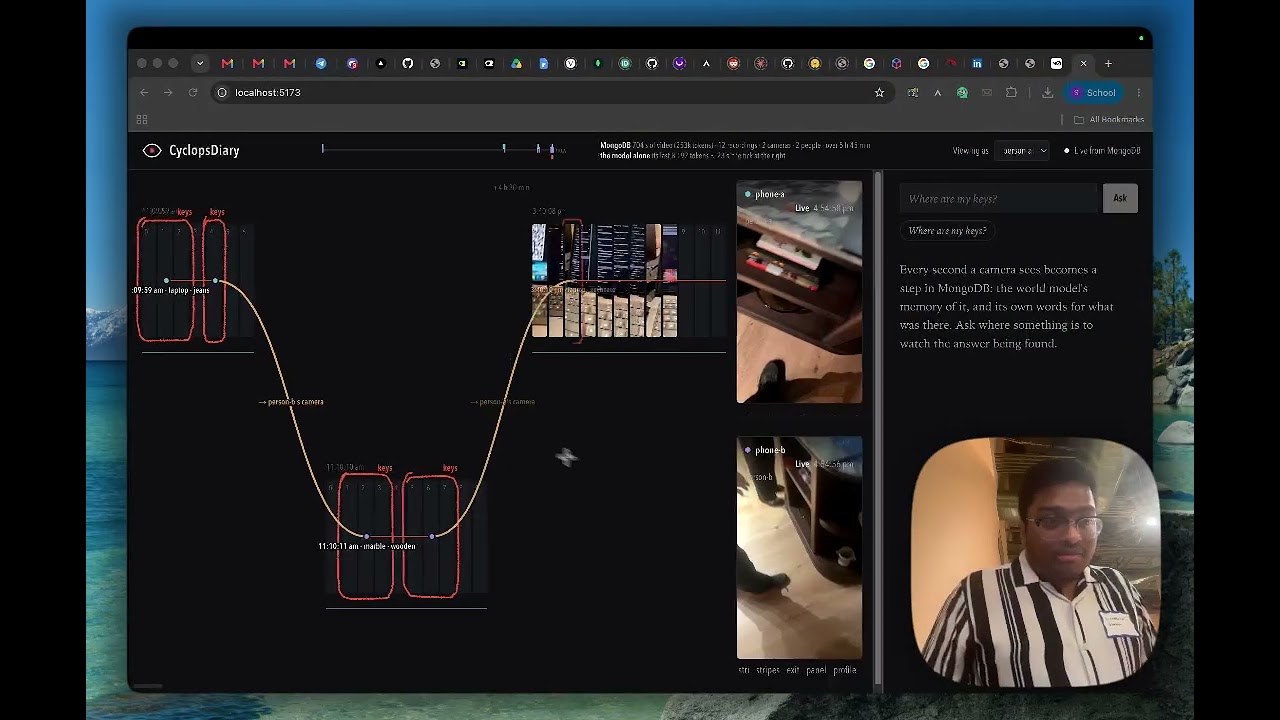
CyclopsDiary gives factory workers wearing Meta AI glasses a shared memory of the floor. Every worker's glasses feed one MongoDB memory that keeps what was…

A harness that teaches itself what context to show Jev, TypeSafe's fast decision model, proves the result on a storm it never saw, and can't cheat because…