Darwin. Self-improving research system for 5S rRNA biology. This project builds a self-improving research system to investigate how changes in 5S ribosomal RNA and its assembly partners, RPL5 and RPL11, affect ribosome production and cellular stress signaling. A motivating application is Diamond–Blackfan anemia, a rare disorder in which impaired ribosome production disrupts red-cell development. The 5S ribonucleoprotein complex offers a molecular bridge between RNA structure, assembly of the 60S ribosomal subunit, and the MDM2–p53 stress response. The agent combines literature, sequence, RNA structure, protein structure, genetics, and expression evidence to generate **specific, experimentally testable hypotheses**. STAIR and ToC index available tools so the agent can select relevant capabilities efficiently; ToolUniverse provides a logged `find_tools` and `execute_tool` interface. Local analysis tools align sequences, model RNA folding, and compare results across datasets. Each conclusion retains its source and uncertainty. The central research contribution is **recursive self-improvement of the research workflow**. The agent identifies failures in retrieval, tool selection, analysis, or verification; proposes a new cited skill or a change to its procedure; and keeps that change only if it improves performance on fixed, held-out tests. Historical publication cutoffs allow us to ask whether the system can anticipate later experimental findings without seeing them. The intended result is a reproducible system that improves both the **quality of biological hypotheses** and the **process used to generate and check them**. Its first application would prioritize 5S RNP mechanisms for laboratory follow-up, rather than make clinical diagnoses from predicted RNA structure.

More from The Harness Engineering & Model Wrangling Hackathon
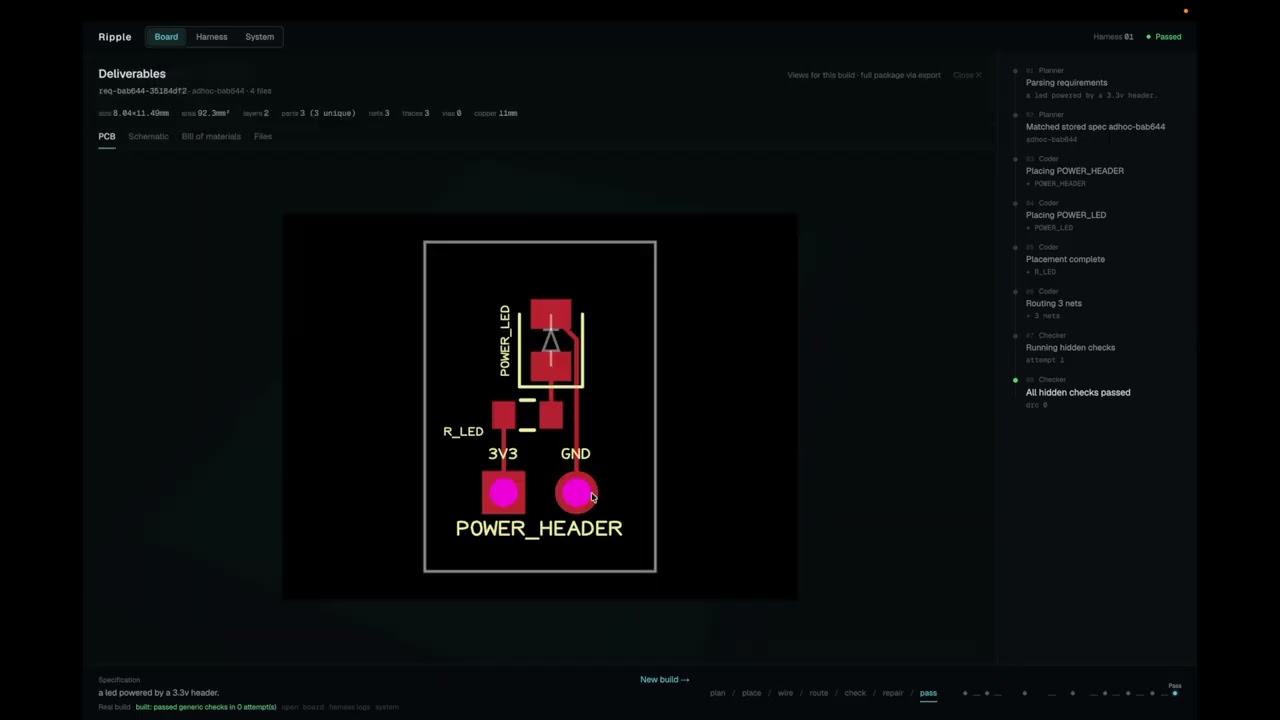
Ripple designs circuit boards from plain English, grades them against hidden checks, and evolves its own harness from the failures, going from 0/4 to 3/4 on…


 +1
Offload learns the work you repeat, so next time you can hand it over. Its engine, REM (Replay · Evolve · Merge), is an agent harness with a day/night cycle…



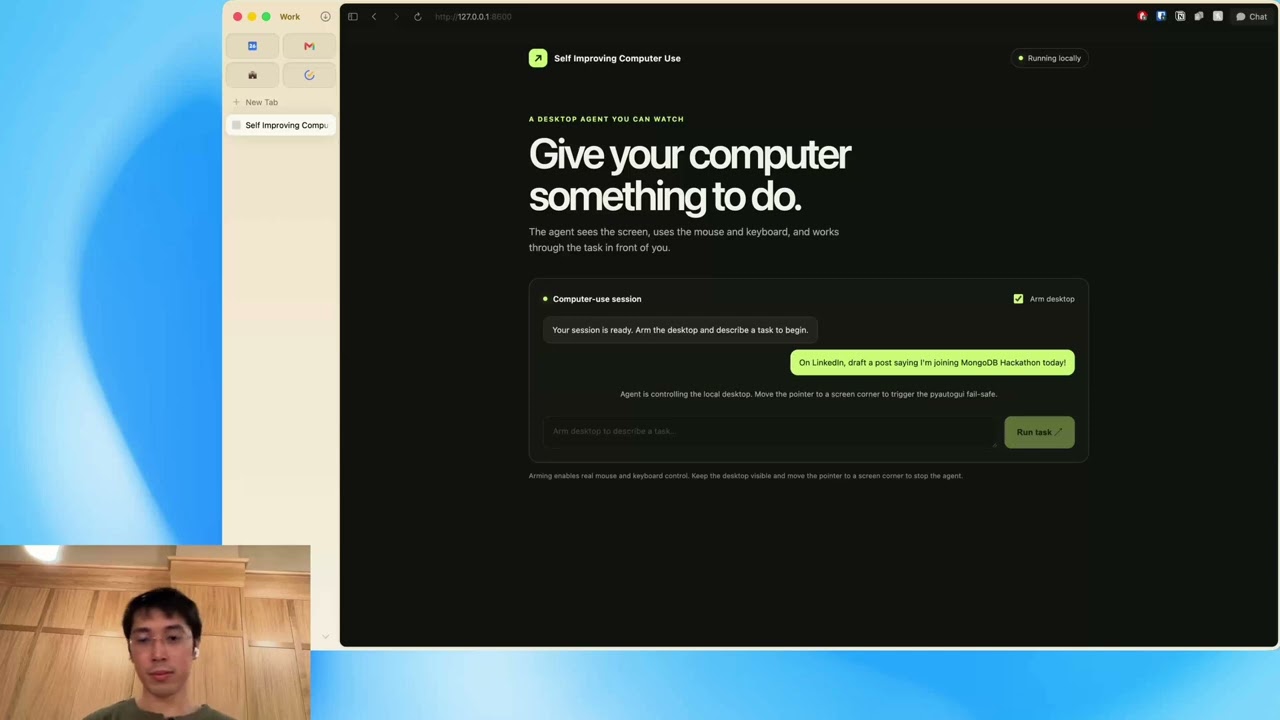
Recursive Computer Use is a local-first desktop automation harness that enables AI agents to execute tasks on your computer, verify outcomes locally, and…

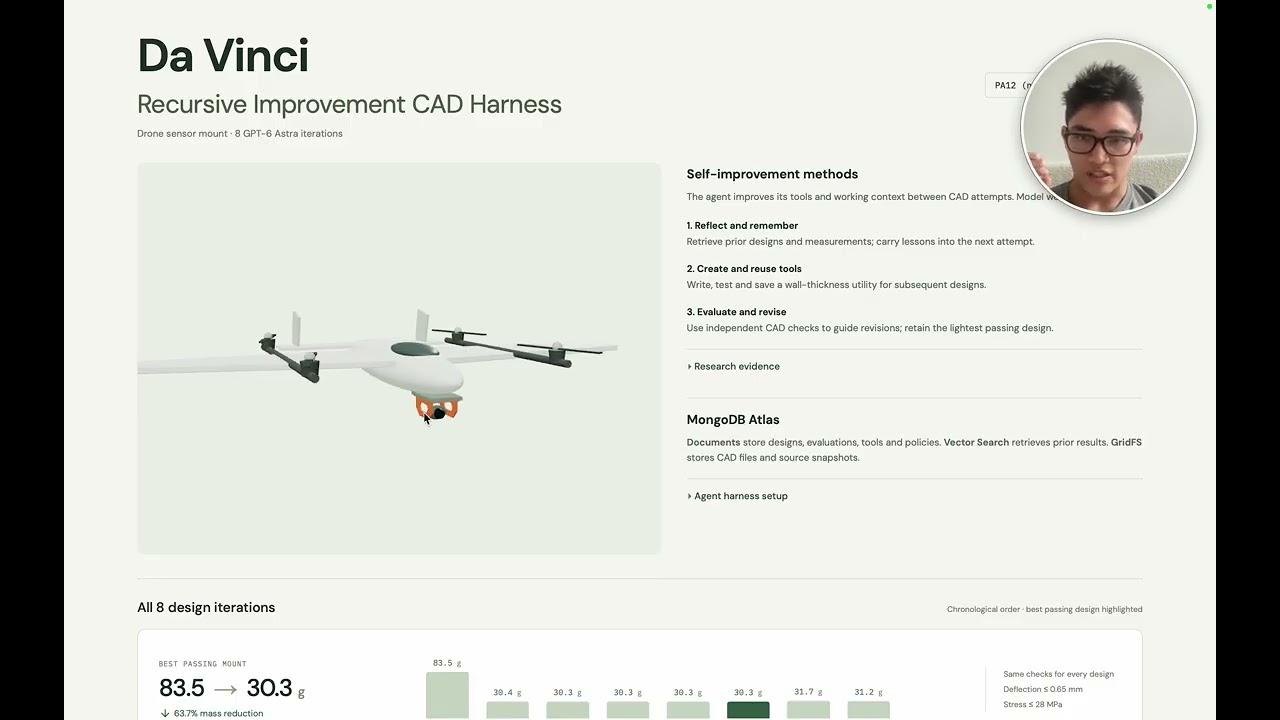
Da Vinci is a recursive improvement CAD harness designed to support physical engineering tasks through specialized AI agents, programmatic CAD and automated…

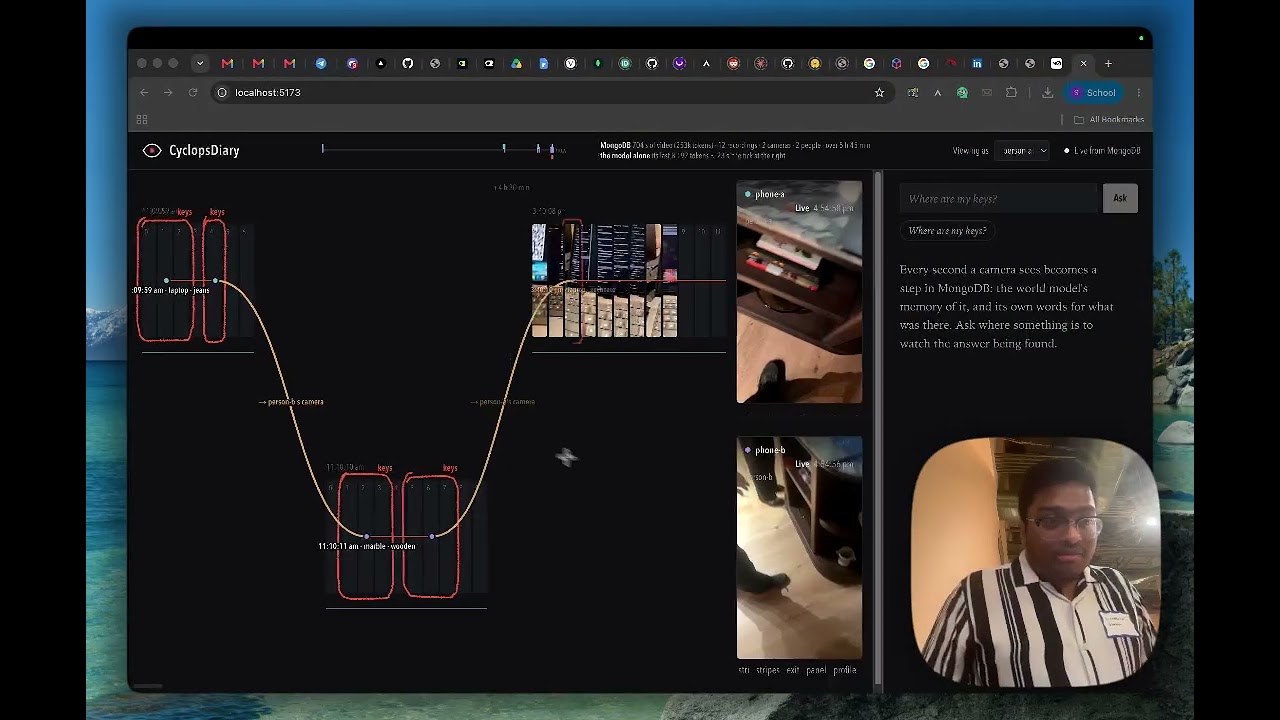
CyclopsDiary gives factory workers wearing Meta AI glasses a shared memory of the floor. Every worker's glasses feed one MongoDB memory that keeps what was…

A harness that teaches itself what context to show Jev, TypeSafe's fast decision model, proves the result on a storm it never saw, and can't cheat because…