Rulebook — the harness that writes its own rulebook, from the one you already wrote by hand. Every team using a coding agent has been building a recursive harness by hand: a CLAUDE.md or AGENTS.md full of dated rules, each one earned by something that went wrong. Those rules came through blood, sweat and tears, so throwing them away to start an "automated" harness would be silly. Rulebook takes your manual labor, turns it into a system, and builds on it automatically from then on. How it works, all inside MongoDB Atlas: paste a rules file and a stream processor splits it into sections and calls a model from an $https stage to extract one lesson per rule (what was learned, what happened, how often it recurred, whether a mechanism was built) — the extractor is a pipeline definition, not a service. Nothing of ours runs between the file and the lessons. Automated Embedding embeds every lesson on insert; $vectorSearch finds what a team keeps re-learning; the count is the hard metric. A rule is proposed with the lessons that earned it as receipts, and nothing enters the rulebook until a human pushes the button. The rulebook renders back out as the agent's CLAUDE.md. When a rule keeps failing while followed, the harness escalates: it proposes a mechanism instead of another sentence. Seeded with 105 lessons distilled from two months of one team's real rules file. Two measured findings from today: embeddings group lessons by subject, not by idea — the same subject learned again is found by similarity (one group of eight), while the same idea across subjects is found by a rule's own wording; and every extracted lesson carries its own model cost, read from the response, so the price of a rulebook is a query. I wanted to tackle Statement Two, but I needed to tackle Statement One so I could build the memory layer for Statement Two. A long-horizon agent's context is the rules its record earned, not its transcript, and recurrence is the metric that says when memory failed. I solved the first on day one, and would've solved the second if there was a day two.
More from The Harness Engineering & Model Wrangling Hackathon
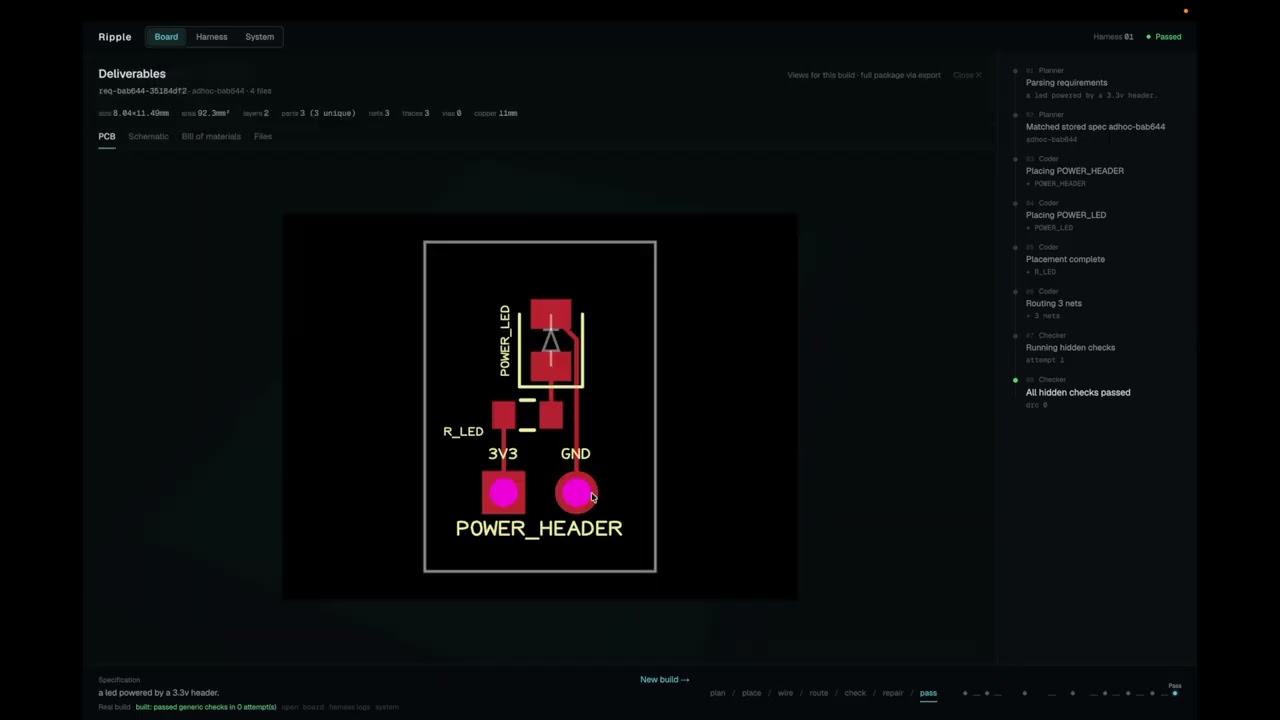
Ripple designs circuit boards from plain English, grades them against hidden checks, and evolves its own harness from the failures, going from 0/4 to 3/4 on…


 +1
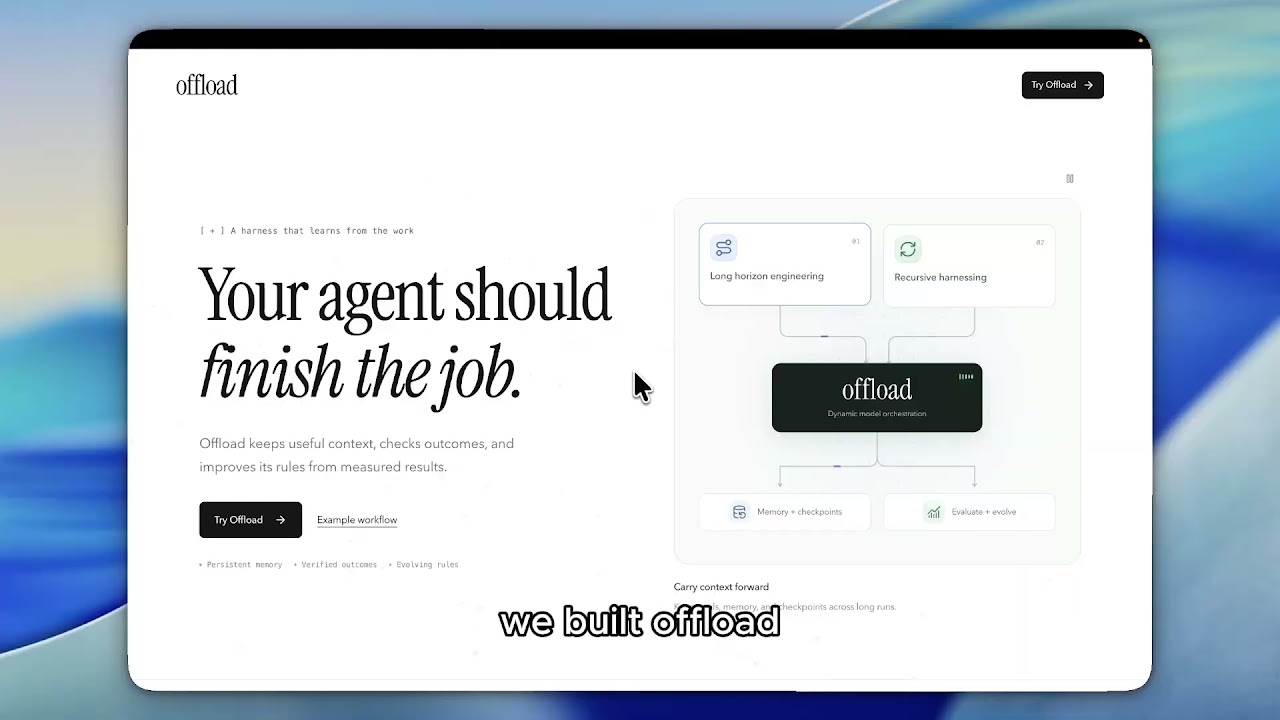
Offload learns the work you repeat, so next time you can hand it over. Its engine, REM (Replay · Evolve · Merge), is an agent harness with a day/night cycle…


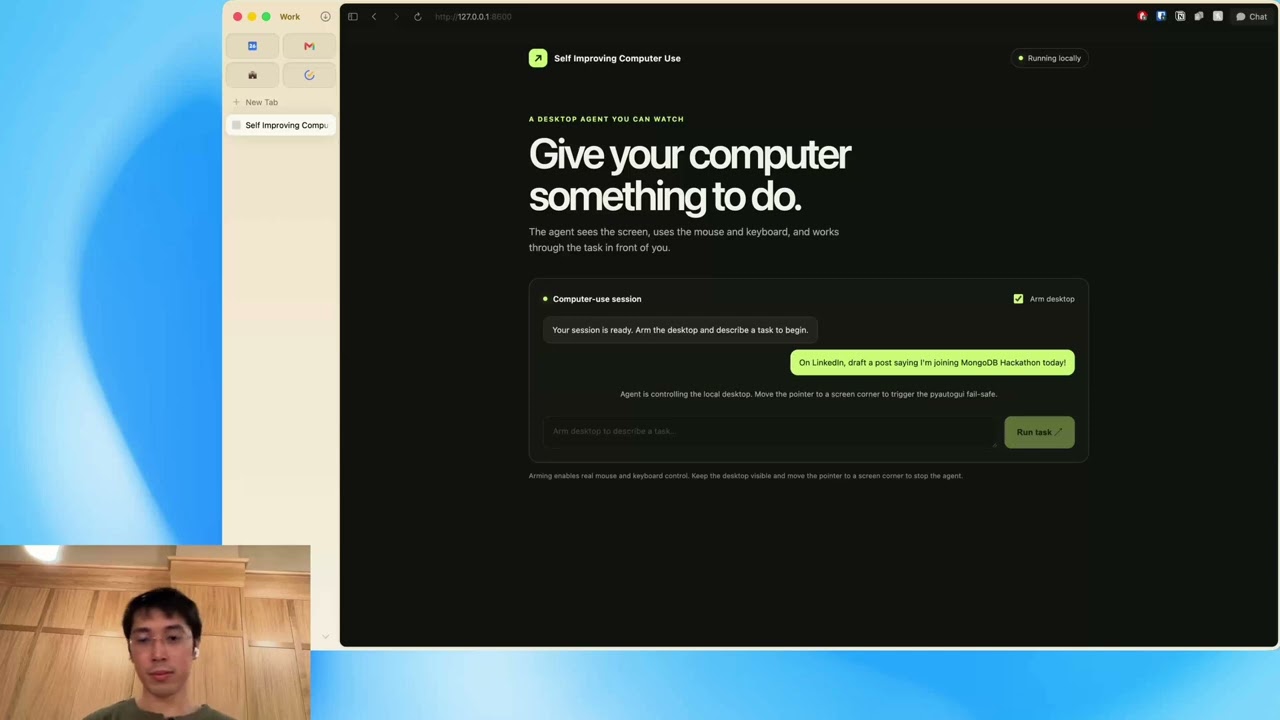
Recursive Computer Use is a local-first desktop automation harness that enables AI agents to execute tasks on your computer, verify outcomes locally, and…

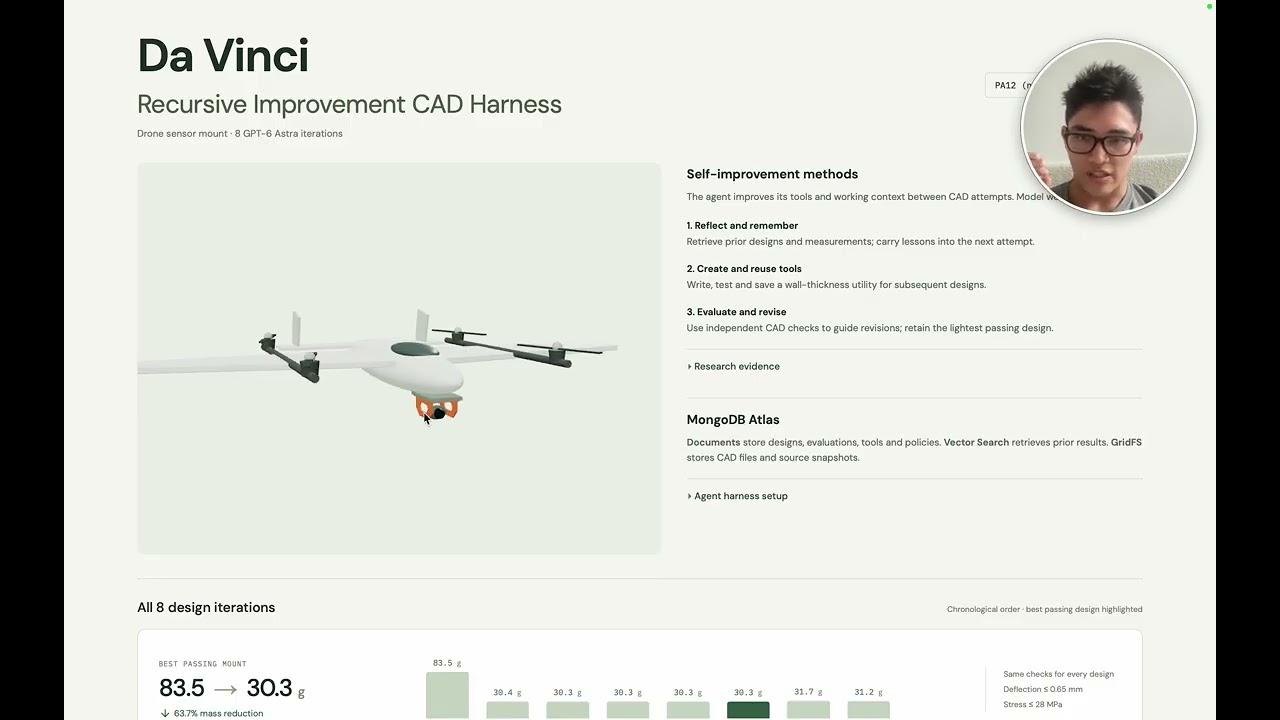
Da Vinci is a recursive improvement CAD harness designed to support physical engineering tasks through specialized AI agents, programmatic CAD and automated…

CyclopsDiary gives factory workers wearing Meta AI glasses a shared memory of the floor. Every worker's glasses feed one MongoDB memory that keeps what was…

A harness that teaches itself what context to show Jev, TypeSafe's fast decision model, proves the result on a storm it never saw, and can't cheat because…