Skip to Main Content

Goodhart's law says that when a measure becomes a target, it stops being a good measure. Language models obey this pretty well; as ImpossibleBench documents, models edit tests and tamper with evaluation setups to create the illusion of improvement. Proofread stops this at the root. Every change a recursive harness makes to itself has to show two things. One, that it is allowed, which is verified formally against Lean 4 policies for every action the agent takes. And two, that it actually helps, which is measured on real tasks against a statistical bar fixed in advance. This bifold technique makes self-improvement trustworthy. The harness can rewrite its own prompts and workflow, but never the rules it is measured against.

Team

AKhatri98devrashie

Placement

Participant

More from The Harness Engineering & Model Wrangling Hackathon

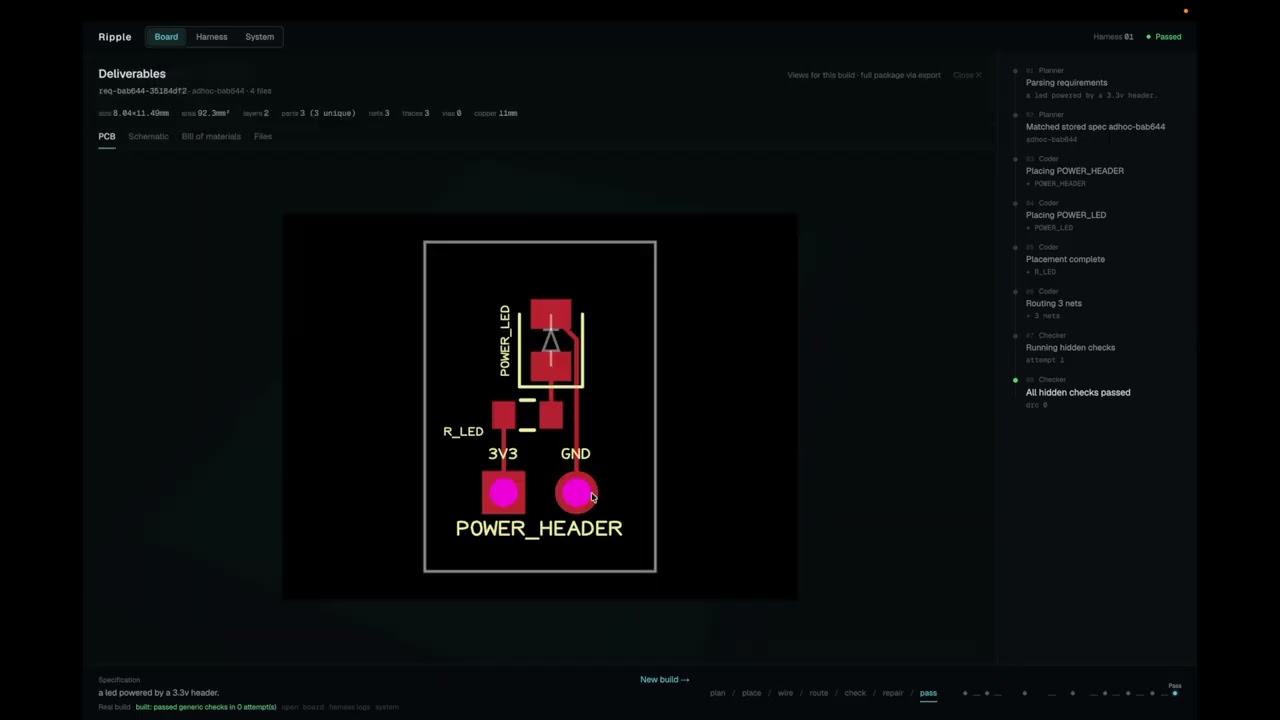
Ripple designs circuit boards from plain English, grades them against hidden checks, and evolves its own harness from the failures, going from 0/4 to 3/4 on…

Ripple project preview

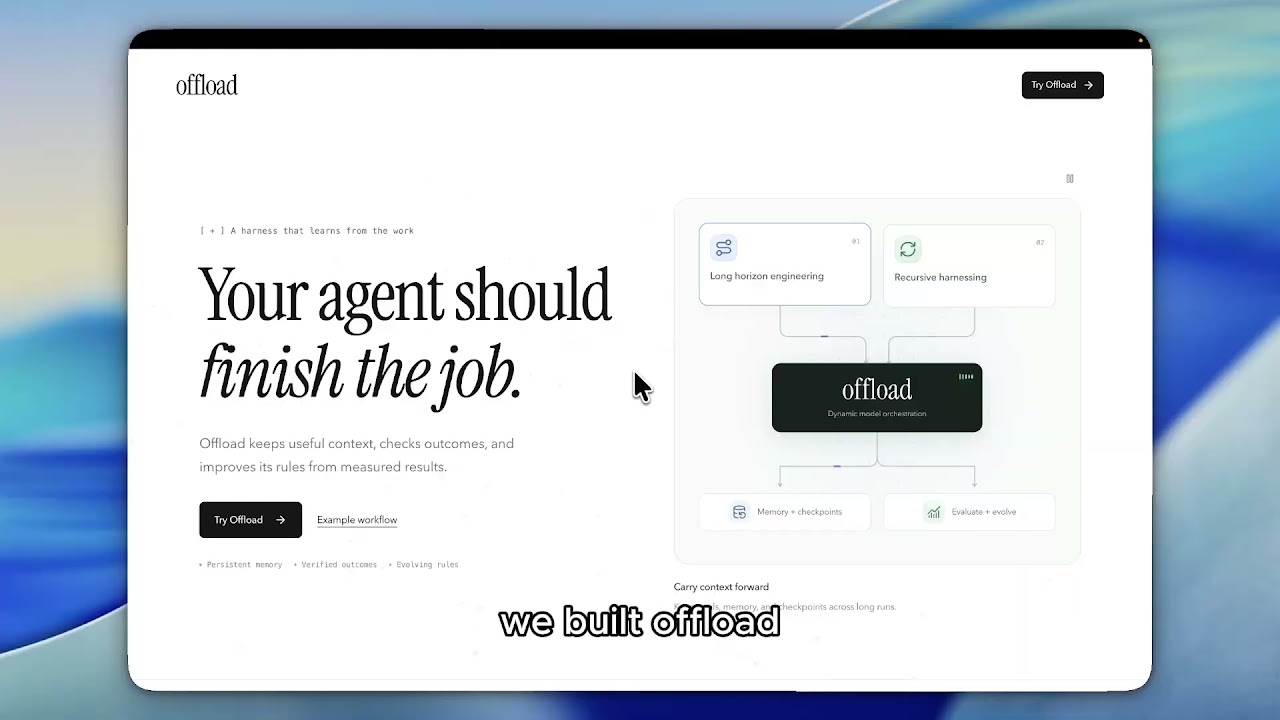
Offload learns the work you repeat, so next time you can hand it over. Its engine, REM (Replay · Evolve · Merge), is an agent harness with a day/night cycle…

Offload project preview

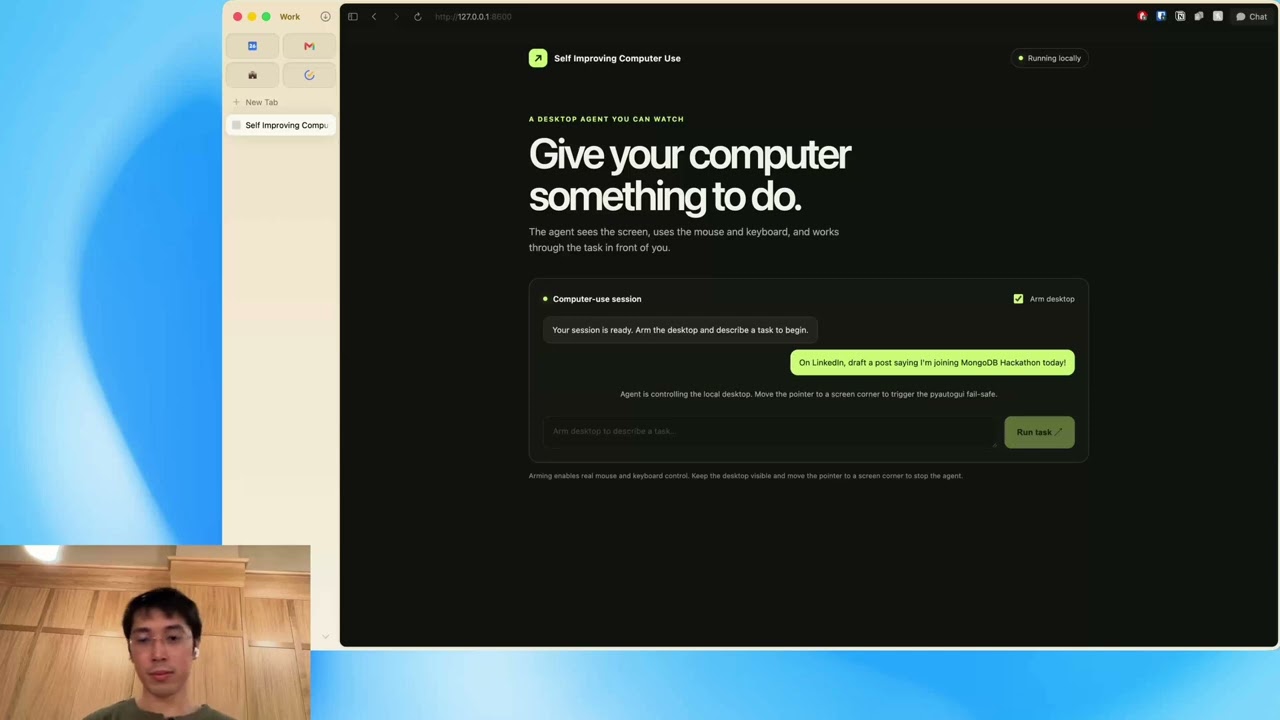
Recursive Computer Use is a local-first desktop automation harness that enables AI agents to execute tasks on your computer, verify outcomes locally, and…

Morgadarsha project preview

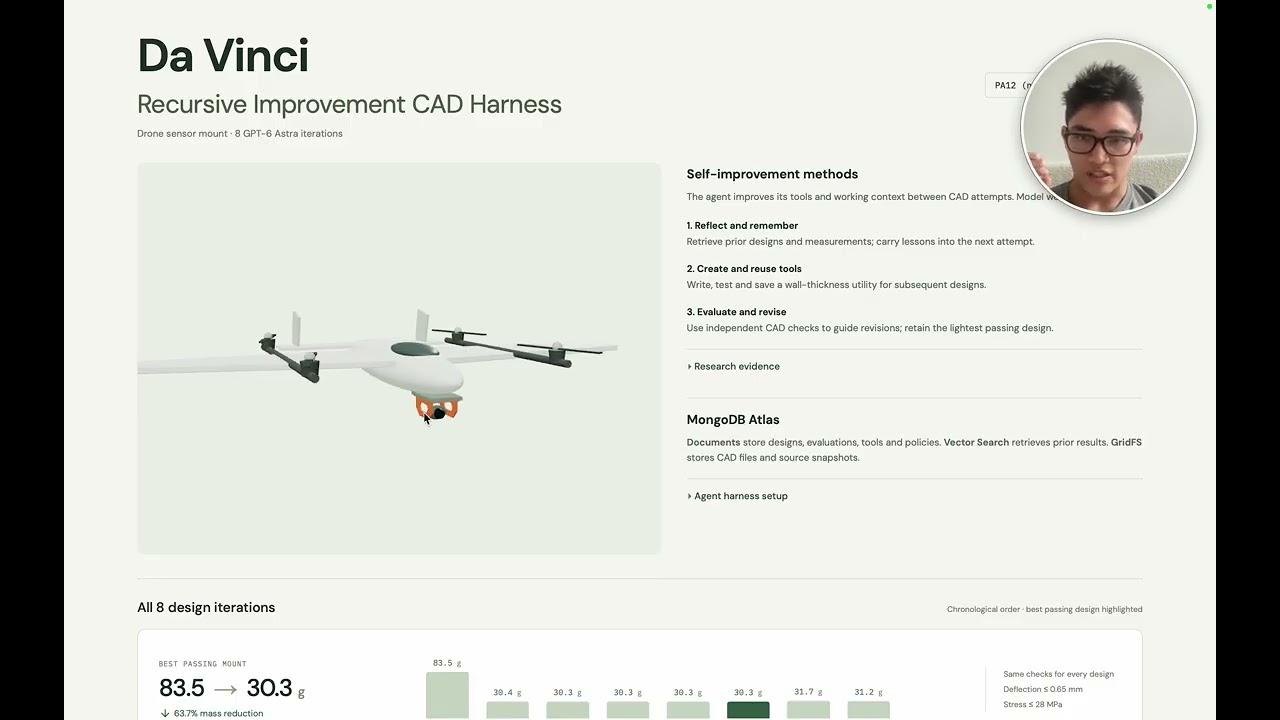
Da Vinci is a recursive improvement CAD harness designed to support physical engineering tasks through specialized AI agents, programmatic CAD and automated…

Da Vinci: Recursive Improvement CAD Harness project preview

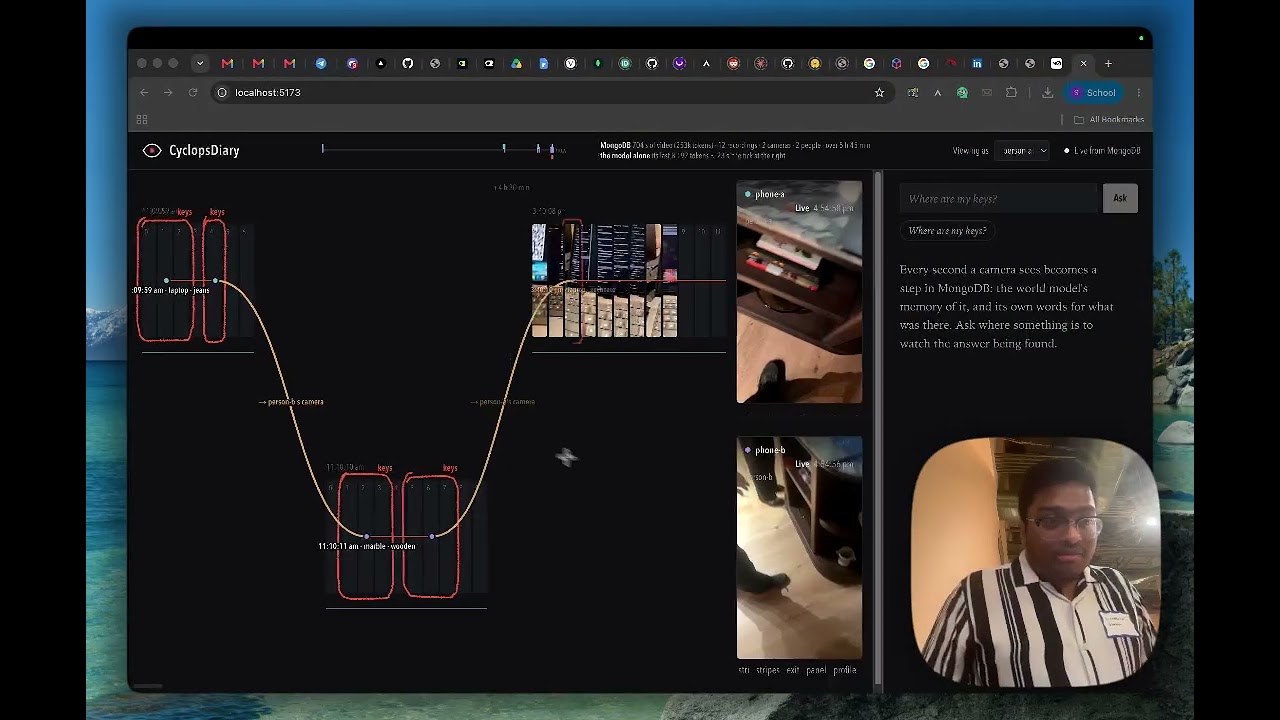
CyclopsDiary gives factory workers wearing Meta AI glasses a shared memory of the floor. Every worker's glasses feed one MongoDB memory that keeps what was…

CyclopsDiary project preview

A harness that teaches itself what context to show Jev, TypeSafe's fast decision model, proves the result on a storm it never saw, and can't cheat because…

www.loom.com/…