Scar Tissue: Every agent failure becomes a tested upgrade to its own harness. An LLM agent takes a small grocery's orders in MongoDB Atlas. When a run breaks an invariant (the order API times out after saving, and the retry orders twice), the harness, with no human: Turns the incident into test cases; Recalls past incidents and their fixes with one $lookup; Asks a model for three typed policy changes: rules, guardrails, context or tool access; Drops any that name the incident, and tests the rest against a fixed evaluator it can't edit. Only a candidate that passes every case ships; Writes the winner to Atlas, and the agent reloads it through a change stream, pinned by hash. Agents that take real actions can't learn by trial and error in production. Scar Tissue makes the postmortem executable and tested. https://scar-tissue-five.vercel.app/
More from The Harness Engineering & Model Wrangling Hackathon
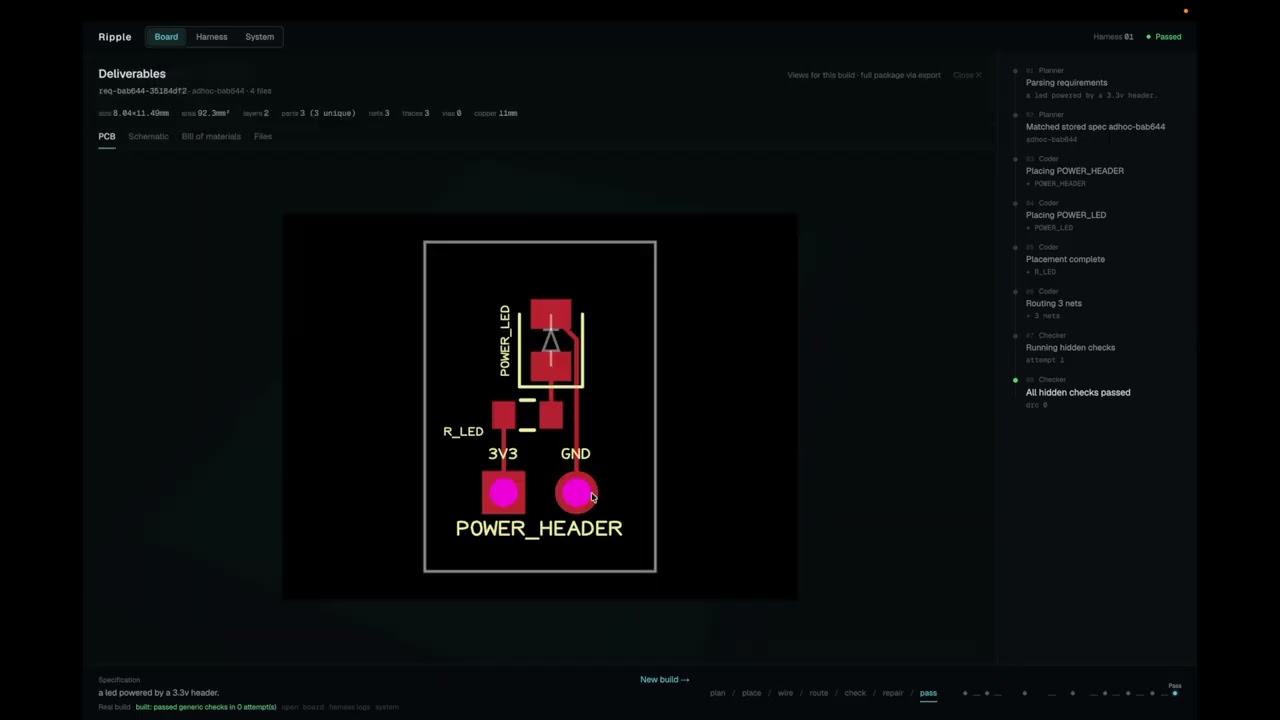
Ripple designs circuit boards from plain English, grades them against hidden checks, and evolves its own harness from the failures, going from 0/4 to 3/4 on…

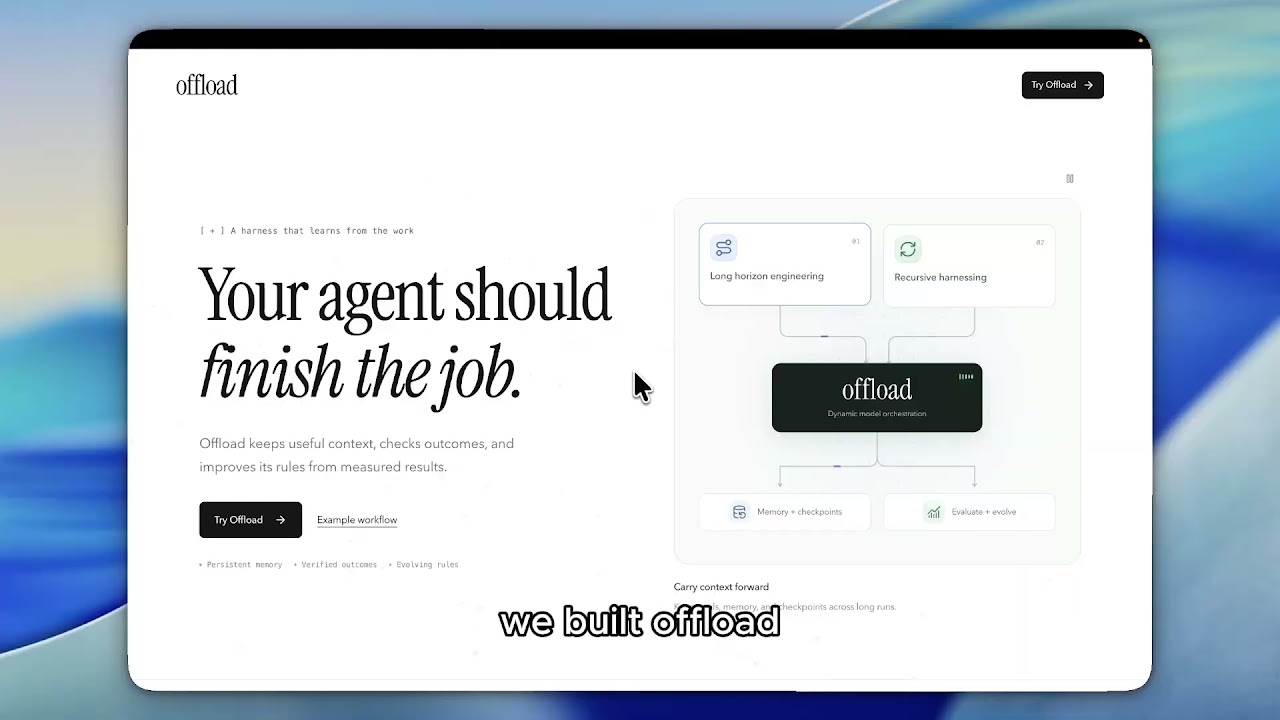
Offload learns the work you repeat, so next time you can hand it over. Its engine, REM (Replay · Evolve · Merge), is an agent harness with a day/night cycle…
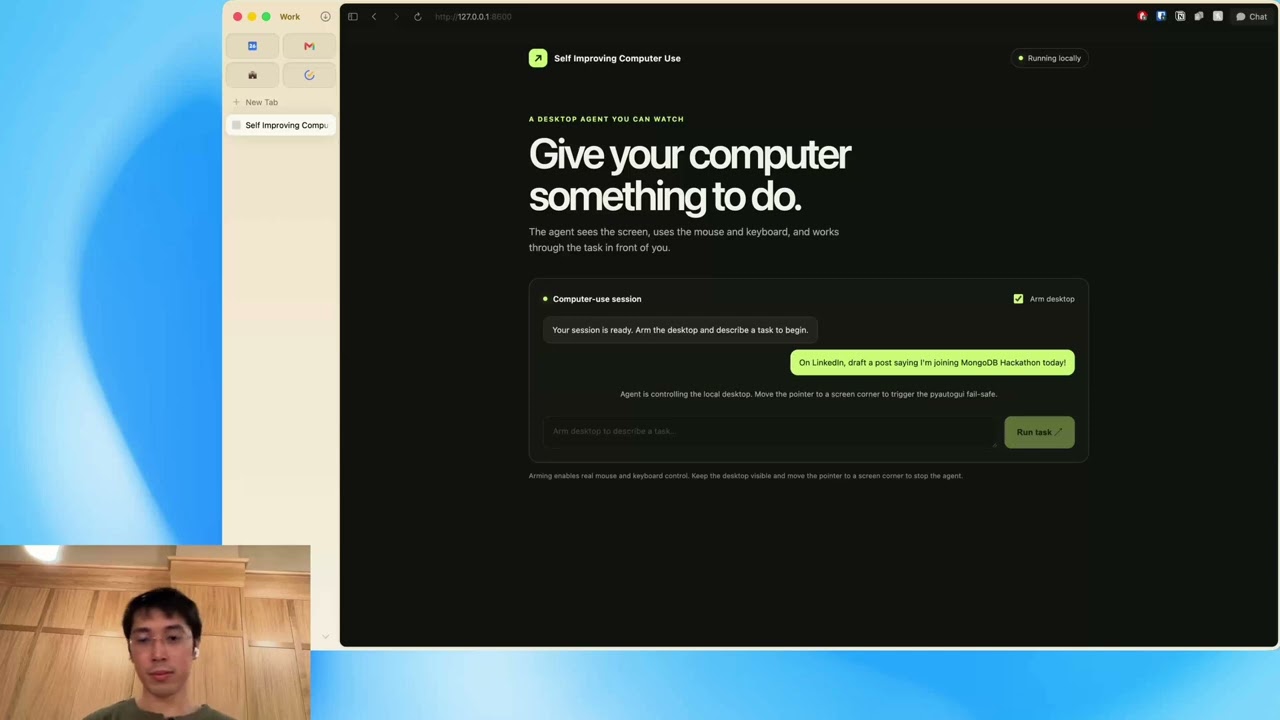
Recursive Computer Use is a local-first desktop automation harness that enables AI agents to execute tasks on your computer, verify outcomes locally, and…

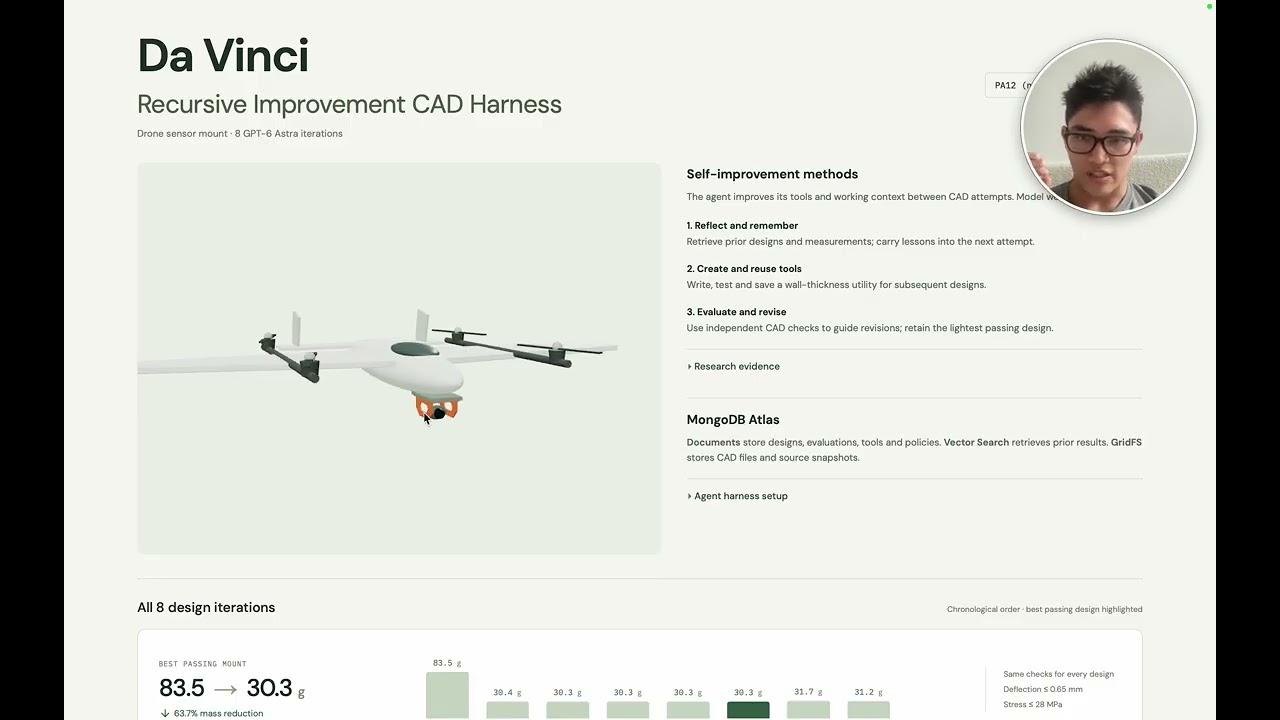
Da Vinci is a recursive improvement CAD harness designed to support physical engineering tasks through specialized AI agents, programmatic CAD and automated…

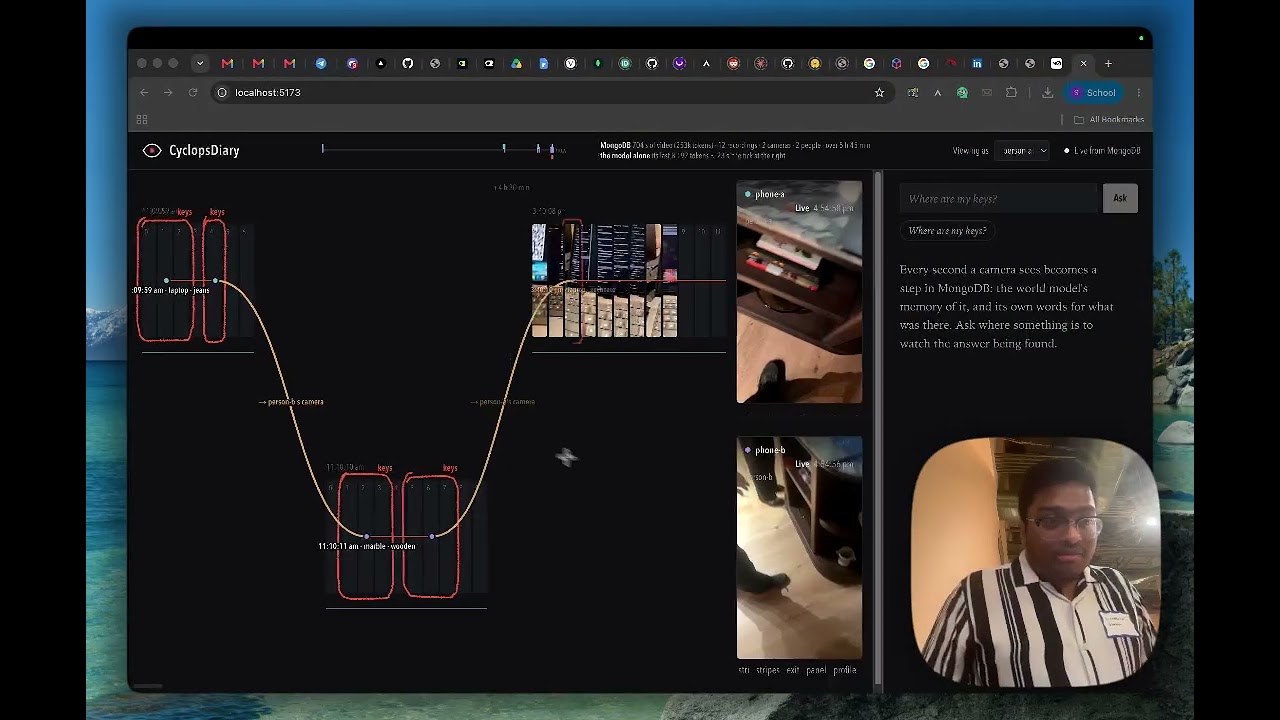
CyclopsDiary gives factory workers wearing Meta AI glasses a shared memory of the floor. Every worker's glasses feed one MongoDB memory that keeps what was…

A harness that teaches itself what context to show Jev, TypeSafe's fast decision model, proves the result on a storm it never saw, and can't cheat because…