QuartetIQ
Built at Meta Global AI Developer Hackathon · Oct 26, 2026 · Remote
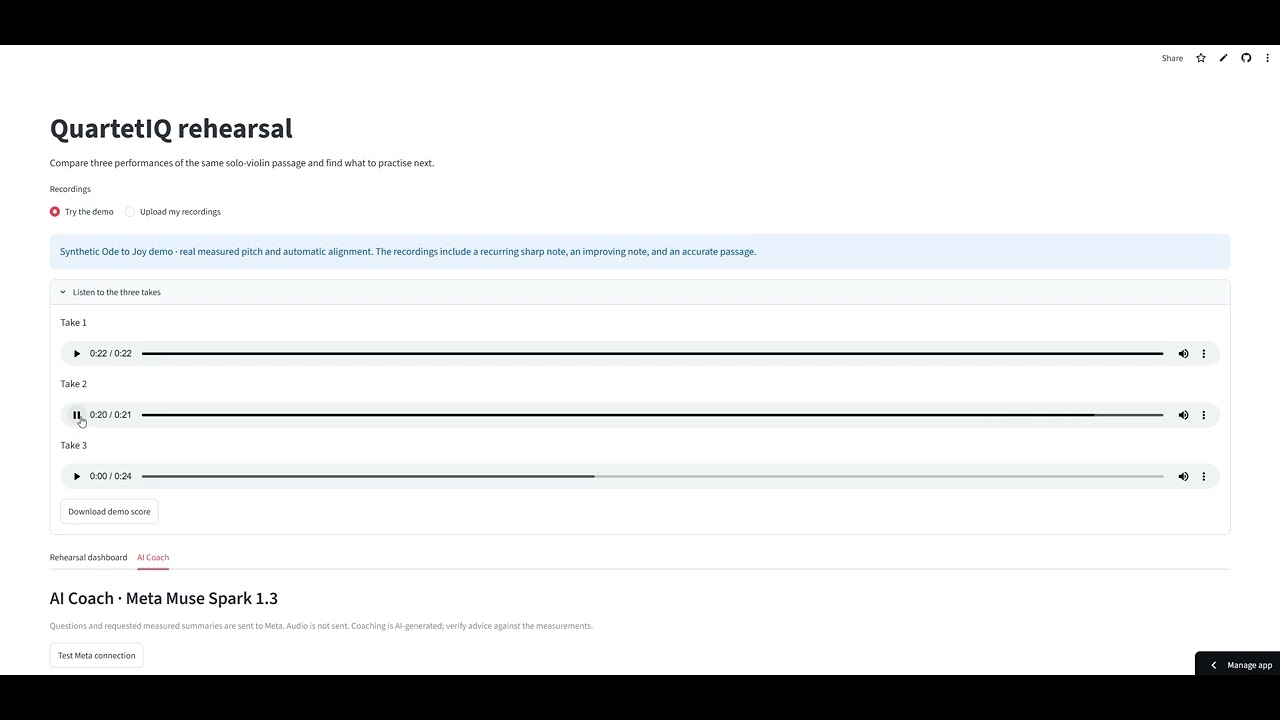
I integrated Meta Muse Spark 1.3 through the Meta Model API to power QuartetIQ's conversational AI rehearsal coach. QuartetIQ combines traditional music information retrieval with Meta's AI capabilities. The Python analysis pipeline uses librosa's pYIN algorithm to estimate fundamental frequencies, music21 to parse MusicXML scores, and Dynamic Time Warping to align recorded performances with written notes. It then calculates intonation deviations in cents, compares multiple recordings, and identifies recurring mistakes. Muse Spark provides the intelligence layer that transforms these numerical measurements into personalized rehearsal advice. I implemented an AI coaching system using Muse Spark's function-calling capabilities. The model can access five application-defined tools: - `get_performance_summary` - `compare_takes` - `get_measure_analysis` - `get_persistent_errors` - `get_practice_priorities` These tools retrieve actual performance measurements rather than relying on the model to estimate musical accuracy. Through the Streamlit interface, musicians can ask natural-language questions such as "Which measures should I practice next?" or "Did my intonation improve across takes?" Muse Spark uses the structured analysis results to generate specific, evidence-based explanations and practice recommendations. The application is publicly deployed and includes a three-take synthetic demonstration that measures an 83.86% reduction in mean absolute intonation error while identifying persistent problems requiring additional practice. By combining Meta Muse Spark with deterministic audio analysis, QuartetIQ demonstrates how Meta's models can make specialized musical data more accessible, understandable, and actionable.