GajaMitra
Built at Meta Global AI Developer Hackathon · Oct 26, 2026 · Remote
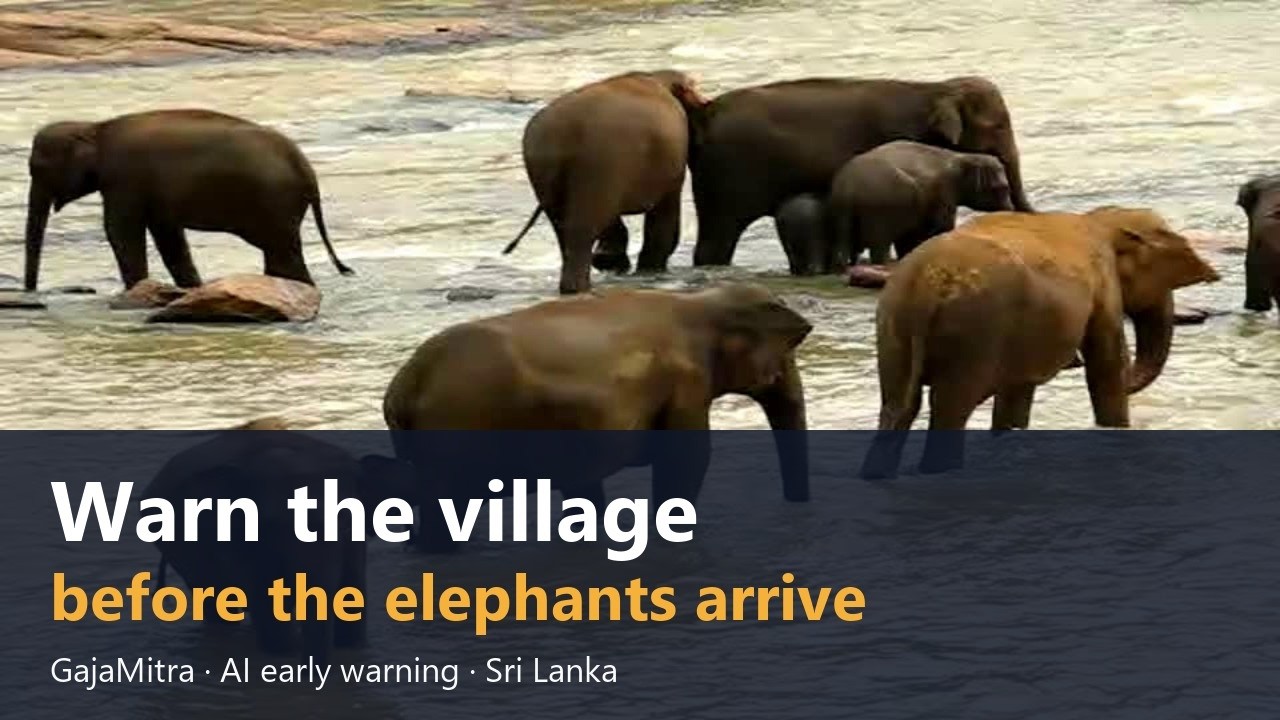
Every year in Sri Lanka, hundreds of elephants and more than a hundred people die in human-elephant conflict, mostly at night on the edge of villages. Warnings come too late. Existing systems are detectors trained for one camera, and they stop at "elephant detected": nobody tells the village how long it has, or what to do. GajaMitra goes from video to a villager's phone. An officer uploads a boundary-camera clip and marks the village boundary (two points on the line, one on the village side). Out come a tracked herd, an estimated arrival time, a risk level, and a short alert in Sinhala, Tamil and English. How it works 1. SAM 3.1 tracks every elephant from one text prompt, "elephant". Object IDs persist across frames, so we get real tracks without training a detector. 2. Deterministic, tested code turns the tracks into speed, distance to the boundary and arrival time, and sets the risk level (low, medium, high, critical). A herd standing at the fence is never rated low. 3. A Muse Spark responder agent reads annotated keyframes and the tracker data, judges behaviour and proposes alerts. A second Muse Spark verifier agent checks the proposal and can send it back. 4. A deterministic guard caps the alert's severity to what the tracker measured. The AI proposes; the code decides. 5. The warning goes out at once. An escalation to "danger" waits for a wildlife officer, who sees the exact text and the frames the agents saw. Approval never delays a warning, and if nobody answers, the escalation is sent automatically when the timer ends. Why it can be trusted Python never sends anything. Every side effect is an audited tool call on the Spring Boot backend, which re-checks the same policy table and refuses any alert it has no tracker risk for. Every alert carries an idempotency key, so retries never double-send, and jobs resume from a checkpoint after a crash. What we built The tracking maths, the LangGraph pipeline, the Spring Boot backend (alerts, SMS, approvals, audit log, key-protected MCP server), a RabbitMQ worker, and a React dashboard in three languages with an officer approval screen showing the evidence frames. We ran it end to end against the real Meta API on a critical-risk case and a high-risk case with approval. Honest limits The demo site runs in test mode: alerts are stored and no SMS reaches real phones; Twilio sending is tested only against a mock. Sinhala and Tamil text awaits native-speaker review. No night footage or live streams yet. Our first evaluation on 13 labelled clips passed 6 of 13 and found two real problems (calm herds rated medium; flipping the village side did not lower the risk). Apart from two cases, the labels were our own predictions, so this is a first measurement, not a benchmark. Impact A new site needs only a camera, a boundary line and a language list, so the same pipeline can serve India and Africa. Next: a shadow-mode pilot with wildlife rangers, comparing what GajaMitra would have sent with real events.