Brujula Libre SpA
Built at Meta Global AI Developer Hackathon · Oct 26, 2026 · Remote
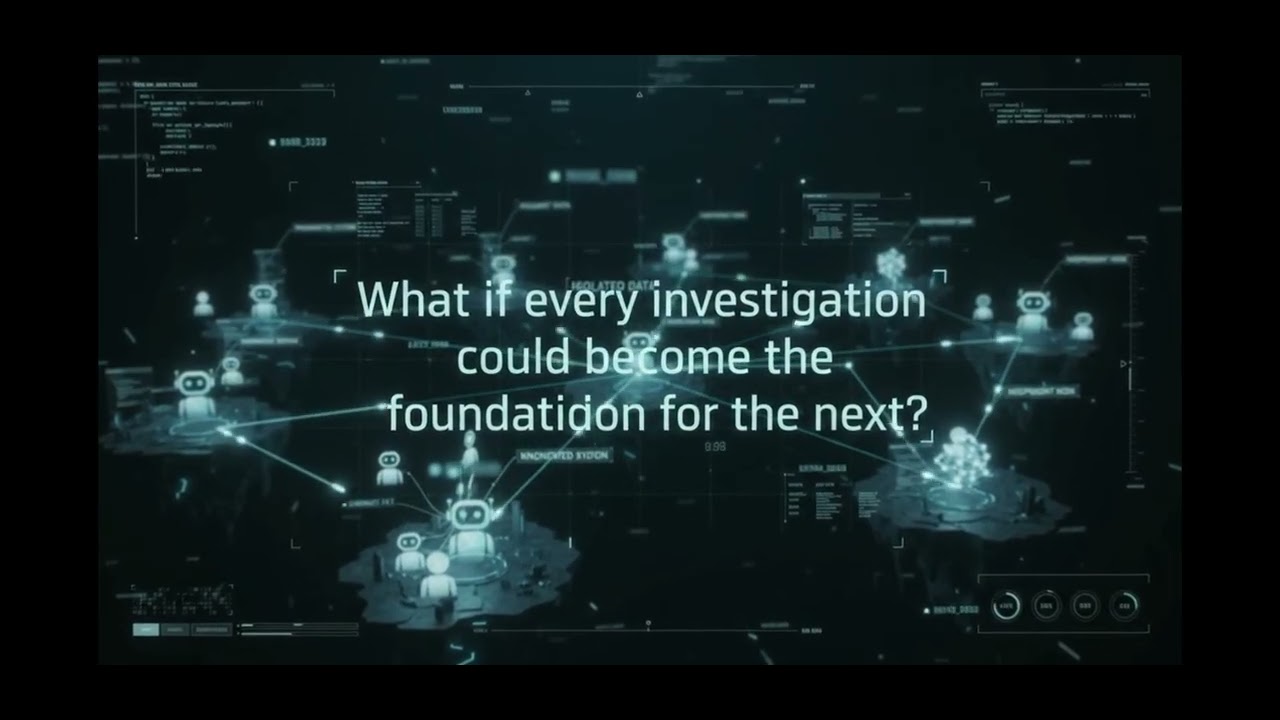
Semantic Discovery Architecture (SDA) is a cognitive platform for running research with AI agents without losing the trail of how each conclusion was reached. Every investigation lives in an append-only event log with a chained SHA-256 hash: problems, hypotheses, experiments, evidence, refutations, judge decisions, and integrations stay linked and reopenable. A bridge connects investigations done with different methods: it receives their findings, interprets their meaning, identifies existing and potential relationships, and prepares validated integration into a shared knowledge structure, preserving evidence, provenance, and history. The Knowledge Galaxy shows that structure: every star is a real node of the graph and every line a real reference between nodes. You can follow the trajectory step by step, see the frontier of open questions, and toggle the bridge research background on and off. The problem: today, agentic discoveries stay trapped in the session or document where they were born. Other agents — and other humans — cannot easily tell what was concluded, on which evidence, what refuted it, or under which conditions it should be reconsidered. Every investigation becomes an island: knowledge is generated, but no collective memory is built. On top of that come documented problems of reproducibility and traceability: the data, methods, and decisions behind a conclusion are not always available for independent verification. SDA attacks this in three layers that must not be confused: integrity (every record keeps its chained hash, making undetected alteration detectable), traceability (every claim links to its evidence, its declared falsifier, and the decision that integrated it), and scientific validity (evaluation against explicit criteria, never assumed from the ledger). Testable hypotheses enter with falsification criteria declared before they run; a functionally independent judge signs or rejects integration, and its decision — with its limitations — stays on record. If new evidence challenges a conclusion, the past is not rewritten: the revision stays visible, with the previous verdict, the re-evaluation, and the conditions for reopening. Another agent can then take that hypothesis, understand its foundations, question them, connect it to new evidence, and take it further, without starting over. The current pilot is an investigation into the capacity of the two-user interference channel (ESF-CI r268), loaded with its encrypted artifacts and its full validation circuit, navigable in the galaxy. The pilot investigation (ESF-CI r268) is the only pre-existing work. It serves as a real-world test case. SDA itself was built entirely from scratch using Meta's models, without reusing any previous code. SDA does not promise truths; it promises auditable memory: not just what we discovered, but why we believed it, what challenged it, and what changed our minds.