LensQi FieldOps
Built at Meta Global AI Developer Hackathon · Oct 26, 2026 · Remote
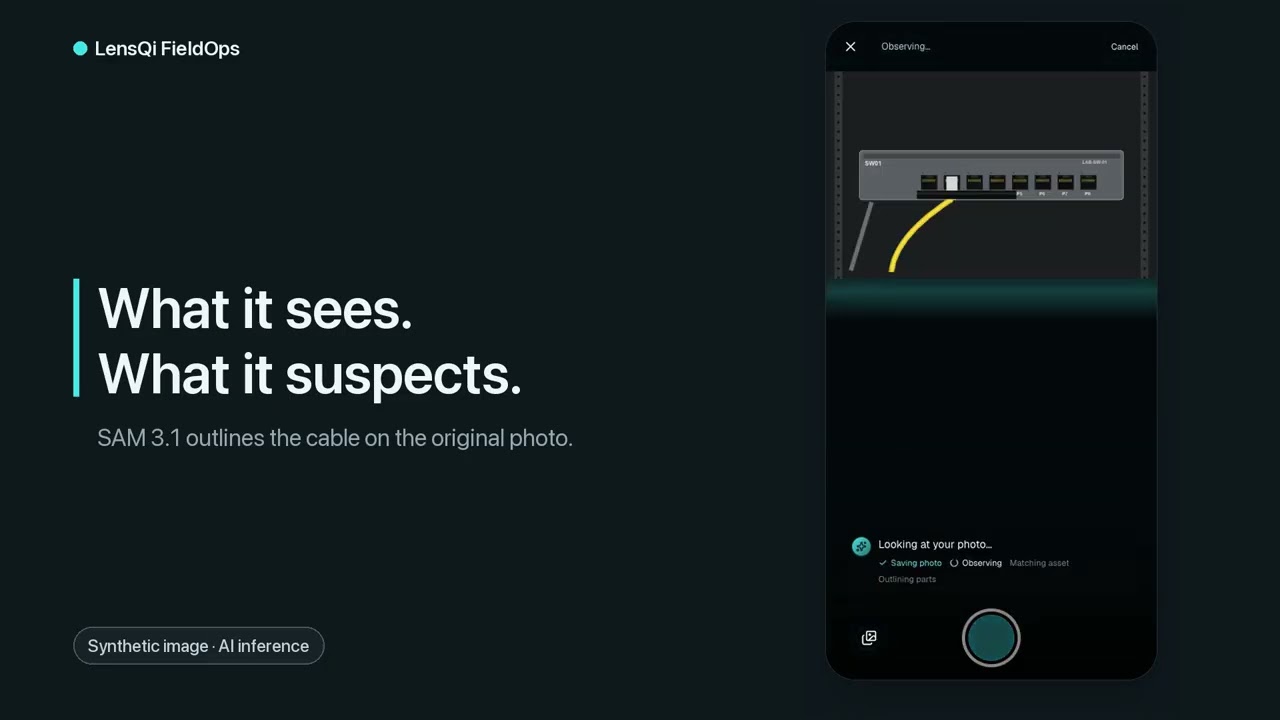
LensQi FieldOps A repair can look finished and still not work. Manuals rarely match the view in front of a worker, and a convincing after-photo can’t show that equipment actually functions. LensQi guides hands-on technical work through the camera, then gives technicians a separate, evidence-based way to close a repair. See the task. Do it right. Prove it when it matters. Enter a goal, such as installing a PoE camera, and LensQi writes a step-by-step plan with tools, cautions and stop conditions. Or open “Just ask,” point the camera and ask about what you see. Meta Muse Spark supplies the guidance and photo-check suggestions, SAM 3.1 outlines the relevant parts, and Muse Voice handles speech input. The person, not the model, marks each step done. The server validates plans before they reach the user: recognized restricted work (gas, mains electrical, EV high voltage, airbags, refrigerant, structural) gets preparation and observation steps and a professional referral, not hands-on instructions. LensQi runs on web and Android, with saved jobs, offline queues for supported captures and step updates, and an operations dashboard for review and handover. For technicians, a repair closes only through FieldProof, when three things agree: a fresh post-repair photo, a human-reviewed checklist and a passing approved equipment check. Duplicate and unchanged photos are rejected before any check runs. Code, not the model, makes the decision. The result is a receipt carrying the full event history and artifact hashes, and an offline verifier flags alterations to it. I tested this on 25 synthetic scenarios, with genuine Muse and SAM calls and simulated diagnostics. The full loop produced zero false completions, and all 12 issued receipts passed verification. A single-look visual baseline would have accepted four of five fake fixes. In a separate phone run, using a real camera on a synthetic image and a live HTTP check standing in for lab equipment, FieldProof refused a fake fix and verified the real one. These results test the pipeline, not field accuracy; the next milestone is a pilot on real equipment. The same evidence could make field work useful for training AI on physical tasks, where a demonstration only helps if you know it succeeded. LensQi’s Android teaching recorder already captures demonstrations with timed action annotations, consent controls and human review, and recordings tied to an inspection can include its event history. The next step is to use FieldProof’s outcomes as labels, so each example shows what was seen, what was done and whether the checks passed. LensQi gives AI a new job in the physical world: guide the work, then require evidence that it worked.