Minva
Built at Meta Global AI Developer Hackathon · Oct 26, 2026 · Remote
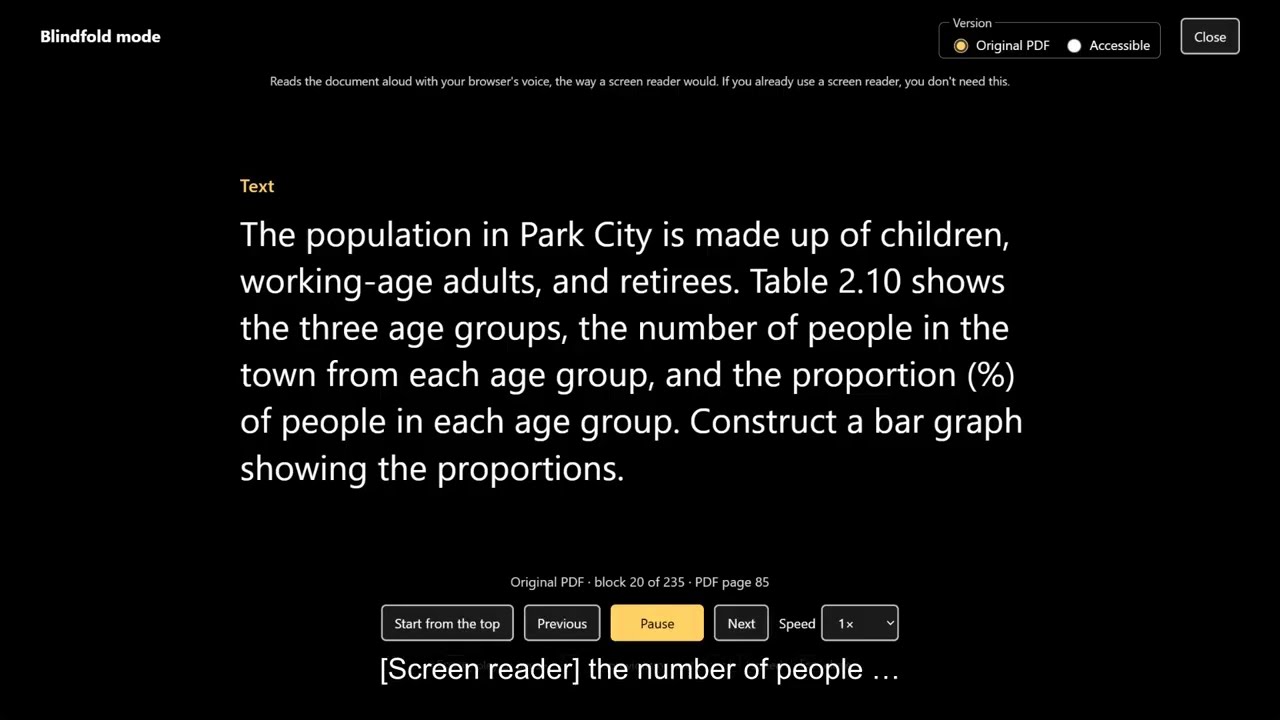
Students who are blind, have low vision, or have other print disabilities get course materials through campus disability services offices. Text converts easily; figures, charts, tables and scanned pages don't. Each needs a description written by someone who understands it, and that's why turnaround takes days to weeks. AI can write alt text, but staff can't trust it without checking every description, which removes most of the time saved. I saw this first-hand working in a university disability services office. Access Agent describes every figure, then verifies each description independently and sends only the uncertain ones to a person, with a plain-language reason and next step. How it works: a PDF (digital or scanned) is ingested, figures and tables are detected, and each figure is classified, its values are read, and it is described. The describer and the value reader never see each other's output, so their errors don't agree. A verifier compares both against the image, backed by free code checks (invented numbers, data table vs. reading, counts, comparisons, axis labels). On failure, an agent loop rereads values at zoom, rewrites, recrops or escalates, with hard limits; approval is refused unless the latest check passed. Figures with no numeric scale, color-only series, or disagreeing readings always go to a person. Staff get a review queue with a readable trace of every agent decision, plus Blindfold mode to hear a page before and after the way a screen reader user does. Students get accessible HTML (headings, alt text, data tables, MathML), four reading profiles, "Hear the chart" sonification, and lecture recordings turned into checked, timestamped notes and captions. Evaluation: 19 hand-checked figures, 3 runs per backend, plus a 13-figure held-out set with references committed before the run. On Muse Spark via the Meta API: 84% handled automatically, fewer than 1 real error per run reached students, about $0.14 per figure. The verifier caught 5/5 planted errors with 0 false alarms. Held-out results, including 2 errors that got through, are reported honestly in the README. Next step: usability testing with blind and low-vision students and disability services staff.