Inkling
Built at Meta Global AI Developer Hackathon · Oct 26, 2026 · Remote
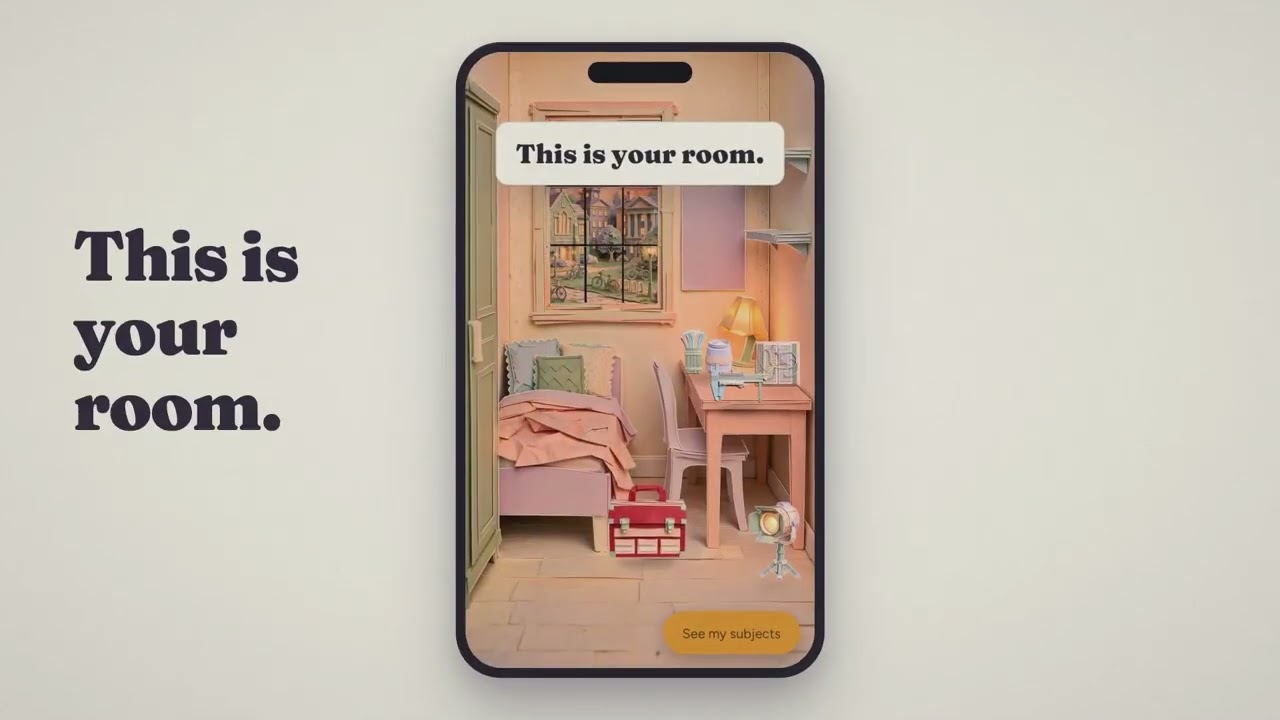
Inkling is a free game that helps UK school leavers find the degree subjects that fit them, then explore real courses and apprenticeships from there. I build university websites for a living. Their main job is getting students to pick a course from a huge catalogue, and they assume you already know what subject you want. Many don't. In the 2026 cycle 344,760 UK school leavers applied to university by the June deadline, choosing from tens of thousands of courses, and among graduates aged 25 to 30, 27% say with hindsight they'd pick a different course or university. The usual answers are a careers quiz or a 2,000-item search box. Inkling is neither: it's four quick rounds of cards (what you take, what you'd get stuck into, this or that, a few big questions) that fill a paper-craft room with what you're into. Then you get your top 3 subjects, a wildcard you'd never have gone looking for, real UK courses by city, coast or campus town, and the apprenticeships closest to each subject. It takes three minutes on any phone, with no sign-up. The content is real. Every one of the 163 subject cards was written and then reviewed by Muse Spark Open; 28,753 courses from 315 providers come from Discover Uni (HESA), 499 apprenticeship standards from Skills England, and job data from O*NET, each under its licence. Nothing about courses is generated. The scoring runs in the browser and never calls a model, so the core is free at any scale; the three live touches (your inkling, your paper pal, live simulated students) are Meta model calls with a fallback provider that degrade silently if unavailable. Before any real student played, I tested it properly. Muse Spark Open wrote 200 simulated students, each with the subjects they'd suit noted first, and played every round as them. That exposed "sink" subjects the questions over-rewarded: Zoology landed in 45 students' top three while suiting one. After calibrating the scoring, on 100 students the model had never seen, a fitting subject in the top three went from 38% to 54%, and the number of subjects that ever reach a top three went from 53 to 99. The whole replay is public at findyourinkling.com/simulation, where anyone can also run a brand-new student live and watch it think, play and walk to its building. Real players can say whether the result felt right, and those anonymous votes are stored to keep tuning the weightings. It's live at findyourinkling.com, built solo from an empty repo in nine days (100 commits), MIT-licensed on GitHub, deployed on Cloudflare Pages with D1, with a Remotion-built demo video from real phone footage. Next: adaptive card pools, scheduled data refresh, and country packs so the same engine can serve other systems. A school, careers service or exam board could run all of it on its own servers because the heavy lifting is done by an open-weights model.