Nexby
Built at Meta Global AI Developer Hackathon · Oct 26, 2026 · Remote
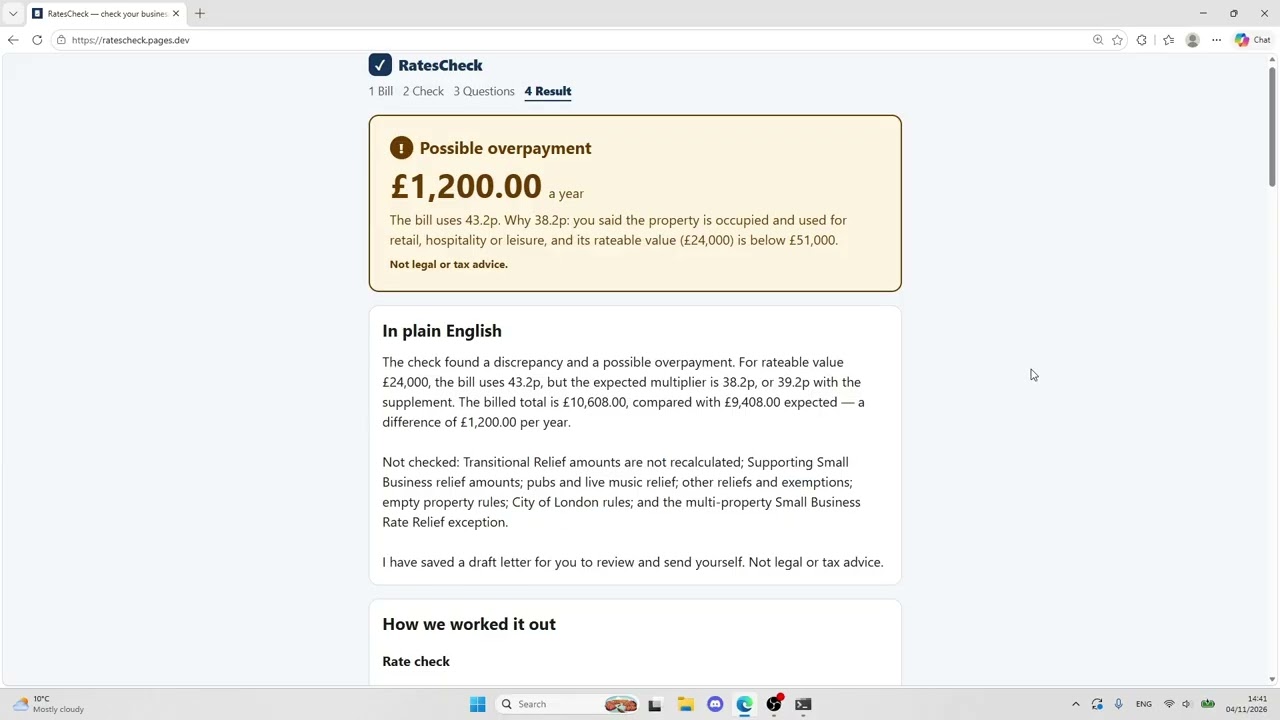
RatesCheck checks a small business’s 2026/27 business rates bill in England and drafts a letter to the council, but never sends it. From April 2026, England uses five business rates multipliers instead of two. The right one depends on the property’s rateable value, whether it is occupied, and whether it is used for retail, hospitality or leisure. The bill shows a single number with no explanation, so most small business owners cannot easily tell whether they have been charged correctly. RatesCheck lets an owner photograph the bill. Muse Spark 1.3 extracts the key figures with a strict JSON schema and returns null instead of guessing. The owner confirms the figures and answers five short questions. A deterministic rules engine, written in code rather than AI, recomputes the expected 2026/27 multiplier and charge from the government’s published rates and reports any possible overpayment in pounds per year. On the fictional demo bill it finds £1,200 a year. Muse Wonder then runs as an agent with tool calls. It explains the result in plain English and drafts a letter asking the council to review the bill, using only figures from the engine. Code verifies every £ and p figure in the letter, and Muse Spark independently reviews the explanation. Nothing is ever sent: the owner decides. An open-weight path runs the same extraction on Muse Spark Open via Baseten. Row-level security on all stored data. Per-user and global spending limits. A strict CSP, and no secrets in the client. 800 automated tests with mutation checks. All code was built during the hackathon (27 Oct–4 Nov 2026). Not legal or tax advice.