Sparta
Built at Meta Global AI Developer Hackathon · Oct 26, 2026 · Remote
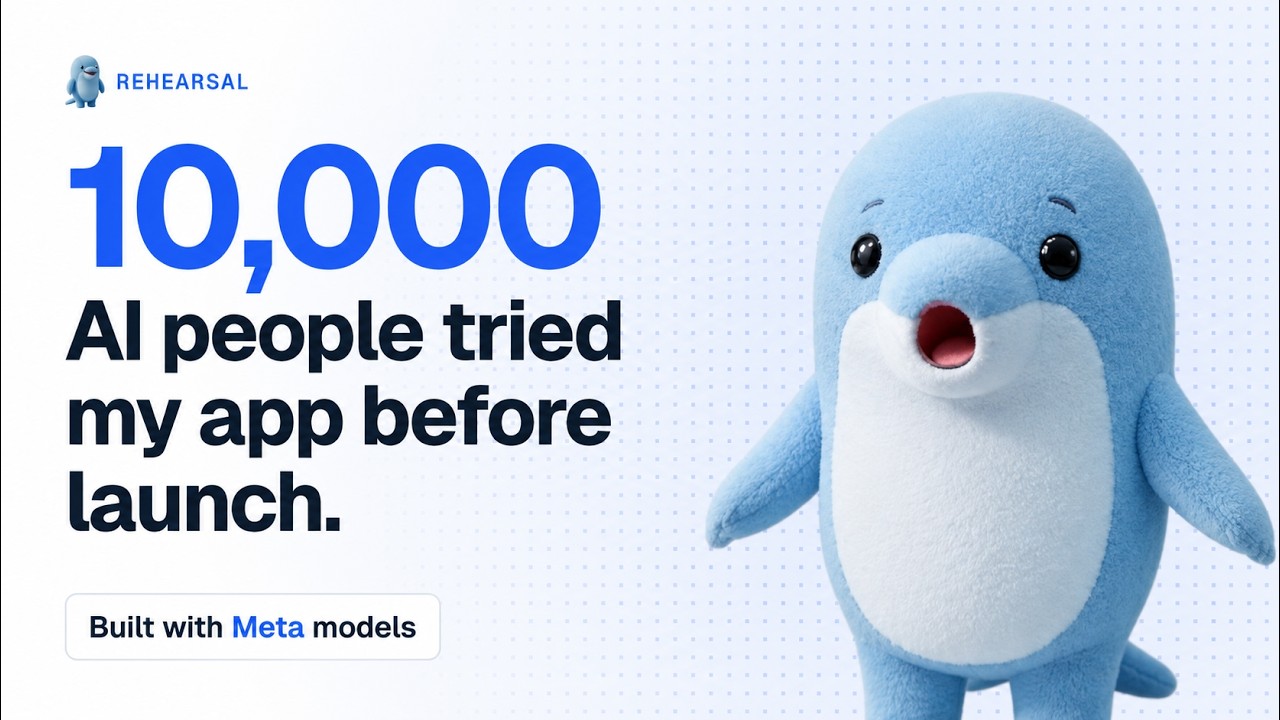
Rehearsal: rehearse your app's launch before you spend the budget. ◾️The problem: A new app spends its launch budget first and learns whether the plan worked months later. For apps that need two kinds of people near each other (daters, buyers and sellers, riders and drivers), the app is empty until both sides meet, so where and how you launch decides whether it lives. In our resale example, the same $40,000 brought 0 sales with nationwide ads and 1,837 sales launching Seattle then Portland, sellers first. ◾️What it does: You describe your app (its screens, price and up to three ads) and two launch plans. Thousands of simulated Americans live through 90 days of each: they see your ad, install, sign up, use the app, pay or leave, and each one says why, in their own words. You get the verdict, the funnel with each step's reasons, which ad worked on which kind of person, and any single person's story, whom you can question by voice. ◾️How: Muse Wonder designs the market's kinds of people from your screens. Muse Spark decides for each of them at every step, looking at the real screen images. Muse Glimmer, an open-weight 30B model we distilled from Spark, decides for every individual person in the dating example. A world engine moves everyone day by day on a US map, calibrated to public benchmarks, 30 runs per plan. ◾️Why trust it: We tested it on real launches, and locked in its answers before looking. The rules and the predictions were committed to git first; what really happened was added only afterwards. On 5 real two-sided launches it had never seen, it answered 16 of 20 growth questions correctly (such as "more trips in month 13 than in month 10?"). Always guessing "it grows" gets only 11. And every number on screen is counted by the engine, never written by a language model. Live demo: https://tokyosini573--rehearsal.modal.run Open weights: https://huggingface.co/Yesini/Rehearsal-Glimmer-30B-r1