Byte Busters
Built at Meta Global AI Developer Hackathon · Oct 26, 2026 · Remote
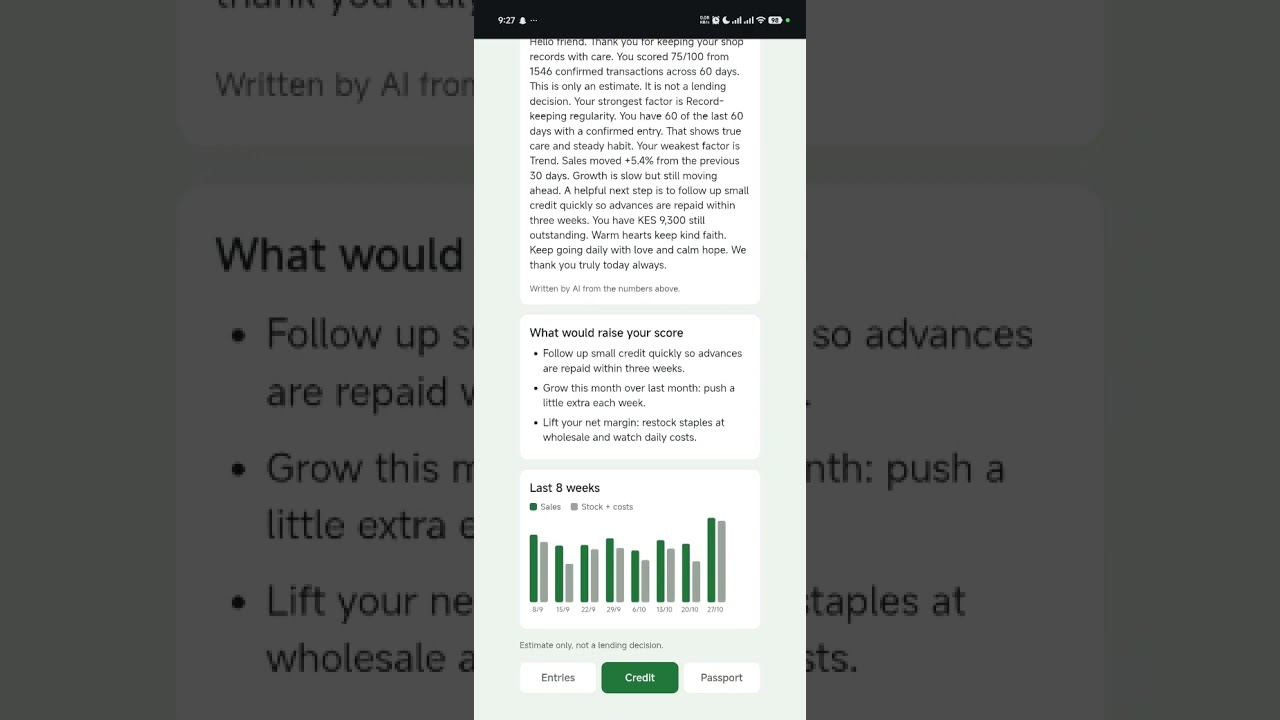
Kenya has about 7.4 million small businesses, yet according to a 2024 Stears report only around 16% can access formal credit. The usual reason is not that they aren't trading. A duka keeper may sell every day and still look invisible to a lender, because nothing she does is recorded in a way a lender can trust. Duka-Yangu closes that gap by letting shopkeepers keep records by talking. She says "sold five kilos of sugar for 800 bob". Muse Voice Transcribe turns it into text, and Muse Spark understands it as a structured transaction, including local phrasing like "bob" and "2k". The app reads it back, and nothing is saved until she confirms. Those confirmed entries become a ledger, and from it a credit-readiness score out of 100, with the five factors behind it and a deliberately conservative safe-loan estimate. The key design choice is that plain deterministic code calculates the score, never the AI. Muse Spark only explains the result in simple English, and every number in its explanation is checked against the real data, with a fixed template as a fallback. A score only helps if a lender can see it, and a shopkeeper shouldn't have to hand over her whole business. So she can share a Business Passport: a read-only summary link with an expiry date, a view log and instant revocation. It never exposes raw sales or customer names. Everything was built during the hackathon, between Oct 26 and Nov 3. It is a live prototype on synthetic demo data, with no sign-in yet. Next: phone-number accounts, Swahili voice, and testing with real shopkeepers and lenders.