Siwi
Built at Meta Global AI Developer Hackathon · Oct 26, 2026 · Remote
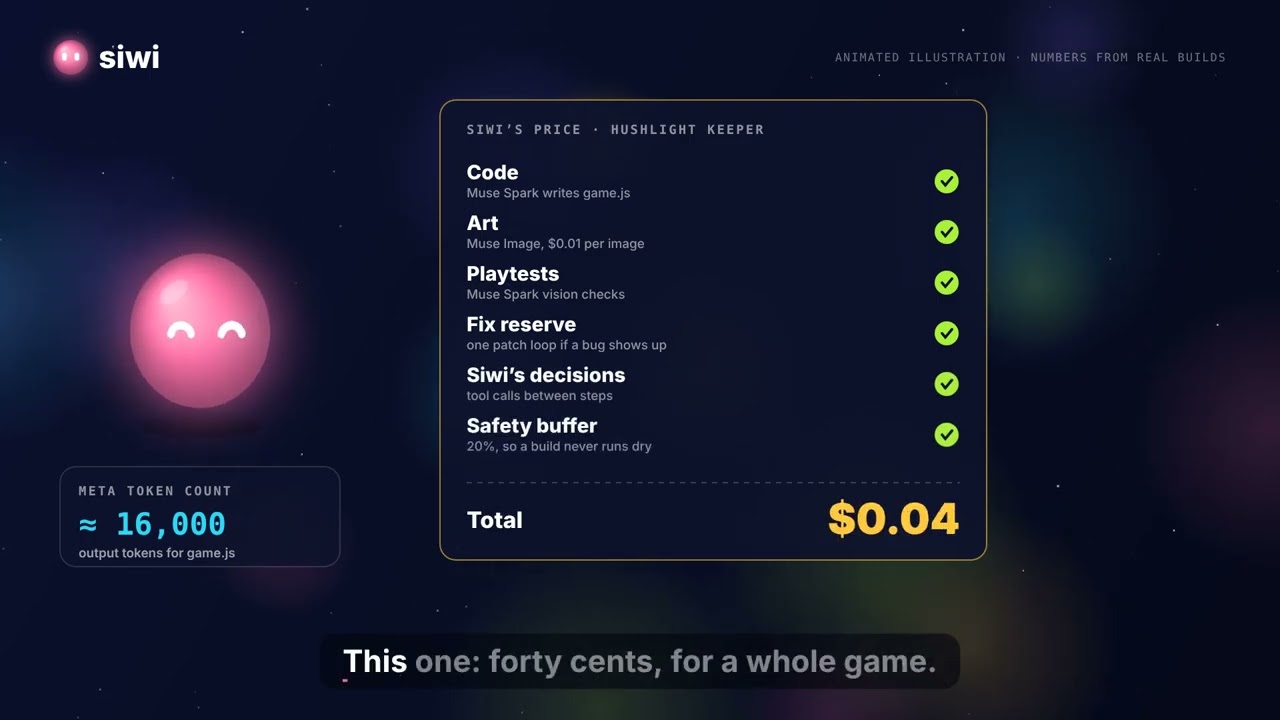
Siwi lets players make games together and own them. Gamers pay full price for games built by studios that don’t listen, and they get no say in the sequel. I’m a gamer and I’ve lived that. Siwi flips it: players fund the game, own it, and decide what comes next. Someone posts a one-line game idea. Other players upvote it and add details, pictures and even drawings; one kid’s drawing of a cloud kite became a real game. Siwi prices the build from Meta’s token counts. Players buy in and split the price: the first buyer covers it, each new buyer pays the price divided by the number of buyers, and earlier buyers get the difference back as credit, so going first never costs more. Then a crew of AI agents on Meta’s models builds it live. Siwi (Muse Spark) produces, Spark (Muse Spark) designs and codes, Pixel (Muse Image) paints, Tester plays it and judges screenshots, and Fixer (Muse Wonder) steps in if a bug survives. A playable browser game takes 2 to 4 minutes and about 20 cents, with touch controls on phones. Only buyers can play it. For a sequel, owners discuss it in the game’s thread. Siwi merges their wishes into one proposal, prices it, and the crew upgrades the game they already own into Season 2. What’s real: the agent crew, the art, the code, the testing and patches, and every price and build cost. What’s simulated for the demo: the money (demo wallets) and the other players. Games are stored in the browser, with no accounts. Live: siwi-siwi3.vercel.app · Code: github.com/aiiitsh/siwi Two things to check before you paste. I said Muse Spark Open “isn’t part of the live demo” because your notes say it’s still waiting on access; if Baseten approves it before you submit, change that line. I also didn’t mention the Muse Code coding agent, because I don’t know whether you used it. If you did, add a sentence about it to the second answer. https://drive.google.com/file/d/11yMb4qHWr3insVzeP2xE-XPiBLo4vgb5/view?usp=sharing