The Amplicons
Built at Built with Claude: Life Sciences · Jul 7, 2026 · Remote
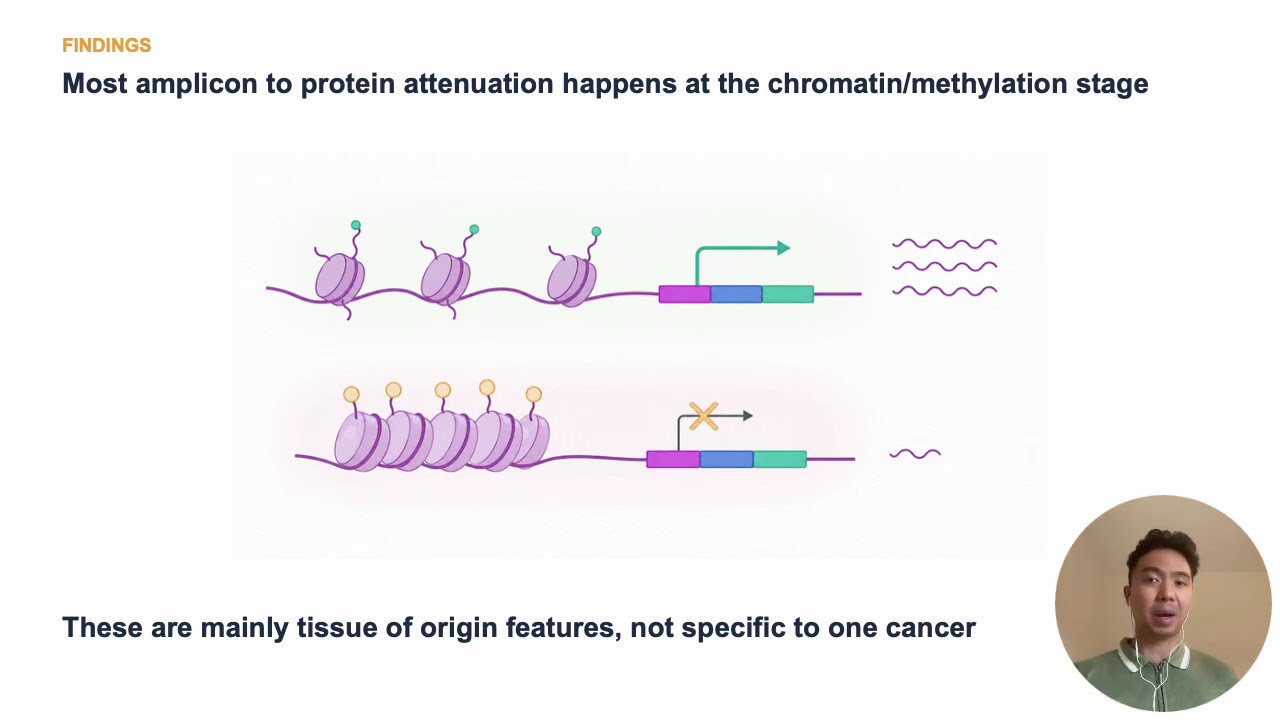
We are two medical oncologists in London who code. We spend our clinics telling people with cancer that we have run out of options. This hackathon was a chance to challenge that — with Claude — head-on. The idea starts with a quirk of cancer genomes. Tumours amplify chunks of their own DNA, early, and in the same places across thousands of patients. That repetition signals the tumour needs something in there — but amplification is indiscriminate, so a crowd of innocent passenger genes is dragged along too. Could we target these? Antibody–drug conjugates are the most targeted weapon oncology has: an antibody homes to the tumour cell and delivers chemotherapy directly to it. But they are brittle — the tumour stops making the single antigen you aimed at, and the drug fails. Newer formats carry several arms. So what if we aimed at several passenger proteins on the same amplicon at once? The catch: an extra gene copy rarely means extra protein on the cell surface. There are several steps between DNA and protein, and nobody had mapped which passengers actually make it through. We built that map. Over the week we used Claude Science to assemble terabytes of matched genomes and proteomes across six cancer types (CPTAC), promoter methylation, chromatin accessibility, ~465,000 malignant cells from CELLxGENE, and UniProt, DepMap, GTEx and the Human Protein Atlas. Three findings came out: 1. Whether an amplified gene reaches protein is decided early: methylation and chromatin accessibility matter far more than any property of the gene itself. Those settings belong to the tissue of origin, not the individual tumour, which means a construct built for one lung, breast or bowel cancer should work in the next patient carrying the same amplicon. 2. We can predict which genes will be amplified at protein level.. A model trained on gene properties alone — no protein data of any kind — recovers a gene's transmissibility at ρ = 0.52 (leave-gene-out). It is not just reading chromosomal position: holding out whole arms costs only 0.001, and the rankings agree across all six lineages (Kendall W = 0.97). So the map extends into cancers no one has profiled by proteomics — we did exactly that for glioblastoma, nominating constructs with no GBM protein data at all, and they held up across 390,761 single cells. 3. We can find targets. Our funnel narrows from 6,648 genes to 22 surface antigens on 18 recurrent amplicons, assembled into 10 multi-antigen constructs. In single-cell data, six of the eight we could test show their antigens on the same tumour cell more often than chance allows. Remove EGFR — the actual driver — from the lung 7p set, and the remaining passengers still co-detect at 1.30-fold (95% CI 1.13–1.47). The approach stands on the passengers, which makes it new. Every construct ships with the experiment already written: named amplicon-positive and amplicon-negative cell lines, and an explicit go/no-go at each step. We are aiming for preliminary bench data by September. We have circled this idea for years. Claude Science made it real in a week.

