Dokely
Built at Built with Opus 4.7: a Claude Code hackathon · Apr 21, 2026 · Remote
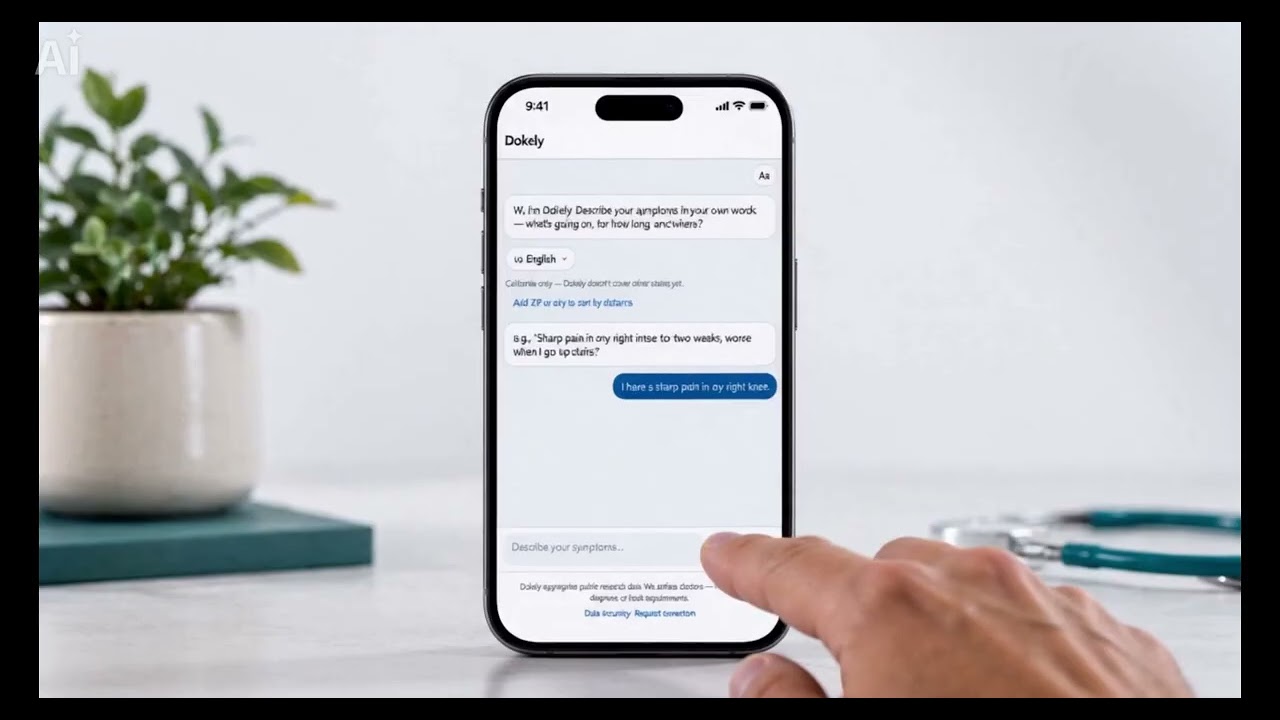
Deployment is complete. You can access Dokely directly at dokely.com. It is common for patients to feel lost when they are sick. Many do not know how to describe their pain, which specialist they should see, or what information actually matters before a visit. From the provider’s side, medicine has become highly specialized, so when the wrong case lands on the wrong desk, time is lost during transfers and the risk of misdiagnosis increases. Dokely is my attempt to bridge that gap between “patient language” and “doctor language.” I used Claude to help organize large scale U.S. public medical data and generate structured, evidence based physician profiles. The system works over public records for 156,113 California physicians, using sources such as NPPES, the Medical Board of California, OpenAlex, and CMS Medicare data. A patient can describe symptoms in everyday language, and Dokely converts that input into medical terminology, including MeSH based concepts, then matches it against academic papers, public physician records, and clinical billing patterns. The goal is not to diagnose the patient or recommend a doctor as if the system knows everything. Dokely is designed as a discovery tool, not a referral or booking service. It helps patients understand which physicians may be relevant to their situation and why, using transparent public evidence. It also includes red flag triage before any doctor card is shown, so emergency signals such as chest pain, stroke symptoms, or pediatric respiratory distress are handled as safety cases rather than ordinary search queries. Because Dokely does not hold private insurance contract data, it does not pretend to know whether a doctor is in network. Instead, it generates an insurance call script that patients can use to verify coverage, new patient availability, and cost estimates directly with insurers or clinics. This design choice matters to me: the system should be useful, but it should also be honest about the limits of its data. By connecting patient descriptions, medical terminology, academic evidence, and public physician records, Dokely creates a foundation that helps patients find a better starting point when it matters most.