Witnessed
Built at Meta Global AI Developer Hackathon · Oct 26, 2026 · Remote
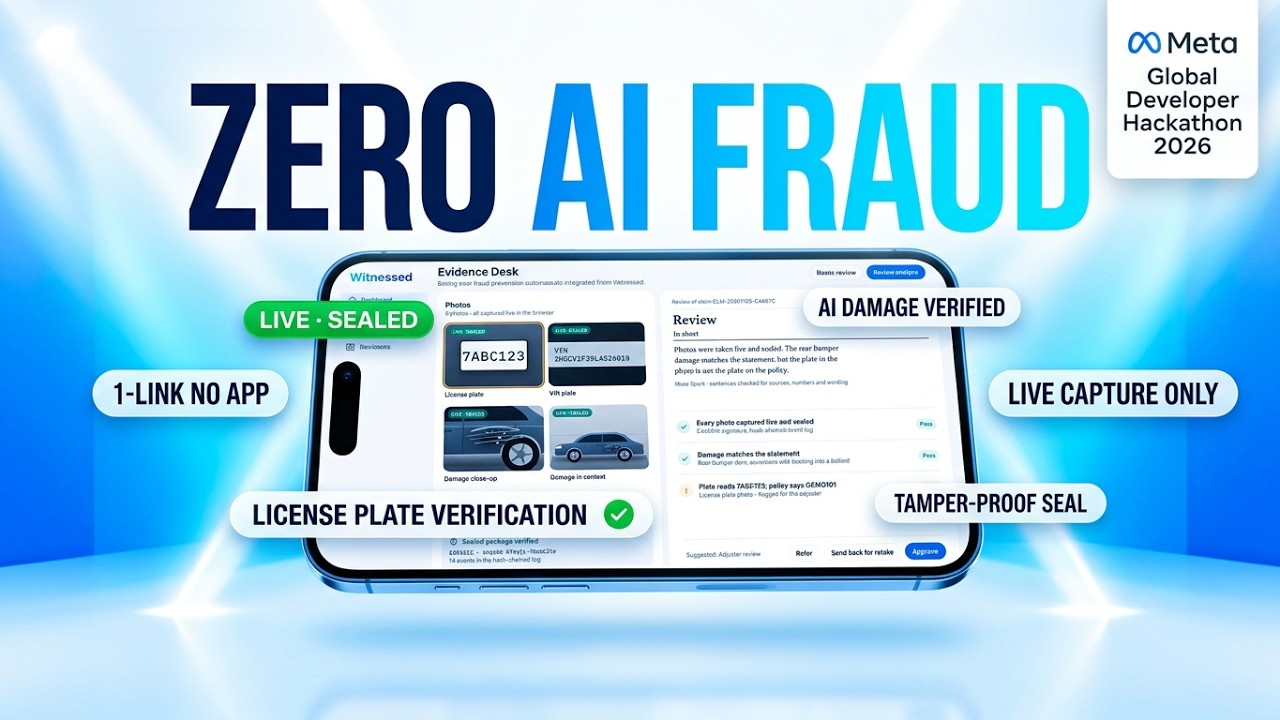
AI can now add fake damage to a car photo in seconds, and a real photo and an AI-edited one are nearly impossible to tell apart. Insurers that pay claims based on customer photos are exposed, and detectors that ask "is this photo fake?" keep losing as editing tools improve. We ask a different question: was this photo taken live, of this car, and does it match the policy and the customer's story? How it works: The insurer sends the customer a link. It opens in the phone's browser, with no app to install. The customer describes what happened and takes photos live from the camera. There is no upload button. Muse Spark reads every photo (license plate, VIN, odometer, damage, screen or print re-capture cues) and returns structured JSON. Code then checks each answer: the VIN check digit, the plate and mileage against the policy, and whether the damage matches the statement. A bad photo is retaken on the spot. The package is sealed with an Ed25519 signature and a hash-chained event log that anyone can verify. The adjuster gets one PDF report in their own claims system, with every flag tied to a photo and a reason. Design principle: the AI points things out, code checks them, and a human makes the call. Nothing is ever rejected automatically. Meta AI: Muse Spark (Meta Model API and Muse Spark Open on Fireworks) for every read and every piece of reasoning. SAM 3.1 damage outlining is built and tested. The code was written with Muse Code and Claude Code. Measured on real and edited photos (small sets, 95% intervals in the README): 0 wrong VIN or odometer reads, and 0 marked damage areas missed. Wrong plate reads (3 of 20) fail the policy match and reach the adjuster as flags. Live demo: https://phamdinhluu0712--evidence-capture.us-east.modal.run