Tunix
Built at Meta Global AI Developer Hackathon · Oct 26, 2026 · Remote
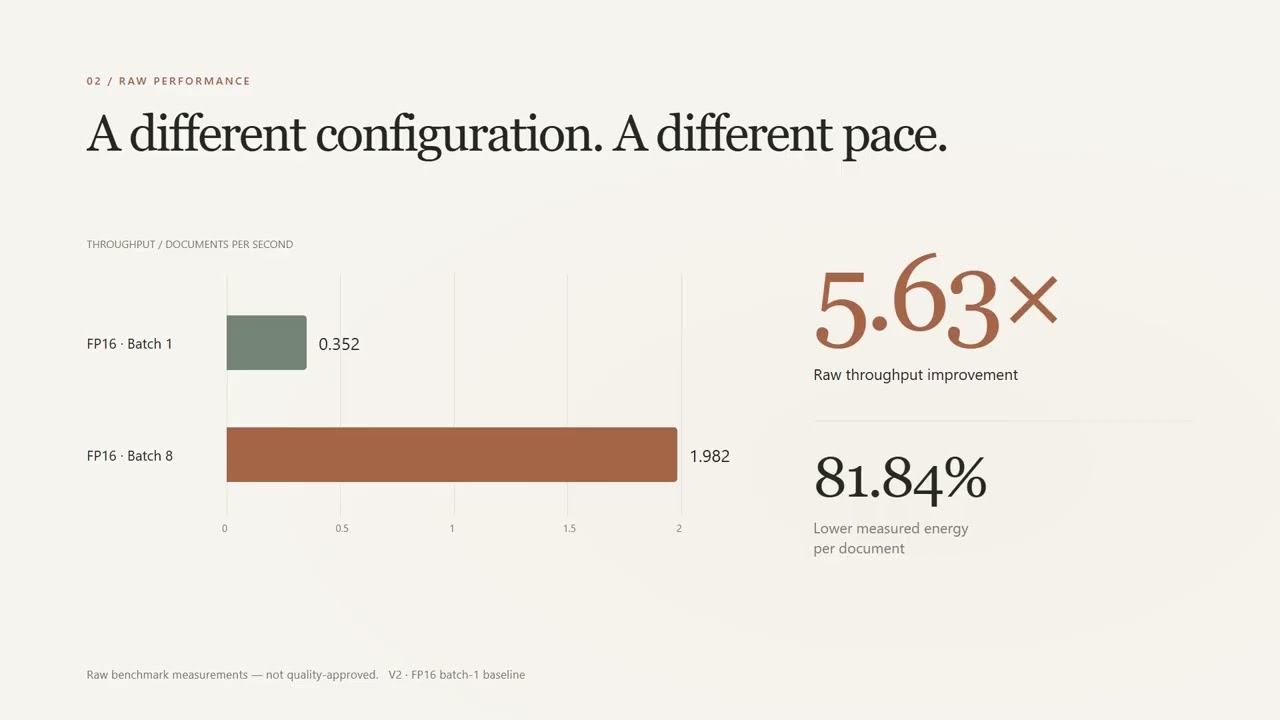
# Tunix — Make AI Faster. Without Sacrificing Trust. **What if AI models could run dramatically faster on the hardware developers already own—without blindly sacrificing output quality?** Tunix is a developer-first, Meta-powered GPU inference optimization agent designed to make artificial intelligence faster, more energy-efficient, and more accessible. Today, optimizing AI inference requires developers to manually experiment with precision, batching, attention implementations, and generation settings. Performance improvements are difficult to measure reliably, and faster execution can introduce subtle output degradation. **Tunix brings experimentation, measurement, and quality verification into one workflow.** Developers install Tunix directly into their Python environment. It detects supported GPU hardware, benchmarks real inference workloads, measures throughput and energy consumption, and generates auditable experiment reports. Results can be exported and imported into an interactive web workbench for comparison and investigation. At its core, Tunix integrates **Meta's Muse Spark** as an intelligent experiment-planning agent. Instead of blindly trying every configuration, its advisory planner uses real benchmark history to propose the next experiment worth testing. Recommendations remain subject to independent execution and strict quality validation. **Our real-world Tesla T4 experiment demonstrated:** - **5.63× higher raw inference throughput** compared with a competent FP16 baseline. - **81.84% lower measured GPU energy per document.** - **Perfect batch consistency (minimum token F1 = 1.000)** across the tested batch configurations. But Tunix's most important feature is what happens when speed isn't enough. When baseline summaries were found to be incomplete, Tunix **blocked quality approval rather than declaring a false optimization victory**. The performance gains are genuine measurements, but they are not presented as quality-approved deployment results. Our current MVP targets Meta Llama 3.2 1B Instruct on NVIDIA Tesla T4 GPUs, with a reproducible CNN/DailyMail summarization workload. The Meta experiment planner is implemented and tested, while successful live Meta API planning and automatic production deployment remain unverified. **Our vision:** Make trustworthy AI performance optimization accessible to every developer—from students using free GPU environments to teams deploying AI at scale. **Tunix. Performance is measured. Trust is earned.**