AURA RLVE
Built at Meta Global AI Developer Hackathon · Oct 26, 2026 · Remote
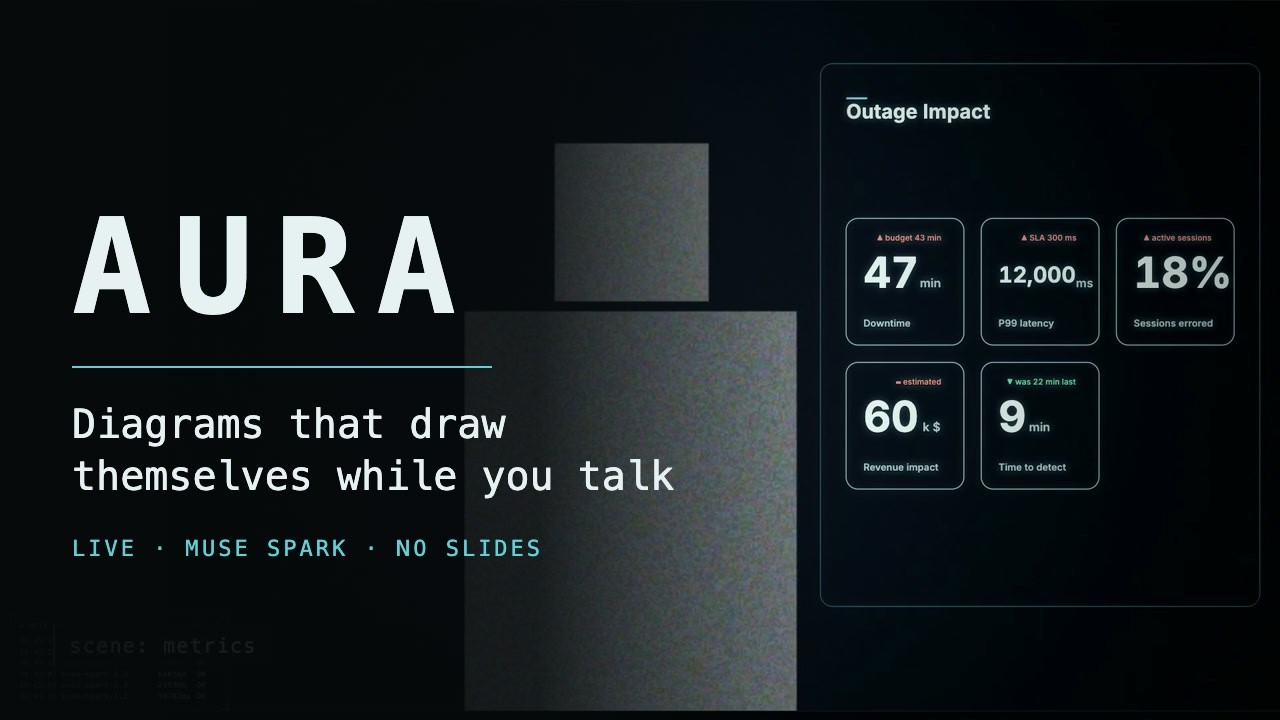
AURA replaces the slide deck. While you talk on a video call, it listens and builds the visual you’d otherwise have prepared slides for (an architecture diagram, a comparison, a timeline, a pipeline, a metrics panel), and places it beside your face like a heads-up display. It never covers your face. The problem: people who explain things on calls (engineers in design reviews, founders pitching, teachers, consultants) either spend hours making slides that go stale the moment the conversation moves, or they talk with nothing on screen and lose the room. Screen-sharing a deck also hides your face, which is the most persuasive thing on the call. How it works: AURA keeps a rolling window of what you said. Muse Spark 1.3 first decides whether this moment is worth a visual at all; “draw nothing” is a valid answer, so it doesn’t spam the screen with chatter. When it is, Muse Spark picks one of 14 scene types and writes a structured scene: nodes, edges, rows, numbers, steps. The server validates that against a strict schema before anything renders. A layout engine places the card in the free space around the speaker. The renderer assembles it with vector motion. A live call log on screen shows every Meta model call with its latency and status, so what you see is the real model working, not a recording. AURA runs in the browser with a small Node server that holds the API key. It needs no account and no install beyond npm start, and works with typed input when no mic is available.