RAN Sentinel
Built at Meta Global AI Developer Hackathon · Oct 26, 2026 · Remote
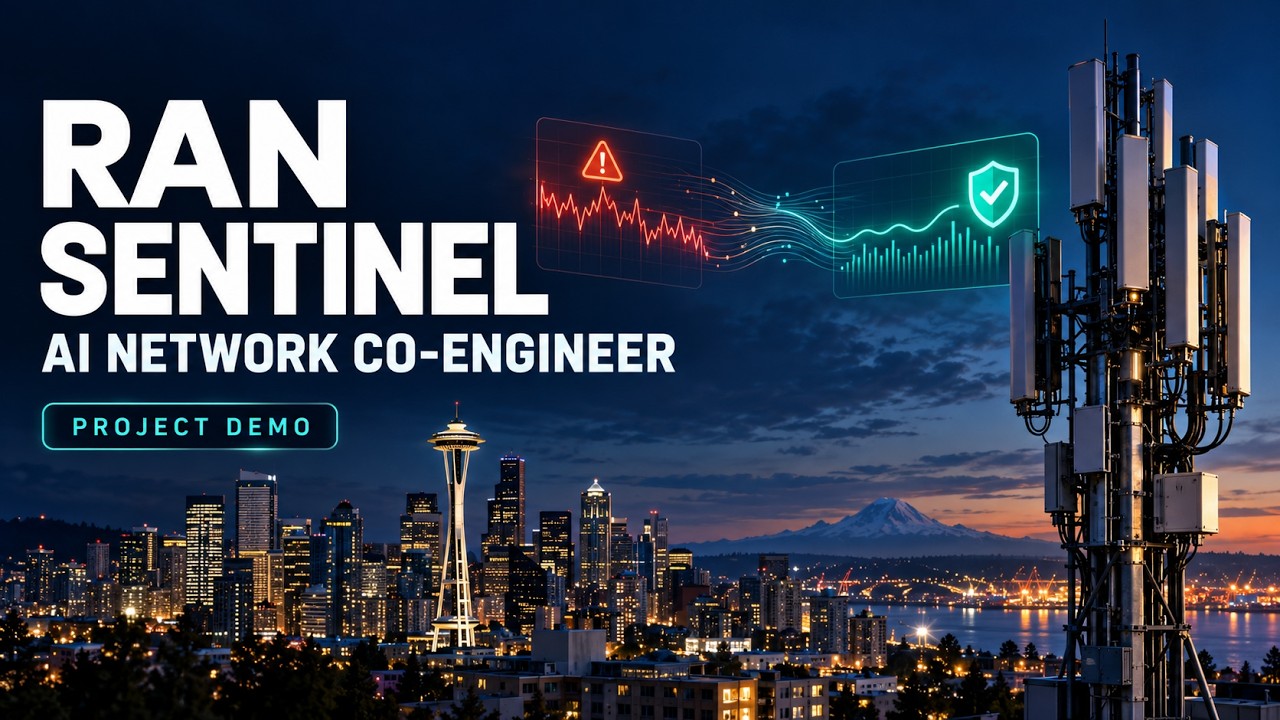
RAN Sentinel is an AI co-engineer for mobile-network operations, built from my experience configuring LTE cells and investigating network degradation. Engineers must correlate scattered KPIs, alarms and configuration details before deciding what to do, while affected customers often lack clear updates. The prototype monitors 36 simulated LTE cells in Seattle using threshold rules, Isolation Forest and a per-cell statistical baseline. Meta Muse Spark agents investigate alerts through read-only engineering tools, compare root-cause hypotheses and cite evidence. A diagnosis verifier checks required evidence and reported facts. When telemetry cannot settle a cause, the workflow can pause for field evidence rather than guess. The planner prepares a structured response with prerequisites and rollback. Deterministic safety rules, a twin what-if and a second-model review support the engineer’s decision. Approved configuration changes run against simulated radio units with recovery monitoring and automatic rollback. The Evidence-to-Action Safety Ledger makes investigations and decisions inspectable. Northstar Connect, a fictional customer app, connects the engineering workflow to understandable service updates, assistance and support requests. The goal is less repetitive evidence gathering and clearer customer communication, with engineers retaining control. The network, operator and subscriber are simulated; no production network is controlled. TelecomTS provides a separate detection benchmark. The code is MIT-licensed, with setup, tests and limitations documented in the repository.