Rypha
Built at Meta Global AI Developer Hackathon · Oct 26, 2026 · Remote
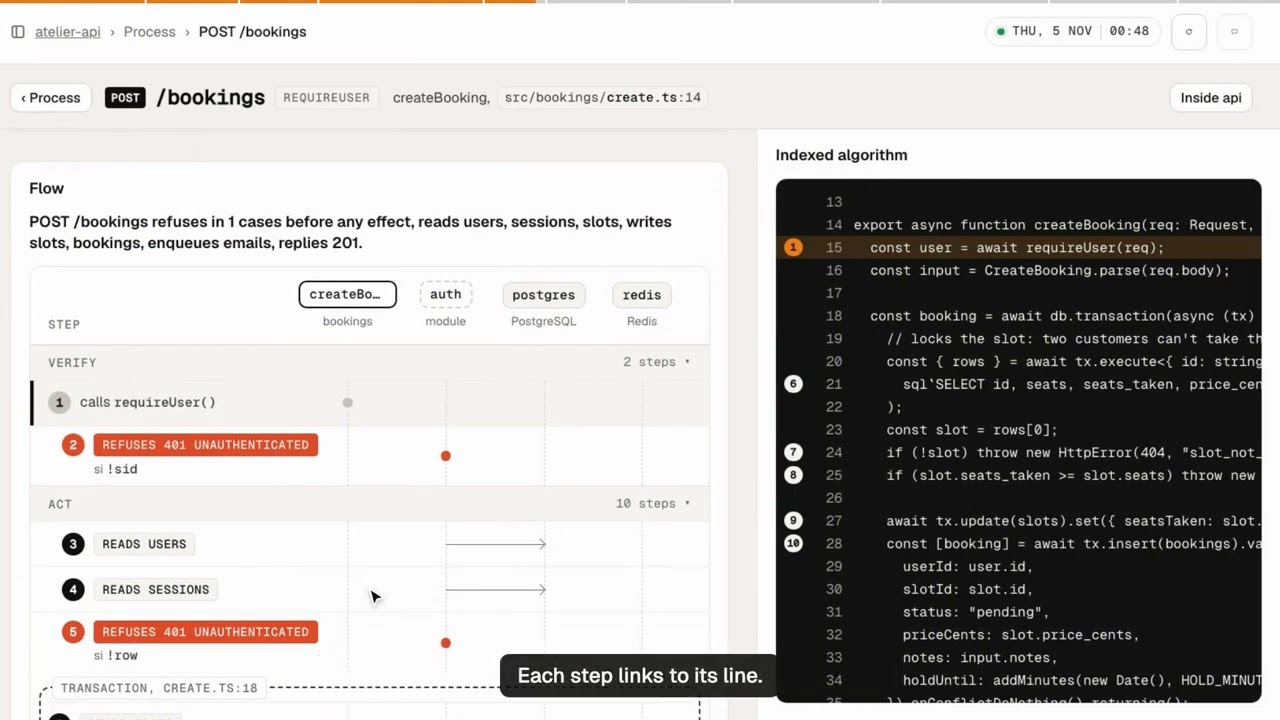
Coding agents now write most of our code. The risk is no longer a bad diff: it's shipping a black box, a system even its own team can't explain. VisionLayer reads any JavaScript/TypeScript repository (a local folder or a GitHub address), without any language model in that reading, and shows the system as it actually runs: a map of programs, resources and external services; processes (every status field, who changes it, from routes, signed webhooks and scheduled jobs, inside which transaction and behind which guard); each route's flow in code order; access, data, mechanisms and scheduled tasks. Every fact cites its file and line, and what it can't read is marked 'not read', never 'safe'. Then it keeps what agents knew. Coding agents (Muse Code, Claude Code, Codex) are linked over MCP in one click: they get the map as context instead of grepping, and they declare what the code can't say (business rules, decisions). VisionLayer anchors each declaration to the code and re-checks it at every analysis. Measured: one feature's full flow costs about 1,250 tokens instead of 6,600 to read the file; on the same task over 5 runs, 23% cheaper with 12% fewer model calls; on a large repository (31 runs), searches before the first edit fall from 11.5 to 7.6, but cost is not lower yet, and we say so. Vigie answers questions in words through VisionLayer's own tools, citing files and lines (under a minute, under 3 cents). The pack writer has Muse Spark write the pack for a missing technology from its documentation and test it before loading. Replays turn an agent's fix into an exercise: the failing test, the solution hidden, your own copy, then a comparison with what the agent did. Tested blind on 11 public projects: 7 read well. Open source (Apache 2.0), local first, 317 tests.