KV_ca$h
Built at Meta Global AI Developer Hackathon · Oct 26, 2026 · Remote
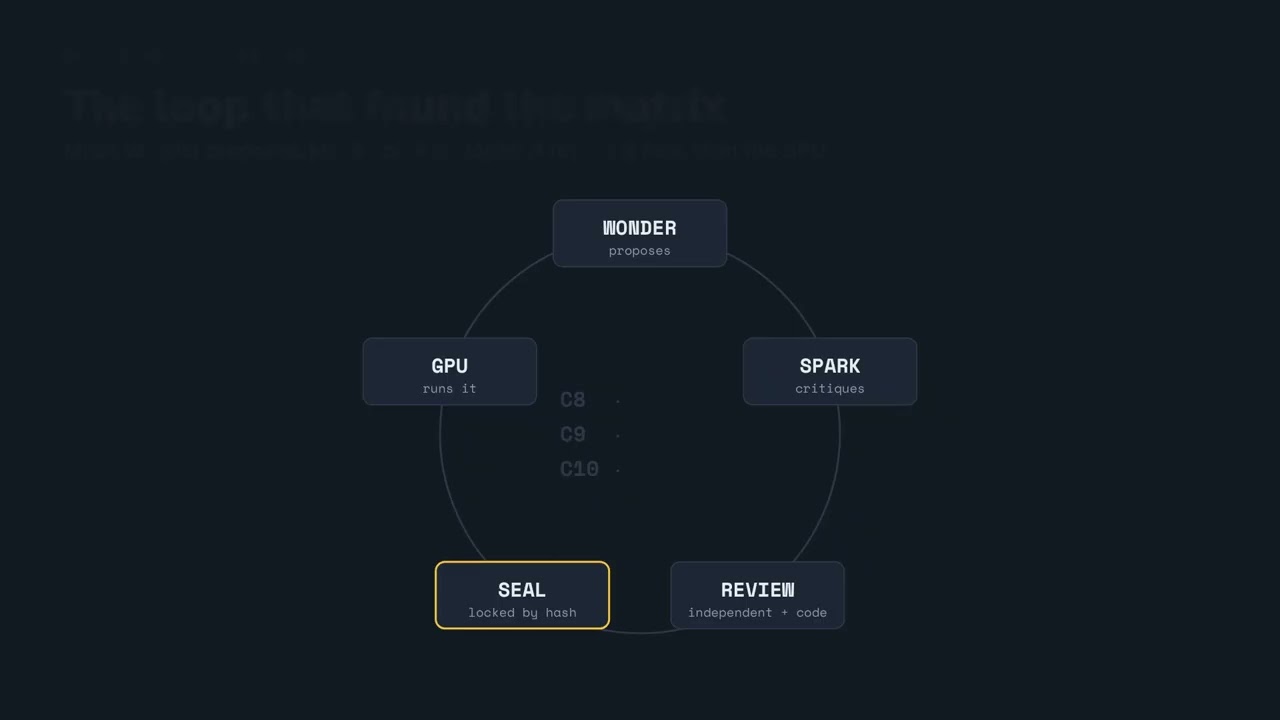
Language models have an internal frequency response nobody measures or controls. We played test tones through Muse Glimmer-30B, faint waves injected into its hidden states, and found its attention heads pass slow signals far more strongly than fast ones: the fastest wave keeps about a third of the slowest's strength, on all 15 books tested. We call that the lean. The dial: no built-in setting could change the lean, so we trained a small adapter with one dial. At 2x it flattens the lean by 24% for under 1% perplexity cost, and about half of it lives in a single matrix, layer 2's value projection. We also run it live on Glimmer: turn the dial and every head responds in real time, matching our sealed layer 2 result (74.3% live vs 73.7% sealed). The AI scientist: Meta's Muse ran the lab. Muse Wonder proposed the two experiments that pinned down the matrix, Muse Spark critiqued them, and every spec was sealed by hash before the GPU ran it. Muse can't make numbers up: each number it writes must match a cited result file, or a checker rejects it. Misses are reported as misses.