Kaung Zin Hein
Built at Meta Global AI Developer Hackathon · Oct 26, 2026 · Remote
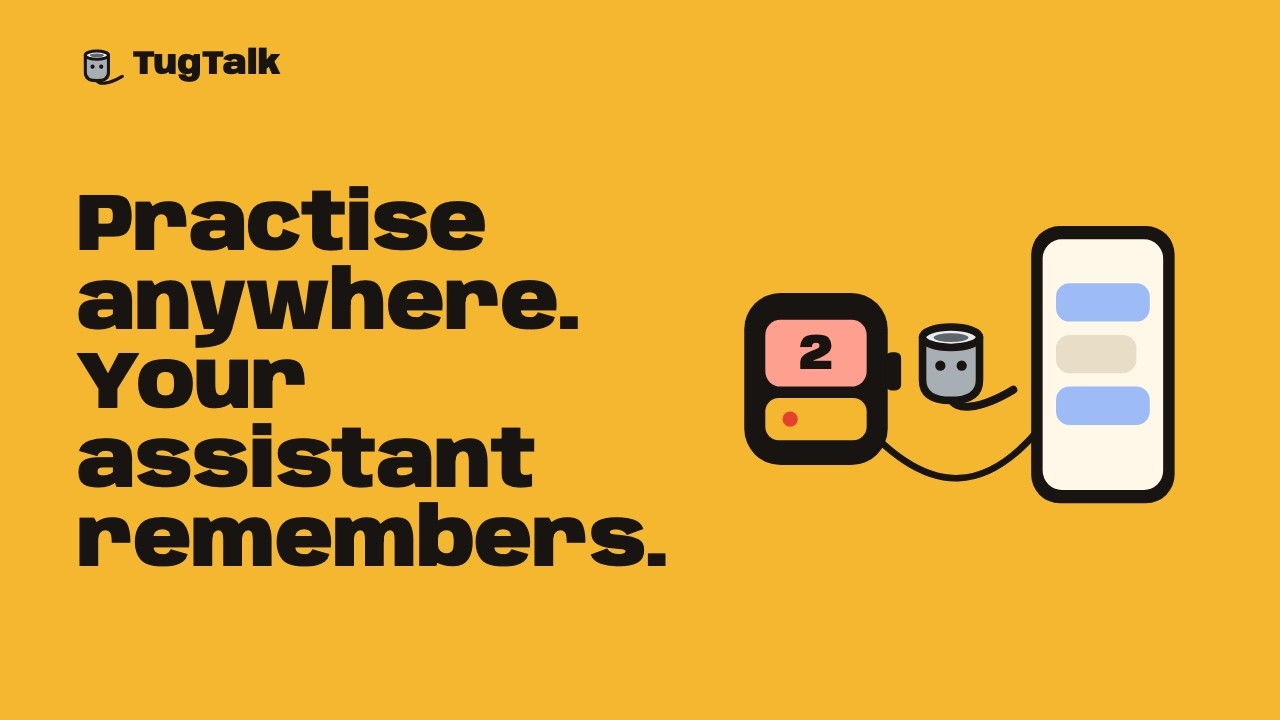
Practise out loud. Your assistant remembers. Communication practice for interviews, meetings, sales pitches and public speaking, based on how you actually talk. TugTalk is for people who rehearse out loud before the moments that matter, and who already ask Muse for help. I built it because what matters is how you speak and how you want to improve on it. But when practice lives in its own app, your assistant never sees it, so every new chat starts from nothing. TugTalk solves that context problem with one record synced across every device: practise on your watch, your Mac or the web, and Muse, the assistant you already use, reads it in any chat on your phone or laptop. Your next drill comes from your real speaking patterns, and you can practise it on any device. Record a short answer on Apple Watch or Mac. Meta's muse-voice-transcribe-1.0 writes down what you said, and the app counts your fillers ("um"), unsure words ("I think", "maybe"), restarts and pace. Muse Spark Open, Meta's open-weight model served on Baseten, then plays the other person: it asks one follow-up question and checks whether you covered the points you set for this practice. Everything joins one record. Muse reads that record through a custom connector, so any new chat on your phone or laptop knows what you practised and what to work on next. A public web dashboard at tugtalk.live/app shows the same record, with the recordings. The models suggest; the app checks. Every quote and every piece of evidence the model gives must match your own words exactly before it is saved or spoken, and a retried upload never pays for the models twice. Why it matters: getting better at speaking takes many short reps, and feedback only helps when it remembers your last try. Generic tips don't change your habits, and most practice tools forget you the moment you close them. With one shared record, a fresh Muse chat on your phone can quote the answer you just gave on your watch, point to the habit it showed, and save a drill built from it, so your next practice starts where the last one ended, on whichever device is in your hand. How it works with the sponsor tech: Meta's speech-to-text (muse-voice-transcribe-1.0, Meta Model API) writes down every answer, from the watch's recording or live on the Mac. Muse Spark Open, Meta's open-weight model served on Baseten, plays the other person and checks each point you wanted to make. Muse, Meta's assistant, is the agent that carries it all across devices: through our custom TugTalk connector it reads and updates your goals, sessions, practice rounds and drills, and every save returns a receipt, so it never claims a save that didn't happen. Wit.ai speaks the follow-up question aloud, and Modal hosts the API, its database, the landing page and the dashboard. Try it: https://tugtalk.live (landing) and https://tugtalk.live/app/ (dashboard, open without signing in). Mac app: https://github.com/Zen-cronic/tugtalk/releases/tag/v0.9.1-mac