Dream it. Ship It
Built at Meta Global AI Developer Hackathon · Oct 26, 2026 · Remote
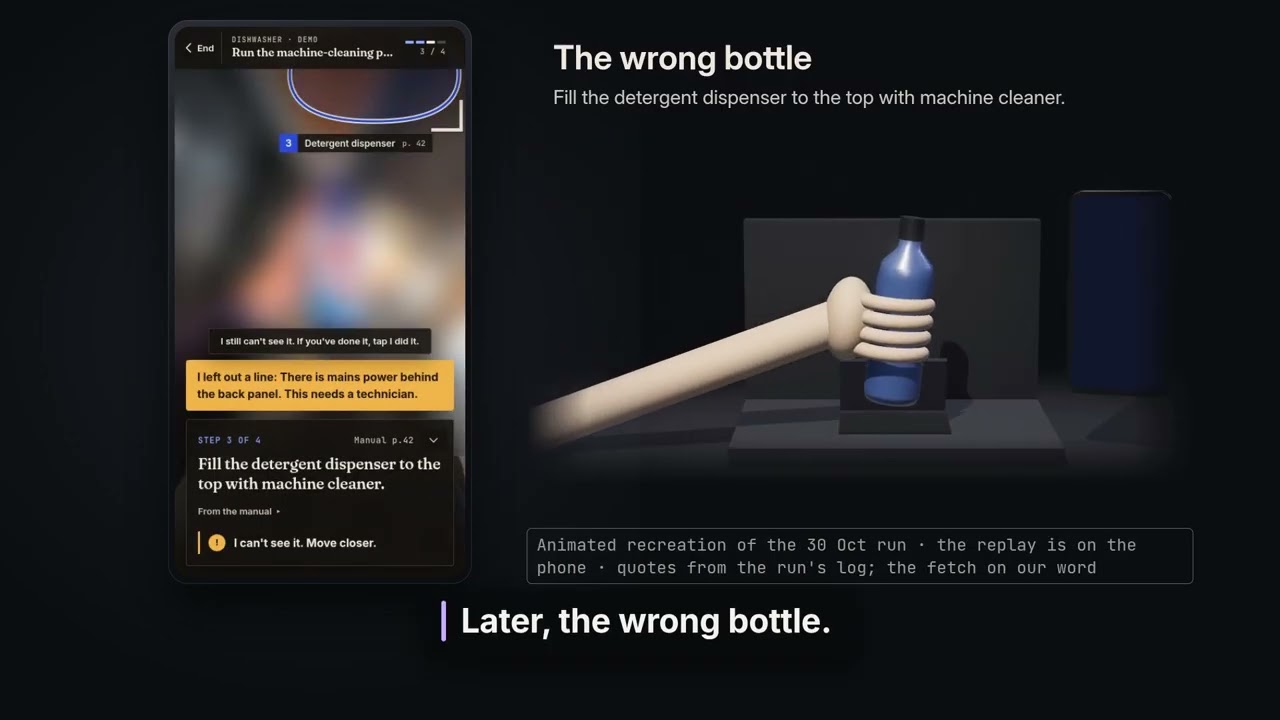
Your dishwasher won't drain. Often the fix is a filter you could clear yourself, if you knew which part the manual means and could be sure you had done it right. Otherwise a technician is called out before anyone touches it. Fix-It Lens is an upkeep and repair guide for the appliances in your own home. Photograph the type plate and it finds the maker's manual, or opens the maker's page so you can share the PDF. Muse Wonder reads the whole manual and drafts a repair card. Code then checks every quote on that card against the PDF's text on its cited page, and drops any that fail. Due dates come from the manual's interval and your own last-done date, never from a model. They reach you as a phone notification, a calendar feed and a Home Assistant to-do, and any agent can ask what is due over MCP. When a job is due, point your phone at the machine. Muse Spark guides you one step at a time, in Dutch or English, with the manual page cited. SAM 3.1 outlines the part on the live image. A step closes in one of two ways, and the record keeps them apart. The camera passes it, which needs a separate judge model and SAM's own look at the part to agree, with the verdict computed in code, not by a model. Or you say "I did it", which is offered on every step unless a safety hold or stop stands: the job moves on, and the step is recorded as confirmed by you, never as checked. Safety is code, not a prompt: - jobs on gas and mains parts are refused by country rule files; - every sentence passes a filter before it is spoken or shown; - the phone itself turns the screen red when a hand nears a red zone. If you run it on your own computer and the API fails, the repair carries on with Muse Glimmer on your own GPU. The first checked card is for the real Bosch dishwasher in my kitchen, from the maker's Dutch manual: 64 pages in, 8 jobs and 46 steps out, 87 of 87 quotes passing the citation check. We ran its Machine Clean job to the end in our own home, on the live server, for $0.665 in model calls. That is one session, so one price and no average. The camera held the first step back several times, then passed it. I confirmed the other steps myself, and the app records them that way. The numbers include the misses. Every number in the README comes from eval/claims.json. On a sealed set the filter never saw, it wrongly held back 29 of 300 safe sentences, against a target of at most 3. On 12 manuals nobody prepared, cards are built and code-checked automatically, and 11 passed the code checks. They are still being improved: by our own read, 0 of 12 could yet be followed end to end. The camera step check has no accuracy number yet: that row is registered and still empty.