Say Again
Built at Meta Global AI Developer Hackathon · Oct 26, 2026 · Remote
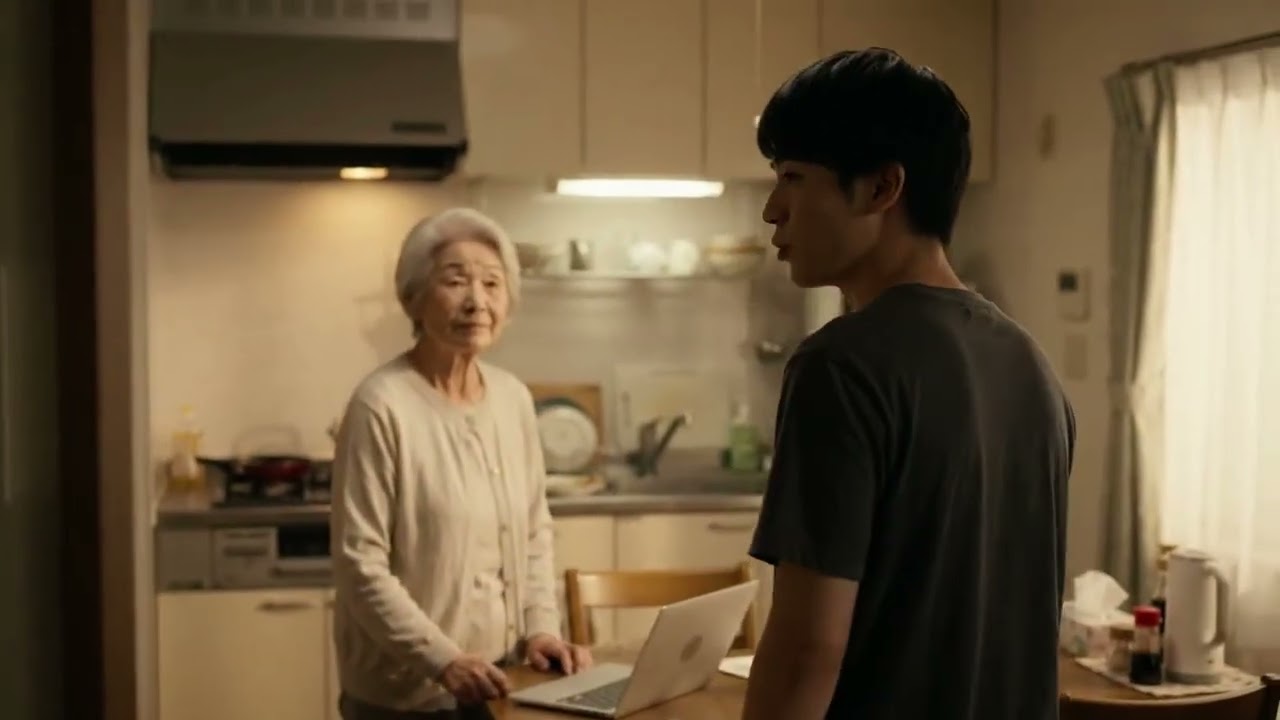
What it does At a family dinner, with the range hood running and dishes clattering, an older listener misses a sentence and says "huh?". Someone repeats it louder, then again, and after the third time many people stop asking. More than 1.5 billion people live with some degree of hearing loss. Say Again sits on the table and listens. When anyone says "huh?", "sorry?" or "え?", it rewinds the room a few seconds, pulls the missed sentence out of the noise in the voice of the person who said it, and plays it again a little slower. Nobody has to enroll their voice first. A large caption screen shows the same sentence with the important words marked, such as a time or a place. A second "huh?" shows a plainer version, marked as an AI paraphrase. It works in Japanese and English. How it works 1. Microphone audio is kept for 60 seconds in memory and streamed to Muse Voice Transcribe. Because we keep exactly the samples we send, the transcript's turn times point straight into our buffer. 2. A "huh?" is found from the words, or from a short utterance whose pitch rises at the end (our own pitch tracking). 3. The missed sentence is picked by rules, not by the LLM: the latest turn by someone else. 4. SAM Audio separates every turn as soon as its transcript arrives, prompted with time spans from the transcript instead of a voice sample, so the replay is already under way when "huh?" comes. 5. The voice is slowed to 0.8x without changing the pitch (WSOLA, our own code). Muse Glimmer marks the key words and writes the paraphrase in parallel. What we measured - "huh?" to replay start: 0.5 s in Japanese and 1.0 s in English, streaming kitchen test scenes to Muse Voice Transcribe in real time. - Separation on kitchen-noise scenes (synthetic voices, SAM Audio small, RTX 5070 Ti): SI-SDR -0.2 to 11.5 dB in Japanese and -0.4 to 7.2 dB in English, about 1.3 s per run. With a TV voice instead of kitchen noise there was no gain. - Separation does not help machine transcription, so Say Again always transcribes the original audio and the separated voice is only for the listener. We have not yet tested with human listeners. - Muse Glimmer: 4.5 to 5.2 s per answer. Safety and limits Not a medical device, and it keeps no record of how often anyone asks. It can pick the wrong sentence or mishear words, so the screen says to check medicine, money and appointments with the person. Audio is never written to disk. For adults, and everyone in the room should know it is running. Details are in PRIVACY.md. Built during the event The idea was sketched before the event. All code in the repository was written from an empty folder during the event, starting October 27; the commit history shows it.