Usher By Looma
Built at Meta Global AI Developer Hackathon · Oct 26, 2026 · Remote
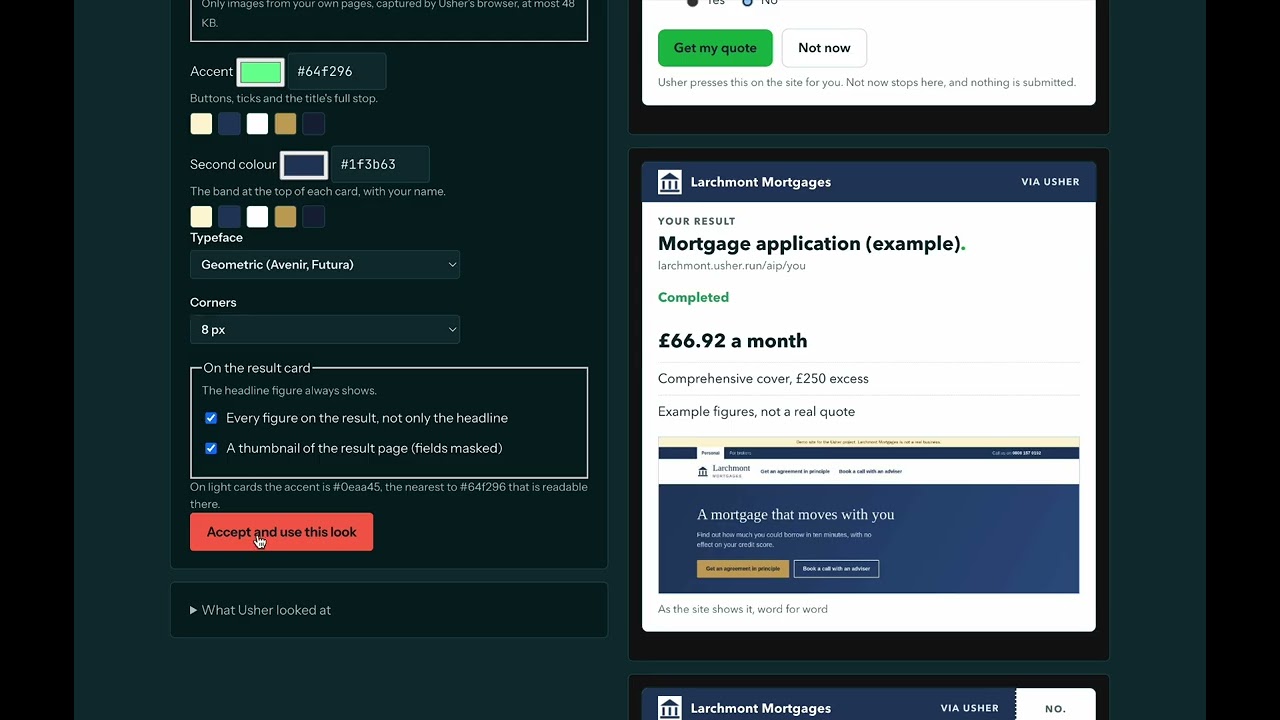
AI assistants are starting to fill in forms for people, and for many businesses that is a compliance problem. They need to know that customers saw important documents and gave or validated key information themselves. We watched ChatGPT complete a mortgage form: it took two and a half minutes, guessed answers, put three questions into one box and never showed the customer the key information. The business had no way of knowing whether the customer agreed to the terms, or to submitting. Many businesses also want a presence in AI assistants but don't have the resources to build one. Usher is built for both. A site owner adds one script tag, with no API to build. At the owner's request, Muse Spark walks their site like a customer would, using a made-up test person, and builds a map: what each field means, how risky it is, and who answers it, the agent or only the customer. Maps hold structure, never values, and nothing anyone typed is logged or stored. The model labels and the code locates, so a model never writes a selector. The owner checks the map page by page and corrects it in plain English. Rules work the same way: Muse Spark turns them into policy. It also reads the site's own pages and proposes its look. With one click, the site has its own branded MCP app in any assistant that speaks MCP; we tested in Claude and ChatGPT. In a usability test, a tester went from joining to published in about 20 minutes. When a customer asks their assistant, it uses the site's own app, and Usher fills the safe fields on the real form. Questions only the customer may answer go to them on a card, in the site's own words, and the final button is theirs too. The site's server then checks a signed, short-lived token. In our demo, the same mortgage journey took just over a minute, including the customer's replies. The owner gets a record. The dashboard shows every agent that came through Usher, each step, which fields were filled and what the customer agreed to, but never what they typed. Muse Spark explains any session in plain English. Usher isn't a wall. The server refuses a submit with no token from any agent it can identify. One that looks like an ordinary browser gets the same path a person does, unless the site's CDN or bot detection catches it. Meta's models do most of the work. Muse Spark compiles maps, turns rules into policy, proposes each site's look and explains sessions. Muse Spark Open gives a second opinion on every field's risk, and the stricter answer is kept. We tuned Muse Glimmer with LoRA on an H100, on 490 of Muse Spark's labels. On forms it had never seen, it matched 61% of them; untuned Muse Spark Open scored 68%, so it stays off in production. Owners' corrections will outrank model labels in the next run. Usher is an open protocol (code Apache-2.0, specs CC BY 4.0); anyone can run it with one command, npm run local. Looma plans to sell setup and publishing as a service on top. Try it at https://usher.run