watchverify
Built at Meta Global AI Developer Hackathon · Oct 26, 2026 · Remote
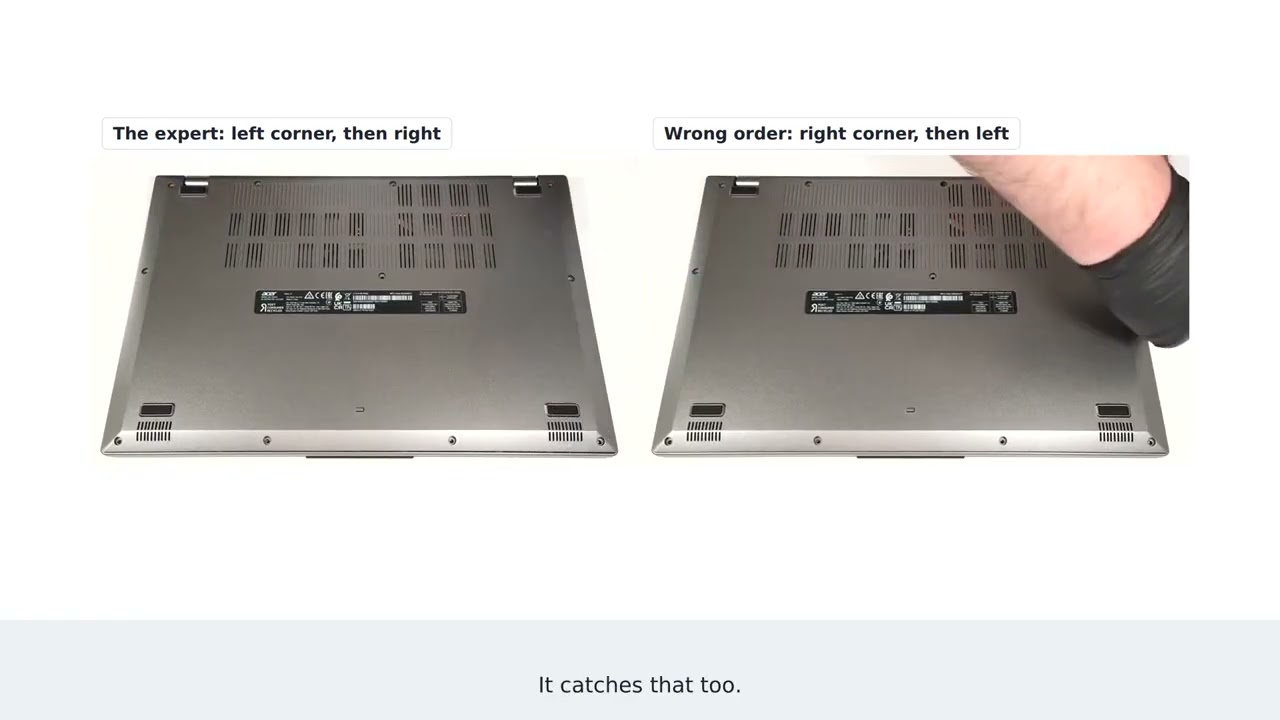
A skipped step leaves no trace. In January 2024 a door plug blew out of Alaska Airlines flight 1282 because four bolts taken out during a repair were never put back. Plenty of hands-on work is already filmed (repairs, assembly, lab work), but nobody has time to watch it. watchverify: film an expert doing the job once. Muse Spark 1.3 watches that video, picture and sound together, and writes a checklist of steps a camera can check, plus what a camera can't prove (like whether clips inside are damaged), so it never pretends. SAM 3.1 follows each tool and part through the video, giving every step a time and a picture, and Muse Voice Transcribe writes down what the expert says. It checks the expert's own video first, so a step the camera can't show is never blamed on the next person. Then every new recording of that job is checked step by step: each step passes, is called missing or out of order, or goes to a person with the exact moment to look at. The AI only describes what it saw; plain rules in code make the call. A check costs about 9 cents, with a hard spending cap on every paid call. Does it work? I tested it on six openly licensed videos it had never seen. Code cut steps out or swapped them, so the right answers were known before it looked, and each copy was checked once. Of 26 cut-out steps it flagged 21: 8 called missing outright and 13 sent to a person to look at; 5 got past it. Of 19 swapped pairs it called 7 out of order. 5 of 6 untouched copies passed clean, but about one fine step in seven gets a "person should look" anyway. So today it's a reviewer's assistant, not an inspector: it tells a supervisor which recordings to watch, and where. The test is built not to flatter it: the AI never sees the answers or even the file names (a test fails if anything leaks), every AI answer is saved, and anyone can re-score every result offline from the repo. It also exposed a real blind spot: Muse Spark tends to count a step as done when only its result is on screen (the cover is already off, so "take the cover off" passes). Where it fits: checking work video against a procedure is already sold (Retrocausal, PowerArena, DeepHow), which says the problem is real. What this adds: setup from one expert video, with no hand-labeling and no training, and an open test anyone can rerun, false alarms counted. Next: telling one bolt from another, hour-long recordings, and steps people really skipped instead of cut video.