Muse Shopping
Built at Meta Global AI Developer Hackathon · Oct 26, 2026 · Remote
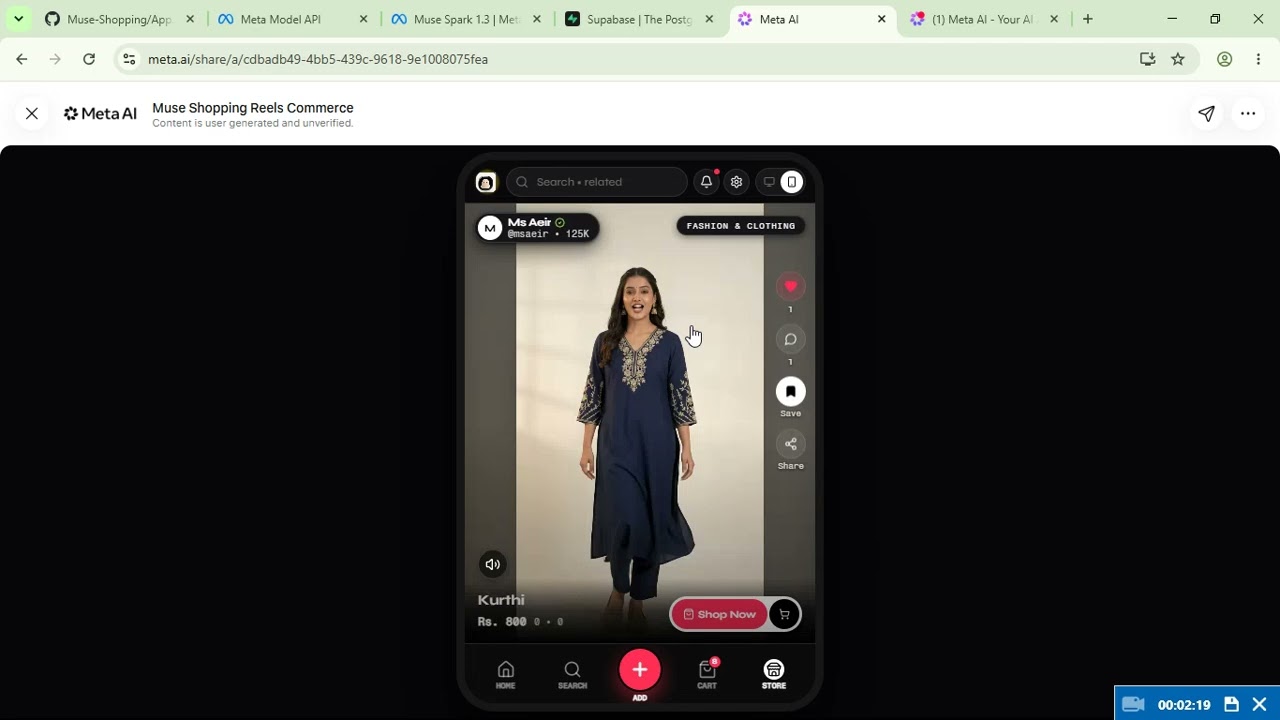
# Muse Shopping **International, AI-powered social commerce that transforms short-form videos into shoppable storefronts.** ## The Problem Millions of creators on TikTok, Instagram, Facebook, X, and YouTube generate significant views and audience engagement but lack a simple, independent platform to sell products directly. Many creators share personal Gmail addresses or phone numbers in their social media bios to receive business inquiries, creating privacy and security risks. e-commerce platforms such as Shopify, Amazon, Daraz, and Meesho can involve upfront costs, subscriptions, or complex store management processes. ## Our Solution: Three Core Principles **1. Zero Monthly or Yearly Fees** Creators and sellers do not pay monthly or yearly subscription fees to maintain their stores. Muse Shopping follows a success-based business model: the platform earns a service fee only after a successful purchase. No sale means no platform service fee. **2. Verified Creator Onboarding** Creators can submit their social media profile links and complete identity verification to apply for a verified digital storefront. The goal is to provide a trusted business presence without requiring creators to expose personal contact information publicly. **3. Short-Form-First Commerce** Muse Shopping focuses on short-form videos, Reels, feeds, and product images. Its shopping experience is designed around quick visual discovery and interactive product engagement rather than long-form video content. **4. Demo Muse Shopping ** https://www.meta.ai/share/a/cdbadb49-4bb5-439c-9618-9e1008075fea https://github.com/mahendrapy/Muse-Shopping/blob/main/README.md https://youtu.be/wjtb3nslaKo?si=VLwYJZYJ_AIoSIrQ ## How It Works 1. **Creator Upload:** A creator uploads a short product video or image. 2. **AI Product Detection:** Meta SAM 3.1 supports object detection and segmentation within visual content. 3. **Interactive Buy Tags:** Detected products can be connected to catalog entries and displayed as interactive shopping tags. 4. **Watch and Shop:** Buyers swipe through the visual feed, tap product tags, explore product details, and place orders. 5. **Localized Payments:** The platform's payment vision includes eSewa, Khalti, Fonepay QR, and COD in Nepal; UPI in India; and supported international payment providers such as Stripe. 6. **Revenue Distribution:** The intended revenue model distributes the transaction between the supplier's product cost, creator earnings, and Muse Shopping's service fee after a successful sale. ## Meta AI Integration - **SAM 3.1:** Object detection and segmentation to support visual product identification. - **Muse Image:** Intended for AI-assisted visual product understanding and image workflows. - **Muse Spark:** Intended as an AI co-pilot for product descriptions, creator scripts, and hashtags. - **Muse Code:** Used as a coding assistant to support development of the swipe-feed and shopping workflows, where applicable. **Technology Stack:** Next.js, Tailwind CSS, Supabase, Meta Model API, and SAM 3.1. **Supabase** is used as the backend infrastructure for database management and data storage. It supports the application's backend needs, including user accounts, creator storefront information, product catalogs, and shopping-related data. Meta's SAM 3.1 and Meta Model API power the AI-driven product discovery and video-based shopping experience. ## Vision Muse Shopping aims to connect creators, suppliers, brands, and buyers through a global, short-video-first commerce ecosystem. Our mission is simple: **Watch a product. Discover it. Buy it.** We want to help creators turn their audience and creativity into business opportunities without upfront subscription costs.