Teamvejimil
Built at Meta Global AI Developer Hackathon · Oct 26, 2026 · Remote
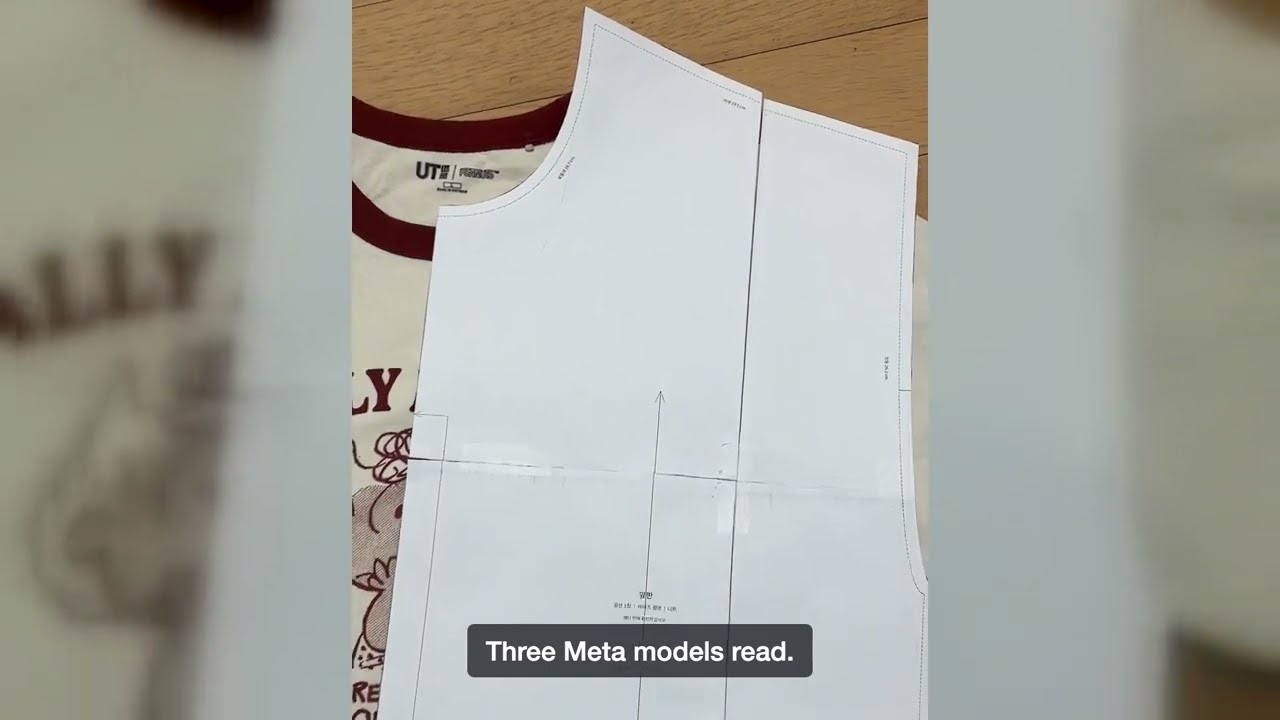
Rub-Off turns one photo of a garment, lying flat with an A4 sheet, into a sewing pattern you print at full size and cut, a size decision against a shop's measurement chart, a cutting layout on the fabric you own, and an alteration order a tailor can work from. Every centimetre comes from geometry and rule tables; no number comes from a language model. The demo video prints the pattern, tapes it, and lays it on the shirt it came from. "Rub-off" is the sewing term for copying a finished garment into a pattern. I study clothing and textiles, and by hand it takes me one to two hours with pins and paper. In Korea, online shops post flat measurements for every item, and shoppers check them against a garment they own with a tape measure. Home sewers copy a garment that fits, one-person brands start a tech pack from a sample, and anyone shopping online checks a chart against a shirt in their closet. In every case the starting point is a garment you already have, which is why a photo of it is enough. Muse Spark says, from fixed options, what the item is, which way is up, knit or woven, and which single noun to hand SAM. SAM 3.1 cuts out the garment, its sleeves, hood, pockets and the sheet, and Spark then looks at those masks coloured and numbered and says which sleeves lie flat and what each pocket is. Everything after that is geometry: the sheet's corners map the photo onto the floor in centimetres, perspective included, and each measurement carries its own ± in centimetres. A front and a back photo are merged value by value. The pieces are drafted with per-edge seam allowance, grainline, notches and the sleeve cap solved to the armhole, seams that are sewn together are checked against each other, and grading moves the measurements one or two sizes and drafts again. A nesting step places the pieces on your fabric along the grain. In the size decision, a length no size comes near is another style, not another size: it is left out of the comparison and the app says so. If the sheet is cut off or a value falls outside what a garment can measure, the app refuses that value and asks you to measure it yourself. The alteration rules include seated fit for wheelchair users, from research I wrote this same week. On my own T-shirt, all ten values from the photo fell inside the ± the app gave them. Chest and hem were within 2% of my tape measure, and the largest gap was the length, 2.7 cm. Thirteen kinds of garment and item share one set of pieces and drafting rules and can all be drafted and graded on the site, from T-shirts and zip hoodies to A-line skirts, tote bags and cushion covers; T-shirts, shorts and two zip hoodies were measured from my own photos. It is live at https://rub-off.vercel.app/en. Upload your own photo (five runs a visitor a day), or open the sample runs, which need no API call. I built it alone in the ten days of the hackathon. Some library code (Meta API client, SAM mask parsing, A4 scale, geometry, number guard) was first written for my other hackathon-period repo, Seated Tailor, and ported on Oct 31; the README's table says what was built when.