Xorshield
Built at Meta Global AI Developer Hackathon · Oct 26, 2026 · Remote
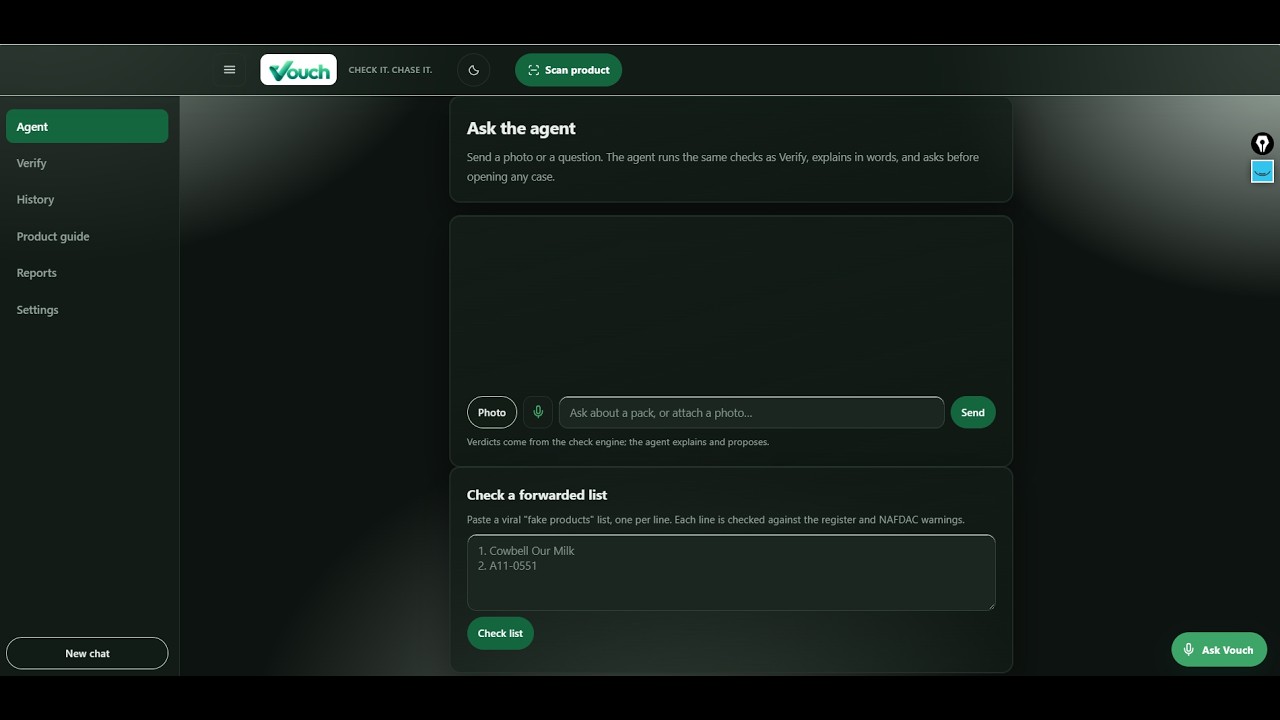
Vouch: a camera-first risk check for fake and expired products The problem Fake, expired and tampered food, drink and medicine products are a widespread crisis across Africa, especially in Nigeria, and they can cause serious harm, including kidney problems, even in young children. One common trick is to erase an expiry date and stick a new one over it. It is easy to miss on a shelf, and most everyday products carry no security code that could be checked. What Vouch does A shopper, retailer or inspector photographs a product label. Vouch returns a risk level (Low, Medium, High or Inconclusive) with the evidence shown on the photo, such as a sticker edge over the date, print that does not match the rest of the label, or an impossible date. It never says a product is "safe". Users can report suspicious sellers, and reports feed a map that shows where inspectors should look first. How it works Muse Spark, through the Meta Model API, reads the photos and acts as an agent. It chooses tools to gather evidence: a date-logic check, a registry lookup, and batch history from earlier reports. [SAM 3.1 outlines the date area on the photo.] The model only describes the evidence. Plain code decides the risk level, and guardrails check the uploaded photos, the wording of every answer, and failures, so a wrong answer is never presented as certain. Honest limits A photo cannot prove a product is genuine. Registry data in this demo is sample data, and the handheld scan station is a roadmap concept. Where it goes next Vouch is built to work alongside NAFDAC's traceability and code-based systems, covering the many products that carry no code. Next steps are real registry access, a WhatsApp channel, voice readout, and a handheld scan station for markets and warehouses.