ASSERTARA
Built at Meta Global AI Developer Hackathon · Oct 26, 2026 · Remote
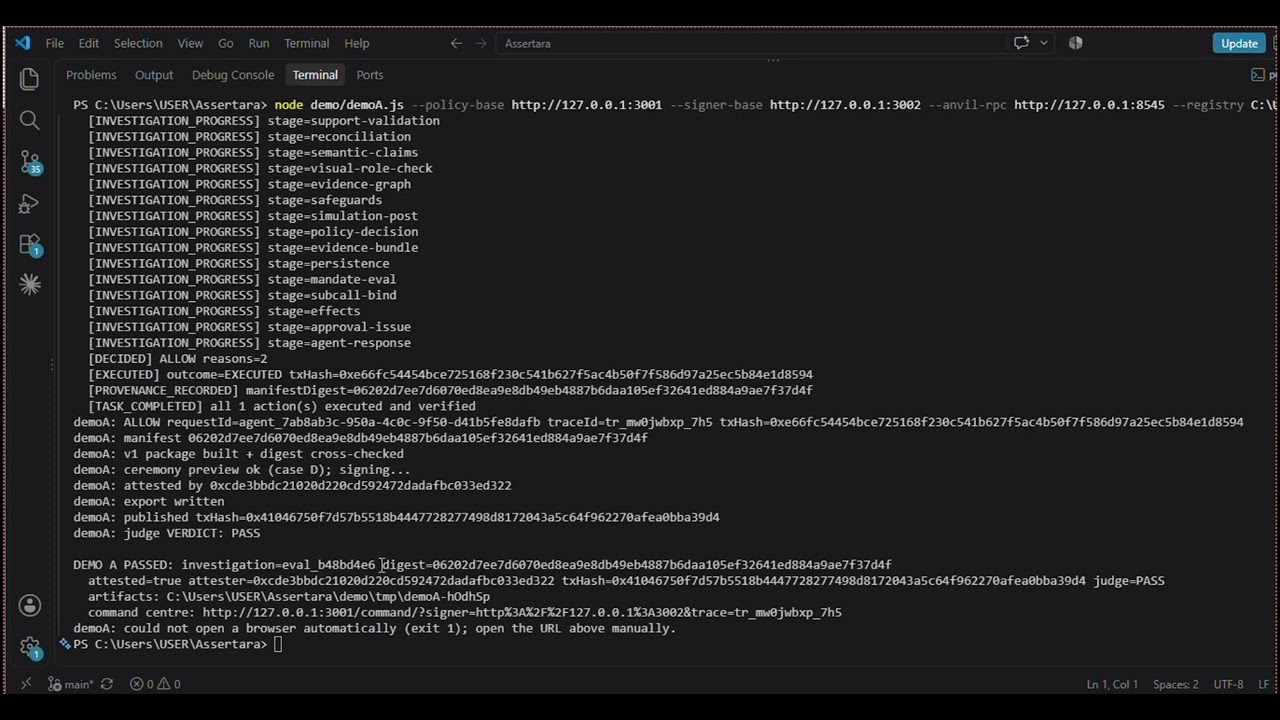
Assertara is an intent-verification and transaction-enforcement system for autonomous Web3 agents. It investigates an agent's proposed on-chain transaction against its stated intent, authorizes it against a sealed operator mandate, executes it only through an independent signer, and publishes signed, verifiable evidence of the whole path. Assertara follows a controlled execution process: an AI agent proposes an action, Assertara investigates it, independently authorized mandates and deterministic policies are checked, and the action is either permitted, blocked, or escalated when required. Human approval is not required for every action; permitted actions can proceed autonomously within their authorized limits. HOW IT WORKS 1. Investigate Decodes the proposed transaction and conducts a structured Muse Spark investigation, comparing the agent’s stated intent with the transaction’s actual execution details. 2. Authorize Evaluates the proposal against a sealed, operator-owned mandate defining permitted actors, recipients, spending limits, and contract interactions. The system returns one of four decisions: **ALLOW, BLOCK, REVIEW, or UNCERTAIN. 3. Enforce Routes execution exclusively through an independent signer process, which independently re-verifies the authorization before signing. Denied transactions are never signed or broadcast, leaving the blockchain state unchanged. 4. Prove Binds the investigation and execution record into a content-addressed provenance manifest, signs it through an offline attestation ceremony, and anchors it to Arc Testnet. The resulting evidence can be independently re-verified using Assertara’s read-only judge tool. Assertara is being built to make autonomous AI agent actions more accountable, verifiable, and aligned with the permissions they have actually been granted.