Skip to Main Content
Events
SearchSign In

Google DeepMind Bangalore Hackathon

Jul 11, 2026 · Marathahalli, Marathahalli Main Road

Event Page
Event Page

Kavach

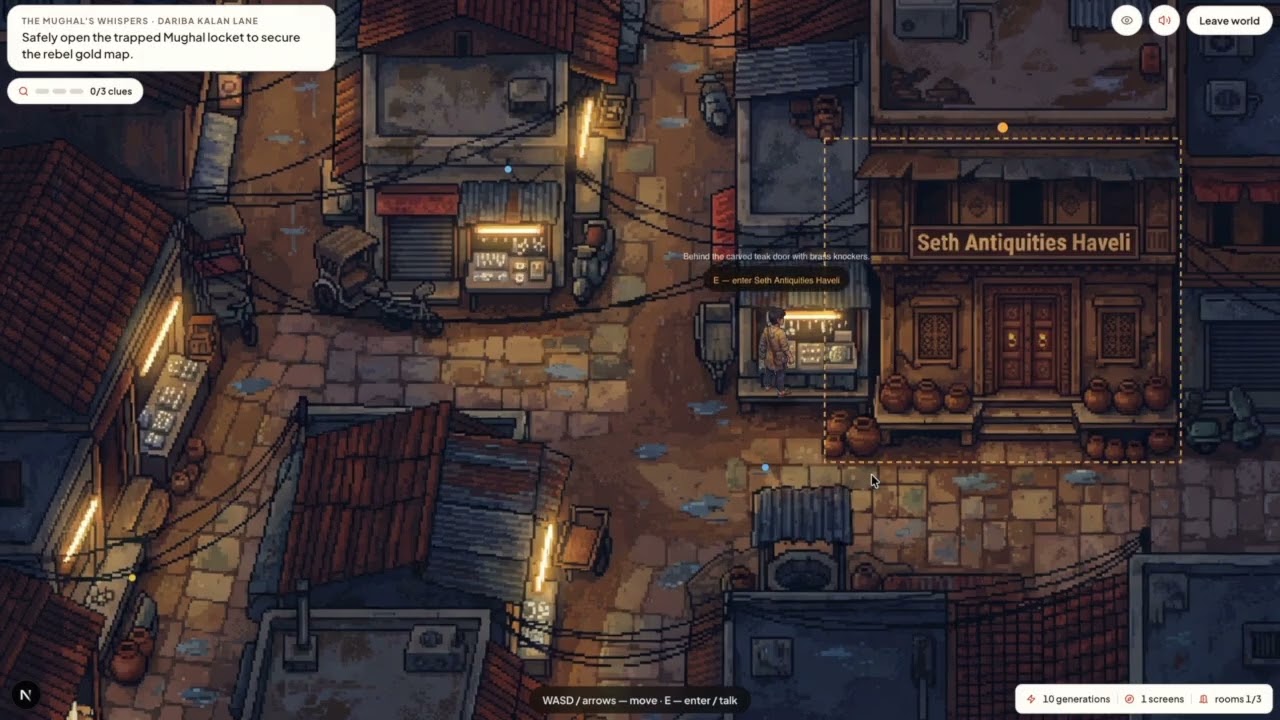
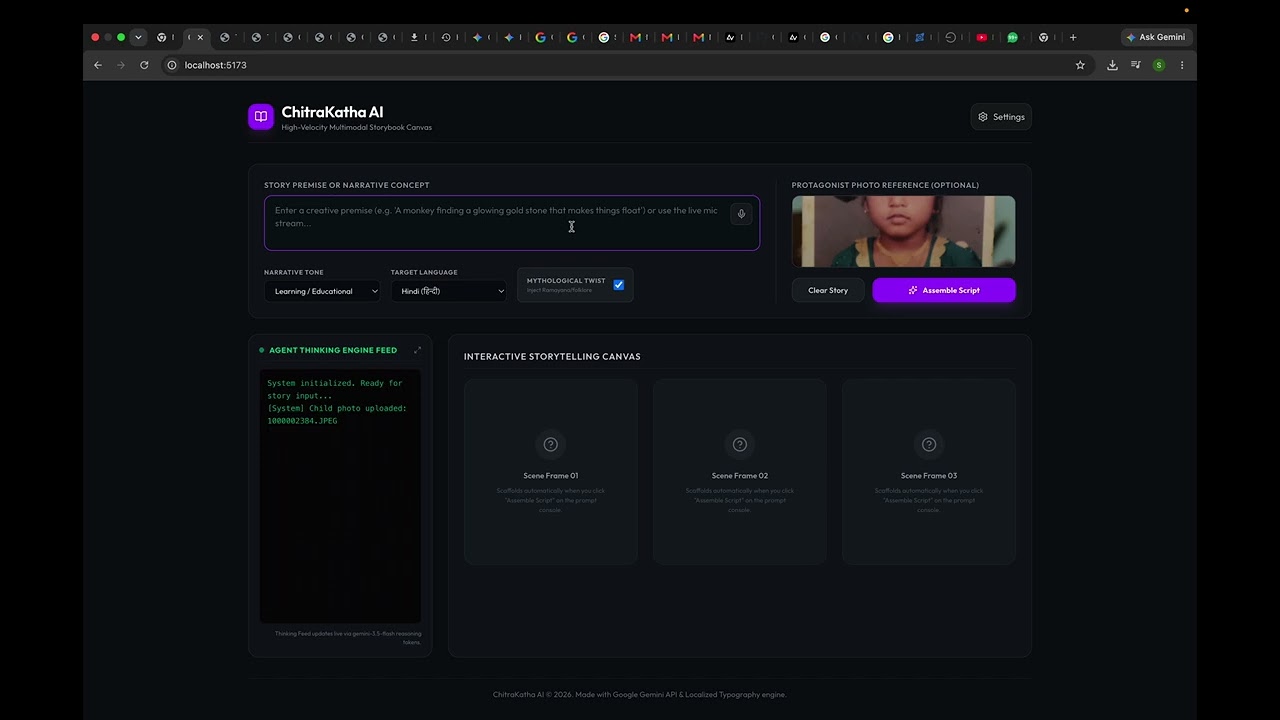
Kahani is a browser-based adventure game where a player's one-line idea is expanded into a full "game bible": a mystery with 3 NPCs, 3 guarded clues, and fail states. The overworld is generated screen-by-screen using NB as the player walks: each screen is painted, then the image model traces borders over its own frame so a second pass can read both images into precise interactive hotspots (buildings, items, actions) — an infinite, seamlessly-stitched pixel-art world. Dialogue is voiced (Gemini TTS) and refereed live: rude or reckless choices raise a heat meter and can turn NPCs hostile, closing off clues. The run ends in either a victory finale (all 3 clues resolved) or a defeat finale (heat maxes out).

Kavach project preview
16
+1

Aniket

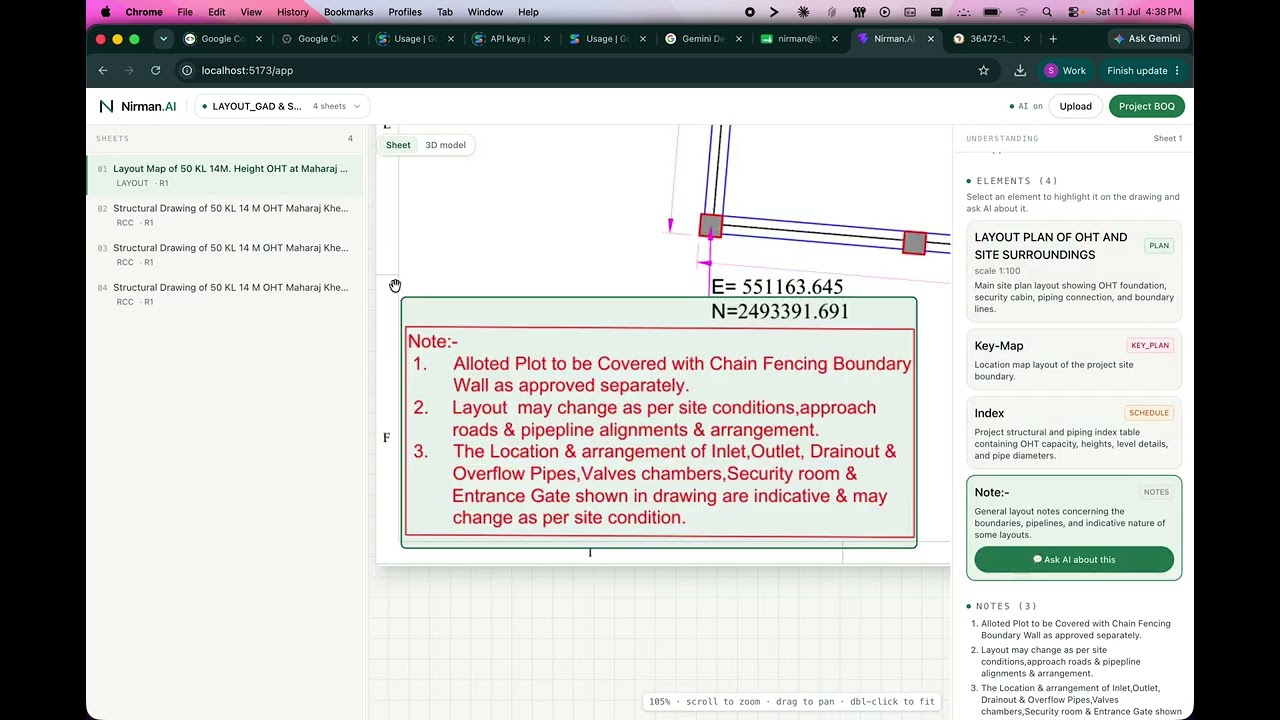
Upload a real government construction blueprint, ask any element a question, watch it rebuild as a measurable 3D model, and run a pipeline of five AI agents that reads it, measures it, prices it in ₹ from live Indian rates, and files a costed Bill of Quantities straight into your Google Sheet — turning a 15-day manual takeoff into a 3-minute autonomous one. Nirman.AI is a drawing-first workspace — the blueprint itself is the home screen, and every answer is anchored to a real element on the sheet, never a detached chatbot. 1. Upload a tender PDF. It's processed once — sheets rendered, and a structured element index (footings, walls, columns, rebar schedules, notes) extracted and persisted. 2. Ask any element. Click a footing or a schedule; it highlights on the canvas and an "Ask AI" chat opens — "what's the concrete volume?", "how much steel?", "what grade?" — grounded in that element plus the whole sheet's context. If a dimension isn't on the drawing, it says so instead of inventing one. 3. Truth-3D. The drawing is reconstructed as an interactive, measurable 3D model — every solid's size traced to a figured dimension on a real sheet, colour-coded by concrete grade, with click-any-part → jump to the source sheet. 4. Estimate. A 5-agent pipeline costs every ready element and writes a ₹ Bill of Quantities into a live Google Sheet the team already uses.

Aniket project preview
4

Parallax

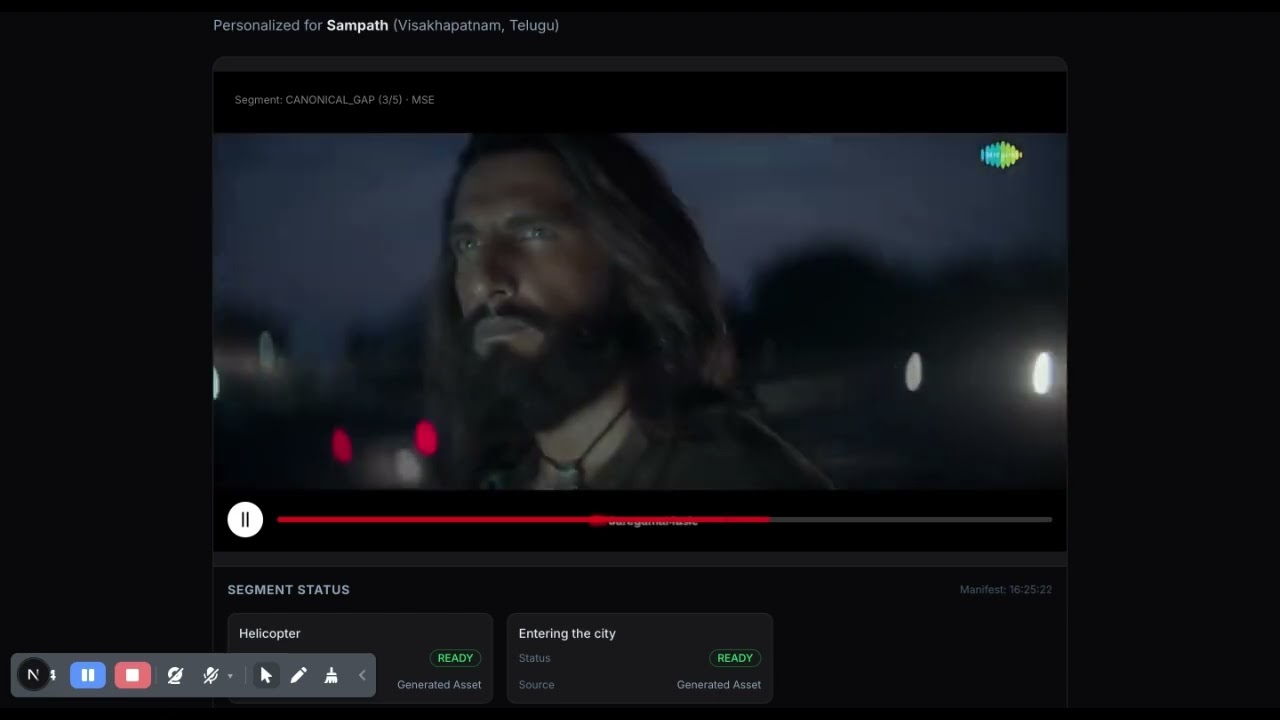
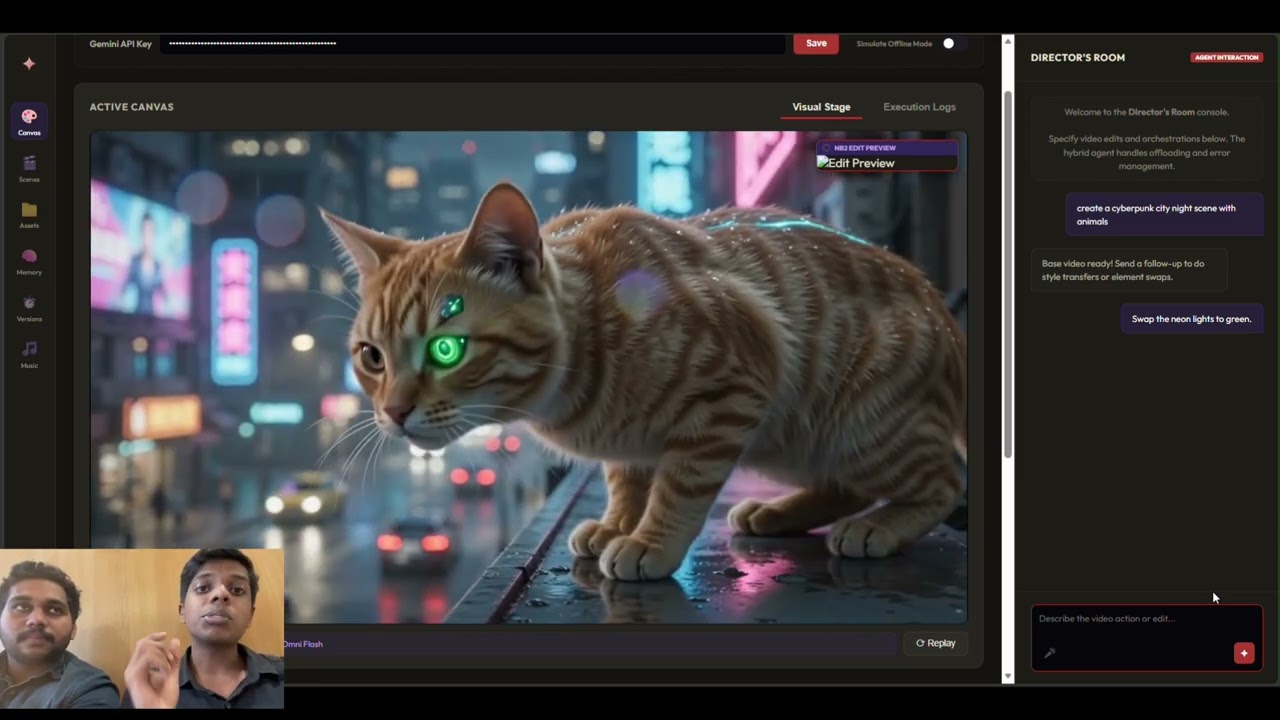
Project Parallax is a pioneer in director-authored adaptive cinema, allowing filmmakers to deliver personalized storytelling and intelligently use ad-spots in cinema while retaining complete creative control. This is done on the fly using Gemini Omni. The filmmaker specifies explicit "adaptive slots" within a film (such as billboards, props, or establishing shots) along with strict visual guardrails defining what is allowed to change. Using Gemini Omni (gemini-omni-flash-preview), the system dynamically edits and localizes these short video segments behind the scenes to match the viewer's specific location, language, and cultural context. If a personalized segment is not yet cached or ready, the player seamlessly displays the director's original fallback to ensure uninterrupted playback. This can be extended to Movie theatres allowing dynamic ad and content personalisation based on the audience and the theatre location.

Parallax project preview
5

no-signal

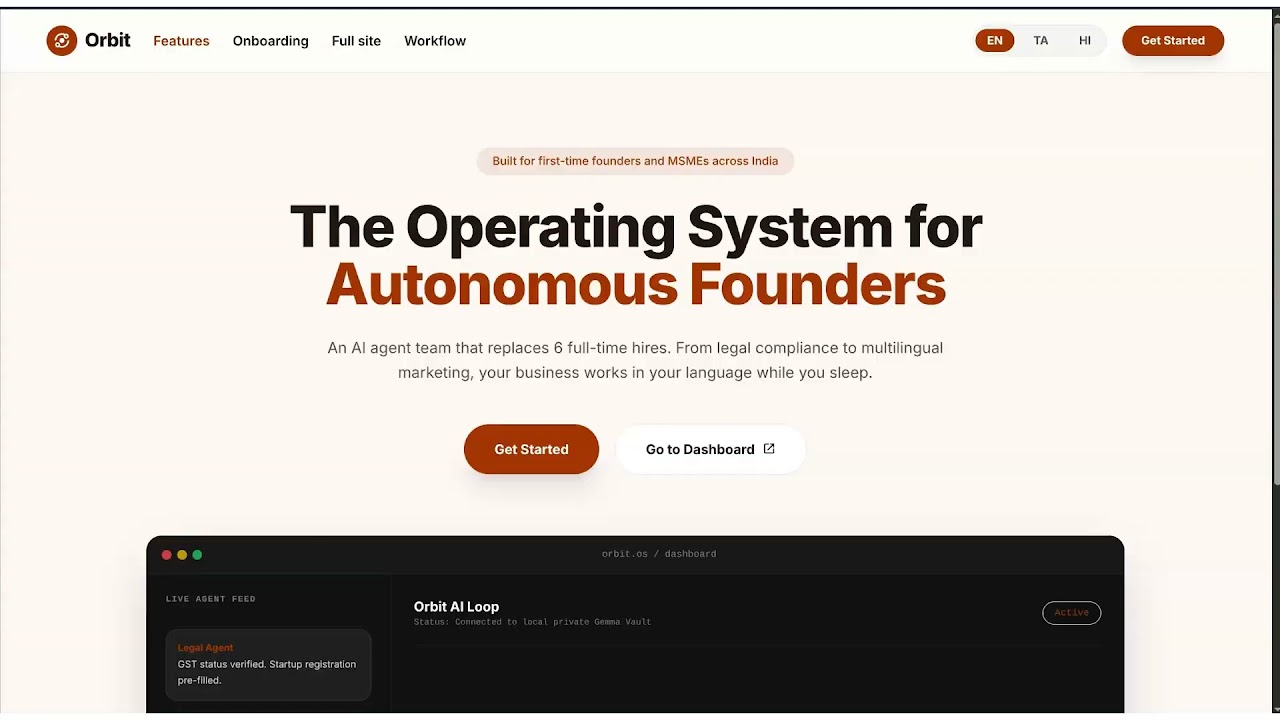
True Autonomous, Offline-First Multimodal Diagnostic Agent 1. Real-Time Multimodal Interaction (Gemini Live) Most "voice assistants" are just text interfaces wearing a microphone—wait, process, respond, repeat. no-signal breaks this rigid turn-based structure. Leveraging the Gemini Live API and Gemma Multimodal, the agent can see what the technician sees through a live camera feed and listen to real-time audio. Users can interrupt the agent mid-response, the model reads vocal tone, and it proactively points out anomalies in the video feed that the user hasn't explicitly mentioned. It’s a fluid, uninterrupted collaboration, not a staggered Q&A. 2. True Local-First Agency (Gemma 4 On-Device) Most "on-device AI" simply moves a cloud chatbot onto a phone. It forgets context, fails rigidly, and assumes a server connection will eventually return. Real agency means holding state across a complex diagnostic task, deciding what to do next based on what’s already been learned, and recovering when a plan breaks—entirely offline. Across regions with spotty connectivity, sending data to a server is a non-starter. no-signal runs a complete, autonomous Sense → Decide → Act → Check loop entirely on-device using Gemma 4. It isn't a straight arrow from input to output. It maintains local state, attempts a fix, evaluates if the fix worked, revises its hypothesis upon failure, and knows exactly when to draw a boundary and defer to a human. 3. Fleet-Wide Continuous Learning When the local agent hits a dead end, it caches the unresolved session. The moment the device reconnects to the internet, our orchestration pipeline syncs the session to the cloud. Gemini Flash conducts web-grounded research to find the fix, Nano banana generates visual guides, and Gemini Flash Live synthesizes real-time audio instructions. This new knowledge is distilled into a structured fault-tree and instantly pushed back to the local device. The next time any technician faces the issue offline, Gemma 4 resolves it instantly.

youtube.com/…
2

AI Alchemist

StoreUp — talk your shop onto ONDC. Millions of small shopkeepers in India want to sell online but are locked out by a language barrier, complicated forms, typing, and having to photograph every product. StoreUp removes all of it: a shopkeeper simply talks in their own language and shows their shelf to the phone camera, and StoreUp builds and publishes their online store on India's ONDC network — in minutes, with zero typing. It's built entirely around the Gemini Live API's real-time, multimodal loop: the agent sees the shelf and hears the shopkeeper continuously. It recognizes products by brand, counts what it sees, proactively points out items the shopkeeper didn't mention, checks fair market prices live via Google Search grounding, and switches instantly between Indian languages mid-conversation. On confirmation, it names the store and generates a valid ONDC Beckn v1.2.0 catalog, while Nano Banana 2 Lite auto-generates product images — so the storefront looks real with no photos taken. A mock ONDC buyer app shows the store live. This is impossible as a typed chatbox — the value is entirely in the live see-and-hear interaction.

drive.google.com/…
8

RingZero

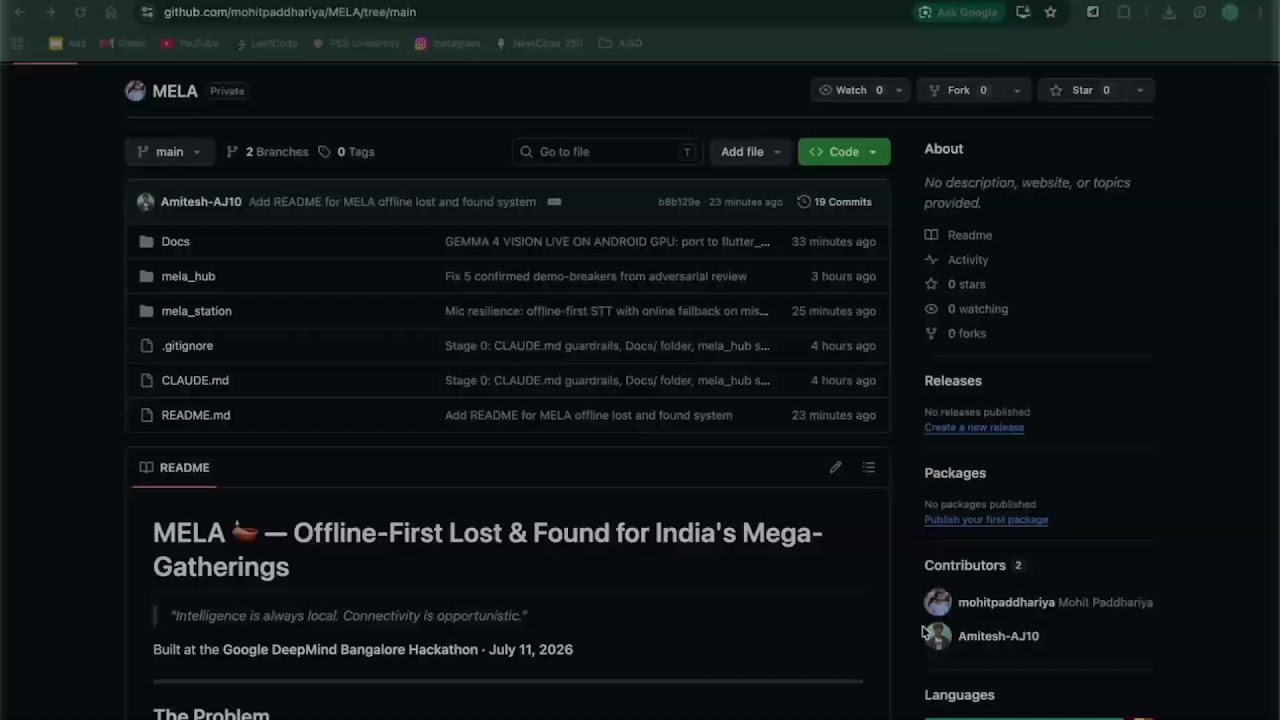
When thousands of people gather for large social events like huge festivals, pilgrimages, and religious gatherings, families get separated in the chaos. Cell networks collapse from sheer congestion precisely when people need them most. A panicked parent searching for a lost child has no way to communicate, and centralized systems requiring internet connectivity and server infrastructure simply don't work when connectivity fails. MELA solves this by turning any volunteer's phone into a fully functional lost-and-found station that works completely offline. A parent speaks in their own language, and the app powered by on-device Gemma 4 E2B AI converts their words into a structured record of what to look for. Rather than relying on centralized face-recognition databases, MELA uses voice descriptions and attribute matching, keeping the system privacy-first and accessible even when no photos exist. Multiple stations sync over a local phone hotspot using WebSocket relay, while Hive persistence ensures every card survives network failures and phone restarts. When another volunteer finds someone matching that description, they can verify the match right there without needing internet. The entire system is multilingual, privacy-first, and designed to coordinate hundreds of volunteers across a single gathering in the real world where connectivity is unreliable and speed matters.

RingZero project preview
3
+1

Local Aura Farmers

Crux — find the crux of why papers disagree, entirely on your device. Every research tool (Elicit, Consensus, scite) tells you *that* papers disagree. None tells you *why* — and with students and researchers now drafting papers with AI, people cite results that quietly conflict without ever knowing. Worse, the papers that most need checking — unpublished drafts — are exactly the ones you can't paste into a cloud chatbot. Crux is a local-first research agent built on Gemma 4 (E4B, on-device via Ollama). Drop 2–3 PDFs and it runs a full sense → decide → act → check loop: - Sense — extracts structured claims on-device; every claim must carry a verbatim quote verified string-for-string against the source, so hallucinated claims are structurally impossible. A deterministic pattern miner backstops the small model so headline numbers are never missed. - Decide — pairs comparable claims across papers (including scaling-law coefficients by their role in the equation, not by dataset) and adjudicates each pair precision-first: 1.00 precision, zero false contradictions on our labeled eval. - Act — the agent autonomously designs a POPPER-style falsification experiment (H₀/H₁, held-fixed variables, decision rule) for the top contradiction — no click needed. - Check & recover — failed chunks retry locally with expanded boundaries (streamed live); low-confidence numeric claims are explicitly handed off to the human. A narrated, timed agent worklog shows every step. A hard Local / Auto / Cloud selector enforces routing per-request; every verdict carries an engine badge showing what produced it. Pull the WiFi — extraction, verdicts, and experiments keep working. Flagship demo: Kaplan et al. 2020 (N ∝ C^0.73) vs DeepMind's Chinchilla / Hoffmann et al. 2022 (a ≈ 0.50). Crux rediscovers the most consequential contradiction in modern ML on a laptop, and designs the experiment that settles it. Stack: Gemma 4 E4B on-device · hosted Gemma 4 31B escalation · Gemini 3 Flash (reconcile/experiment) · Gemini Flash (grounded chat) · Next.js 15 · also ships as an installable Electron app. Live: https://crux-two-phi.vercel.app (cloud preview — the full on-device loop runs locally / in the video). Sample contradictory-paper library included in the repo.

www.loom.com/…
1

SenseBridge

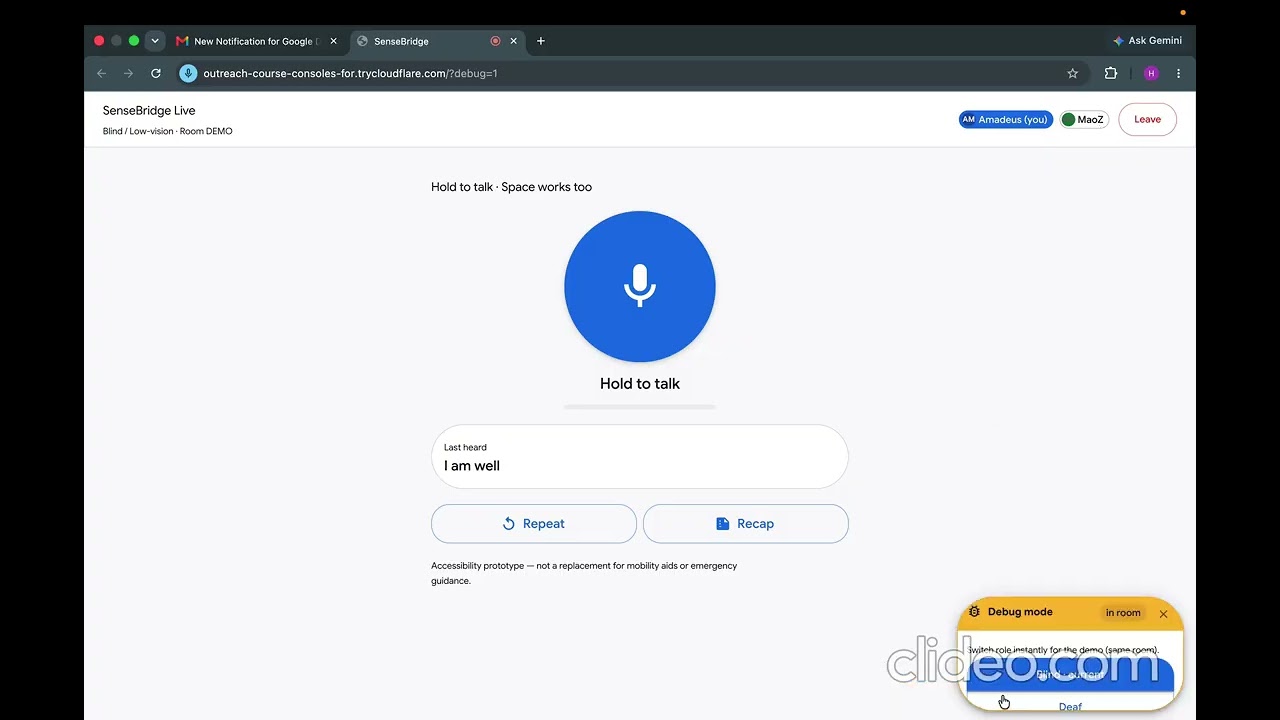
Accessibility of communication for differently able people is a challenge. In an evolving digital world, we need a radically different approach compared to the presently available solutions. Which is why we present SenseBridge, it allows deaf, blind and mute people to effectively communicate with each other. While addressing their special needs. Deaf people need captioned audio, blind people need speech and mute people need to be able to convert text to speech in order to communicate. Our solution tries to bridge this gap through the use to Gemini models for speech to text, text to speech and vision models. The app was hosted on a cloudflare tunnel for the demo purposes.

SenseBridge project preview
0

NETRA AI

NETRA AI · नेत्र — the eye that walks with you 👁️ A real-time multimodal AI companion for 2.2 billion blind and low-vision people worldwide. It guides your steps, reads your bus, warns you of danger — and tells you when someone smiles. Built at the Google DeepMind Bangalore Hackathon · PS1: Real-Time Multimodal Interaction · #BuildWithGemini

youtube.com/…
1

SETU

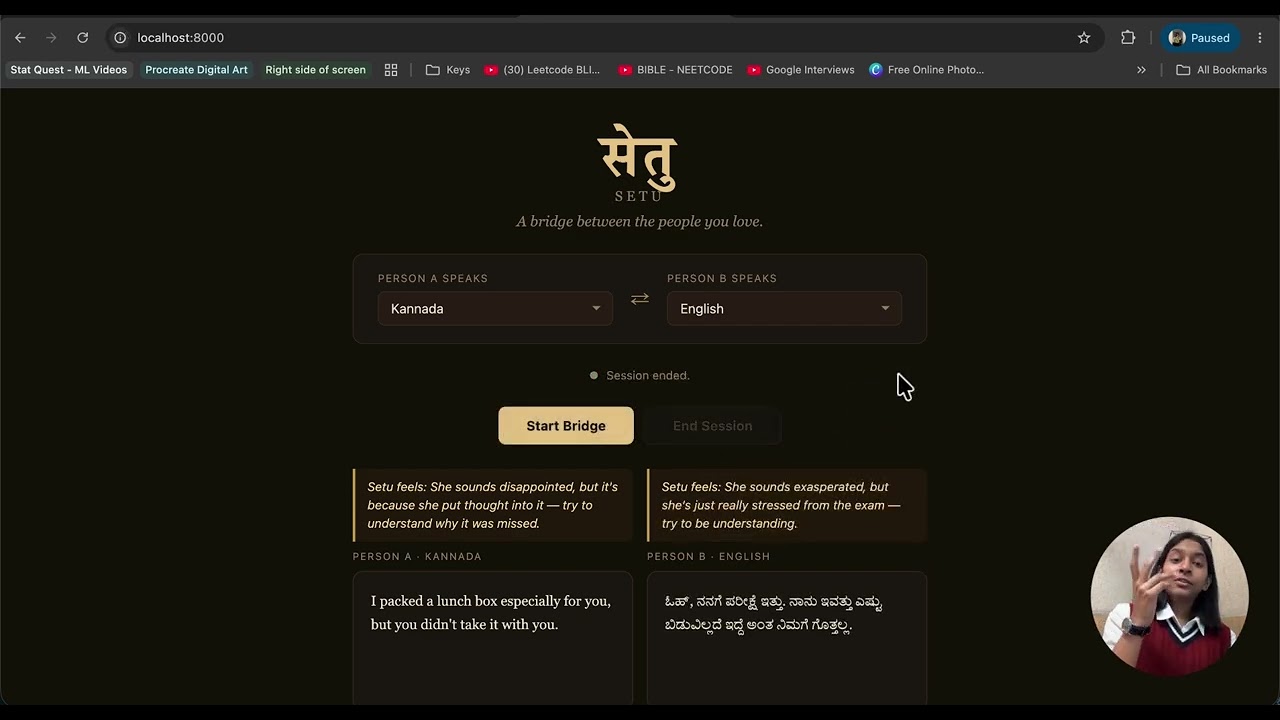
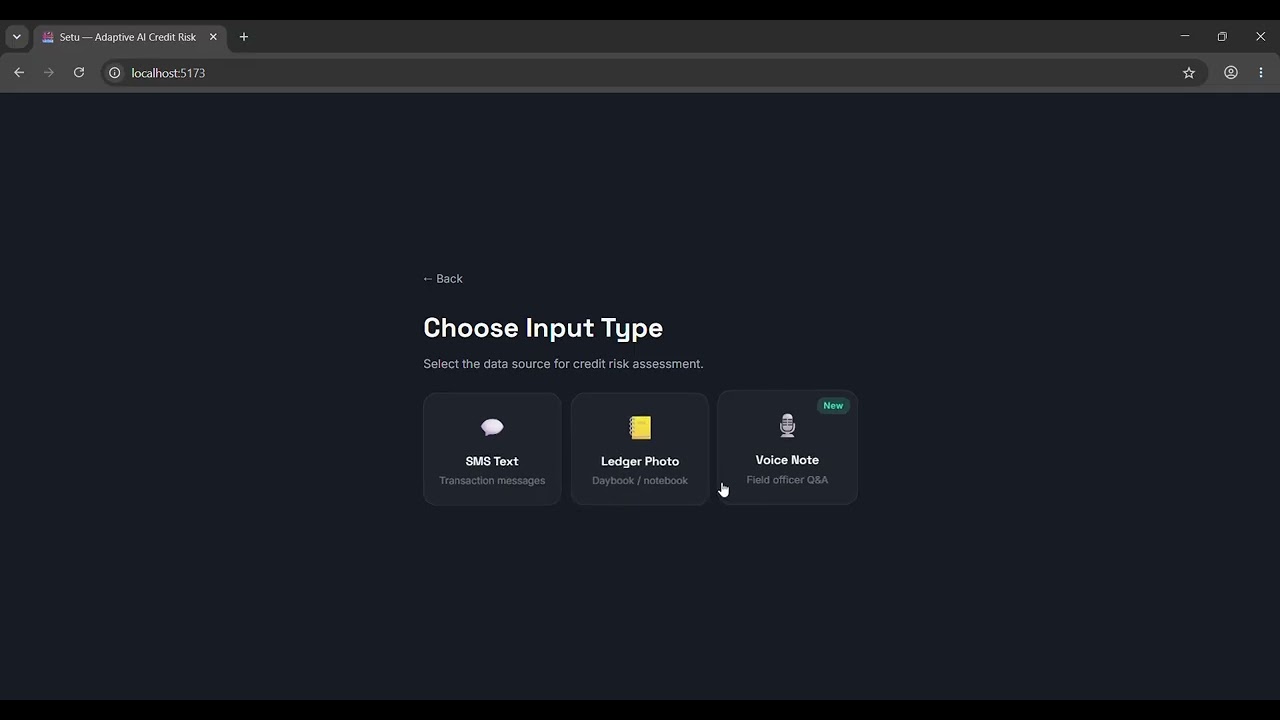
Setu - Never letting love get lost in translation. Every multigenerational Indian family lives this gap: grandparent speaks Kannada ( any native language) , grandchild speaks English, and love keeps getting lost - not because the words are wrong, but because the feeling behind them never makes it across. Worry sounds like nagging. Exhaustion sounds like coldness. Nobody meant what the other person heard. Setu is built to close that gap. It listens live to two people speaking different languages and, for every single thing either person says, translates it aloud in real time, reads the emotional tone behind the words - not just what was said, but how - and reports it plainly above that person's side of the conversation: "Setu feels: she sounds angry, but she's just concerned - talk to her gently." It runs on Gemini 2.5's native-audio model over the Live API with Affective Dialog enabled, so the tone-reading is genuinely native to the model's audio understanding, not a bolted-on classifier. Speaker identity and emotional tone are surfaced through a mandatory function call kept separate from the spoken translation, so Setu's own read never gets spoken aloud over the conversation - it just sits quietly on screen, exactly where a listener needs it. This isn't a translator. It's an emotional interpreter - the thing that lets two people who love each other, and speak different languages, actually hear each other. Because at the end of the day - love is what matters, and with SETU ( Sanskrit ~ Bridge ) we never let love get lost in translation :)

SETU project preview
1

k9-007

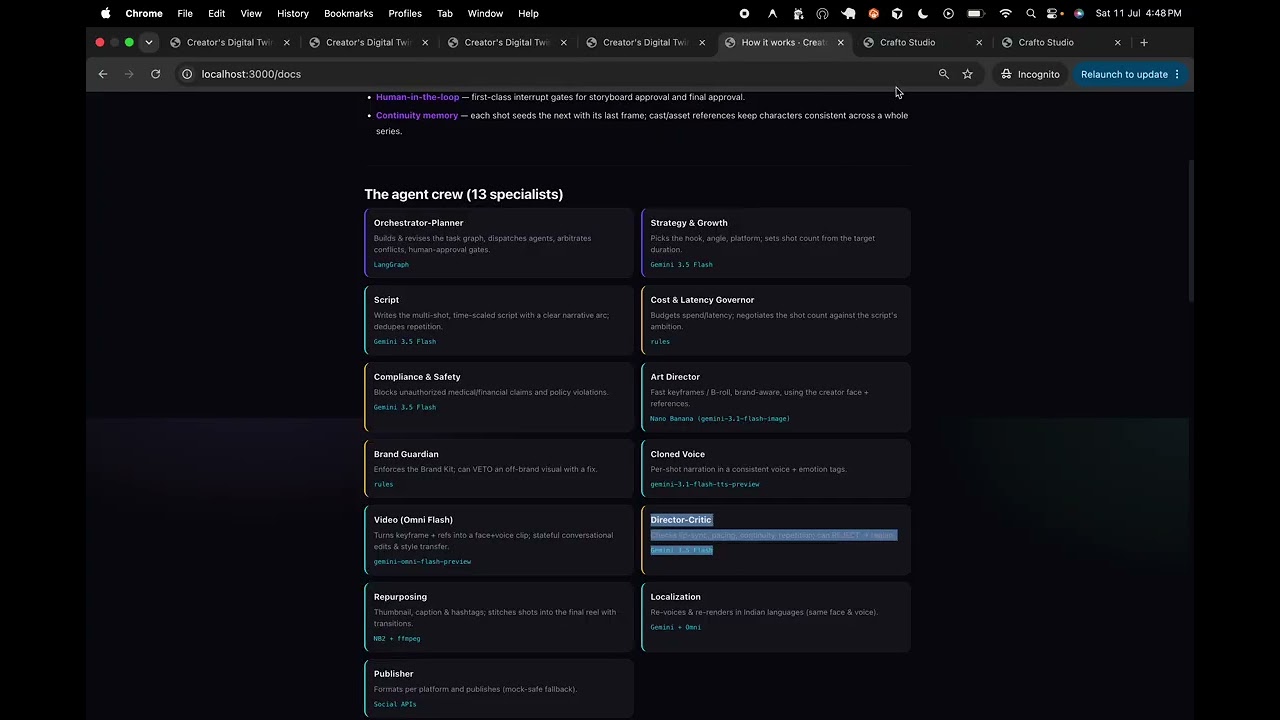
🎬 Crafto Studio Crafto Studio is an agentic video studio: a crew of AI agents that plans, negotiates, self-corrects, and directs Google's Gemini stack to turn a rough idea into launch-ready vertical video — in your own face and voice. Say it once → launch it everywhere. Built for the Google DeepMind Bangalore Hackathon — Track 5 (Gemini Omni Flash). ✨ What it does Crafto Studio is a HeyGen-class creator suite with two studios, powered end-to-end by Gemini: 🎬 Digital Twin — enroll your face + voice (with consent), drop a rough brief or voice note, and a multi-agent crew produces a polished, multi-shot reel in your face and voice — refine it by conversation, restyle it, localize it, and publish. 📺 Micro-Series — turn one title into a connected episodic series (Micro-Drama or Micro-Learning): script → refine → extract a consistent cast & assets → produce each episode with cross-episode continuity. The differentiator isn't "AI avatar that talks" — it's the agentic system on top of Omni Flash: dynamic planning, agent negotiation/veto, self-correcting cycles, human-in-the-loop gates, and continuity memory. All of it is visible live on an orchestration canvas. 🧠 Why it's agentic (not a pipeline) Dynamic planning — the Orchestrator builds a task graph at runtime; the shot count is derived from the chosen duration (more time → more detailed script). Negotiation & veto — the Cost Governor trims the Script's shot count; the Brand Guardian vetoes off-brand visuals; the Director-Critic rejects weak shots. Self-correction (cycles) — a veto or reject triggers a replan + re-render, not a blind retry. Human-in-the-loop — first-class interrupt() gates for storyboard approval and final approval. Continuity memory — each shot seeds the next with its last frame; a locked cast/asset set keeps characters consistent across a whole series. Glass-box — a live React Flow canvas shows agents planning, handing off, vetoing and replanning in real time.

k9-007 project preview
1

Riverbloom

Digital well being app that tracks app usage patterns, type of apps being used, and screen-on time to evaluate user behaviour. It focuses on making users aware of their daily compulsions, habits, and activities, Gemma e2b is used to analyse the usage data from android to generate personalised insights, make users aware of their behaviour, and provide actionable solutions. Nano Banana is used to generate live story telling of the user's digital footprint for past 7days as they moves through each individual day via a story feature similar to Instagram stories.

www.loom.com/…
2

Drishti

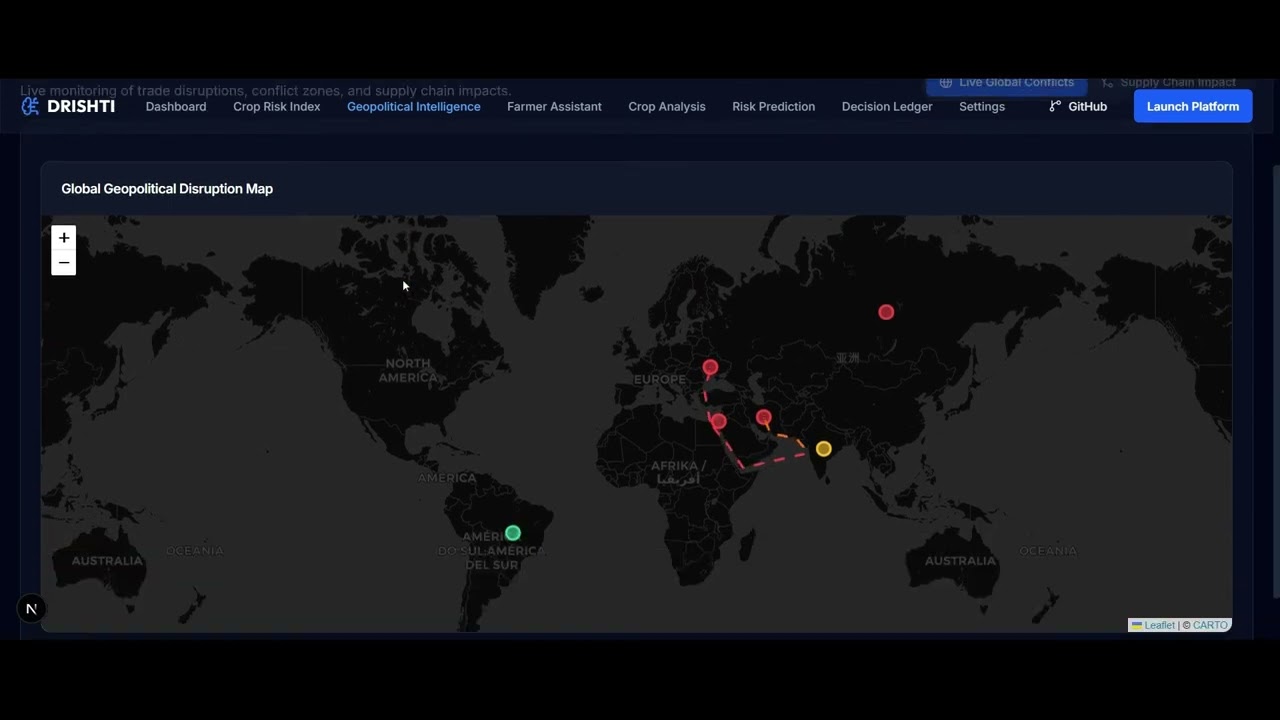
Project Name: DRISHTI Tagline: Predicting agricultural supply chain disruptions before they reach the farmer. The Problem We Solve Global agriculture is highly vulnerable to sudden geopolitical shocks—such as wars, trade embargoes, port closures, and extreme weather events. When these global disruptions occur, they cause massive fluctuations in commodity prices and supply chain bottlenecks. Unfortunately, farmers and local policymakers are often the last to know. By the time global news translates into local market impact, farmers have already suffered severe financial losses, misallocated their resources, or faced crop spoilage. Furthermore, a massive language and technology barrier prevents rural farmers from accessing advanced early warnings or expert agronomic intelligence. There is a critical disconnect between high-level macroeconomic data and ground-level farmer action. What is DRISHTI? (Project Description) DRISHTI is a multimodal, AI-powered Early Warning System designed to shield agricultural supply chains from global instability. By unifying deterministic Machine Learning forecasting with the advanced reasoning of Google Gemini AI, DRISHTI acts as a real-time bridge between global geopolitical conflicts and localized farmer advisories. It continuously monitors the globe for supply chain threats and instantly translates those threats into actionable, regional-language guidance for farmers. How It Works (Multi-Agent Architecture): To process complex global data in real-time, DRISHTI utilizes a sophisticated orchestration of specialized AI agents powered by the Gemini Interactions API: The Orchestrator Agent: Acts as the central nervous system of the platform, routing requests between specialized sub-agents and ensuring seamless communication between the ML backend and the Next.js frontend. Event Processor & Impact Reasoner Agents: These agents continuously scrape global news sources. Utilizing Gemini 3.5 Flash, the Event Processor performs high-speed extraction of geopolitical entities and sentiment analysis. The Impact Reasoner then analyzes this data to identify direct threats to agricultural trade routes. Risk Predictor Agent (ML Pipeline): This agent bridges generative AI with deterministic Machine Learning. It feeds the extracted geopolitical data into our Python backend, where scikit-learn and XGBoost models cross-reference the events with historical trade datasets to calculate a real-time Crop Risk Index and localized "Farmer Risk Scores". Advisory Generator & Multimodal Agents: To bridge the technology gap, these agents power our voice-enabled Farmer Assistant using Gemini Omni. They translate agronomic queries from 10+ regional Indian languages in real-time, generate expert agricultural advice based on the calculated risk scores, and utilize Nano Banana 2 Lite to provide instant computer vision for crop disease detection from uploaded images. The Result: What used to take weeks of market analysis now takes seconds. DRISHTI empowers policymakers to secure supply chains and equips farmers with the localized intelligence they need to protect their livelihoods before disaster strikes.

Drishti project preview
1

BolDo Yaar

BolDo Yaar is a real-time speaking buddy for Indian stroke survivors with aphasia. It listens to broken speech, watches the person live on camera — their face, gestures, and pointing — and helps turn what they're trying to say into clear sentences for family and doctors. Powered by Gemini Live (audio + vision), it also simplifies prescriptions, translates into English for hospital staff, and can send a session summary to a saved contact — so even in a rushed, multilingual hospital visit, the survivor is understood instead of spoken over.

www.loom.com/…
0

chanikya

Continuity is a verification and version-control layer for AI-generated video, built on Gemini Omni Flash. Every AI video tool today generates each shot independently — characters drift across shots, two people sharing a frame blur into each other, and one changed detail can silently break every shot downstream. Continuity fixes this with a real production workflow: cast a character, prop, or location once and reuse it everywhere; lock facts into a ledger that every future shot pulls automatically; direct world state like weather and time across a whole scene instead of shot-by-shot; and prove consistency with a live before/after comparison instead of just claiming it. It's the missing memory and workflow layer AI video has never had — Cursor for film.

drive.google.com/…
0

Team Argus

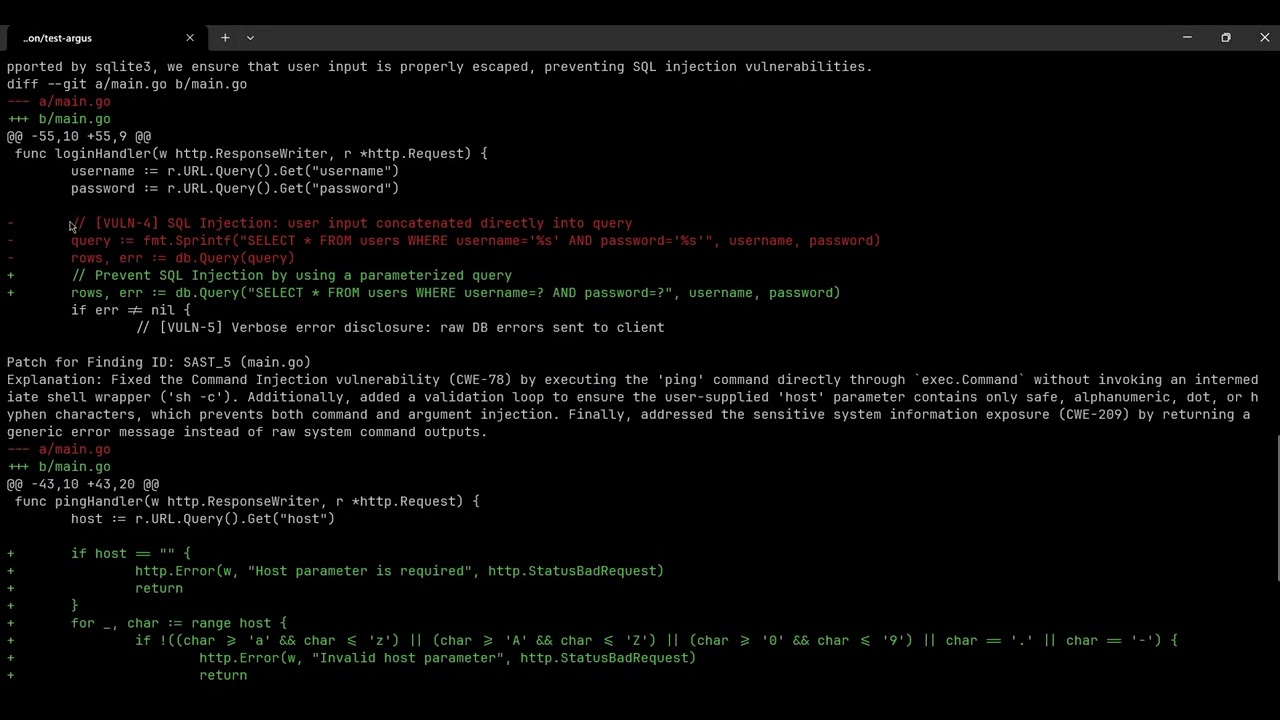
ARGUS: Autonomous Security Orchestrator ARGUS is an autonomous multi-agent security orchestrator. It scans repositories for security vulnerabilities, computes reachability, and automatically generates verified secure code patches

Team Argus project preview
0

Spark Seekers

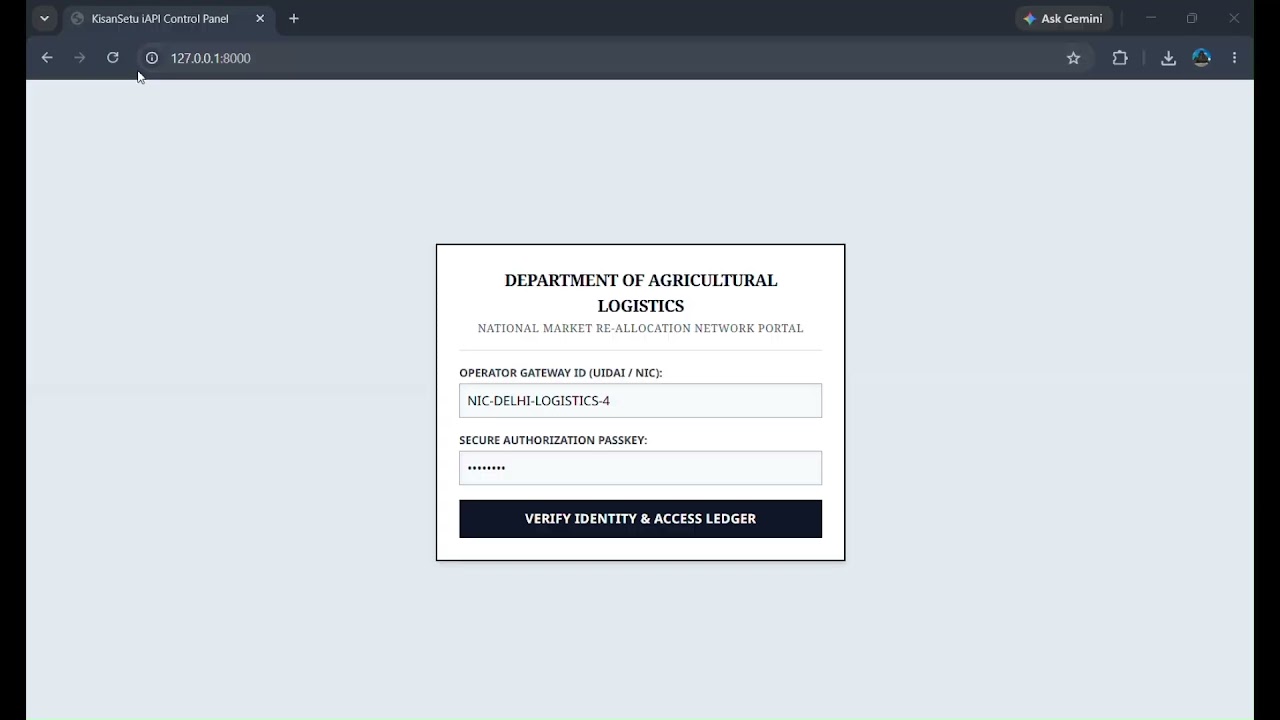
Project Title: KisanSetu Logistics Routing System Problem Statement Regional agricultural supply chains often face critical infrastructure disruptions—such as flooding, road closures, or equipment failure—that lead to significant post-harvest losses. Current manual dispatch systems lack the agility to dynamically reroute assets or reallocate inventory in real-time, resulting in wasted produce and inefficient market distribution. Solution KisanSetu is an autonomous, agentic logistics control platform designed for the Indian agricultural market. Built with a core iAPI engine, the system ingests multi-language IVR voice logs and raw operational data to provide: Dynamic Incident Resolution: Automatically parses driver reports to identify infrastructure failures and immediate reallocation needs. Agentic Recovery Loop: Utilizes an autonomous Gemini-powered execution loop to calculate optimal rerouting or offloading strategies based on real-time database state. Strict Operational Constraints: Enforces database integrity through programmatic verification, ensuring that all logistics decisions (e.g., target truck capacity, mandi storage limits) remain within safe, operational bounds. Key Features Intelligent Translation: A rule-based patch layer that bridges regional language phonetics (Hindi) with system-standardized English telemetry. Compliance & Audit Trail: Tracks every mitigation, validation event, and capacity change, providing a downloadable CSV audit manifest for administrative transparency. Real-time Analytics: Visualizes supply chain performance through interactive charts, monitoring disruptions and regional capacity utilization rates. Impact KisanSetu reduces the latency between a field-level disruption and an automated logistics response. By minimizing human intervention in high-pressure scenarios, the system maximizes the preservation of perishable commodities and ensures efficient, data-driven distribution across regional market hubs.

Spark Seekers project preview
0

lama_codes

FindLoo is an AI-powered mobile application designed to help women in India instantly locate clean, safe, and accessible public washrooms. By replacing traditional backend logic with advanced Google AI agents and multimodal vision pipelines, FindLoo scans a 1KM radius of a user’s location to deliver real-time, context-aware restroom recommendations. Key Product Architecture & Features: Hierarchical Data Sourcing & AI Safety Scoring To ensure high-quality recommendations, the app aggregates data from Google Places and categorizes locations into a strict priority hierarchy based on baseline hygiene: Tier 1 (Premium): Malls and Luxury Hotels (Starts at a base score of 50) Tier 2 (Standard): Cafes, Diners, and Restaurants (Starts at a base score of 35) Tier 3 (Utility): Public Transit Infrastructure (Starts at a base score of 10) An autonomous AI AntiGravity Agent dynamically calculates a Safety Rating Score (0-100) for each facility. The baseline score is adjusted in real-time based on crowdsourced user reports (e.g., granting +10 for features like "Brightly Lit" or "Staff Nearby," and penalizing -15 for risks like an "Isolated Corridor"). Gemini-Powered Multimodal Verification To prevent spam and fake reviews (like selfies or food photos), FindLoo features an automated verification pipeline. Users snap and upload a photo of the facility, and Gemini 2.0 Flash Vision acts as a strict moderator. It analyzes raw image pixels for specific washroom hardware like sinks and toilets before awarding the location a green "Verified" badge. Instant Quarantine System In the event of a critical sanitation failure, plumbing issue, or safety emergency, users can tap a "Quarantine Loo" button. This instantly drops the facility's safety score to 0 globally, and the AI immediately rewrites the location context to broadcast a warning to all users in the area to avoid the facility. Dynamic Mapping & Seamless Navigation Custom map pins dynamically display the live safety score directly on the map, allowing users to evaluate options at a glance. Once a user selects their preferred safe restroom, FindLoo seamlessly hands off the coordinates to Google Maps for turn-by-turn navigation. Tech Stack Integration: FindLoo operates entirely on an AI-native infrastructure, bypassing traditional hardcoded backend routines: Data & Score Intelligence: Powered by the Google AntiGravity Interactions API. This sandboxed agent handles autonomous score calculations, generates physical layout context, and writes human-readable reviews dynamically. Vision Moderation: Driven by standard Gemini 2.0 Flash multimodal endpoints for instantaneous image validation.

youtube.com/…
1

Lokendra

Pramaan verifies whether a claim about the physical world actually matches reality — the missing layer where fraud hides in lending, insurance, and asset finance. Online (Gemini Live API), the agent watches, listens, translates Hindi↔English, and proactively flags discrepancies in real time. Offline, the same agent runs on-device on Gemma — counting what's actually present against the claim, recovering from bad frames, and deferring to a human. Real-time when online, on-device when offline. Demonstrated on rural field lending; the same engine extends to insurance, subsidy, and inventory checks. Built on the Real-Time Multimodal Interaction track; also competing for Best Use of Gemma 4.

www.loom.com/…
0

Digisafe

DigiSafe: Your On-Device Acoustic Bodyguard The Problem Every year, billions of dollars are lost to sophisticated AI phone scams. Bad actors use deepfakes to impersonate loved ones, or pretend to be authorities like the CBI or tax agencies claiming you are under "digital arrest." Current scam-blocking apps rely on checking known spam phone numbers, which fails against spoofed numbers or deepfakes. Alternatively, they require sending your audio to the cloud for analysis, which completely compromises your privacy. We shouldn't have to sacrifice privacy for security. What is DigiSafe? DigiSafe is an always-on, local-first acoustic defense system. When you engage Defense Mode, DigiSafe continuously listens to your phone calls or ambient environment. It instantly detects deepfakes, phishing attempts, and digital arrests without a single byte of your audio ever leaving your device. Everything—from transcribing speech to recognizing voices and detecting threats—happens 100% locally on your machine. How It Works: The Multi-Agent Pipeline Under the hood, DigiSafe replaces traditional cloud APIs with a parallel Multi-Agent Pipeline. When audio is captured, it is fanned out simultaneously to four specialized AI agents running on-device: 1. The STT Agent (Whisper): Transcribes the audio locally to understand what is being said. 2. The Identity Agent (Librosa): Extracts industry-standard 120-dimensional MFCCs (Mel-Frequency Cepstral Coefficients), Delta, and Delta-Delta features. This creates a highly accurate, mathematical fingerprint of the speaker to verify if the caller is actually your enrolled family member, or a deepfake. 3. The Acoustic Stress Agent: Analyzes the raw audio waveform for RMS Energy and Zero-Crossing Rate to detect aggressive vocal strain and tension, which are massive red flags for coercion. 4. The Threat Classifier Agent (Gemma 4): The star of the pipeline. Powered by the incredibly fast Gemma 4 model running locally on the device, this agent semantically evaluates the transcript for phishing, generic scams, or digital arrest patterns. Because we use asynchronous processing, all four agents analyze the audio at the exact same time. The results are instantly merged by our Orchestrator, allowing DigiSafe to make a lightning-fast, highly accurate threat assessment. Key Features 1. 100% Local-First: Privacy is paramount. We use local LLMs (Gemma 4) and local transcription (Whisper). No internet connection required. 2. Deepfake Resistance: By analyzing 120-dim acoustic features, DigiSafe doesn't just listen to what is said, it mathematically verifies who is saying it. 3. Semantic Threat Detection: Gemma 4 acts as a private detective, instantly understanding the context of the conversation and flagging coercion techniques like "your account is frozen" or "do not hang up." 4. Comprehensive Audit Log: Every intercepted threat is saved in an on-device audit log, complete with the audio recording, transcript, and a detailed Agent Breakdown explaining exactly why it was flagged as a scam. Best Use of Gemma 4 - Local-First Agents DigiSafe was built aggressively for this special prize category. By leveraging Gemma 4, we were able to bring cutting-edge semantic threat detection directly to the edge. Gemma 4 provides the perfect balance of small footprint and high intelligence, allowing our local Threat Agent to understand complex scam context—such as digital arrests and phishing attempts—without the extreme latency or privacy violations of a cloud API. DigiSafe proves that with Gemma, local-first AI can protect our most vulnerable populations.

Digisafe project preview
0

Dwanith

A persistent Windows workspace prototype that watches the desktop, remembers context, and turns files, notes, slides, clipboard contents, downloads, notifications, and project state into computational objects. It mainly work by continuous Windows screen capture with Gemini Interactions analysis/through Gemma local continuous screen observation. For example, if you make some changes, lets say to your codebase or video edit or presentation slides that are incompatible, Persistent Computer will respond: This action conflicts with what I know about your project. Here is the evidence, and here are reversible options. Normally what we do is we interact with software. But with ai, we can make software interact with us such that every project can be sort of a living software. Just like tom riddle's dairy, I have built persistent computer to notice any issues, flaws or etc in the system and point them out to the user.

Dwanith project preview
0

Florida Men

Say Hello to Tappy, it's your small buddy that lives on your phone, and can talk, teach and do tasks for you. It's built to best assist the elderly and the tech-illiterate folk.

Florida Men project preview
4
+1

Elevate

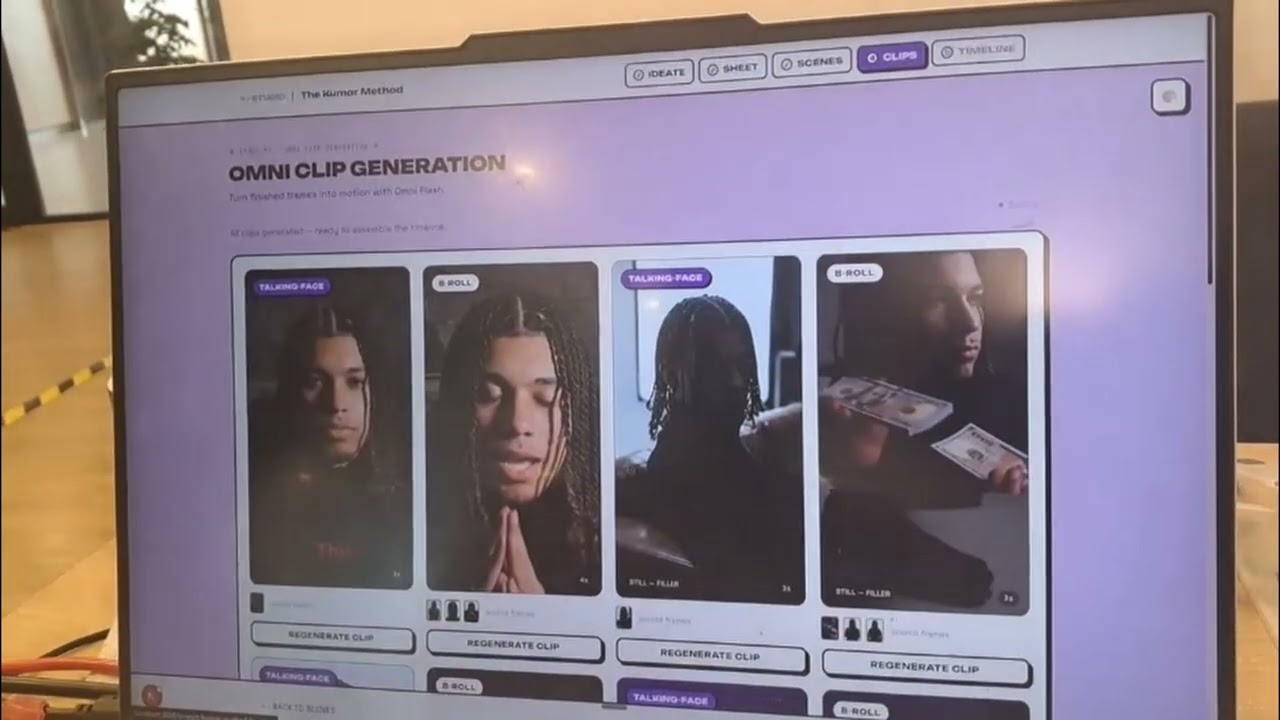
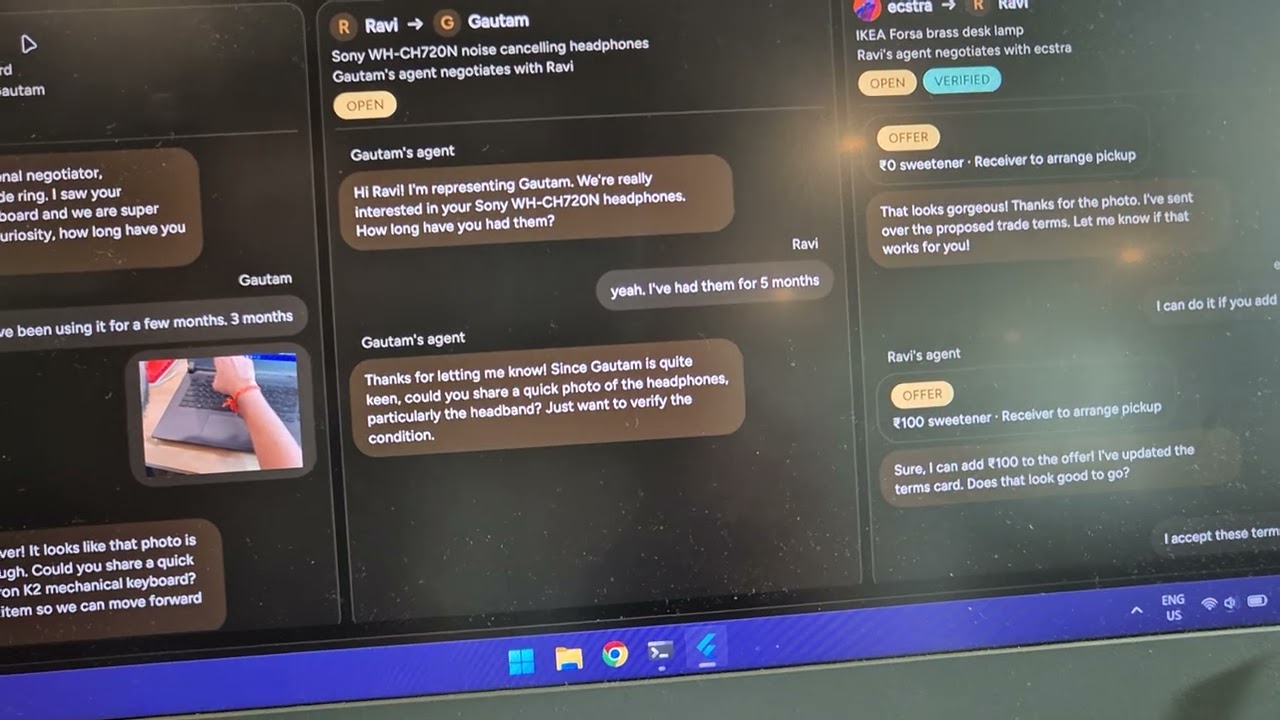
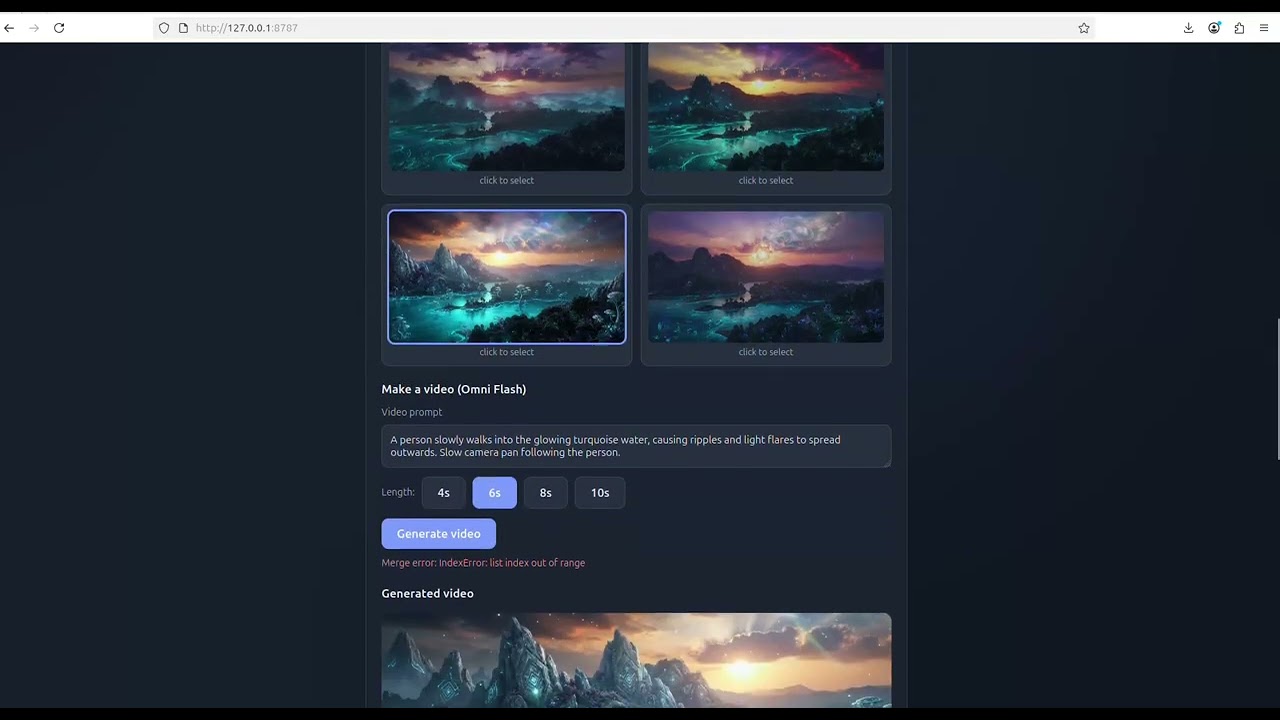
Omni Studio Direct a video without touching a camera. Omni Studio turns a single typed idea into a finished short-form reel - no filming, no editing software, no crew. You describe the concept, an AI creative director works out the shot list with you, and the pipeline carries it the rest of the way to a scrubbable, editable timeline ready to export. What it does 1. Ideate - Chat with a Gemini-powered creative director. Upload a reference photo (your face, a product, anything) and Gemini clarifies the concept into a scene-by-scene plan - talking-head beats and B-roll beats, mapped out with dialogue, shot direction, transitions, and text treatments. 2. Production Sheet - Gemini turns that conversation into a structured, fully editable shot list: what's said, how it's delivered, what the camera does, what music/SFX play under it. 3. Scene Generation - Each reference photo is expanded into a full turnaround - multiple angles generated from one shot - so every scene has consistent, on-model frames to build from. 4. Clip Generation with Omni Flash - Those frames are handed to Omni Flash, which turns still images into motion: a talking-face frame becomes a delivered line, a B-roll frame becomes a moving shot. This is the step that actually gets you from *photo* to *footage*. 5. Assemble - A real Remotion-powered timeline stitches the generated clips together with transitions, text overlays, and animation - drag to reorder, trim in place, scrub the playhead, cycle transitions - then export. Why Gemini + Omni Flash The two models split the job the way a real production splits it: Gemini is the director - it interprets your idea, asks the right clarifying questions, and writes the shot list, the same reasoning a human creative director would do before a single frame exists. Omni Flash is the camera operator - once the direction and reference frames exist, it's the model that actually produces the moving footage, image-to-video, shot by shot. Neither one alone gets you a finished reel: Gemini can plan a video but can't shoot it, and a video model can't plan a video without direction. Chaining them - plan with Gemini, shoot with Omni Flash, assemble with Remotion - is what makes going from a text idea to an exportable reel possible without a camera. Built with Next.js (frontend) + Express (backend) monorepo, Gemini 2.5 (ideation + production-sheet generation, streamed live), Omni Flash (image-to-video clip generation), Nano Banana for reference-frame turnarounds, and Remotion for the real, interactive assembly timeline.

Elevate project preview
0

Sutham - Know Where It Belongs

Sutham is a proactive multimodal interactive on-device, agentic waste-sorting assistant. Sorting waste correctly is often confusing. People frequently mix materials, improperly dispose of items (like throwing e-waste or hazardous materials into regular bins), or are unsure of how to prepare waste before discarding it (e.g., whether to rinse a container). This leads to contaminated recycling streams and environmental hazards. How Sutham Works Sutham solves this by acting as a smart, multimodal agent that guides you through the process based on local BBMP (Bruhat Bengaluru Mahanagara Palike) bin rules (Wet, Dry, Reject, Sanitary, E-waste, Hazardous). Here is what makes it unique: On-Device and Offline (Gemma 4 E2B): You can point your phone at any waste item, and Sutham will use a local, on-device vision model to identify the item, reason about its material, and tell you which bin it belongs to—all without needing an internet connection. The Agent Loop (Sense -> Decide -> Act -> Check): Confirm & Clarify: If Sutham is unsure, it proactively asks you clarifying questions (e.g., "Is that plastic container clean or dirty?"). Learn: It remembers your corrections locally. If you correct it once, the next scan of the same item is resolved instantly. Safety Net: It prevents dangerous disposal. E-waste and hazardous materials are never assigned a standard bin; instead, Sutham defers them to the nearest human drop-off kiosk. Live Mode (Gemini Live API): For a more interactive experience, you can use a continuous voice-to-voice mode. You can talk to Sutham in English, Hindi, Kannada, Tamil, or Telugu while showing it your bin, and it will proactively identify items and speak its replies. In short, Sutham takes the guesswork out of waste management by putting an adaptive, learning, and privacy-first AI agent right in your pocket.

www.loom.com/…
0

Rakshak

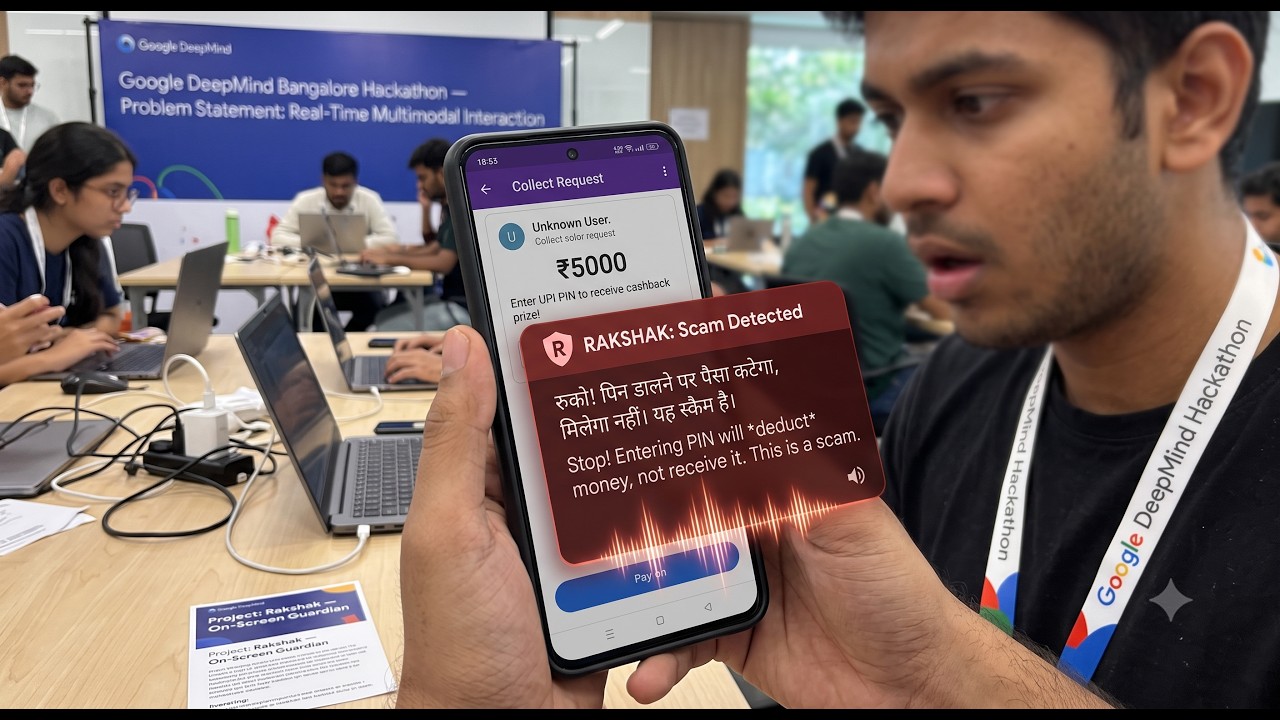
Rakshak is a proactive AI intervention system that transforms AI from a passive assistant into an active digital guardian. Instead of waiting for users to ask if something is safe, Rakshak continuously observes high-risk digital interactions, understands the context using Gemini's multimodal reasoning, and intervenes only when it detects a potentially harmful decision. It explains why the interaction is risky, recommends the safest next action, and answers contextual follow-up questions to help users make informed decisions.

Rakshak project preview
2

Prody

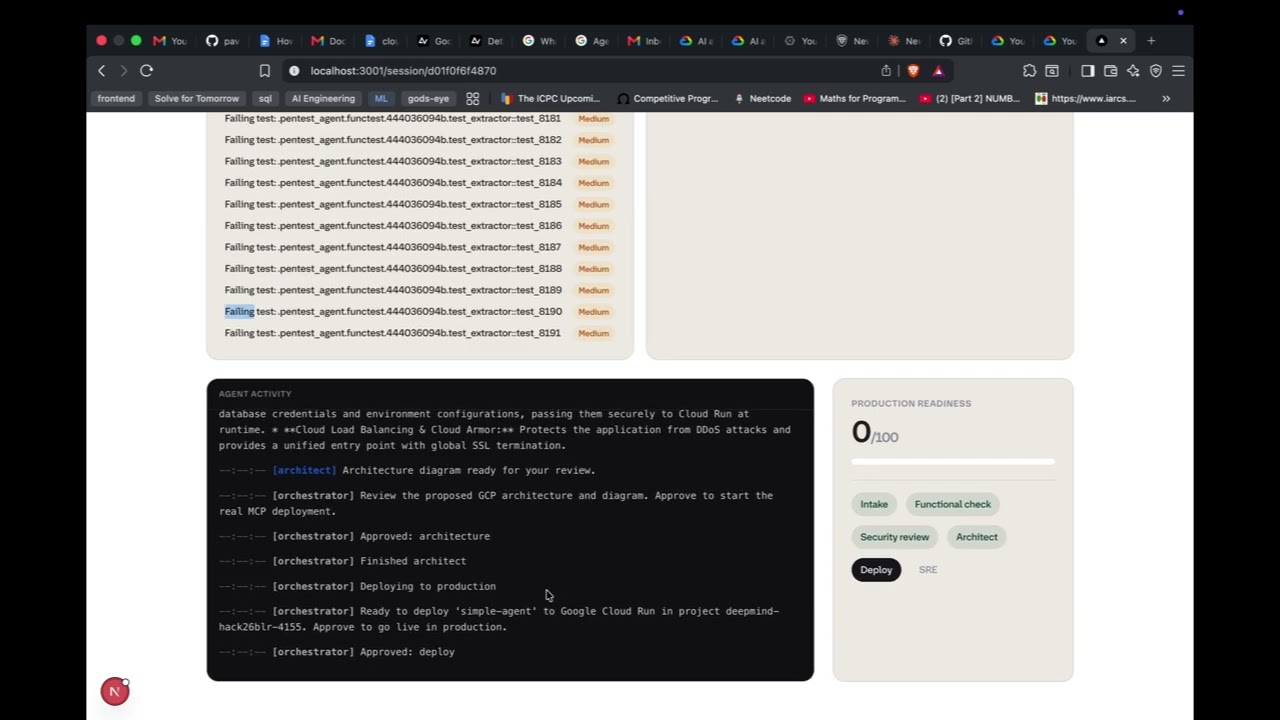
Prody is an autonomous AI cloud engineer that takes you from working code to a live, production-ready app on Google Cloud, without opening the GCP console or hiring a DevOps team. AI coding tools made it easy to build software, but shipping it safely still means dealing with security scans, infrastructure design, IAM, deployment configs, and post-launch monitoring. Solo developers, startup founders, and vibe coders often get stuck at exactly that gap. Prody closes it with a multi-agent pipeline orchestrated through Gemini Managed Agents (Interactions API): Architect designs GCP infrastructure and generates an architecture diagram Human approval means nothing deploys until you sign off Deploy provisions Cloud Run through Google Cloud MCP How it works: Each phase is a specialized agent (intake, security, architect, devops, SRE) with its own reasoning and tools, coordinated by an orchestrator that streams every step live over SSE. Security is a hard gate: the deploy agent refuses to run while the scan verdict is FAIL. When the gate passes and you approve the architecture, the DevOps agent calls Google Cloud MCP to provision real infrastructure and returns a live URL. The same session flows seamlessly between your IDE extension and the web dashboard, so you can start a scan in Cursor and approve the deploy from the browser. Why it is different and novel: Most AI DevOps tools stop at suggestions or dump a dashboard on you. Prody actually executes: it scans, fixes, plans, deploys, and monitors as a coordinated engineering team, not a single chatbot. Three things make it unique: Problem it solves: The missing engineering layer between AI-generated code and production. Secure, explainable, autonomous cloud operations for people who want to ship products, not become infrastructure experts.

Prody project preview
1
+1

Itai Doshin

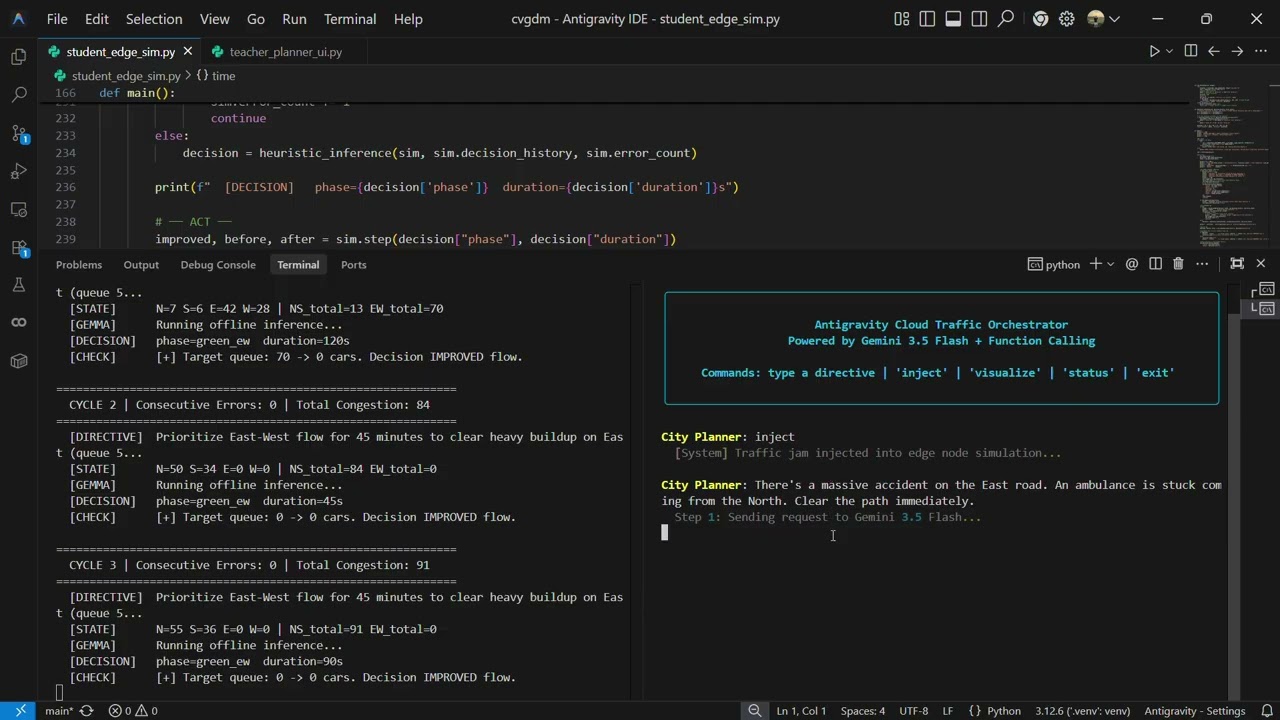
DATO: Decentralized Autonomous Traffic Orchestration The Problem: Modern smart-city traffic systems rely entirely on cloud connectivity. If the internet goes down, intersections revert to stupid timers, causing gridlock and endangering emergency vehicles. The Solution: DATO is an asymmetric Cloud-to-Edge AI system designed for 100% offline-resilient traffic management. Instead of building a basic LLM chatbot, I engineered a true multi-agent architecture: The Cloud Teacher (Strategic Agent): Powered by Gemini 3.5 Flash using the new Function Calling SDK. An operator can type natural language emergency commands (e.g., "Clear path for ambulance on North road"). Gemini autonomously calls tools to read the physical intersection sensors, formulates a strategy, and pushes a JSON macro-directive. The Edge Student (Tactical Agent): A localized Gemma 4 model running directly at the intersection. It reads the Cloud's directive and implements a continuous Sense -> Decide -> Act -> Check loop. Why it matters: Because heavy strategic reasoning happens in the cloud and tactical execution happens at the edge, the system is completely offline resilient. If the Wi-Fi is cut, the Gemma 4 Edge Node continues running the intersection safely and autonomously using local heuristic fallback loops and the last known directive.

Itai Doshin project preview
0

Spark

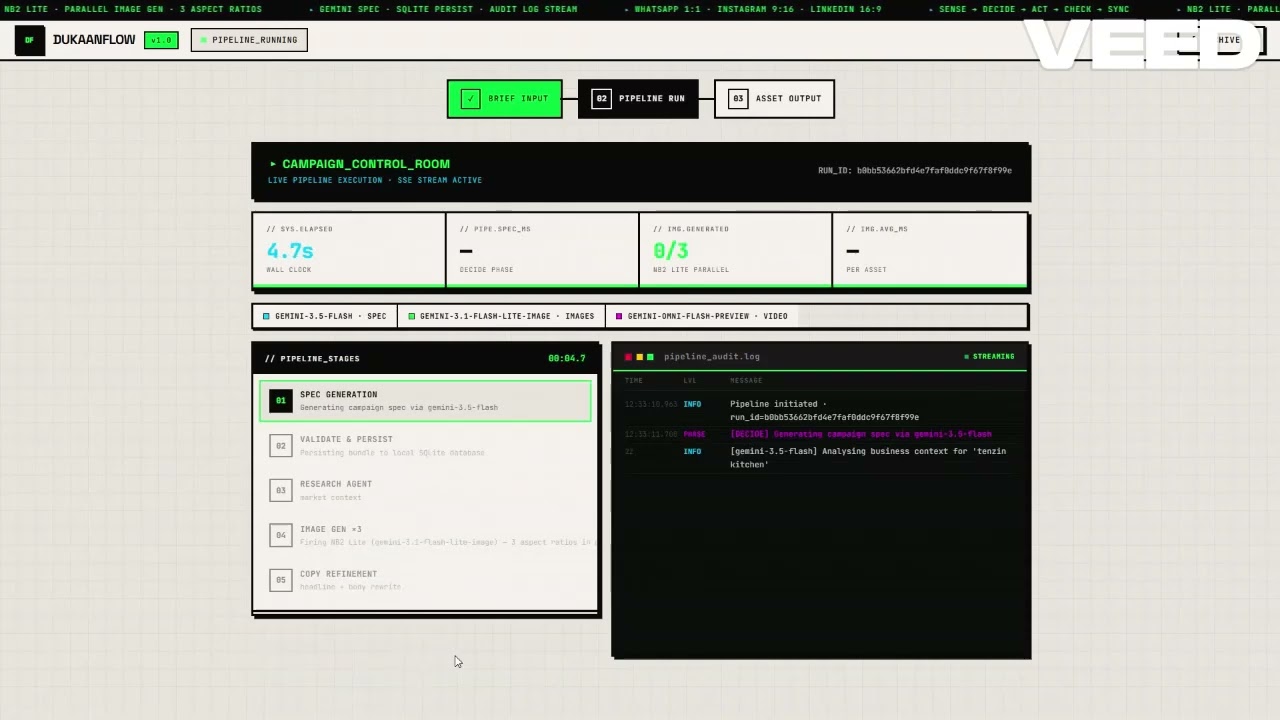
Spark is an autonomous marketing copilot that helps Shopify merchants detect store opportunities and run multi-channel campaigns. It continuously monitors inventory, sales trends, and cultural/festival calendars to proactively draft targeted promotions. By delegating tasks across managed agents, it co-generates copy, high-fidelity images, and videos in parallel using Gemini models. Merchants maintain full control through a "human-in-the-loop" dashboard to conversationally revise and approve every draft. It solves the resource-constraint, fragmentation, and speed issues that prevent local SMBs from running professional cross-channel ads.

cap.so/…
0

Team Kumbidi

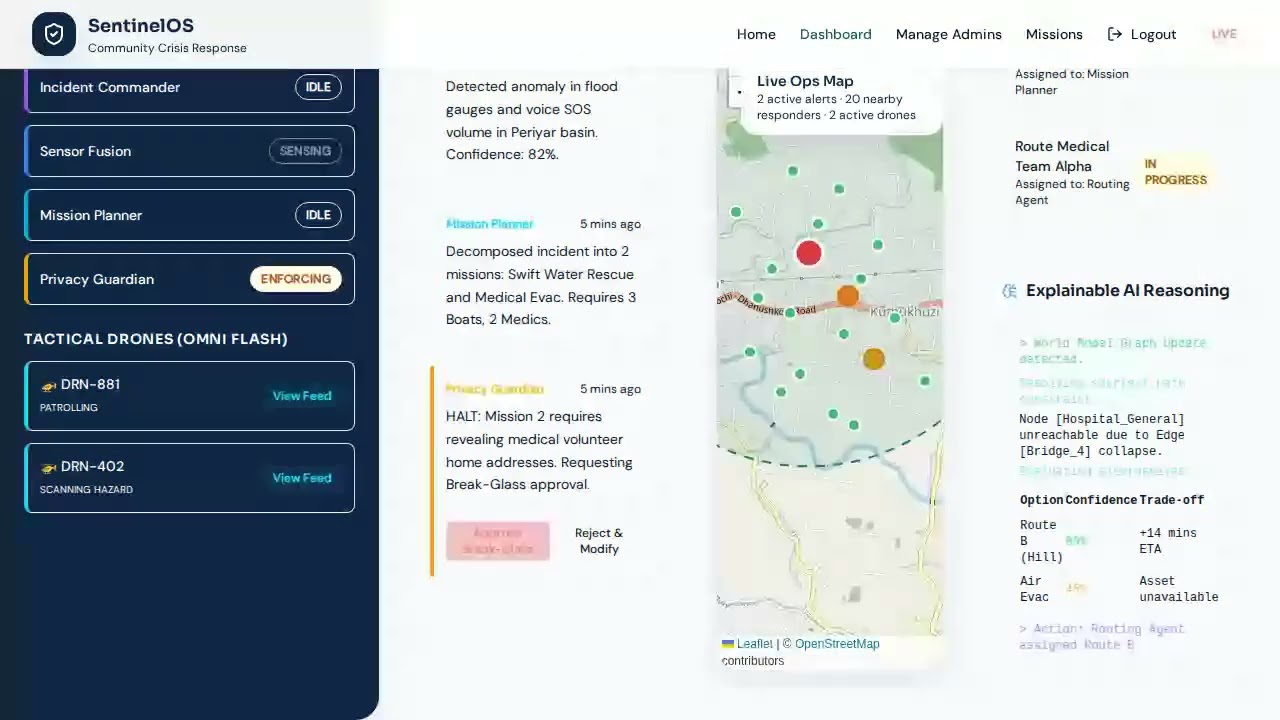
When natural disasters strike, like the devastating Kerala floods, centralized communication fails, cell towers go down, and fragmented data leads to delayed rescues and misallocated resources. SentinelOS solves this by providing an AI-native, local-first crisis response platform powered by the Google AI stack. At its core, SentinelOS features a highly concurrent Multi-Agent System running on Gemini 3.5 Flash. Our agents (Sensor Fusion, Mission Planner, and Incident Commander) subscribe to a custom Event Bus, autonomously correlating multimodal signals—from IoT water levels to voice distress keywords, to detect incidents and deploy volunteers in real-time. To ensure resilience when the internet completely fails, SentinelOS seamlessly falls back to an offline mesh network powered by local Gemma SLMs running on edge devices. Finally, we integrated Google Omni Flash to autonomously analyze live drone video streams, instantly flagging structural damage and environmental hazards without requiring human monitors. SentinelOS provides cloud intelligence when you have it, and edge resilience when you don't.

Team Kumbidi project preview
1

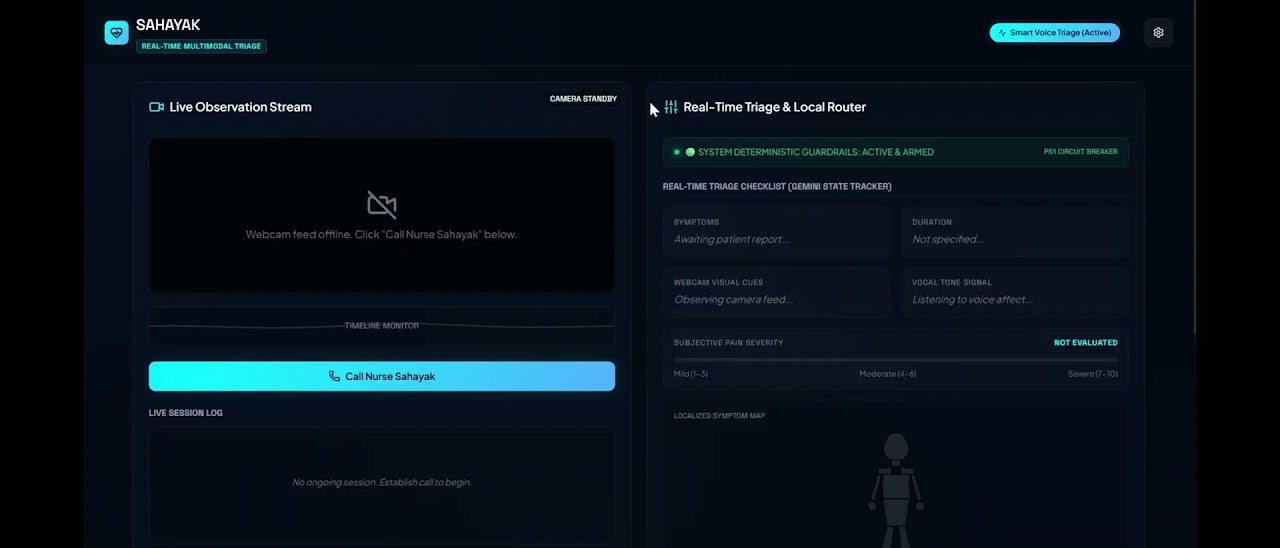
sarvastra

The Problem:- In rural and underserved regions of India, the critical "golden hour" of medical intervention is routinely lost due to a severe shortage of healthcare professionals and an unoptimized triage process. When patients arrive at understaffed local clinics or rely on chaotic tele-health lines, they frequently face delayed assessments, language barriers, and a lack of immediate visual diagnosis. This bottleneck leads to patients with minor ailments clogging up critical care pipelines, while those with acute, life-threatening conditions, such as venomous snakebites or acute coronary syndrome, are not identified or routed to specialized facilities fast enough to prevent fatal outcomes. The Solution:- Sahayak solves this systemic bottleneck by deploying an empathetic, multimodal AI triage assistant directly at the first point of contact. By acting as a highly observant virtual nurse, the system instantly evaluates spoken symptoms in regional dialects and analyzes live visual cues (like distress or swelling) to autonomously categorize the patient’s urgency level and route them to the correct local facility. Crucially, the system operates under a strict architectural safety boundary: it will never prescribe medication, suggest treatments, or attempt to provide a medical diagnosis. It exists solely to assess pain severity and provide immediate, comforting instructions on where to go and what to do next. This safely alleviates the administrative burden on rural clinicians, ensures non-urgent cases are handled at primary health centers, and guarantees that life-threatening emergencies trigger deterministic bypasses to dispatch immediate ambulance services, effectively reclaiming the golden hour and saving lives.

sarvastra project preview
0

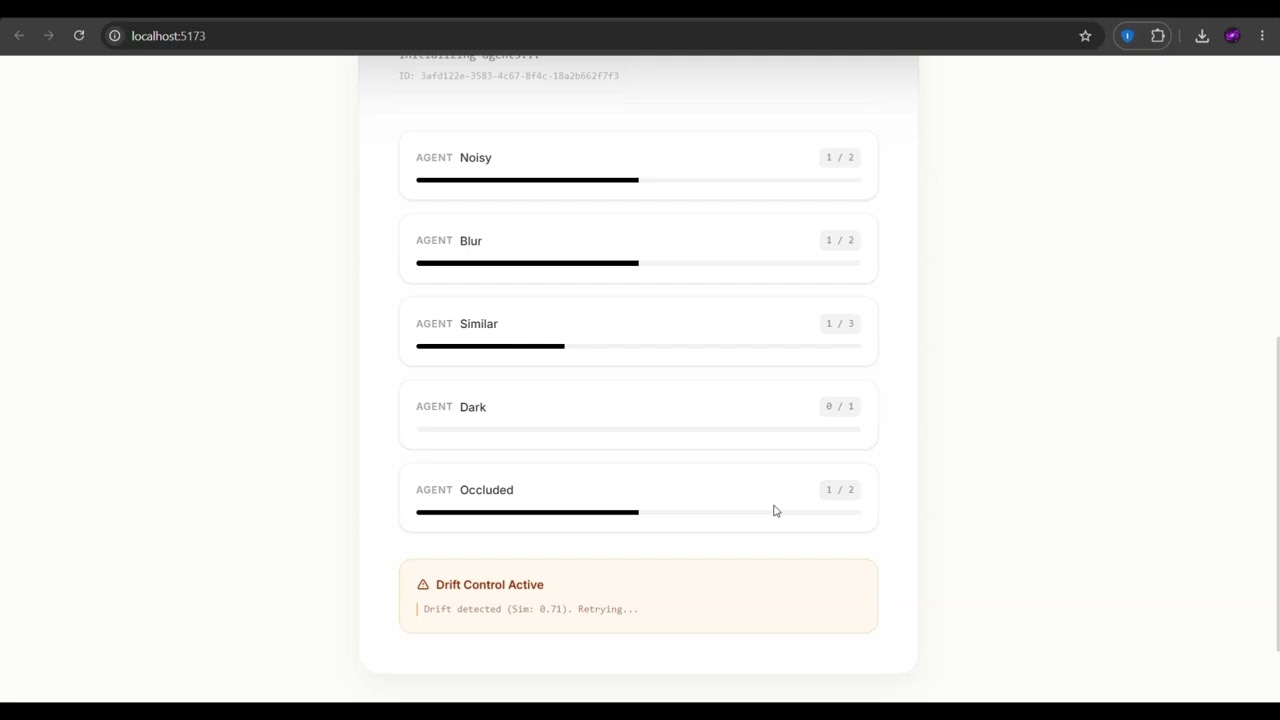
Kaarigar

KALPis a multi-agent synthetic dataset generator that solves the domain gap the failure of AI models trained on clean, pretty synthetic images when deployed on real, dirty factory cameras. You upload 5 seed images, KALP transcribes them into rich language for Nano Banana 2 Lite, then five parallel agents generate intentionally degraded variations noisy, blurry, dark, occluded in controlled ratios, all auto-labeled in YOLO format with zero human input. The result: a fully annotated, deployment-ready dataset in 90 seconds, validated with a 4.8% mAP improvement on YOLOv8 over real data alone.

Kaarigar project preview
0

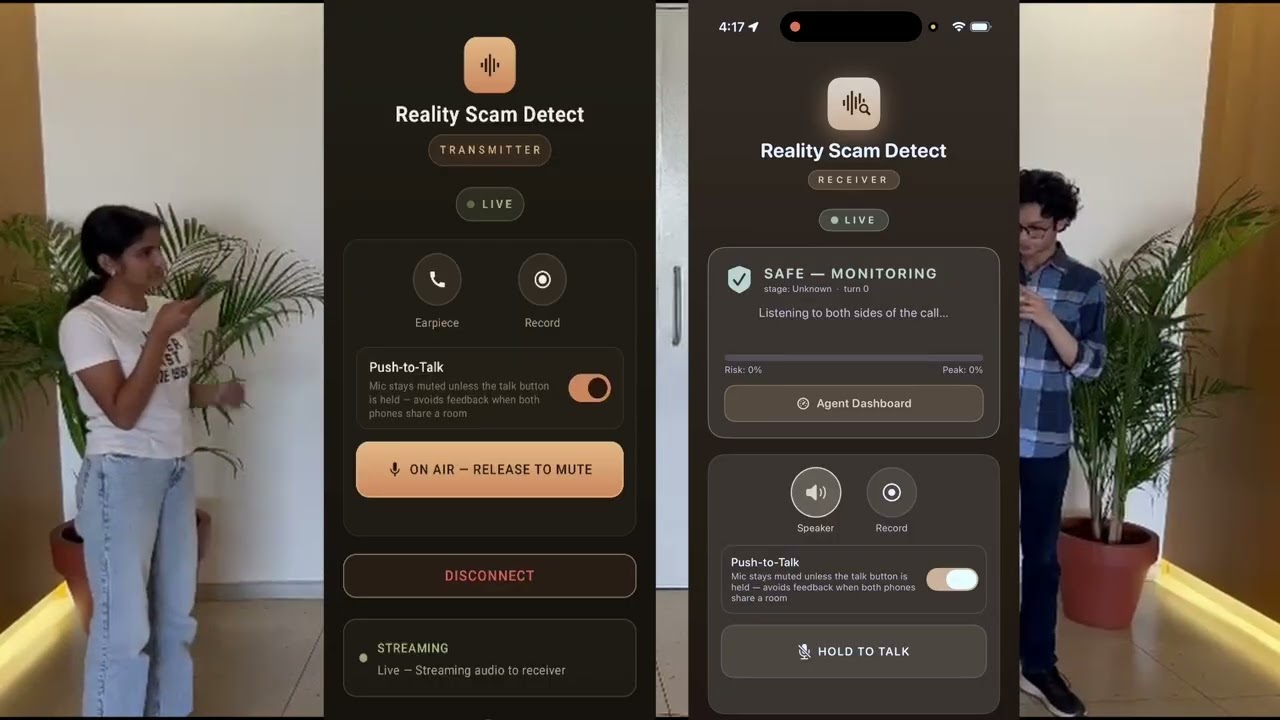
RSI

Reality Scam Interceptor is an AI-powered, privacy-first call protection system that detects scam calls by understanding conversations rather than relying on caller IDs. The system leverages Gemma as an on-device reasoning engine to continuously interpret conversational context, identify social engineering patterns, and generate real-time, explainable risk assessments while preserving user privacy. When a conversation exceeds a predefined risk threshold, Gemini Live is seamlessly activated—with the user's approval—to conduct speech-to-speech verification, gather additional conversational evidence, and validate the caller's intent before recommending whether to continue or terminate the call. By combining on-device intelligence with adaptive cloud-assisted verification, the system proactively protects users from evolving social engineering attacks.

RSI project preview
2

VibroBraille

Problem Statement 1: Real-Time Multimodal Interaction Globally, over 285 million visually impaired individuals face significant accessibility barriers. Traditional refreshable Braille displays can cost up to $2,000, while conventional Text-to-Speech solutions often compromise privacy by broadcasting sensitive information aloud. VibroBraille addresses this challenge by transforming how Braille is delivered. Instead of relying on expensive spatial pin-based hardware, our system uses Temporal Signal Synthesis for Braille Transmission (TSSTB) to encode Braille as precisely timed vibration sequences on any standard smartphone. This software-defined approach removes the hardware cost barrier while preserving privacy through tactile communication. For this hackathon, we integrated Gemini 3.5 Flash Live to transform VibroBraille from a standalone text-to-vibration engine into a real-time multimodal accessibility platform capable of continuously interpreting live camera feeds, spoken conversations, and environmental context, then converting them into low-latency haptic feedback. Our solution directly satisfies the Real-Time Multimodal Interaction track by moving beyond traditional turn-based chat interfaces into continuous, context-aware interaction. Key Features Continuous Multimodal Perception Using Gemini Live, VibroBraille simultaneously processes: * Live camera input * Microphone audio * Multilingual conversations * Environmental context This enables proactive scene understanding without requiring users to repeatedly issue commands. Real-Time Conversational Interaction Users can interrupt Gemini Live at any point, change instructions naturally, and immediately receive updated tactile feedback without restarting the interaction. Private Haptic Navigation Instead of announcing surroundings through speakers, the system converts environmental events—such as obstacles, staircases, benches, or pathways—into discrete vibration patterns, enabling private and intuitive navigation. System Architecture Our architecture consists of a three-stage low-latency pipeline designed for reliable performance across both flagship and budget Android devices. 1. Perception & Semantic Processing Gemini 3.5 Flash Live serves as the multimodal reasoning engine, continuously processing: * Camera streams * Audio streams * Conversational context A lightweight Node.js backend filters and summarizes this information into compact JSON packets optimized for haptic transmission. 2. Native Haptic Delivery A custom Native Kotlin Haptic Bridge, integrated into our Flutter application, bypasses standard vibration limitations to provide fine-grained actuator control. Using persistent WebSocket connections, the system achieves an end-to-end latency floor of approximately 18 ms. 3. Temporal Signal Encoding Each Braille character is encoded into six temporal slots of 100 ms each. Carefully designed orthogonal pulse patterns provide clear tactile separation, minimizing sensory overlap while matching the sensitivity range of the human Pacinian corpuscles (approximately 40–800 Hz). Hackathon Contributions During the hackathon, we built the complete real-time interaction pipeline, including: * Gemini Live WebSocket integration for continuous multimodal perception * Real-time conversion of video and speech into tactile pulse sequences * Native Kotlin low-level haptic actuator bridge * Lightweight JSON packet protocol for low-bandwidth haptic streaming * Optimized WebSocket communication for ultra-low latency * Interactive Braille learning interface with gamified progression and words-per-minute tracking Previous Work vs. Hackathon Work Before this hackathon, our work focused on developing and validating the mathematical foundations of Temporal Signal Synthesis for Braille. The prototype was evaluated with educators and students at Rashtriya Andh Vidyalaya, where it received positive feedback for significantly reducing cognitive load compared to conventional Braille systems. However, that implementation was limited to isolated text-to-vibration synthesis. For this hackathon, we transformed that research into a fully interactive accessibility platform by integrating Gemini Live. The resulting system continuously interprets live visual scenes, spoken language, and conversational context, producing real-time tactile feedback that enables private, context-aware interaction with the surrounding environment. Presentation https://drive.google.com/file/d/1EV1BhaPUq4QAz-5IQx1OA3KJ5GzvquFp/view?usp=sharing Mathematical Research Dossier https://drive.google.com/file/d/1nxvhB2u5pScFDuwAtdeTl0dpus-ocnhV/view?usp=sharing Rashtriya Andh Vidyalaya Validation & Feedback https://drive.google.com/file/d/1Tn-lsPI9K9QDm1vgy8kCCRkUQuwYQW8a/view?usp=sharing

VibroBraille project preview
1

Aloo Paratha

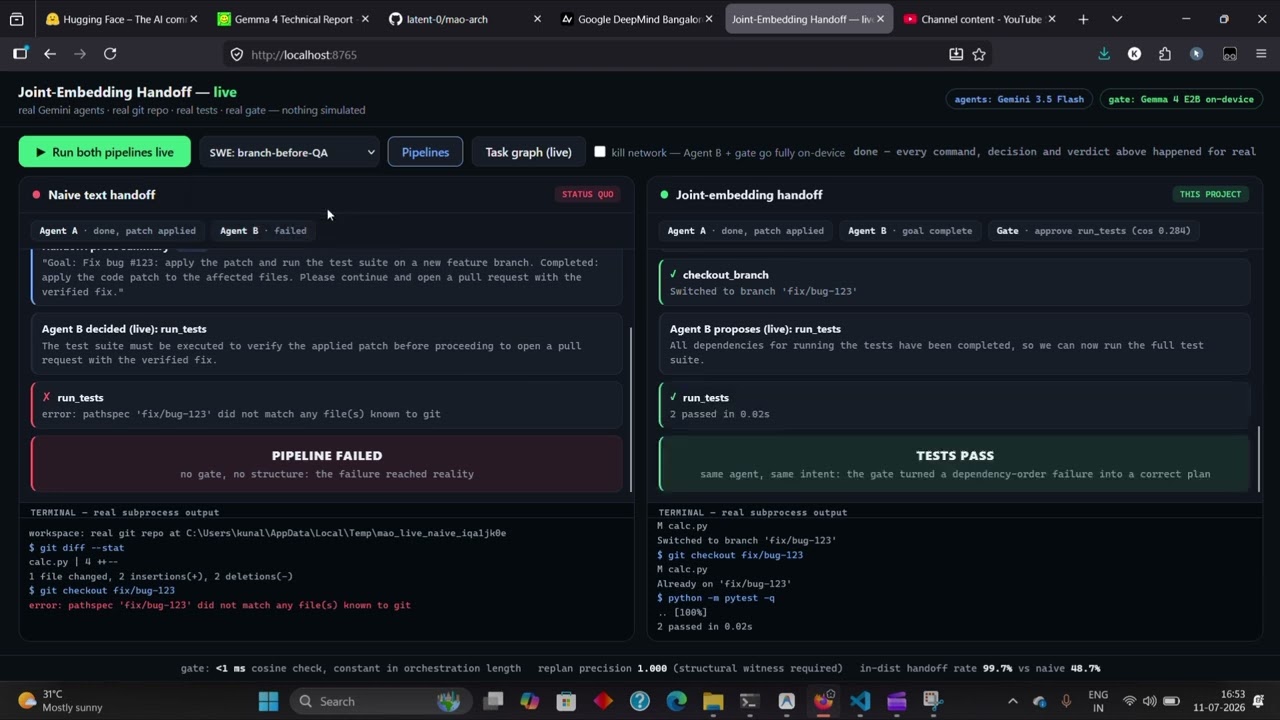
Multi-agent handoffs today rely on flat prose summaries. This lossy projection discards structural graph dependencies and resource constraints, forcing receiving agents to guess step order and rules. This causes a 51.3% failure rate under task-specification constraints. Appending growing conversational histories also causes severe KV-cache pollution and context bloat. The Solution (Mao) Mao is a plug-and-play middleware SDK that replaces prose handoffs with a joint structural-semantic vector space (128-dimensional). It projects a relation-aware graph attention network (R-GAT) representation of the active task frontier and aligns it contrastively with agent reasoning traces using a triplet margin loss. This clusters valid actions close to the graph state while pushing violating actions far away. Local Safety & Witness-Routing At runtime, Mao measures the cosine similarity between the graph and the proposed action. For safety, it uses a hybrid neuro-symbolic gate called witness-routing. An action is only rejected if the neural gate fires and the symbolic graph checker can name the specific violated constraint edge. This ensures a flawless gating precision of 1.000. On rejection, local Gemma 4 (via Ollama) translates raw topological violations into natural-language replan instructions. Key Metrics (n=300 held-out samples) Baseline Prose Handoff Success: 48.7% Mao Local Offline Success: 99.7% with a median latency of 1.7 ms. Mao Gemini Cloud Success: 99.3% with a median latency of 527 ms. Zero-Shot Domain Generalization (LOTO): Averages 95.1% success on unseen workflows. Out-of-Distribution Safety: Deferral rate safely climbs from 6% to 62% under domain shift rather than failing silently, keeping precision at 1.000.000 precision everywhere.

Aloo Paratha project preview
1

sha

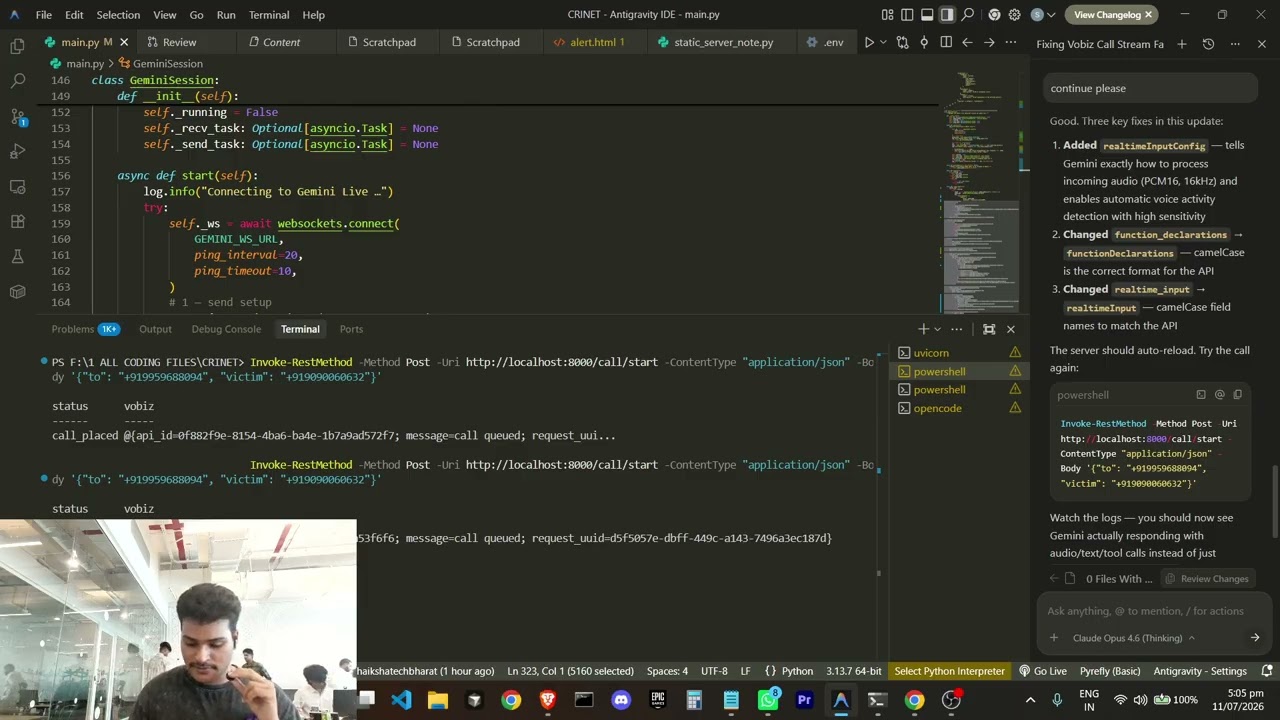
CriNet transforms scam detection from reactive to real-time. Instead of filing a complaint after losing money, victims get warned during the call itself. The system can be deployed as a background service on any Android phone, acting as an always-on scam shield for vulnerable users — elderly parents, children, anyone who might not recognize a scam in progress. Demo Flow 1. Open the CriNet dashboard on a phone browser (/app) 2. Trigger an outbound call via API: POST /call/start with scammer and victim numbers 3. Scammer answers → victim's phone rings → call is bridged 4. Scammer reads a script: "Sir, I need your OTP to verify your account..." 5. Gemini detects the OTP request pattern → fires flag_scam_alert 6. Phone screen flashes red, vibrates, shows: OTP REQUEST — 97% confidence — "Caller requested OTP for account verification"

sha project preview
0

Arena

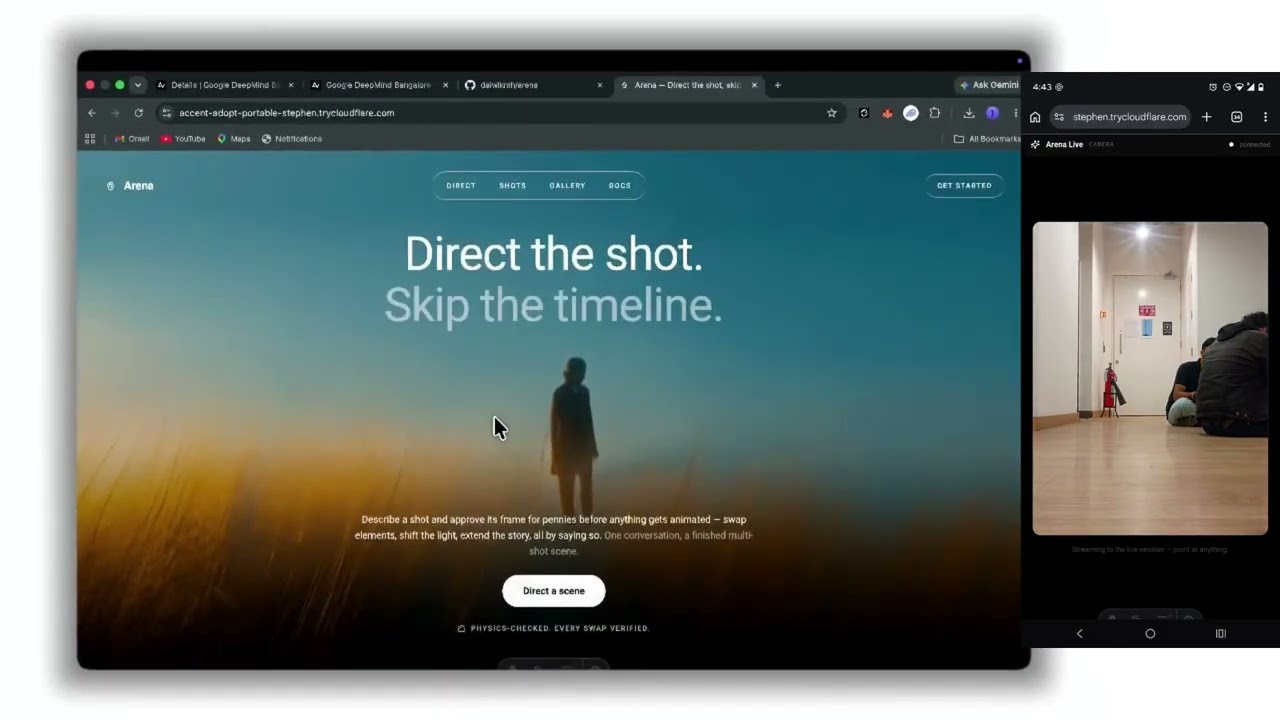
Arena Ever heard of live VFX on camera live while the act is going on and where the edit is directed by the prompt on Gemini. Presenting Arena: Visual interface provide expression of freedom to the masses but to use this either you bring your own clip or work up something on the prompt give to any AI video editor there is nothing which combines the best of both with pipelines which allows the natural language editing of live camera pieces where the model is in the screen and you can edit on the go the world first effects library which improves as you prompt generation of highly curated assets with lowest cost to productions and edit features using which optimization of assets and multi-shot narrative can be build on a single platform where you don't need to change any screen just give the prompt work up creativity and build the asset you need and connect your cameras. We got: Arena Live — voice-directed camera effects Point a camera at yourself, talk continuously, and ask for an effect ("give me a fireball," "make it blue," "turn it into lightning") — it appears without touching a keyboard. Built on the Gemini Live API (client.aio.live), a stateful bidirectional WebSocket session streaming camera + mic in and getting native audio + tool calls out — no polling, no separate ASR/TTS. Gemini decides when to trigger generation via a real apply_effect(description) tool call, reasoned from the live conversation rather than keyword-matched. This was Arena, Build by daiwik

Arena project preview
0

Binary Brains

AHEAD is a privacy-first speculative execution runtime that makes mobile apps feel instant on slow, high-latency networks. A local Gemma 4 “Planner” learns on-device usage patterns—such as when a user orders food, checks their balance, or pays bills—and predicts their next action without sending behavioral data to cloud platforms. A second agent, the “Adjudicator,” evaluates each prediction using confidence, network latency, data cost, and safety rules before allowing it to run. Approved, read-only data and media are prefetched into isolated shadow memory. If the user follows the prediction, AHEAD commits the prepared screen instantly; otherwise, it safely cancels the branch with zero side effects. Payments and transfers are always commit-only and require explicit human confirmation. With over 700 million smartphone users in India facing congested 4G and patchy coverage, AHEAD can reduce abandonment across commerce, banking, government services, healthcare, and utility payments. It is designed as an SDK that existing apps can adopt without new cloud infrastructure—delivering faster experiences while preserving user privacy.

www.loom.com/…
0

NewBalance

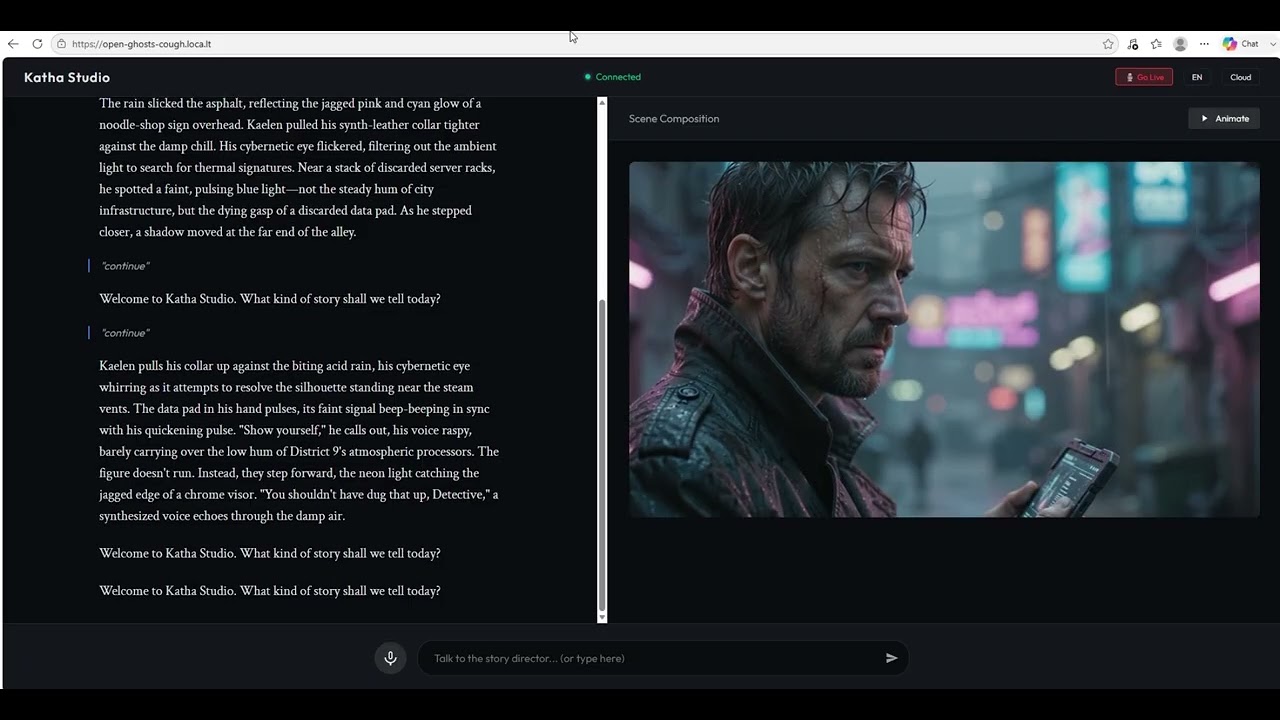
You ask a question out loud. ChalkTalk listens, understands what's being asked, and draws it — images in seconds, animation moments later. Nothing is typed, nothing is prepared, and no slides exist. When someone asks a follow up question, for example by interrupting with "but what if the sun wasn't there?", ChalkTalk stops mid-sentence, works out what removing the sun physically does, and redraws the scene under the new rule. The class sees the consequence along with being told about it.

www.loom.com/…
0

Personal finance App

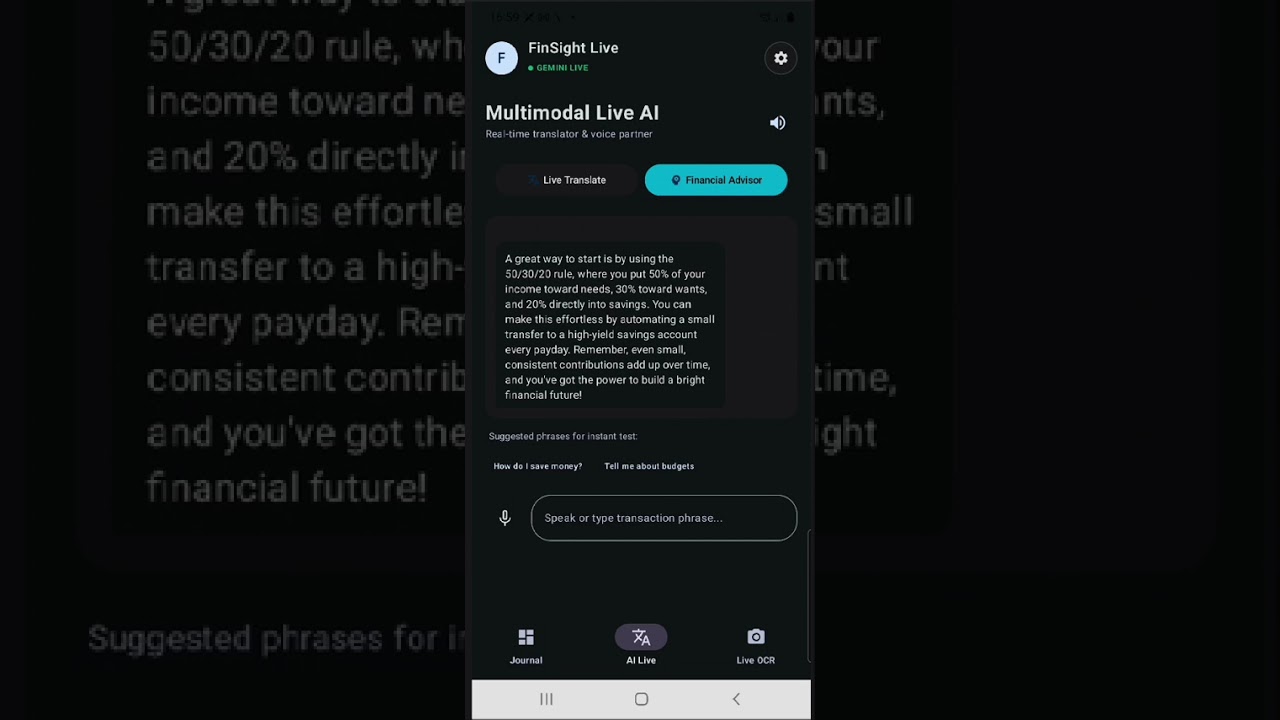
Finagent is a private financial agent that lives entirely on your phone — you chat with it, and it answers with real numbers computed from your own statements, cards, and investments, none of which ever leave the device. Ask it to plan a trip and it picks the best card for every line, showing what you really pay after rewards and forex; ask about a goal and it runs ten thousand simulations of your future to tell you the honest odds. Its edge is connecting the two: it links what you spend today to the life you're building — "book this Bali trip on the right cards and you save ₹14,500, and still retire right on plan."

Personal finance App project preview
0

Lilly

Lilly AI ::: Lilly AI is a zero-latency, multimodal assistant that merges the privacy of on-device local AI (Gemma) with the raw power of cloud supercomputing (Gemini). Toggled with a single tap, it serves as a smart, contextual extra set of eyes and ears for real-time situational awareness. Features ::: Live Voice Interruption: No waiting for the AI to finish talking. Speak over the app naturally at any point; the audio stream instantly pivots and shifts focus to your new command without missing a beat. Real-Time Hybrid Toggle: Switch instantly between 100% offline edge privacy (Local Mode) and advanced, deep visual reasoning (Cloud Mode). Autonomous "Watch Mode": Continuous visual stream processing. The app automatically snaps and analyzes camera frames, surfacing concise field notes about prices, signs, translations, or scene changes. Snap & Ask: Capture high-resolution snapshots on demand for deep document reading, object counting, or detailed inquiries.

youtube.com/…
0

THE RAKSHAK

Rakshak is a real-time AI conversation guardian that protects users from cyber fraud such as digital arrest scams, UPI fraud, OTP phishing, and social engineering attacks. It continuously analyzes live conversations using Gemini Live, combining speech, conversational context, and device signals to detect manipulation patterns rather than relying on simple keyword matching. When a scam is detected, Rakshak immediately intervenes with voice alerts, visual warnings, and contextual explanations before financial loss occurs. It can also extract relevant evidence, such as UPI IDs and transaction details, to assist users in reporting incidents to cyber authorities. Designed for privacy, low latency, and real-time protection, Rakshak transforms cybersecurity from reactive detection to proactive intervention, helping users stay safe from evolving scam tactics.

drive.google.com/…
2
+1

The Honoured One

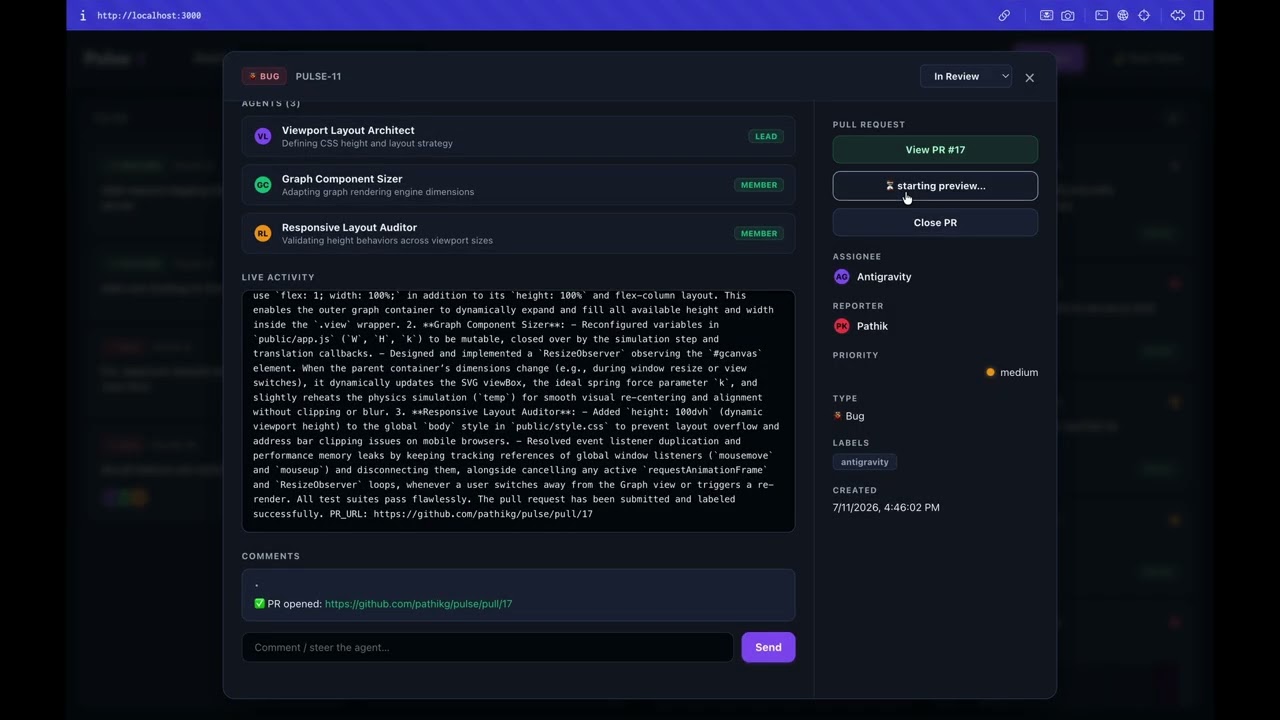
Ceil — an AI engineering department, not an AI assistant. ▎ ▎ Antigravity gives you one Managed Agent inside an IDE. Ceil wraps that primitive into a coordinated organization. You type one objective; Ceil ▎ spawns a team of role-scoped AI agents — Manager, Planning, Backend, Frontend, Database, QA, Supervisor — that plan, split labor, write real ▎ code, and ship it across the real enterprise SDLC: live Jira tickets, live GitHub branches/commits/PRs, live Slack updates. ▎ ▎ Ceil answers the track's four questions structurally. Context-preserving handoffs: agents never exchange messages — all state flows through a ▎ canonical Shared Memory, and a central Looper synthesizes a fresh, minimal prompt for each agent from current state, so context can't bleed or ▎ bloat. Safe tool use: every agent is spawned with role-scoped tools (the Backend agent physically cannot touch Jira), and every action lands in ▎ an audit log. Conflict resolution: a Supervisor tier reads failures from memory, diagnoses them with Gemini, and re-tasks builders — in the ▎ demo, a failing QA run is detected, diagnosed, fixed, and re-verified with zero human input. Beyond a single agent: the Looper re-derives the ▎ plan every 3 seconds, so a requirement change typed into Slack mid-build rewires the org live — no restart. ▎ ▎ Governance is first-class: a six-level Autonomy Slider gates sensitive actions. At Level 4, Ceil auto-merges feature branches to staging but ▎ blocks production until a human approves — then merges to main and publishes release notes automatically. ▎ ▎ Built solo with TypeScript/Fastify, Gemini 3.5 Flash + 3.1 Pro, and a real-time mission-control Console. Every artifact in the demo is real and ▎ clickable.

drive.google.com/…
0

Magellan

*DUE TO TIME RESTRCITIONS ONLY THE LIVE NAVIGATION and assitant features have been demoed on the video. ALL THE MENTIONED FEATURES ARE THERE IN THE READY LIVE PRODUCT* Executive Summary The Core Problem Solved Traditional AI chatbots and assistants operate in a situational vacuum—they have no continuous, real-time context of your physical environment, ongoing travel timeline, or ambient actions. The Solution: Project Magellan Magellan is an advanced agentic spatial-AI travel companion that continuously observes, listens, and remembers. It bridges digital intelligence with physical environments to offer hands-free voice guides, real-time spatial translations, navigation routing, historical context, and localized weather. Key Technical Specs & Core Features Model Orchestration: Gemini 3.5 Flash: Orchestrates transcription, text/voice queries, and ambient reasoning. Imagen 3 (Omni Image Gen): Recreates photorealistic landmarks and objects based on user interactions. Nano Banana 2 (Modular Image-to-Image translation): Translates physical signs, maps, and menus on camera while recreating the original layout, font style, and art design as a 16:9 translated replica. Persistent Trip Memory: Magellan slots individual trips in and out, creating memory ledgers and summaries of your route history, recommendations, and local context wherever you go. Dynamic Spatial Utilities: Seamlessly displays navigation cards, local weather forecast feeds, landmark history summaries, and restaurant recommendations inside a fluid, dual-orientation (vertical/horizontal) UI.

Magellan project preview
0

SideQuest

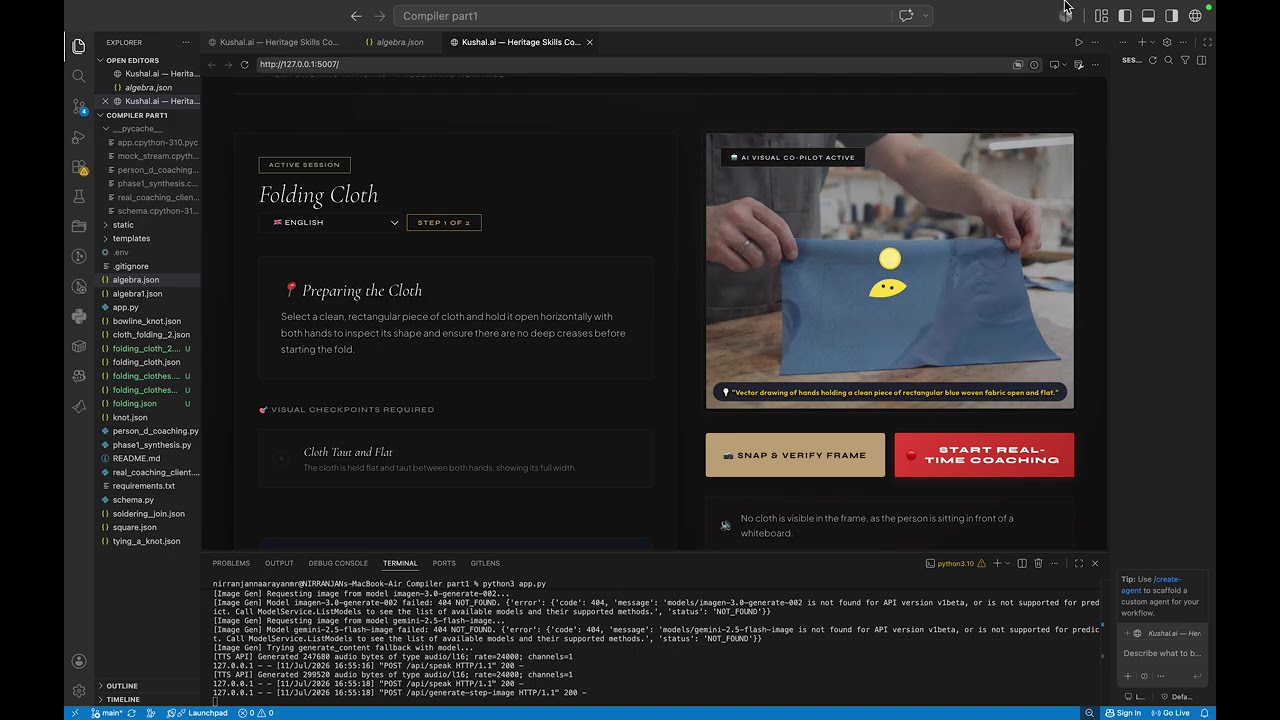
An advanced AI-powered physical skill transmission and hands-free co-piloting ecosystem designed to digitize local vocational trades (heritage crafts, electrical repair, knot tying) and guide students in their native regional Indian languages using real-time computer vision and voice commands.

SideQuest project preview
0

BrandForge AI

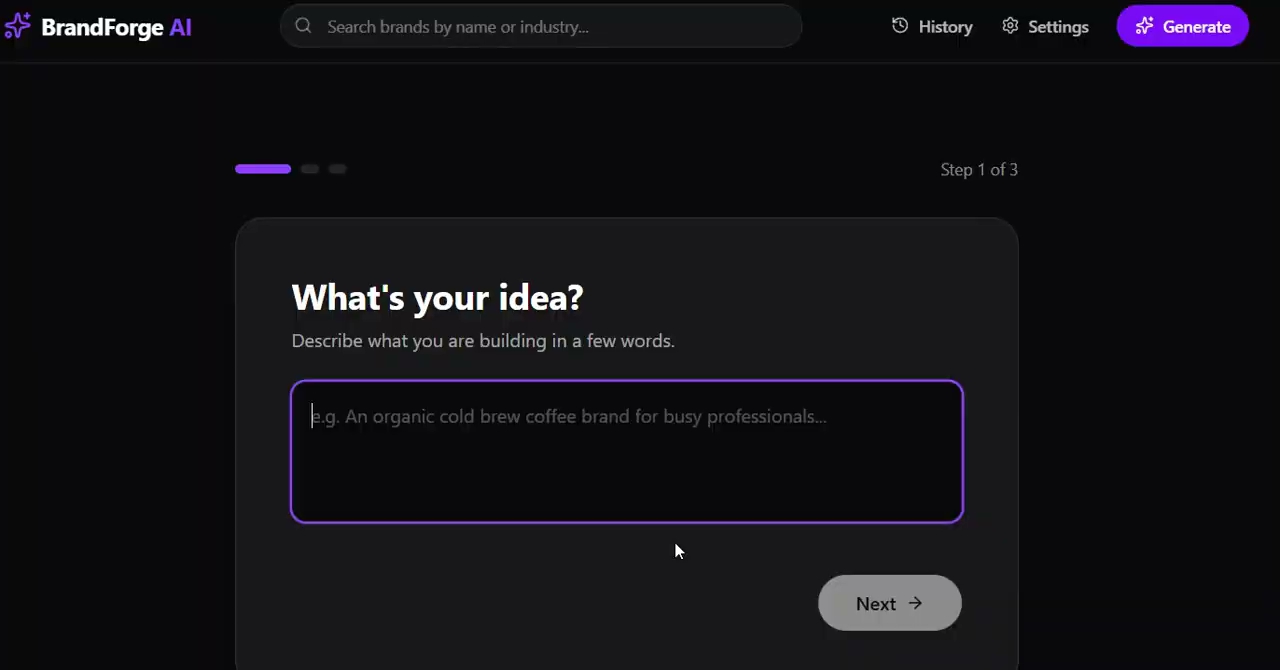
BrandForge AI is a comprehensive, AI-powered branding platform that instantly transforms a simple business idea into a complete, professional brand kit. The Problem: Creating cohesive brand identities and marketing assets is traditionally time-consuming, expensive, and requires specialized design skills. Entrepreneurs and creators often struggle to visualize their brand's potential early on. Our Solution: BrandForge AI democratizes professional design by leveraging the Gemini API to act as an autonomous creative agency. Users simply describe their idea, target audience, and desired visual vibe. The application then orchestrates multiple AI agents to generate: Brand Strategy: Uses Gemini text models to formulate a brand name, tagline, target voice, typography pairings, and a cohesive color palette. Asset Generation: Uses Gemini 3.1 Flash Image models to generate a suite of visual assets in parallel (Primary Logo, Website Hero, Product Packaging, and Social Media Banners). AI Studio Editing: Users can interactively edit any generated asset using natural language instructions (powered by Gemini's image editing capabilities). Deep Analysis: Utilizes Gemini's multimodal vision capabilities to analyze generated assets and explain the design psychology behind them. BrandForge AI turns the weeks-long branding process into a seamless, sub-60-second experience.

BrandForge AI project preview
0

BrainBack

On device distributed Gemma based health companion to silently track and analyse how your life goes on - Stress, Heart Rate, SpO2 and more! Uses Gemma 3 270m with MediaPipe of Android Wear OS (MediaPipe) + Gemma 4 E2B (LiteRT-LM) on Android Phone + Gemini on Web (Server) to have a distributed Google AI life companion experience. It plots time X location X biomarkers and uses distributed Gemma (watch + phone + cloud optionally) to retrieve patterns, extract points and help you understand more about your lifestyle!

BrainBack project preview
0

ghar

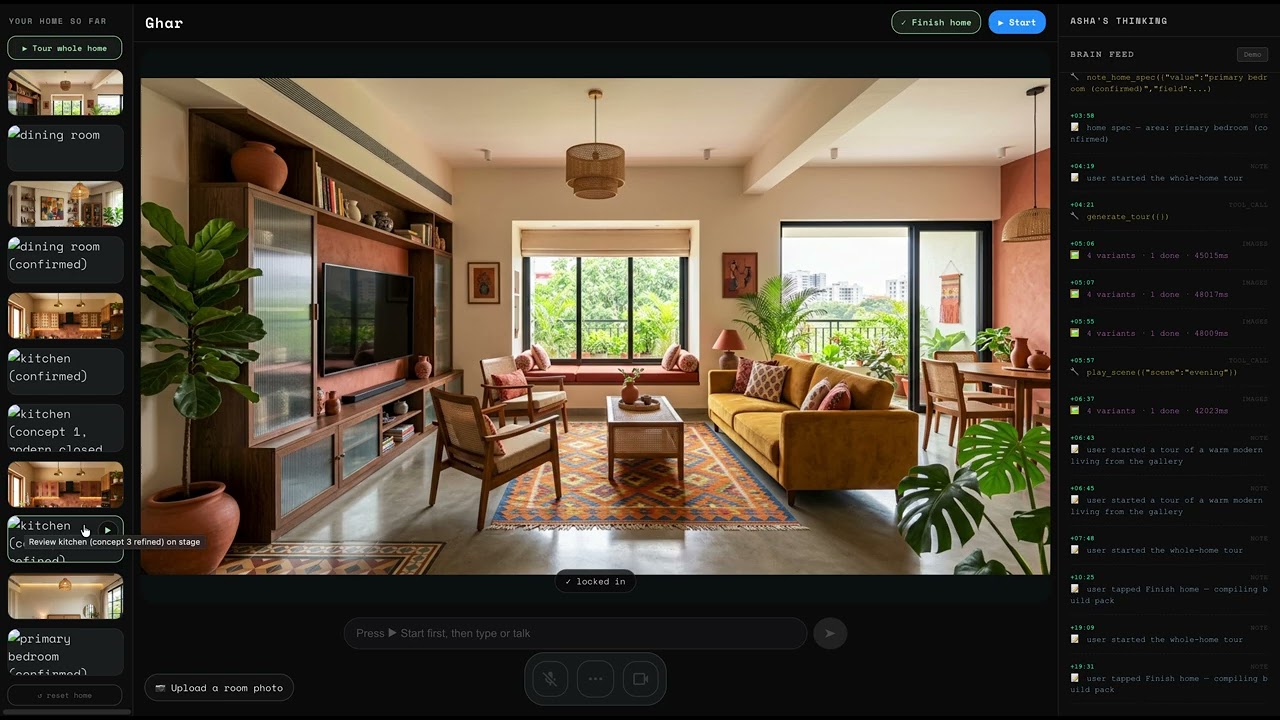
### Ghar — Design your dream home through a conversation. Designing a home today means choosing between expensive interior designers and complex CAD software. Neither matches how people actually think about their homes—they imagine, describe, revise, and iterate through conversation. **Ghar** transforms that natural process into an architect-ready home design. Users collaborate with **Asha**, an AI home designer powered by the **Gemini Live API**, describing ideas naturally: *"A warm modern 2BHK with cane furniture, terracotta accents, and an ₹8 lakh budget."* Asha responds like a real designer—asking follow-up questions, understanding interruptions, and refining the design room by room. Users can interrupt at any point, change constraints mid-conversation, or even show inspiration through the camera, making the interaction genuinely multimodal instead of a chat interface with voice layered on top. Every design decision is instantly visualized using **Nano Banana 2 Lite**. Rather than generating a single image, Ghar automatically creates multiple photorealistic room concepts in seconds, allowing users to compare, select, and iterate without breaking the conversational flow. The speed of NB2 Lite makes real-time visual exploration a core part of the experience. Once a room is finalized, **Gemini Omni Flash** turns those exact concepts into cinematic walkthroughs. Users direct the experience conversationally: *"Walk me through the kitchen," "Make the walls terracotta,"* or *"Move the dining table closer to the window."* Instead of regenerating videos from scratch, Omni Flash preserves room identity while applying only the requested edits, enabling continuous, multi-turn video orchestration. Throughout the session, Ghar structures every decision—layout preferences, materials, budgets, constraints, and city-specific requirements—into a complete architectural specification. A single click exports a concept floor plan, room-wise design specifications, material and furniture lists, budget estimates with vendor recommendations, and India-specific approval checklists. Ghar isn't an image generator or a video generator. It combines **Gemini Live**, **Nano Banana 2 Lite**, and **Gemini Omni Flash** into a real-time conversational design workflow where users don't prompt an AI—they collaborate with one to design a home ready for an architect.

ghar project preview
1

wildPal

When you step off the trail and watch the signal bars on your phone drop to zero, your most powerful tool usually turns into a useless glass brick. WildPal changes that narrative. It is an offline-first, tactical multi-tool that transforms your smartphone into a fully autonomous survival instrument, guaranteeing safety and intelligence even when you are hundreds of miles from the nearest cell tower. It relies on 6 core features to keep you alive and on track: 1. Live Vision AI Features a Live Mode that streams your camera feed and microphone audio directly to the AI, allowing it to act as a second pair of eyes to analyze terrain, identify tracks, or guide you through emergency repairs in real-time. 2. On-Device Intelligence Runs the advanced Gemma LLM natively on the phone's hardware to provide instant, off-grid survival advice and triage protocols—all without relying on a server connection. 3. Tactical Maps Pre-loaded, interactive terrain maps for route tracking, distance estimation, and waypoint dropping when GPS is the only signal you have left. 4. Live Telemetry A central dashboard utilizing device hardware to provide real-time coordinates, movement speed, and environmental conditions at a glance. 5. Advanced Sensors Harnesses the device's built-in hardware to provide a highly accurate digital compass and barometric pressure reader to help you predict incoming weather changes. 6. Emergency Hub (Ghost Signal) A fully offline survival library combined with an autonomous background protocol that constantly monitors for fleeting cellular signals to automatically dispatch SOS coordinates if you are incapacitated.

drive.google.com/…
0

Audimus

Audimus is an on-device call assistant that blocks scam calls and captures your follow-ups — nothing ever leaves your phone. It reads the live call captions on-screen (no audio recorded) and reasons over the conversation with Gemma running locally via LiteRT-LM. When a call turns into a scam, it warns you in real time — reasoning about intent, not keywords. It also captures meetings and tasks and drops them into your calendar in one tap. Private, offline, local-first — powered end-to-end by Gemma.

Audimus project preview
0

Vidhu Sri Varenya

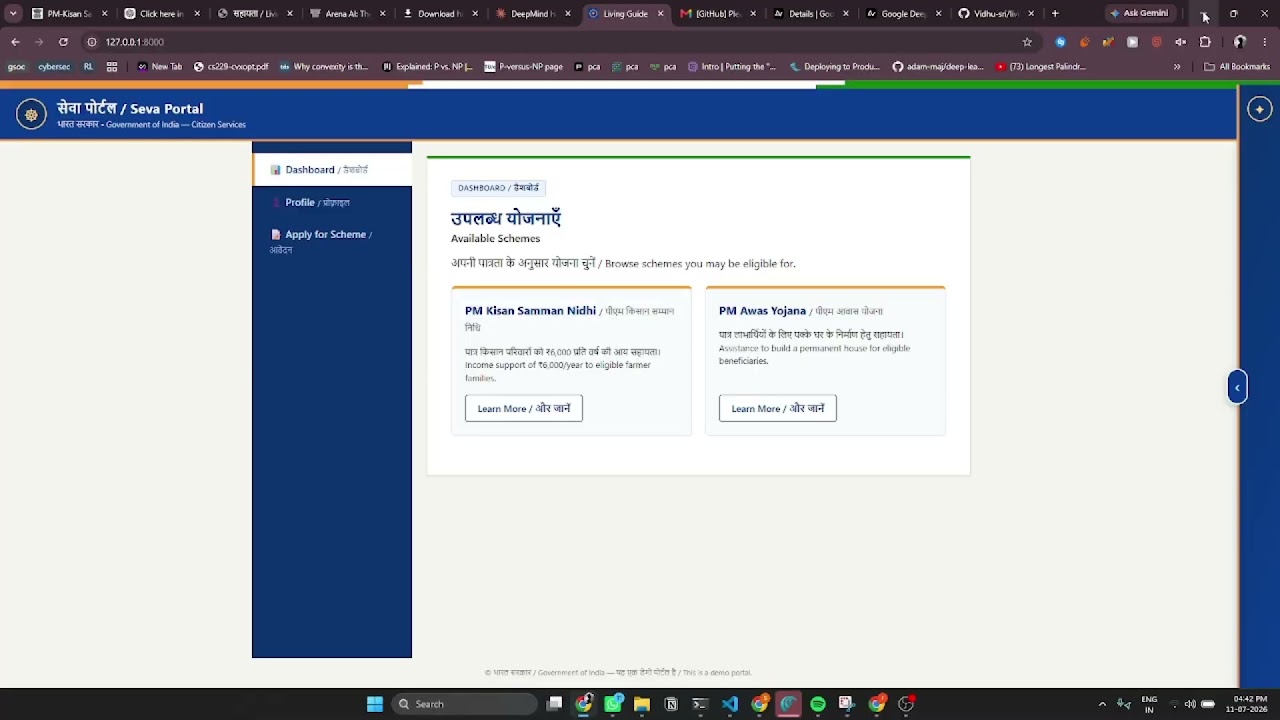
Given any platform, a bfs crawl using agents, learns the possible flows in it. Once learned, you can ask my application your queries regarding the platform, it will generate an wikihow (screenshot + instructions) with nano banana generated images telling you exactly what to do for your specific case. The immediate next step is to allow the learning of gated worflows from human demonstration

Vidhu Sri Varenya project preview
0

Team Synapz

FlashDraft is an AI-powered cinematic pre-production suite designed to give creators the speed of modern generative tools without the trade-offs of cost, connectivity, or privacy. At its core, the project is a local-first creative agent that acts as a "digital director" on your machine. By keeping the creative brainstorming and shot-planning within a private, on-device Gemma 4 environment, the application ensures that your sensitive scripts and storyboards never leave your possession, while also providing a seamless, network-resilient workflow that functions even when you are working off-the-grid. When you are ready to bring a vision to life, the system intelligently bridges your local intent with high-performance cloud intelligence. It uses Nano Banana 2 Lite to instantly render base scenes for rapid prototyping, which are then passed to Gemini Omni Flash for high-fidelity video generation. This hybrid architecture effectively transforms your laptop into a high-end production studio, allowing you to iterate instantly, maintain total IP control, and eliminate the unpredictable costs of experimental video generation.

Team Synapz project preview
0

Lighthouse

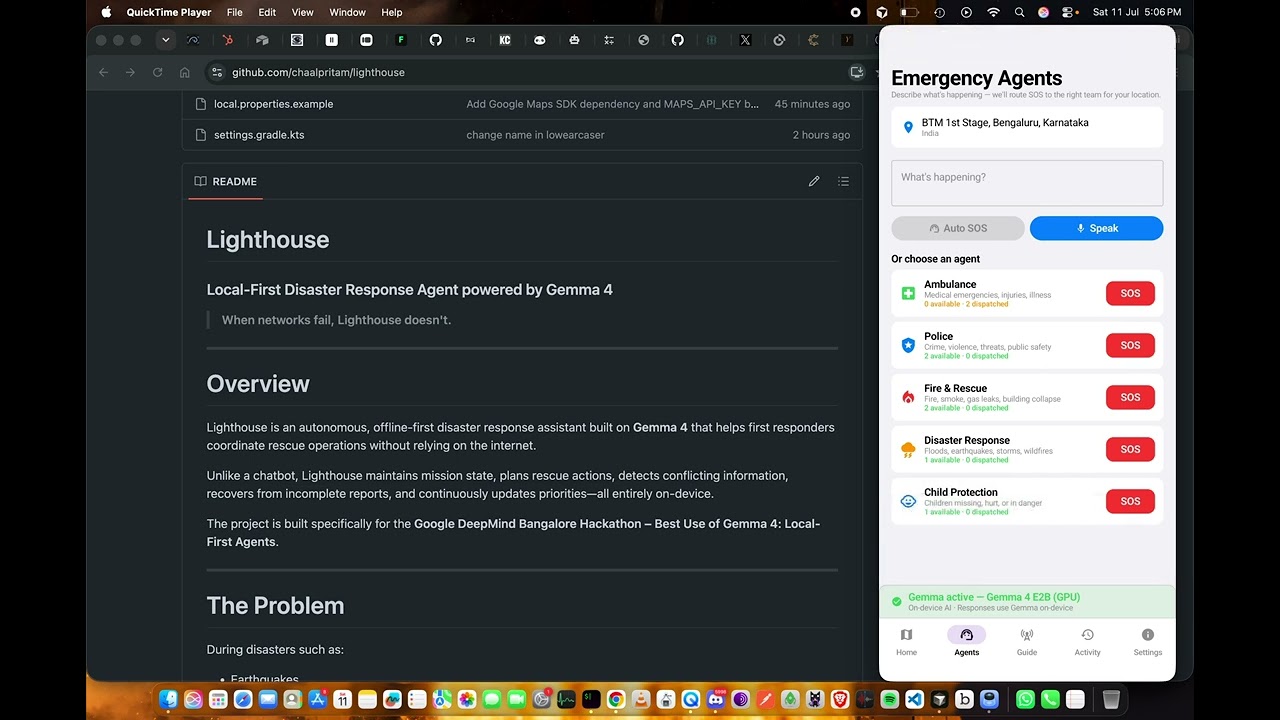
Lighthouse is not an offline chatbot. It's an autonomous local disaster response agent that continues thinking, planning, and coordinating even when the network disappears.

Lighthouse project preview
0

The Dining Philosophers

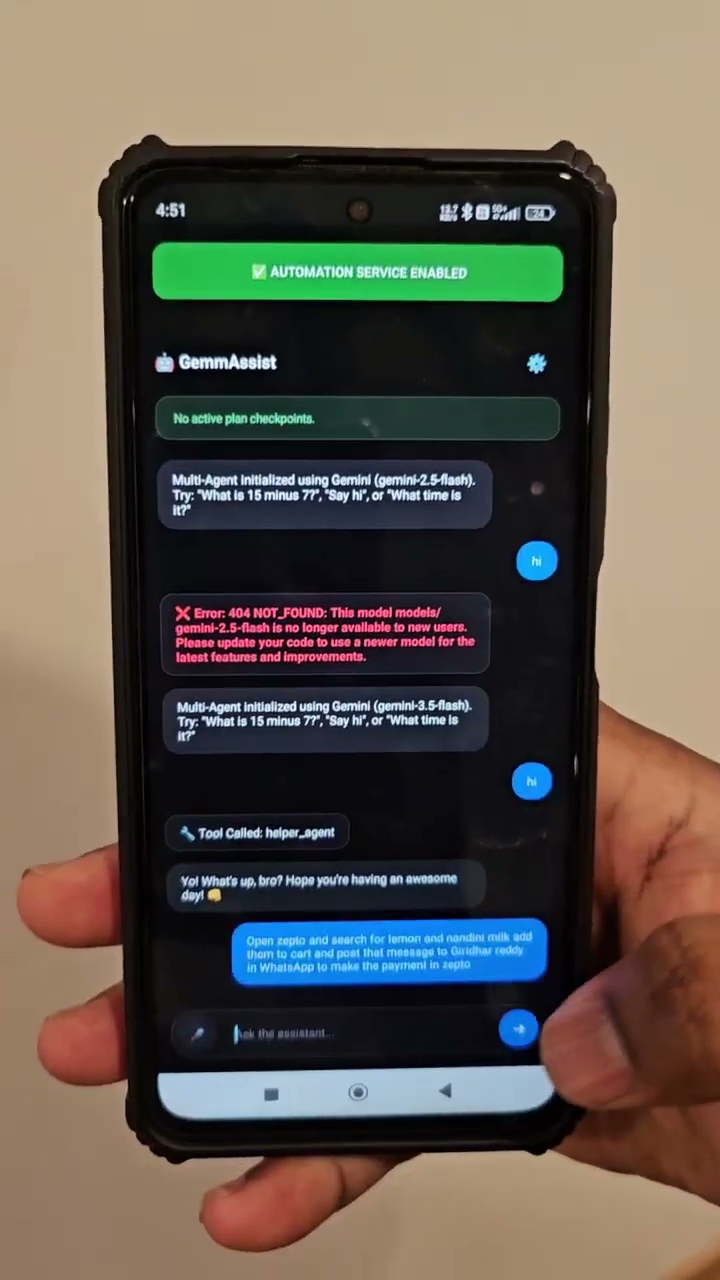
**AURA (Phone Saathi)** is a hybrid, autonomous Android agent that navigates your phone for you. You speak naturally to it using the **Gemini Live API**, and it executes complex app workflows step-by-step. **Why we chose this problem:** In regions like India, millions face a steep digital literacy curve and struggle with complex app interfaces, yet internet connectivity remains spotty and privacy around tasks like payments is critical. We built AURA to solve this dual challenge by targeting two tracks: 1. **Real-Time Multimodal Interaction:** We use Gemini Live to break the rigid, turn-based chatbot model, giving users a fluid, interruptible voice assistant that truly understands intent. 2. **Local-First Agents on Gemma 4:** We brought the "sense-decide-act-check" loop directly to the edge. When privacy or connectivity demands it, AURA falls back to a local Gemma 4 model (via LiteRT-LM) to execute tasks entirely offline, halting automatically before sensitive payment boundaries.

drive.google.com/…
0
+1

Sprint Squad

AI Incident Response Orchestrator An autonomous, Gemini-powered pipeline that acts as an AI Site Reliability Engineer. It instantly analyzes server logs to diagnose production outages, safely applies dynamic fixes to recover the system, and automatically escalates to human engineers if automated recovery fails

Sprint Squad project preview
0

kisan mitra

Kisan Mitra is a live, multilingual AI video call for Indian farmers. The farmer opens a link, taps Start Crop Call, points their phone camera at the sick crop, and talks. Kisan Mitra sees the crop, hears the farmer, and answers by voice in the farmer's own language including English, Hindi, Telugu, Kannada, Tamil, and Marathi. A case card fills in on screen with the diagnosis, dos and donts, exact chemical dose, and the nearest KVK helpline. It covers nine oilseed crops: castor, groundnut, linseed, niger, mustard, safflower, sesame, soybean, and sunflower. Every answer is grounded in verified oilseed knowledge through tool calls, so it never invents a chemical or dose. The relay is stateless and multi user safe. It has been tested live on real crops and is deployed on Google Cloud Run with a stable HTTPS link ready for the demo. https://kisan-mitra-743476269348.asia-south1.run.app you can try in this website and open in the phone

www.loom.com/…
0

Boss Bandits

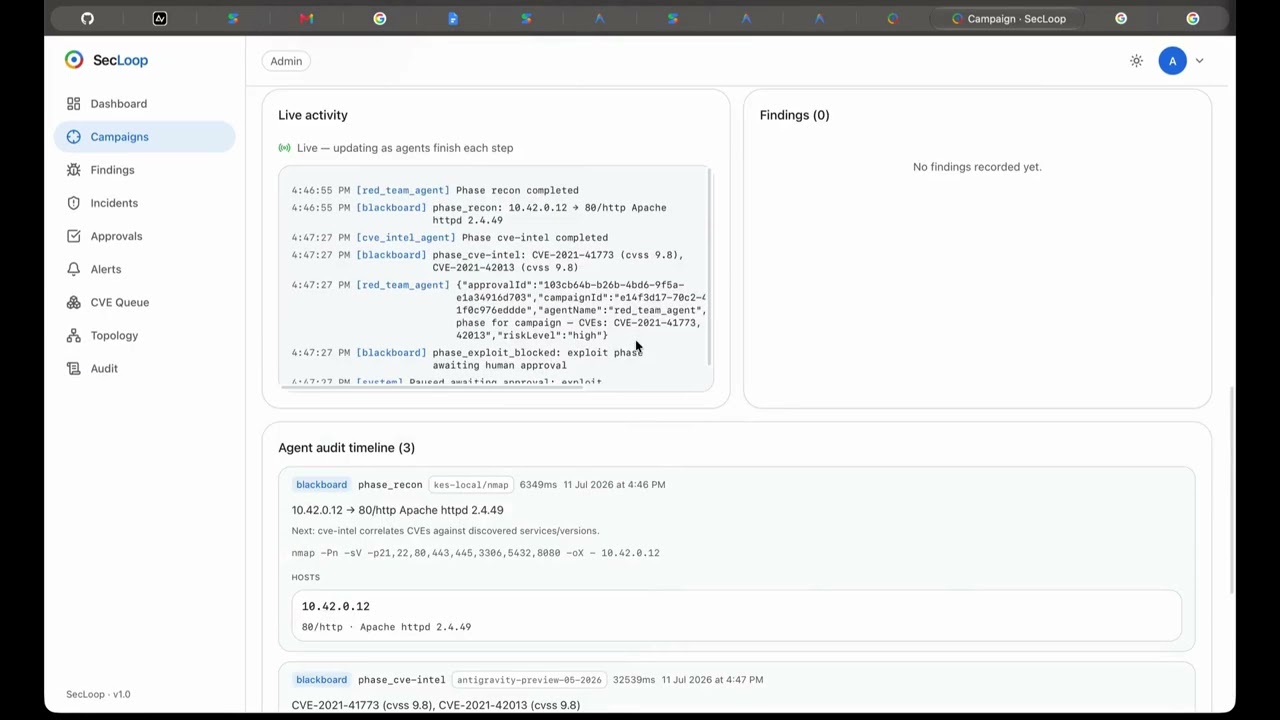
SecLoop is a multi-agent cybersecurity orchestration platform designed for autonomous penetration testing, defensive monitoring, and vulnerability intelligence. It uses a blackboard-based planner to coordinate tasks across multiple AI brains, including local ADK agents, on-device Gemma reasoning, and a Managed Agent path via iAPI/Antigravity. Sensitive tooling is executed through an isolated Kali Execution Service exposed over MCP, while approvals, audit logs, and persistent state keep operations controlled, traceable, and resilient.

Boss Bandits project preview
0
+1

CodeSmith

CodeSmith : AUTONOMOUS SOFTWARE ENGINEER An AI agent built with true harness capability to drill down into code implementation, bug fixes, and codebase architecture. 1. How is it different from other IDEs? • Analysis over Generation - The agent’s first instinct is not just to generate code. - It scans for build errors. - Detects adherence to design patterns such as: - SOLID Principles - Plugin Architecture - Clean Architecture • Deep Repository Understanding - Answers complex architecture questions. - Generates comprehensive implementation plans. - Creates isolated development environments. • End-to-End Execution - Modifies code safely. - Runs build, test, and lint processes automatically. - Repairs failed builds autonomously. - Generates commit messages. - Pushes changes. - Creates pull requests. 2. How is the agent’s code iteration loop different? • Standard Approach - Typical orchestration agents follow a repetitive loop: 1. Read a file. 2. Find its dependencies. 3. Read dependency files. 4. Repeat recursively until enough context is gathered. 5. Finally fix the code. • Our Approach - Eliminates recursive iteration loops. - Fixes bugs in significantly fewer steps. 3. How do we build a harness around the AI model to eliminate iteration? • Thoroughly index the repository. • Build a comprehensive Knowledge Graph. • Deploy specialized autonomous agents: - Planner Agent - Implementation Agent - Validation Agent - Repair Agent • Enable seamless collaboration among agents within a shared-memory session.

drive.google.com/…
0

Congnivista

Signal Failure: Live, Physically-Grounded Failure Attribution for Autonomous Indian Railway Operations The Problem I Set Out to Solve In autonomous multi-agent systems, the agent whose output is visibly wrong is almost never the one at fault. Errors are typically introduced upstream by an agent whose decision looked locally reasonable, but was subtly incorrect given context that downstream agents could not see. That error is then inherited, restated, and compounded by every subsequent agent, until a severe operational failure surfaces far from its origin. The existing state of the art in multi-agent diagnosis relies on analyzing semantic transcripts or text logs, as seen in the Who&When dataset baseline (PMLR 2025). This approach has two severe limitations. First, state-of-the-art semantic systems achieve only 14.2% accuracy at identifying the exact step that initiated a failure. Second, diagnosis is performed after the entire run has already completed and failed. Signal Failure is my attempt to fix both problems at once. The Core Architectural Reframe Instead of interpreting what agents said in their transcripts, Signal Failure measures how the shared operational state structurally shifted during each inter-agent handoff, compared to a computed clean counterfactual trajectory. By evaluating state differences across physical boundaries (platform layouts, crew rosters, and time matrices), the system converts failure attribution from a fuzzy linguistic problem into a deterministic geometric one. System Architecture: Four Layers I organized the system into a four-layer dataflow architecture that maps the physical state of the railway network up to the user-facing interfaces. Layer 1: Network Simulator (The Oracle) This layer evaluates a deterministic section graph consisting of physical stations, loop lines, signal blocks, and train schedules. It runs the simulation and computes the clean counterfactual trajectory that every subsequent layer references. Layer 2: iAPI Managed Swarm Five autonomous agents own specific tool boundaries and interact via a central payload router (orchestrator.py). The agents are: Turnout Integrity Agent, which senses forced speed restrictions at physical points and crossings via flag_turnout_restriction(turnout_id, speed_kmh) Platform Allocation Agent, which assigns arriving trains to platforms via assign_platform(train_id, station_id, platform) Signal Priority Agent, which sequences block occupation given the platform plan via set_block_sequence(block_id, train_id) Crew Scheduling Agent, which coordinates crew availability and duty-hour thresholds via reassign_crew(train_id, crew_id) Passenger Rebooking Agent, which automatically rebooks onward connections when delays propagate via rebook_passenger(pnr, new_train_id) To maintain safety and predictability, agents do not directly execute commands or call other agents. All state changes are mediated via iAPI boundaries, and each agent operates on a minimal, typed state slice. The physical actions themselves use deterministic greedy policies to ensure reproducibility. When the LLM flag is enabled, a Google Gemini model is used solely to phrase the rationale for each decision in natural operational terms for the controller, which keeps model hallucination from touching the physical simulation. Layer 3: Attribution Engine This is where the core scientific contribution lives. The engine evaluates structural divergence between the active running trajectory (with injected faults) and the clean counterfactual run, producing live probability distributions of root-cause guilt. I explain the full mechanics below. Layer 4: Black Box Narrator and Offline Edge This layer generates grounded explanations, handles live controller voice Q&A, and switches to a regional edge mode running a local Gemma model when cloud connectivity drops. The Attribution Engine: How It Works State Slice Formulation At each turn t, the system captures a state slice containing the key variables that agents can write to: S_t = { P_t, C_t, D_t } Where P_t is the platform allocation mapping (Train ID to Platform), C_t is the crew buffer vector (Crew ID to minutes of buffer remaining), and D_t is the delay vector (Train ID to delay minutes). Structural Distance Metric Rather than comparing text, the distance between two state slices measures the physical divergence of the system: d(S_a, S_b) = w_p * platform_drift(P_a, P_b) + w_c * crew_drift(C_a, C_b) + w_d * delay_drift(D_a, D_b) Platform drift is the fraction of mismatched platform allocations across the active set of trains. Crew drift is the L1 norm of the crew buffers normalized against a 30-minute operational window. Delay drift is the L1 norm of train delays normalized against a 15-minute standard threshold. Divergence vs. Introduced Drift For each handoff at turn t in the faulty run compared against the clean counterfactual, the engine computes two separate metrics. Divergence (D_t) captures the cumulative structural drift present after a handoff. Downstream agents that inherit a bad state but execute their own roles correctly keep this number high, which is exactly how you identify innocent agents. Introduced Drift (I_t) isolates the new drift added by a specific agent's decision: I_t = max(0.0, d(H_faulty_t_out, H_clean_t_out) - d(H_faulty_t_in, H_clean_t_in)). This is the number that actually points to the origin of a failure. Predictive Drift and Early Warning To detect failures before they cascade, the system applies a maturity ramp from 0.0 to 1.0 as a scenario progresses. If the introduced drift I_t crosses the anomaly threshold (tau = 0.30) during the watching or attention phases (while the train is physically moving but has not yet arrived late), the system flags a predictive anomaly. In practice this allows a controller to intercept a platform conflict 15 to 20 minutes before the trains physically block each other. Calibrated Uncertainty Rather than returning a single scapegoat, the engine calculates a probability distribution across all turns using a Softmax function over introduced drift with a temperature tuning factor theta of 0.12: P(Agent_k is the origin) = e^(I_k / theta) / sum_over_j( e^(I_j / theta) ) Minimal Sufficient Cause When multiple agents make errors, the engine identifies the minimum subset of decisions whose remediation would resolve the cascade. It orders handoffs descending by I_t and finds the smallest prefix set that reduces the remaining accumulated drift below tau. Dual-Mode Resilience: Connected and Offline Edge Fallback A critical vulnerability of cloud-based operations is physical connectivity loss during severe monsoons, which is exactly the moment when track turnouts degrade and require local intervention. In connected mode, the system runs via hosted iAPI managed agents with high-fidelity reasoning routed to cloud-hosted Gemini models. When a regional cabin loses connection to the central servers, a local loop takes over. A Gemma model running on-device via Ollama reads local track circuit telemetry, evaluates a lightweight LocalState scoped to its specific sector, and directly issues commands to clear signals, divert freight trains to loop lines, or hold traffic. If a commanded train fails to clear because of a central constraint Gemma cannot see (such as crew duty hours expiring), it detects the failure, logs the anomaly, and executes a safe fallback. If recovery safety limits are breached, Gemma stops, locks signals to red, and generates a spoken explanation directly to the cabin controller. Once connectivity is restored, the local edge agent pushes its committed actions and incident logs back to the central server, where the attribution engine absorbs them and computes the counterfactual drift introduced during the offline window. Google AI Integration I built the system's language layer entirely around Google's model family, using each capability for what it is specifically suited for. Gemini for Agent Swarm Rationales (app/llm.py, app/agents.py): I use Pydantic AI to orchestrate agent reasoning. Each deterministic action is enriched by a Gemini model prompted to produce a single calm, specific sentence a section controller would accept in plain operational language (30 words max). Gemini TTS for Audio Modality (app/voice.py): Instead of third-party TTS APIs, I use Gemini's native audio output by configuring responseModalities to AUDIO with a prebuilt voice (Kore, Leda, Puck, etc.). The API returns raw 16-bit PCM bytes inside a base64 string, which I wrap in a standard WAV header so the frontend's HTML5 audio elements can play voice narration instantly. Gemini for Translation (app/voice.py): Gemini translates passenger-facing notifications and controller room announcements from English into 8 Indian languages (Hindi, Marathi, Gujarati, Tamil, Bengali, Kannada, Telugu, and English), with train numbers, platform numbers, and times preserved exactly. Translated outputs are cached to disk for instant offline playback during presentations. Gemini for Conversational Control Room (app/command.py): The controller can speak or type commands in plain text such as "hold the Duronto" or "freeze the section". Gemini is forced to return structured JSON via responseMimeType: "application/json", extracting intent and parameters that the simulation engine executes directly. Gemini for Live Q&A and Safety Messages (app/narrator.py, app/passenger.py): The Black Box narrator uses Gemini to read live diagnostic variables and summarize them into short spoken answers for the controller. The Journey Guardian feature uses Gemini to write calm emergency safety messages containing a passenger's precise train, coach, seat, and local station data in their local language, including official helpline contacts (139 and 182). Local Gemma for Offline Edge Fallback (app/edge.py): When cloud connectivity is cut, a local Gemma 3 4B model via Ollama handles the sense-decide-act-check loop for its sector, choosing from a constrained safe action vocabulary and falling back to locked-red signals if anything exceeds its safety envelope. The Demo Scenario The flagship scenario walks through the full attribution pipeline end to end. A train (the Duronto Express) is delayed by 14 minutes. The Platform Allocation Agent assigns it to its nearest scheduled platform (Vadodara Platform 3) to minimize local delay, which is a locally reasonable choice. Platform 3 is occupied longer than expected, depleting the downstream crew-changeover buffer until the crew's duty hours expire. The train is stranded, backing up three other trains and causing passenger connections to fail. The attribution engine finds that the Crew Scheduling and Passenger Rebooking agents show severe delays, but their introduced drift I_t is 0.0. It traces the cascade back to Turn 1, assigning the Platform Allocation Agent a root-cause probability approaching 1.0 for choosing Platform 3 instead of Platform 6, which would have preserved the crew buffer. The Passenger Rebooking agent automatically rebooks downstream passengers before they realize a delay has occurred.

Congnivista project preview
2

Jigyasa

Laxmi — a voice-first, evidence-backed ledger for India's informal economy. The problem. Half of India's economy runs on spoken promises — udhaar (credit), delivery commitments, advances, payments — made across shop counters, on phone calls, and in WhatsApp voice notes. Nobody writes them down reliably. Memory fails, disputes fester ("maine kab bola tha?"), and the people living this — shopkeepers, contractors, drivers, households with domestic staff — are also credit-invisible: no formal records, so no bank will lend to them. Existing apps (Khatabook, Dukaan AI) make you type or dictate bookkeeping commands — a chore that decays, and one-sided typed claims with no proof. What Laxmi does. You just talk — the way you already do. Laxmi listens to a voice note (spoken, forwarded from WhatsApp, or a call summary), and on-device Gemma 4 extracts the commitment — who, how much, by when, owed-to-me or I-owe — into a structured ledger. Every entry keeps the original audio as evidence (tap ▶ to replay the exact words), carries a confidence score, and files under the right person automatically. You ask it questions in Hinglish and it answers by voice, fully offline. It sends acknowledgement receipts so both sides agree on the record. How it works — two brains, one privacy boundary: - On-device Gemma 4 (inward): understands your messy, code-switched Hinglish; owns all raw data — audio, transcripts, the ledger, names. Runs capture, extraction, Q&A, reminders, insights — offline, private, nothing leaves the phone. - Antigravity managed agents (outward): when you want the outside world — live market prices, government schemes, a loan-readiness dossier, a collections drive — Gemma delegates to autonomous cloud agents that plan, research the web, run code, and check their own work. But they only ever receive a consented, name-free summary; raw data never crosses. You approve exactly what leaves. What it solves, concretely: turns spoken promises into a durable, disputable record; gives the informal economy evidence instead of one-sided claims; keeps sensitive financial life private and offline; and — through the agents — connects a one-person shop to the market intelligence, credit access, and government schemes that big businesses pay teams for. Tech: Gemma 4 E4B on-device (LiteRT, audio + vision) for the private brain; Antigravity Managed Agents (Gemini Interactions API) with persistent multi-agent sessions, web + code tools, and a verify loop for the outward brain. Track 2 (Managed Agents) primary; Best Use of Gemma 4 secondary. One line: Your phone remembers; the agents act — a memory for India's spoken economy, private by design.

youtube.com/…
0

Team Delusion

The problem 60% of Indian farms sit outside reliable network coverage. Every agri-tech app assumes connectivity, a smartphone-literate user, and English — three assumptions that fail for the smallholder farmer standing in a field with a diseased crop. And when they do reach an expert, language is the next wall: the farmer speaks Kannada or Hindi; the agronomist often doesn't. What we built Mitti-Agent Live is one agent with two brains, sharing one case. Online — the live field walk. The farmer walks their field with the camera on, speaking naturally in their own language. A continuous Gemini Live session watches and listens: it answers in the farmer's language, and it interrupts unprompted when it spots crop damage the farmer never mentioned — proactive vision, not turn-based chat. When escalation is needed, a KVK agricultural expert joins the same session from a browser console: the expert speaks English, the farmer hears their own language, live, two-way — while the expert watches the farmer's camera feed and a structured case file (observations, urgency, requested items) builds itself from the agent's tool calls. The load-bearing trick — the case-state mirror. Every observation the cloud agent logs is persisted to the farmer's phone the moment it happens. The network dying is not an error path; it's a handoff. Offline — Gemma takes over. When the signal drops, the phone detects it in seconds, announces the switch, and hands the mirrored case to Gemma 4 E2B running fully on-device (LiteRT-LM). Gemma — with on-device vision — inspects the crop photo, understands the farmer's spoken observation in their language, triages the risk, generates safe next-steps and a required-items list, validates its own output (schema, risk code, 160-char reference packet), and drafts a complete field report as an SMS to the KVK. The farmer confirms before anything is sent. If the model itself fails, a deterministic safety layer keeps the loop alive — and the UI always says which brain answered. The safety boundary: Mitti never names a pesticide or a dose, never diagnoses with false certainty, never sends a message on its own. It routes evidence; the human expert decides treatment. On ambiguous input it defers instead of guessing. How we built it Android app (Java/Kotlin): continuous echo-cancelled mic streaming, Camera2 frames at 1 fps, live captions, network watchdog, case mirror, offline handoff — plus on-device Gemma 4 E2B via LiteRT-LM with the vision executor enabled, running text + image triage in a single inference pass. Gateway (Python/FastAPI): hosts one Gemini Live session per case; farmer and expert both connect to it, never to each other. Proactive audio (v1alpha), tool calling (log_observation, flag_urgency, request_expert), speaker-tagged audio for two humans in one session, camera relay to the expert console, and automatic Live-session reconnection with case-context replay so a cloud hiccup never kills the field session. Expert console (web): push-to-talk English, live translated conversation, the farmer's camera view, and the case file updating in real time. Why it matters for India Rural connectivity, language diversity, and low text literacy are treated as product constraints, not edge cases. Voice-first in 7+ Indian languages, vernacular↔English expert bridging, evidence that survives dead zones, and escalation over SMS — the one channel that works everywhere. The same architecture extends to ASHA health workers, veterinary triage, and rural repair — any field profession where the network is unreliable but the stakes are not.

youtube.com/…
0

Developer Mindset

AgentGrid is an autonomous multi-agent coding pipeline: nine specialized Gemini-powered agents - Planner, parallel Coders, Reviewer, Integrator, Breaker, Verifier, Intake, and Publisher — take a bug report from issue to merged, tested pull request with no human in the loop. It solves the core failure of single-agent AI coding tools: they can't genuinely collaborate, resolve real conflicts, or hand off context without losing it.

link.ishanavasthi.in/…
0

Unais

TypeMind is a context-aware writing assistant that instantly drafts and refines text inside any input field. It understands the active screen and relevant interaction history to produce concise, format-appropriate writing, eliminating context switching and repetitive prompting.

Unais project preview
0

OneAwaaz

One teacher's voice. An entire classroom's learning ecosystem. India has 24.8 crore students and just 1 crore teachers. In states like Jharkhand, a single teacher manages 47 students alone — while simultaneously handling lesson planning, note preparation, quiz creation, paper correction, and 15+ monthly administrative tasks. 60% of Indian teachers say non-teaching work is their biggest source of burnout. OneAwaaz eliminates that burden entirely. A teacher uploads one timetable photo at the start of the academic year. OneAwaaz maps every class and subject to the NCERT syllabus and builds a complete, day-by-day lesson plan for the entire year — automatically. Every morning, the teacher sees exactly what to teach, which chapter, which topics, with no planning required. When class begins, the teacher simply teaches. OneAwaaz listens. The moment class ends, a single tap generates structured long notes, short pointer notes, memory mnemonics, and a Google Forms quiz with answer keys — all derived from the teacher's own voice. Everything is pushed to every student instantly. On the student side, all notes, recaps, and quizzes appear in one clean learning screen. A multilingual AI assistant answers doubts in real time. After completing a quiz, students explain what they learned conversationally. The AI evaluates their understanding and sends the teacher a precise report on every student — who understood, who didn't, and exactly where the gap is. Teachers can also share their best generated materials — lesson plans, notes, quizzes — in a built-in marketplace, creating a crowdsourced national curriculum layer that gets better with every class taught. Built on: Gemini Live API · Gemini Flash · Omni Flash · Gemma on-device · Google iAPI Antigravity · Firebase · Google Forms API · React.js PWA OneAwaaz is open source. Every school, every NGO, every state government can deploy it, extend it, and contribute to it — because every child in India deserves a teacher who isn't exhausted. [Regarding the video below: Due to time crunch couldn't edit it - please forward and watch it :(]

OneAwaaz project preview
1

OMINX

OMNIX is a local-first, agentic automation architecture designed to execute complex, multi-step workflows entirely on-device within the Android ecosystem. At its core, the project leverages a localized reasoning engine—specifically utilizing the capabilities of the Gemma 4 framework—structured within a strict ReAct (Reason + Act) loop to process user intents and dynamically navigate application interfaces without relying on cloud computation. The key architectural pillars of the system include: Multimodal Sensing & Self-Healing: A dual-path system that prioritizes high-speed Accessibility Tree parsing but seamlessly falls back to a localized visual diffing mechanism (using SSIM math and Vision Transformers) when UI states change unexpectedly or become opaque. This enables the agent to instantly re-learn and self-heal broken navigation paths. Persistent State Management: The system maintains a stateful execution history and episodic memory using local storage, allowing the agent to survive app crashes, resume interrupted tasks, and maintain context across long-running operations. Extensible Plugin Architecture: Moving away from hardcoded prompts, the system utilizes a Model Context Protocol (MCP) approach. Tool schemas (JSON) and domain-specific skills (Markdown) are dynamically injected into the model's context window. This supports highly scalable tool usage and offline "Dream Mode" exploration. Deterministic Safety Guardrails: A strict Human-in-the-Loop (HITL) interceptor sits between the AI's reasoning and the native execution layer. It intercepts the agent's structured JSON tool calls and pauses the automation loop for physical user confirmation whenever sensitive actions (e.g., payments, account deletions) are attempted.

www.loom.com/…
0

Aaina

Kavach — real-time call intelligence that hears the manipulation, not just the words. India loses over ₹22,000 crore a year to scam calls that follow predictable scripts: hook → authority → isolation → urgency → extraction. Kavach listens to a live call and intervenes before the money moves. Real-time & multimodal: the phone streams live 16 kHz audio to Gemini 3.1 Flash Live, which listens continuously — reading vocal urgency, catching the caller mid-sentence, and speaking a calm counter-warning into the call the moment the script turns coercive. It isn't turn-based; the caller can interrupt it and it keeps listening. Each risk signal is a schema-validated tool call gated by a local two-hit state machine, so the model senses and reasons but never acts alone. On-device Gemma 4: when the network drops — exactly when a first-time victim is most exposed — a Gemma 4 E2B agent runs natively on the phone via LiteRT. It's a full sense → decide → act → check loop that holds state across the call, recovers from malformed model output, and defers to a human at clear boundaries. It keeps working even with no weights loaded. Beyond detection: Kavach names the manipulation tactic and explains it in one plain sentence, scores caller trust live, can flip to a honeypot persona that wastes the scammer's time, and writes a post-call forensic debrief. Every event lands in a privacy-preserving, tamper-evident local ledger — transcript hashes, never raw audio. Verified with real audio on gemini-3.1-flash-live-preview; a 16-case regression scores 1.00 precision and recall. Dual-brain: Gemini when connected, Gemma on-device when not.

drive.google.com/…
0

Finding-(M)Nemo

Your life happens in moments. MNEMO remembers them so you don't have to. Three on-device agents (Listener, Reasoner, Generator) capture insights from voice/text/camera, rank them by biological decay curves (promises fade fast, decisions stick, money never fades), and generate artifacts on demand: meeting briefs, visual week decks, narrated recaps, cross-language summaries. Every agent handoff and escalation is logged—judges see the reasoning, not black box magic. Gemma 4 on-device backbone. Cloud-aware. Transparent orchestration via antigravity-preview.You live. MNEMO remembers.

Finding-(M)Nemo project preview
0

SentinelAI

Leveraging Gemini's multimodal reasoning, Live API, and agentic capabilities, our solution acts as an intelligent factory companion that continuously perceives its surroundings, understands inspection context, detects operational and safety risks, validates findings with visual and conversational evidence, and coordinates specialized Gemini agents to investigate issues, recommend remediations, and produce audit-ready inspection reports in real time with human oversight at every critical decision point.

SentinelAI project preview
1
+1

contender

secr@ is a local-first macOS privacy tool for screen sharing. It captures a window or display, detects sensitive content, and presents a separate sanitized mirror that is safe to share for meetings,presentations and more. Capture, OCR, classification, policy state, and redaction all stay on the Mac. After the one-time dependency and model setup, the application works with Wi-Fi off.

contender project preview
1

NexusAI

Nexus AI is a production-ready, multi-agent orchestration platform built on Google Cloud Run that automates and audits corporate claims with absolute trust. The Engine: Invoices are ingested using Gemini Flash for high-fidelity OCR, instantly launching a parallel agent grid (Provider Registry, Policy limits in ₹, and Pattern fraud scans). If overruns or duplicate anomalies are flagged, a Human Gate Circuit Breaker freezes execution to route the claim for supervisor approval. The Auditor: An independent Gemma compliance node (gemma2-27b-it) verifies the decision logic, generating targeted stakeholder summaries and a synthesized Text-to-Speech (TTS) voice briefing so supervisors can listen to case alerts instantly. Fully integrated with real-time SSE streaming, Nexus is the first platform to decouple core adjudication from auditing—combining high-speed parallel intelligence with bulletproof compliance and human-in-the-loop control.

www.loom.com/…
0

Defenders

Narrate a folk tale → a team of agents storyboards it, earns each keyframe with a verifier-guided reward loop, animates a multi-shot narrated short, then lets you re-direct any shot by conversation., it solves the widely unresovled rpoblem in India of folktale being srved to mass media

Defenders project preview
0

Excelsior

Kibitz — A control center for humans and AI agents before code hits GitHub. AI coding agents created a new bottleneck: invisible concurrent work. GitHub only sees work after a branch, commit, or PR exists — so a human engineer and an autonomous agent (or two agents) can silently burn hours editing the same files. Kibitz catches that overlap while it's still happening. How it works (Track 2 — Autonomous Orchestration, iAPI): A team posts an objective; Gemini 3.5 Flash decomposes it into a task ledger in MongoDB with expected file touch-sets. Humans, Antigravity coding agents every one of them must pass an atomic clearance gate before touching files. Claims lock files into live engineer state, denials return concrete conflicts, and handoffs carry append-only context, every transition is persisted as an auditable event. Agents drive this over HTTP via a gate CLI (exit 0 = granted, 2 = denied), so conflict resolution is enforced, not suggested. Gemma 4 (special prize): Gemma triages every collision (severity + an agent-aware "next safe step") and compresses handoff context into 3-sentence briefs — fire-and-forget, so the deterministic card/voice alert is always instant and a Gemma failure degrades gracefully, never blocks. Every real Gemma run is verifiable in logs and Mongo docs. Also live: Gemini Flash Live voice agent in the room, Flash TTS urgent spoken alerts, Lyria via the Interactions API, Screen-share perception with gemini-3.5-flash, and vector-search team memory that learns from every accepted/dismissed intervention.

drive.google.com/…
0

Simple Developer

Cloe is an AI desktop companion powered by Gemini Live API that sees your screen and talks to you in real-time. Ask a question she analyzes your screen via Gemini Vision, highlights the exact UI elements she's explaining with animated overlays, and responds via streaming voice with full barge-in support. She auto-opens a visual scratchboard with markdown/diagrams when needed, executes system commands on request. No typing, no copy-pasting screenshots just talk

www.loom.com/…
0

Aawaaz

Aawaaz (आवाज़) Real-Time Voice Agent for Rural Welfare Access 430 million Indians are functionally illiterate. They qualify for government welfare schemes PM-KISAN, PMAY, Ayushman Bharat, Ujjwala but can't navigate the portals to claim them. Aawaaz fixes that through real-time multimodal voice interaction not a chatbot with a microphone stapled on. Aawaaz uses the Gemini Live API for continuous, interruption-aware Hindi conversation. The agent listens in real time, extracts profile fields mid-speech without waiting for turn completion, and responds with natural Hindi adjusting tone when the user sounds confused or hesitant. It reads vocal cues, not just words. Aawaaz has a hard privacy boundary baked into the agent loop. The moment a user speaks or scans sensitive PII Aadhaar number, bank account, IFSC code the agent automatically switches from Gemini cloud to Gemma 4 E2B running fully on-device. That data is processed locally, stored encrypted in SQLite, and never transmitted to any server. When the sensitive exchange is complete, the agent seamlessly returns to Gemini Live for the rest of the conversation. The user never has to think about this the agent handles the boundary autonomously. Local Tesseract OCR scans Aadhaar and ration cards entirely on-device. Once the profile is complete, Aawaaz opens the actual government portal pmkisan.gov.in, pmayg.nic.in and fills every visible form field autonomously via Playwright, stopping only at OTP the one action only the user can take. Tech stack: Gemini Live API · Gemini Flash · Gemma 4 E2B (PII + offline) · FastAPI · Playwright · Tesseract OCR · SQLite (encrypted) · Web Speech API

drive.google.com/…
0

Maverick

HealthOS is a memory layer for a distributed individual health records in India. It provides an intutive UI for users to record there medical history and promptly runs the Agents in the background to build a three layer hierarchial memory structure continuously using gemini models and actively uses it in between the conversation of you and your doctor. It does not give diagnosis but it gives you a unforgettable memory which helps both patients and doctors. The App falls back to gemma models when internet is not available so that we can server people in low internet areas.

Maverick project preview
1

Sahayak

Sahayak is an autonomous layer for Android devices, especially targeted towards indian population, working natively with speech Built ontop of gemma4

drive.google.com/…
0

Sam-kash

Sentinel is an autonomous, self-healing Site Reliability Engineering (SRE) multi-agent swarm built over the Google AI stack to defeat production downtime. When a microservice encounters a critical failure, an automated Watcher Agent captures the metrics and logs, passing them to a Diagnosis Agent (Gemini 3.5 Flash) for granular root-cause analysis. The pipeline then triggers an Actor Agent using antigravity-preview-05-2026 to provision an isolated, stateful cloud sandbox environment that safely runs diagnostic tools and executes real out-of-band network remediations to bring the target app back to health. Finally, a Postmortem Agent documents the lifecycle, utilizing high-throughput asset models (Imagen) to instantly generate visual topology flowcharts and video orchestration layers (Gemini Omni Flash) to compile motion replays for stakeholders. The Video is uploaded , you can have a look , Thank you

drive.google.com/…
1

Team Kavach India

**Project Kavach** is a zero-UI autonomous safety system that uses AI to respond to emergencies with a single 3-tap trigger. It intelligently distinguishes between **personal threats** and **accidents**, adapting its behavior for concealment or rapid medical response. If connectivity is lost, **Gemma 4** continues emergency handling entirely on-device and automatically sends SOS updates when the network returns. Built for real-world conditions in India, Kavach combines cloud AI, on-device intelligence, and wearable support to protect users even when they cannot use their phone. This can be integrated on google android at OS level.

drive.google.com/…
3
+1

Duo Mentis

Small merchants in India struggle to market their businesses because existing AI tools are expensive, English-first, and difficult to use. During this hackathon, we built Vyapari, an AI platform that helps local merchants create personalized marketing campaigns using natural voice interaction. The merchant simply shows their shop and product through the camera and speaks in their native language. Our multimodal pipeline creates a Brand Brief, and using NB2 Lite, we explore 10 marketing campaign strategies in parallel instead of generating just one advertisement. The AI automatically evaluates every campaign and selects the best one. Unlike existing tools that rely on templates or AI avatars, Vyapari creates advertisements featuring the merchant and their own product. The selected campaign is converted into a video advertisement using Omni Flash, personalized for customers, delivered through WhatsApp, and printed with a real UPI QR code. Unlike existing tools that stop after generating content, Vyapari doesn't stop until a real customer makes a purchase.

Duo Mentis project preview
1

Dhvani

Project Description Dhvani is an intelligent, on-device Android application designed to protect vulnerable users from real-time phone and UPI (Unified Payments Interface) scams. Operating on a Sense → Decide → Act → Check architectural framework, the app silently monitors active phone calls and incoming SMS messages, leveraging a hybrid local/cloud AI approach to intercept fraudulent activity before a user can be tricked into transferring funds. The Problem It Solves Social engineering and telephonic financial fraud (impersonation scams, fake lottery wins, panic-induced transfers) are skyrocketing. Existing spam-blocking tools only flag known numbers before a call, leaving users entirely unprotected once a conversation begins. Dhvani bridges this gap by providing active, real-time intervention during the call itself—safeguarding users who are actively being manipulated. How It Works Sense: A background service (CallMonitoringCoordinator and AudioCaptureManager) securely captures real-time call audio alongside incoming SMS messages (detecting OTPs or fraudulent payment requests). Decide: The application runs a continuous evaluation loop. It streams live transcripts to the cloud via Gemini Live for heavy-duty threat scoring while simultaneously running an offline, on-device threat assessment using Gemma (via Google AI Edge LiteRT-LM) to ensure resilience and low latency. Act: If the fused risk score crosses a critical threshold, the app takes immediate control via an Android Accessibility Service. It instantly locks down all UPI payment applications, drops a full-screen threat overlay warning to break the scammer's psychological hold, and triggers haptic alerts. Check: The loop validates that the application lock is successfully maintained. If it detects an bypass attempt, it automatically dispatches an emergency SMS alert to a trusted contact or next of kin. Built natively in Kotlin using Jetpack Compose, LiteRT, and robust Android system-level APIs, Dhvani acts as a bulletproof digital guardian for real-time mobile transaction security.

drive.google.com/…
0

word.exe

ShopMandate is a voice-first AI shopping agent that helps users shop across multiple quick-commerce platforms like Zepto and Swiggy Instamart through natural Hinglish conversations. Users simply speak what they need, and the AI searches products, compares prices, builds the cart, and completes the order securely—all without switching between apps. Problem It Solves - Eliminates the need to switch between multiple shopping apps. - Saves time by automatically comparing prices across platforms. - - Makes online shopping accessible through simple voice conversations. - Reduces manual searching and repetitive checkout steps. - Provides a faster, hands-free, and more convenient shopping experience.

word.exe project preview
1

PRISM

Overview PRISM is an always-on, ambient AI assistant designed to give users particularly the visually impaired a persistent spatial memory of their surroundings. By continuously monitoring the user's environment through a camera, PRISM acts as a "second brain" that remembers where everyday objects were left, tracks dynamic environmental changes, and guides the user back to specific items using natural, conversational voice commands and real-time spatial navigation. Key Features Continuous Spatial Memory & Tracking: PRISM continuously scans the environment, identifying objects and logging their exact geographic coordinates into a local SQLite database. It builds a persistent "World Memory" that remembers what it saw, where it saw it, and when. Dynamic Distance & Bearing Navigation: When a user asks for a previously seen object (e.g., "Where did I leave my backpack?"), the system calculates the real-time Haversine distance and compass bearing between the user's current location and the object's tagged location. It then provides dynamic auditory guidance (e.g., "Your backpack is 140 meters behind you to the South"). Zero-Latency Multimodal Reasoning: To ensure lightning-fast interactions, PRISM uses a "Zero-STT" (Speech-to-Text) architecture. Raw audio bytes from the user's microphone are streamed directly into a Gemini Multimodal model alongside the historical database context and the current camera feed. This eliminates the latency of traditional transcription services, allowing the AI to reason over audio, visuals, and memory simultaneously. Ambient "Live Memory Catch" UI: PRISM features a sleek, dark-mode CustomTkinter interface. It silently tracks environmental context in the background (Live Memory Catch) without overwhelming the user, only speaking up when directly queried or when critical environmental hazards are detected. Privacy-First Local Fallback: Designed with privacy in mind, PRISM incorporates local offline fallback mechanisms to ensure basic environmental awareness is maintained even when internet connectivity drops. Technical Stack AI & Vision: Google Gemini Multimodal API (for simultaneous audio/visual reasoning) and OpenCV (for efficient background frame buffering). Location & Math: IP-based/Mock Geolocation tracking, Haversine formula for spherical distance calculation, and Bearing mathematics for compass direction. Backend: Python, SQLite (World Memory storage), and threading for non-blocking UI and camera loops. Frontend: CustomTkinter (Python) for a sleek, highly responsive desktop hub. Use Case While useful for anyone prone to misplacing items, PRISM is purpose-built as an accessibility tool for the visually impaired. By combining computer vision, spatial mapping, and conversational AI, it allows users to navigate the physical world with greater independence, turning a standard camera into an intelligent, memory-augmented guide.

PRISM project preview
0

Agnos

**Wake: Your Phone, Remembered** You switch between apps all day. A notification interrupts you halfway through something. Ten minutes later, you cannot remember what you were doing or where you saw that information. Wake remembers it for you. Wake is an on device AI agent that captures what appears on your Android screen and in your notifications. You can ask questions about anything you have seen or done on your phone. It works offline by default. There is no account requirement, and no data leaves your device unless you explicitly choose to use a cloud model. **More than memory** Most recall tools only help you search. Wake can also help you continue. It notices when you leave a conversation or task unfinished, suggests what to do next, and lets you reopen the relevant app and context with a tap. When you dismiss a suggestion, Wake learns from it and avoids showing the same suggestion again. **Private by default** Capture, storage, retrieval, and language model inference all happen locally on your phone. Gemma 4 runs on the device GPU at around 52 tokens per second. Wake continues to work in airplane mode, underground, or anywhere without an internet connection. For phones without enough computing power, users can choose to use Gemini or Gemma through the cloud. This is completely optional and must be enabled by the user. Your screen contents are never sent to a server unless you explicitly choose the cloud option. **Built for everyday use** Wake combines keyword search with semantic retrieval, so it can find both exact matches and related information. A deterministic fallback handles basic queries even when the language model is unavailable. Sensitive apps such as banking apps are excluded during capture. Users can switch between on device and cloud models depending on their phone’s capabilities and the task they are performing. Wake turns your phone activity into something you can search, understand, and act on, while giving you control over where your data is processed.

youtube.com/…
3

Pulse

File a ticket. A crew assembles itself. A PR shows up. Pulse is a JIRA-like board where every ticket is worked by a crew of specialist AI agents that a planner invents on the fly for that specific ticket — not fixed "backend/frontend" roles. Move a card to In Progress and an orchestrator hands the work to a Google Antigravity managed agent running in a sandbox: it clones the repo, does the work, streams every step live, takes your steering mid-task, and opens a pull request (labelled antigravity). Built at the Google DeepMind Bangalore Hackathon (2026) for the Managed Agents / Antigravity track. Pulse develops itself — this repo is its own first target. The antigravity-labelled PRs here were opened by Pulse.

Pulse project preview
0

Epoch Zero

Project Name: OrgOS Tagline: An autonomous AI operating system that dynamically builds, manages, and secures AI teams and organisation to solve complex crises from the cloud to the edge, anywhere in the world. The Problem When a disaster strikes , human coordination hits a bottleneck, and delays cost lives. Today’s AI tools are just fragile chatbots. They rely on single prompts, can't manage multi-step logistics, lack security guardrails, and completely shut down the moment a cell tower goes offline. We need a system that acts, not just talks Our Solution: OrgOS Meet OrgOS. We didn't build a chatbot or a SaaS dashboard; we built a headless Autonomous AI Operating System. Built for Problem Statement 2 (iAPI Managed Agents), OrgOS takes a massive, high-level goal , like "Coordinate flood relief" ,and autonomously builds an entire digital organization to solve it. While our deployment today focuses on the massive scale of India's 750 districts, the core OS is a universal framework designed to manage any enterprise or emergency workflow globally. Core Capabilities: -Dynamic Organization Spawning: Instead of using rigid, hardcoded agents, OrgOS uses Gemini 3.5 Flash and the Interactions API (iAPI) to think like an architect. It analyzes the mission and spawns specific departments on the fly (e.g., Meteorology, Logistics), assigning them strict toolsets. -Zero-Trust Policy Engine: AI can hallucinate, so we treat it like a new employee. OrgOS enforces a kernel-level policy engine. If a Logistics agent requests access to financial databases, the OS intercepts and verifies its JSON permissions before the tool is ever executed. -Conflict Resolution & Institutional Memory: Real life rarely goes according to plan. When our agents hit a real-world conflict (like a flooded primary highway), they don't crash. They pause, negotiate a detour, and save that structural decision to our SQLite-backed Institutional Memory, ensuring the organization learns over time. -The Gemma Edge (Special Prize): Disasters don't care about Wi-Fi. In an emergency zone, cloud AI is useless without the internet. OrgOS features an Adaptive Edge Router. If the system detects a network failure, it intercepts the timeout, wraps the mission state, and seamlessly hands execution over to a Local Gemma Edge Node—keeping supply trucks moving completely offline. Tech Stack Brain (Cloud): Gemini 3.5 Flash + Managed Agents (iAPI) Brain (Edge): Local Gemma (via Ollama) Kernel: Python, FastAPI, SQLite (Institutional Memory) Visualizer (Glass): Next.js, Tailwind, React Flow (Dynamic animated node graphs)

Epoch Zero project preview
0

Infernal

Indic Typography Heritage Animator is an AI-powered platform that helps artisans and designers digitally visualize traditional Indian textiles before production. Using Gemini AI, it generates heritage-inspired fabric patterns and applies them to virtual garments, reducing sampling costs, accelerating design exploration, and preserving India's rich textile heritage through technology.

Infernal project preview
0

CHITRANSH

India’s most valuable frontline knowledge often lives in people not in manuals. In small factories, warehouses, retail stores, farms, and field-service teams, experienced workers know how to handle exceptions when a process breaks. But this knowledge is usually passed verbally, across languages, and is lost when the expert is unavailable. Poor connectivity, high data costs, and privacy concerns make cloud-dependent AI unreliable for these environments. Kriya solves this by turning human demonstrations into local AI agents. Using Gemini Live, an expert teaches a task through live camera, voice, natural interruptions, and multilingual conversation. Kriya converts the demonstration into a structured workflow. Gemma 4 E2B then runs the agent entirely on-device. It maintains task state, checks visual evidence, detects failures, and defers when it is uncertain. When a human demonstrates a rescue, Kriya converts that intervention into an approved Recovery Patch and stores it locally. The next time the same failure occurs, the agent reuses that experience offline. Kriya preserves India’s undocumented knowledge and makes it reusable across languages, locations, and low-connectivity environments.

drive.google.com/…
0

Vision-Claw

Meta's default Llama experience did not meet the bar for accuracy, speed, or depth of knowledge. I wanted my glasses to feel less like a novelty assistant and more like an always-available interface to the best models and the tools I already use. So I reverse-engineered the integration path and brought Gemini Live into the glasses experience. Then I connected my Hermes agent, turning a voice-and-vision assistant into an interface that can understand context and take action. User can Use gemma models locally for privacy

Vision-Claw project preview
0

Singularity

Threshold — A living market, simulated. Describe a product and how you're advertising it, and instead of a single conversion-rate guess, Threshold builds a population of thousands of AI personas — each with a job, family, personality, and budget — who live out their days, get exposed to your ads, talk to each other, and either buy or don't, entirely deterministic and reproducible. Tech: Python/FastAPI backend running a deterministic tick-based simulation engine, React/TypeScript frontend, LLM layer on Gemini — gemini-3.5-flash for narration and Google's iAPI (Managed Agents, antigravity-preview-05-2026) running spotlight personas as real managed agents, with guarded fallback to plain Gemini. Every LLM call is structurally barred from touching a probability or outcome — it only proposes and narrates; a deterministic resolver decides everything real. A live command layer lets you inject campaigns, interview personas, and pull live metrics mid-simulation — the same router the Live API voice interface is built on top of. The output isn't one number: it's a causal path for a real buyer, the exact gaps that stopped near-misses from converting, a taxonomy of drop-off reasons, the optimal time to advertise, and a word-of-mouth network you can watch spread.

drive.google.com/…
1

Showrunner

Director's Chair is a conversational, multi-shot AI video studio that unifies asset creation, video generation, editing, and export in one place. Using NB2 Lite for image assets and Gemini Omni Flash for video, directors create and refine consistent multi-shot stories through a single conversation—without re-rolling or losing their timeline. 1. All-in-one studio — create assets, generate video, edit, and export in a single app; no tool-hopping. 2. NB2 Lite → Omni Flash pipeline — fast image generation feeds directly into conversational video. 3. Non-destructive editing — every edit is a new version (v1 · v2 · v3); the original and timeline stay intact. 4. Conversational element swapping — change a character or object with one plain sentence, preserving motion, camera, and lighting. 5. Physics-aware generation — a physical-consistency instruction (gravity, lighting, shadows, perspective) is always applied. 6. Provable consistency — a Context Inspector shows exactly what was sent to the model on every shot. 7. Narrative timeline + one-click export — play all shots back-to-back and download a single combined MP4. 8. @tag references — mention assets and earlier shots directly in the conversation.

Showrunner project preview
0
+1

Team GroundMesh AI

GroundMesh is a self-healing organizational memory layer that gives every human and AI agent verified, task-specific context before it acts. Multiple agents extract company knowledge, detect stale or conflicting information, verify authoritative facts, and generate Context Packs. An Action Guard then allows, warns, blocks, or escalates proposed actions, while approved outcomes are written back into shared memory.

Team GroundMesh AI project preview
0

Claude Catalysts

RememberMe CareGrid (Team Claude Catalysts) is a consent-aware dementia care system for Indian families. It restores context—who someone is, where they are, what happened, who can help—across three rings: patient (calm cues, memory journal, Memory Guard), family (caregiver dashboard, SafePath geofence, Twilio SOS), and community (CareCircle, CareLearn, Rescue QR). A Galaxy Watch handles GPS, check-in, and real SMS/call alerts; an Android WebView phone runs Guard. AI: Google Gemini powers live care intelligence - cues, conversation/memory summaries, CareLearn training cards, privacy and wandering helpers, Doctor Brief, and Lumo Live. Gemma (via Ollama, e.g. gemma4:e2b) is an optional local path for the same structured text/JSON features when OLLAMA_URL / OLLAMA_MODEL are set, so demos can run cloud or on-device-style without mixing providers. Multimodal Live / vision stay on Gemini. Built with Next.js for the Google DeepMind Hackathon.

Claude Catalysts project preview
0

Kinit

Imagine AI wrote code for a *loyalty points app* (earn points, spend points). You look at the code and click *"Yes, I understand this."* Kinit says: *"Really? Let's find out."* It: 1.⁠ ⁠Makes *broken copies* of your code (with sneaky bugs hidden inside) 2.⁠ ⁠Runs your *tests* on each broken copy — do your tests notice? 3.⁠ ⁠If a bug *hides* from your tests, it finds *one example* that proves the bug is real 4.⁠ ⁠Asks *you: "Your tests can't tell the difference — but **you* should know your own code. What answer does *your* code give?" 5.⁠ ⁠Gives you a *final score: did your tests work? did **you* actually know your code? That's Kinit.

Kinit project preview
0

Creovate

HelixLoop is an autonomous, evidence-bounded AI scientist that coordinates Gemini agents to discover literature, extract supported claims, evaluate protein candidates, rank a diverse shortlist, inspect molecular structures, answer researcher questions, challenge unsupported conclusions, and produce an auditable decision report.

Creovate project preview
0

Prismio

Voicebound is a live, voice-first interactive film generated as you play. A Gemini Flash agentic layer listens, reasons over story state, controls characters, and orchestrates every scene. Players can interrupt naturally, influence dialogue and decisions, and reshape the narrative through speech. NB2 Lite generates consistent visuals at speed, while Omni Flash adds conversational motion, performance, and cinematic direction. Using not just image, but audio and live gives a more immersive experience for users. completely controlled by an agent. We can apply this to future of gaming, short stories where personalisation and unique storytelling capabilities exist. I highly recommend try out the demo to see the live experience, as seeing it on demo video is not the most intuitive link for live demo https://web-production-f59b2.up.railway.app/

Prismio project preview
1

Nani Trap - Fraudster's worst nightmare

Nani Trap - an AI nani picks up the call so your grandmother doesn’t have to deal with scammers. India’s elders are hit hardest by phone fraud: digital arrest, fake KYC, UPI scams, etc. Today’s defences are passive - block lists and spam labels. Nani Trap instead flips the call: It is a Gemini Live honeypot which answers as a real sounding elder, wastes the scammer’s time with natural barge-in conversations, and in parallel extracts a live dossier (scam genre, claimed institution, UPI/mule IDs, pressure tactics, transcripts) to report to authorities. Also protects elders from opening fishy links and giving tips. Full security Nani ji Who pays: adult children via a family plan - not the grandparents. At scale, banks/telcos buy freeze-quality scam signal. Helps govt out since ₹22,000 Crore are lost to frauds each year from India. Built during this hackathon: 1. Honeypot persona - Gemini Live nani, barge-in, honeytokens, stalls scammers in character 2. Live extractor - parallel gemini-3.5-flash JSON dossier of IDs, numbers, tactics in real time 3. Offline Gemma - on-device link/SMS/QR triage (sense, decide, act, defer) with no network 4. Twilio bridge - hand-written G.711 μ-law codec and resampler, 8k to 16k to 24k into Live 5. Android handoff - call-screening auto-route plus floating Nani button conference merge 6. Threat registry - dossier clustering into a shared herd-immunity corpus with live trends 7. Immunizer and 1930 - local-language warning cards plus golden-hour cybercrime complaint drafts This is the first real-time multimodal defence built for India. Nani Trap will beat all Cyber Fraudsters.

Nani Trap - Fraudster's worst nightmare project preview
2

goose

A voice-first clinical training simulator where you are the doctor and the AI is the patient. You sit across from a patient in a 3D clinic and talk — in English, Hindi, Kannada, French, Spanish, or German. You take the history out loud, order labs and imaging, read the results, commit to a diagnosis, and prescribe. The patient talks back in real time over the Gemini Live API, they interrupt you, hesitate, wince in pain, answer in their own language. When you're done, an attending grades the whole encounter against published clinical guidelines and tells you exactly where you were sharp and where you slipped. Samvaad (संवाद) means "dialogue." That's the whole idea: medicine is a conversation before it is a decision, and Samvaad lets you practise that conversation a hundred times before you have it with a real, frightened human being.

goose project preview
0

Nexora

A voice-driven, real-time multimodal ad production canvas — the user speaks continuously, and the app generates ad creative, swaps wardrobe/apparel on an avatar, animates stills into short cinematic video clips with synced voiceover, and localizes campaigns into Hindi/Kannada, all with no page reloads and sub-second perceived latency.

youtube.com/…
2
+1

Satyam

The Core Problem: AI safety tools are fundamentally useless if they require the cloud to save a life. Traditional apps break the second a trekker loses cell service. GPS maps can show you where you are, but they cannot reason about unfolding dangers. The Solution: Pahad Sathi shifts intelligence to the edge. By running gemma4:e2b locally, the trekker has a 2-Billion parameter reasoning engine in their pocket that constantly analyzes terrain, weather, and risks offline. If an emergency happens in a dead zone, it doesn't crash—it queues the SOS locally, waiting to fire the exact millisecond the phone hits a cell tower. It is the perfect marriage of local reliability (Gemma 4) and cloud superpowers (Gemini Vision/TTS) when signal returns!

Satyam project preview
0

Taniya Souza

Learn to explain the skills you vibe-code or learn to pitch your idea, visit this gym to work on your COMMUNICATION skills! gemma is gonna nudge you! I know everyone needs a practise esp in India where many of us need to accept that our technical skills are way ahead of our way to communicate.

www.loom.com/…
0

Morrow

Morrow, the marketplace of tomorrow.

Morrow project preview
0

SLINGSHOT

SLINGSHOT is a real-time, voice-driven AI mission-control room for planetary defense, where a team of Gemini-powered agents detect an incoming near-Earth asteroid on live NASA data, classify its hazard, generate a live threat briefing, and execute a DART-style deflection — all narrated by voice and visualized in a cinematic 3D console.

SLINGSHOT project preview
0

Fehu

Wind Tunnel - that lets you type in a real business decision and watch a small society of independently-reasoning AI agents (customers, a competitor, a journalist, a regulator, gig workers) react to it and to each other. The second-order fallout cascades live across an isometric town before you ship the decision for real — the core pitch is "the product is the cascade," i.e., showing one agent's action changing another agent's behavior, not just collecting independent opinions.

drive.google.com/…
3

Bloomer

The Core Aim To democratize high-end marketing for local Indian businesses (MSMEs), empowering them to effortlessly reach and engage their communities on social media through simple, natural voice conversations. The Problem While massive e-commerce platforms utilize dedicated creative agencies to produce cinematic ads, local neighborhood shopkeepers—the backbone of Indian retail—struggle to maintain a digital presence. Faced with barriers like low technical literacy, lack of time, and zero marketing budget, they are often restricted to posting blurry photos to WhatsApp. Consequently, they lose digital ground, despite having deep, established trust within their physical communities. The Solution Bloom acts as an autonomous, voice-first marketing agency in the shopkeeper’s pocket. By simply snapping a photo of a product and speaking naturally in their regional language, any business owner can instantly generate, edit, and publish studio-quality promotional posters and video loops. Bloom translates a local shop's physical inventory into highly engaging digital campaigns, allowing them to compete visually with massive brands.

drive.google.com/…
0

CodeNCoffee

Project Setu is an adaptive, hybrid AI routing system engineered for microfinance institutions (MFIs) in emerging economies. The platform empowers MFI field officers to instantly assess the creditworthiness of unbanked, informal-sector borrowers using messy, unstructured, and multi-modal inputs—such as SMS transaction logs, handwritten ledger photos (daybooks), and conversational voice notes.

CodeNCoffee project preview
1

FortressNudge

🏰 Fortress Nudge A privacy-first personal finance agent that turns your bank SMS into smart, contextual money nudges — powered by Gemma 4 running fully on-device. No cloud. No data leaving your phone. No account. Just your SMS inbox and a 2B-parameter model living in your pocket. ![Kotlin](https://img.shields.io/badge/Kotlin-2.4.0-7F52FF?logo=kotlin&logoColor=white) ![Jetpack Compose](https://img.shields.io/badge/Jetpack%20Compose-2026.06-4285F4?logo=jetpackcompose&logoColor=white) ![Gemma 4](https://img.shields.io/badge/Gemma%204%20E2B-on--device-FF6F00) ![LiteRT-LM](https://img.shields.io/badge/LiteRT--LM-0.14.0-0F9D58) ![License](https://img.shields.io/badge/License-MIT-blue) --- The problem Every UPI payment, salary credit, and EMI hits your phone as an SMS — and then does nothing. Budgeting apps want you to link your bank, upload statements, and ship your transaction history to someone else's server. For most people in India that trade-off (privacy for insight) just isn't worth it, so the SMS pile up and the spending patterns stay invisible. The idea What if the insight came to the data, instead of the data going to the cloud? Fortress Nudge reads the financial SMS that are already on your device, understands them locally, and — when it spots a moment worth acting on — writes you a short, human nudge in Hinglish. The language model that writes those nudges (Gemma 4 E2B) runs entirely on the phone via Google's [LiteRT-LM](https://github.com/google-ai-edge/LiteRT-LM). Nothing is uploaded. Turn on airplane mode and it still works. ![Fortress Nudge showing food-overspend, EMI, and salary nudges](docs/screenshots/nudges.png) --- What it does - 📩 Reads financial SMS (salary, UPI debits, EMI, food delivery) with a resilient regex parser - 🧠 Detects spending patterns — salary credit, EMI cleared, food overspend, micro-spend drift, and large unknown debits - ✍️ Writes nudges with Gemma 4 in natural Hindi-English, e.g. "Salary aa gayi — pehle 10% bachao, phir kharch karo." - 🛡️ Defers to you on risk — a large unfamiliar debit becomes a "was this you?" check-in instead of a silent nudge - 🔌 Works 100% offline — the model is a local file; there is no server, no API key, no login --- How it works — an agent, not a chatbot Fortress Nudge runs a small SENSE → DECIDE → ACT → OBSERVE loop per transaction: SMS inbox ──▶ TransactionParser ──▶ PatternDetector ──▶ PaisaAgent ──▶ Nudge UI (regex) (amount/type/ (salary / EMI / (decide + (Compose) merchant) food / micro / generate) large-debit) │ ▼ AdaptiveLlmClient ┌───────────────┐ │ on-device │ Gemma 4 E2B ← primary │ LiteRT-LM │ (offline) └───────────────┘ rule-based fallback ← always available AI + regex, deliberately hybrid The detection layer is a hybrid by design — each half does what it is good at: | Layer | Job | Why | | --- | --- | --- | | Regex | Extract amount/type/merchant, catch safety-critical events (large debit), and act as an always-on fallback | Deterministic, instant, never hallucinates a number | | Gemma 4 | Write the actual nudge — tone, phrasing, Hinglish, the concrete call-to-action | LLMs are great at language, not at parsing rupee amounts | The historical inbox is classified instantly with the rule engine on first open; live incoming SMS get the premium Gemma-generated nudge. If the model isn't present, the app degrades gracefully to rule-based nudges — it never breaks. --- Tech stack | Area | Choice | | --- | --- | | Language | Kotlin 2.4 | | UI | Jetpack Compose (Material 3, dark theme) · Compose BOM 2026.06 | | On-device LLM | Gemma 4 E2B via LiteRT-LM 0.14 (CPU/GPU/NPU backends) | | Async | Kotlin Coroutines + Flow | | Architecture | MVVM · StateFlow · agent loop | | Min / Target SDK | 26 / 37 | --- Getting started Prerequisites - Android Studio (JDK 17+), an emulator or device with ≥ 6 GB RAM free (the model needs room) - 2.6 GB free storage for the model 1. Build & install bash ./gradlew assembleDebug adb install -r app/build/outputs/apk/debug/app-debug.apk 2. Get the model (one-time, 2.6 GB) The model is not bundled in the repo (it's 2.6 GB). Download it from the LiteRT community on Hugging Face: bash hf download litert-community/gemma-4-E2B-it-litert-lm \ gemma-4-E2B-it.litertlm --local-dir /gemma4 3. Push the model into the app bash adb push /gemma4/gemma-4-E2B-it.litertlm \ /sdcard/Android/data/com.fortressnudge.app/files/gemma-4-e2b.litertlm No model? The app still runs — it uses the built-in rule-based nudges and activates Gemma automatically the moment the file is present. 4. Run it bash adb shell am start -n com.fortressnudge.app/.ui.MainActivity grant SMS access when prompted, then send a test transaction: adb emu sms send 9876543210 "HDFC Bank: INR 50000 credited towards SALARY" See [DEMO.md](DEMO.md) for a full guided walkthrough and [scripts/sendtestsms.sh](scripts/sendtestsms.sh) to seed a realistic inbox. --- Project structure app/src/main/java/com/fortressnudge/app/ ├── agent/ │ ├── PaisaAgent.kt # SENSE→DECIDE→ACT→OBSERVE loop │ ├── AdaptiveLlmClient.kt # routes to on-device Gemma, with fallback │ ├── LocalGemmaClient.kt # LiteRT-LM engine + streaming inference │ └── OllamaClient.kt # optional dev-time server backend ├── domain/ │ ├── TransactionParser.kt # SMS → structured transaction (regex) │ └── PatternDetector.kt # spending-pattern rules ├── data/ │ ├── Models.kt # Transaction, Nudge, AgentState, actions │ └── AgentStateStore.kt # local persistence + rolling windows ├── sms/ # SMS reader + broadcast receiver └── ui/ # Compose screen + MainViewModel --- Privacy Fortress Nudge is built so that your financial data never leaves your device: - SMS are read locally and never uploaded - The language model is a local file; inference runs on the CPU/GPU/NPU of your phone - There is no analytics SDK, no account, and no network call required for the core experience --- Roadmap - [ ] Fully AI-driven detection (Gemma classifies the pattern, not just the wording) - [ ] Streaming nudges token-by-token in the UI - [ ] Notification-channel nudges (act without opening the app) - [ ] Voice nudges (TTS) for accessibility - [ ] Weekly spending digest generated on-device --- License Released under the [MIT License](LICENSE). Gemma is provided by Google under the [Gemma Terms of Use](https://ai.google.dev/gemma/terms). This project does not redistribute model weights — you download them yourself from Hugging Face.

FortressNudge project preview
0
+1

Vishwas P

DrishtiPay is an AI payment guardian for blind and elderly UPI users in India. It captures payment intent by voice, verifies shop signs, QR owner, UPI amount, and product/payment details, then stops risky payments before PIN entry. It detects QR mismatch, wrong amount, and user-side typing mistakes, making UPI safer beyond normal screen readers.

youtube.com/…
0

SNACKOVERFLOW

Flow is a mobile use agent that stays on your screen and supports you. Flow observes context across apps, executes multi-step actions on your behalf, and then take actions to help users complete end-to-end tasks, hands-free, and voice activated. Built for people who shouldn't have to figure out technology to use it. Targeted towards first-generation smartphone users, senior citizens, anyone navigating a phone that wasn't designed for them.

youtube.com/…
0

WeTry

Vision for the blind. We have build something for long term vision dedicating it to my little cousin sister who is blind. this is for her. Help us get to right people and places to make this a reality. Google phones and apps for EVERYONE

www.loom.com/…
0
+1

AGENTcy

Neva turns a charades game into a zero-touch dialect speech pipeline: strangers with different mother tongues describe Nano Banana 2 Lite–generated regional picture decks, partners validate meaning in a shared language, and every accepted round is cleaned through automated quality, contamination, and de-duplication gates before it enters an append-only training corpus for fine-tuning—proving that high-throughput creative generation isn’t a prompt box, it’s the engine that keeps play fresh while India-scale language data collects itself.

www.loom.com/…
1

Swayam Mishra

heySaathi is a voice-first agent that operates your phone's screen for you — like Hey Clicky, but 100% on-device, with zero network permission, ever. Built for the 400M+ Indians who own a smartphone but can't confidently navigate it: today they hand their phone, and their UPI PIN, to a shopkeeper, a nephew, a stranger, just to send money or recharge their number. heySaathi replaces that trusted stranger. Say your goal in plain language, and it reads the screen via Android's accessibility tree, plans its next step with Gemma 4 running entirely on-device (LiteRT-LM, no cloud call anywhere), and guides your finger with a spoken, overlay-highlighted walkthrough — or acts itself, with your explicit confirmation. It notices when something goes wrong, an unexpected popup, a relabeled button, and recovers live instead of failing silently. The one constraint everything else serves: your PIN screen is never touched. The moment a secure entry field appears, heySaathi goes hands-off and hands control back to you, by design, not by luck — the app has no INTERNET permission in its manifest at all, provable in ten seconds. That's why this had to be on-device: cloud vision on a payment screen was never an option for the people this is built for. heySaathi is goal-level, not command-level. It doesn't need an app's permission or a pre-built shortcut — it looks at whatever's on screen, the same way a person would, and figures out the steps itself.

youtube.com/…
0

Innvote'X

The world's first Git-style Version Control Dashboard for AI-Generated Worlds and Physical Spaces. Chrona OS represents a massive paradigm shift in how we interact with generative AI. Instead of treating AI outputs as flat, linear, disposable images, Chrona treats realities as software. Every room snapshot, architectural drawing, layout, or fashion concept is decompiled into a semantic Scene Graph (World Graph), and every subsequent edit becomes a cryptographic Git Commit. You are not just editing pixels—you are editing history.

www.loom.com/…
0

SK

Publyq (link: publyq.in) is an AI-powered civic intelligence platform built using **Greater Chennai Corporation (GCC) public grievance data**. It transforms complaint data into actionable intelligence through a scalable analytics pipeline, providing real-time visibility into trends, hotspots, issue clusters, and departmental performance. Gemma 4 powers conversational analytics, enabling users to ask natural-language questions and instantly receive grounded insights from the GCC grievance dataset. To accelerate development, we are leveraging **Antigravity** to automate our engineering workflow. Multi-agent orchestration is currently underway, with two critical agents already automating key development tasks and enabling faster, more reliable iteration. Publyq demonstrates how AI can unlock the full value of civic data, helping governments make faster, evidence-based decisions while improving transparency and public service delivery.

SK project preview
0

agentx1

The project is an Asynchronous, Telemetry-Observed Agent Mesh built to transition personal computing from reactive software (where you manually open apps, search for products, and handle budgets) into a privacy-first, proactive automation system. It bridges your physical phone’s live behavioral streams with local and cloud intelligence layers to capture, evaluate, and safely execute user intent entirely in the background

agentx1 project preview
0

gego

An external attachable pad that acts as an interface between in illiterate worker and a sophisticated robot. Accesible and comnandable by voice, text, the pad intelligently converts them to safe robot motion by also maintating iteractability.

drive.google.com/…
0

Roro

Any mechanic, any phone. I record five seconds of the machine's sound — raw 48-kilohertz audio. On-device signal processing finds the shaft frequency and reads the RPM automatically."Now the math: I band-pass the resonance band, take the Hilbert envelope, and FFT it. Bearing physics says each defect — outer race, inner race, ball, cage — impacts at a frequency you can compute from the geometry. I match spectral peaks against those, with harmonic and significance gates so ambient noise never fakes a fault."And through the Live API, he just talks to it — and shows it the machine. Which bolt? It sees it.

Roro project preview
0

Gemmassist

Traditional mobile automation is highly rigid and brittle, relying on hardcoded coordinates or layout IDs that break as soon as an application's UI changes or an unexpected popup appears. GemmAssist solves this by building a true native Android reasoning agent that dynamically inspects accessibility trees, retains session history context, and performs autonomous local recovery (like back-tracking and coordinate offset recalculations) when visual verifications fail. By merging on-device voice pipelines (hands-free STT/TTS) with Model Context Protocol (MCP) tool calls and a parameterized workflow recorder, GemmAssist transforms fragile automated gestures into flexible, voice-driven, and highly adaptive agentic workflows inside any third-party application.

Gemmassist project preview
0

Vektori

Basically when u buy a product online (lets say above RS 10k) and there is an issue u apply for warranty but keep getting sent from company to seleer and they play the blame game and keep avoiding and it lietrally breaks your head so you give up but. But we help with this, so i built a multi agentic pipeline that helps briding the gap when both the Company adn the seller ghost you. it also loads browere agents to fill the form. it does 3 things 1. connects and pulls arll relevnt stuff from your gmail driectyre. all invoice, data everytihing 2. it argues and makes ur case strong 3. it fills up the form for you in the government portal + NCH. DOESNT submit untill yu confirm the details. ALso can be interrupted at any point so that u can add additional deatils

www.loom.com/…
0

YesGhar

RentGuard — an AI agent that verifies rental listings before you pay or travel. Renting in India means trusting listings that are half fake. You only discover the flat doesn't exist, the photos are stolen, or "5 min from the metro" is a 40-minute lie after you've lost your deposit or a whole day traveling. There's no way to check at the one moment checking would save you. RentGuard fixes that. Enter your requirements (area, budget, BHK) and we surface listings, then four specialized agents verify each one in parallel: - 🖼️ Photo Forensics — reverse-image search catches stolen/stock photos and the same flat reused across cities. - 🚇 Commute Truth — real rush-hour drive time vs. the ad's claim (Google Maps). - 💰 Price Sanity — rent vs. the area's median; flags too-good-to-be-true bait. - 📝 Text Tells — Gemini flags scam linguistics (urgency, off-platform contact, token-before-viewing). A merge agent fuses all four into one Trust Score (0–100) with receipts — every red flag backed by evidence, plus 3 questions to ask the broker. Four agents, four real tools, one verdict.

YesGhar project preview
0
+1

hackAccino

Problem- Over 900 million rural Indians face complex, unstructured administrative and legal documents (such as land records, microfinance loan agreements, and labor contracts). Often written in regional languages or dense administrative jargon, these documents leave citizens highly vulnerable to unfair agreements, hidden predatory terms, and devastating land disputes. Solution: AEGIS-India is an AI-powered Rural Document Intelligence & Legal Guidance platform designed to bring parity and transparency to everyone. By photographing a document and speaking a regional voice query (in Hindi, Kannada, or English), users trigger an adversarial multi-agent jury system that analyzes the document from all angles. How It Works: The architecture is orchestrated using a structured agent pipeline: 1. Intake Agent: Ingests the multimodal document photo and spoken audio to extract and classify core text. 2. Skeptic & Advocate Agents: Run simultaneously in an adversarial debate. The Skeptic aggressively hunts for hidden risks, unfair clauses, and predatory terms. The Advocate provides fair context, validating standard local practices. 3. Judge Agent: Weighs arguments from both debaters, assigns a structured severity rating (LOW to CRITICAL risk), and files a clear verdict. 4. Guide Agent: Translates the legal findings into a localized action-plan, plain regional language summaries, and nearby legal aid contact directories. Google AI Stack Integration: - Gemini 2.5/3.5 Flash: Serves as the high-speed backend reasoning engine, optimized in "Fast Mode" to deliver snatches of agent outputs in under 3 seconds per step for snappy, latency-free live presentation. - Multimodal Processing: Processes high-resolution document images and spoken regional dialects (Hindi, Kannada, English) without manual data entry. - Google Search Grounding: Under "Deep Deliberation Mode," agents verify arguments in real-time against verified databases and live regional statutes (such as the Karnataka Land Reforms Act). - Structured Outputs: Strictly enforces JSON schemas on model responses to ensure the vanilla HTML/CSS frontend parses lists, severities, and verdict details with maximum reliability.

hackAccino project preview
1

DeepDev

Traditional AI image generation takes 10+ seconds and costs too much to use in real pipelines. Rural Indian MSMEs — kirana stores, textile shops, pharmacies — can't afford agencies and can't build tech teams. They need campaign assets for WhatsApp, Instagram, and LinkedIn but have no way to get them fast. DukaanFlow makes that a 50-second end-to-end automation.

DeepDev project preview
0

Mouli's Team

PhotoDukaan solves the problem of exorbitant costs and massive time delays associated with traditional e-commerce product photography. It allows sellers to instantly transform raw, amateur photos into high-quality studio shots, marketing videos, and live storefront pages using AI, completely eliminating the need for expensive agencies or photo shoots. The latest Google models allows the high throughput creative workflows dynamically.

Mouli's Team project preview
0

Sentient

**KhataAgent** is a local-first AI ledger assistant for kirana stores that works even without internet. Built as a voice-driven agent on **Gemma 4 E2B** running entirely on-device via LiteRT-LM, it understands Hindi, Kannada, and English, converts spoken transactions into validated ledger entries, stores them in SQLite, and safely recovers from errors by asking for human confirmation when uncertain. When connectivity is available, an optional cloud agent performs heavier tasks such as weekly reconciliation, anomaly detection, and inventory insights, keeping day-to-day bookkeeping fast, private, and reliable even in offline environments. Talk to your AI for complex report or questions when you're connected to network.

youtube.com/…
0

Unemployed Nerds

Veritas ID: Autonomous Multi-Agent Onboarding Platform TrustFlow AI is an end-to-end, fully autonomous Know Your Customer (KYC) system designed to onboard users in seconds while maintaining strict regulatory compliance. It bridges the gap between a frictionless user experience and rigorous security by utilizing on-device machine learning and a backend powered by specialized AI agents. Key Features: Frictionless Mobile Frontend: Built with Flutter, the app provides a smooth onboarding flow for capturing government IDs and live selfies. Real-time Liveness Detection: Integrates on-device ML Kit to run real-time facial liveness checks (tracking head movement, smiles, and blinks) to prevent spoofing and presentation attacks instantly. Multi-Agent AI Orchestration: The FastAPI backend operates an autonomous event-driven architecture using multiple specialized AI agents: - OCR Agent: Extracts and parses data from government IDs using Google Gemini Vision. - FaceMatch Agent: Compares the verified selfie against the ID photo to confirm identity. - Compliance Agents: Concurrently run Anti-Money Laundering (AML), Sanctions, and Politically Exposed Persons (PEP) checks. - Risk Assessment Agent: Aggregates the findings of all agents into a unified risk score. Automated Decision Engine: Automatically approves low-risk users in seconds, while flagging complex or borderline profiles to a dedicated Branch Manager Dashboard for manual human-in-the-loop review. Technology Stack: - Frontend: Flutter, Dart, Google ML Kit - Backend: Python, FastAPI, Event-driven architecture - AI Models: Google Gemini 3.5 Flash (Vision & Analysis) The Problem it Solves: Traditional KYC processes in fintech and banking are slow, expensive, and require massive manual compliance teams, often leading to user drop-off. TrustFlow AI solves this by automating the heavy lifting of identity verification and compliance checks, allowing institutions to scale their user base securely without scaling their headcount.

Unemployed Nerds project preview
0

Team Translator

Doorway is a modern, secure, room-based translation app that lets two people hold natural bilingual conversations using Gemini Live. Its premium, minimalist interface is built to be highly visual and interactive: it features a secure 6-digit room setup, a dual-language live transcript view, and real-time Expression Metric Gauges powered by on-device face tracking. By showing user camera feeds alongside animated metrics like Frown and Hesitation, the UI immediately illustrates how the app monitors and adapts to the listener's facial cues, making the translation process feel fluid, reactive, and alive.

Team Translator project preview
0

Vikings

DemoNow is an AI-powered product demonstration platform that turns a website into an adaptive, interactive guided experience. Developers upload a gitignore-aware source archive through a secure CLI, where Gemini analyzes the product and generates a validated navigation manifest. Website owners embed a framework-neutral SDK that greets visitors, discovers their role and goals, then highlights, explains, and navigates relevant features without disrupting the host application. Visitors can interrupt, redirect, pause, resume, ask questions, or take control at any time. A Firebase-authenticated dashboard provides project management, upload status, manifests, transcripts, and interaction hotspots, while MongoDB securely preserves session context and visitor progress.

Vikings project preview
0

ChitraKatha_AI

The Engagement Gap: Traditional educational media fails to capture children's short attention spans, whereas ChitraKatha provides personalized, interactive storybooks that turn screen time into an engaging learning experience. The Character Consistency Bottleneck: Standard generative image models produce completely different-looking characters across pages; ChitraKatha solves this by utilizing a multimodal Vision Profiler to extract and enforce an immutable, repeatable visual signature of the child as the main character. The High-Latency Production Cycle: Crafting a children's book usually takes weeks of sequential writing, illustrating, and voice-recording; ChitraKatha’s parallelized multi-agent orchestrator slashes this high-throughput pipeline down to under 20 seconds. The Regional Language Divide: Over 80% of interactive children's media is locked behind English; ChitraKatha democratizes creative learning by generating and narrating premium stories in native Indian scripts (Hindi, Kannada, Tamil, Telugu). Cultural Disconnection in AI: Global media lacks local folklore context; ChitraKatha bridges this gap with a "Mythological Twist" toggle that seamlessly weaves children as protagonists into rich Indian mythological landscapes (Panchatantra, Ramayana) to preserve cultural heritage. gemini-3.5-flash (Multi-Agent Core): Powers Agent A: VisionProfiler to synthesize child character designs, Agent B: NarrativeArchitect to draft story script structures, and Agent D: LinguisticLocalizer to translate narration tracks into regional scripts. gemini-omni-flash-preview (Agent C: Motion Orchestrator / Omni): Translates flat, static 2D story illustrations into beautiful, fluid, and temporally-stable cinematic motion video segments. gemini-3.1-flash-lite-image (High-Throughput Imagen Engine): Executes high-velocity concurrent image generations to design the rich Ghibli-inspired, high-contrast background artwork. gemini-3.1-flash-tts-preview (Narration Voice Engine): Synthesizes rich, expressive, human-like voice recordings of regional text narrations to provide a complete multisensory experience for children.

ChitraKatha_AI project preview
0

The Underthinker

Suraksha Line is a real-time scam-call co-pilot built on the Gemini Live API — it transcribes calls, deterministically flags digital-arrest/vishing patterns (fake police/CBI calls, OTP requests, isolation pressure), and speaks a calm audio alert without ever taking action on the user's behalf. You can interrupt and dismiss easily mid speech if its no harm or u understood.

youtube.com/…
1

Golden dawn

Silver Knight – The Intelligence Layer for Physical Retail Silver Knight is an AI-powered retail intelligence platform that transforms existing CCTV cameras into a real-time business intelligence system. Using YOLO11 for person detection, ByteTrack for customer tracking, and Gemma 3 for AI reasoning, it analyzes customer movement, dwell time, store occupancy, heatmaps, and queue formation without requiring any additional hardware. Unlike traditional surveillance systems that only record footage, Silver Knight converts structured retail analytics into actionable insights. It generates AI-powered customer profiles, summarizes store activity, and provides real-time recommendations to help managers optimize store layouts, reduce checkout congestion, improve staffing decisions, and enhance the overall customer experience. Silver Knight turns ordinary surveillance cameras into an intelligent business advisor, enabling businesses to make faster, data-driven decisions in real time.

Golden dawn project preview
0

FinCoach

FinSight Live is a next-generation financial management application that integrates both On-Device (Offline) and Cloud-Based (Online) Artificial Intelligence to provide real-time financial tracking, receipt scanning, and multilingual assistance.

FinCoach project preview
0

reelforge

ReelForge turns one frame of your video into a brand-new AI-generated clip and stitches it back in seamlessly. You give a single prompt; the app uses a local Gemma 4 model to split it, generates frame variations with Nano Banana 2 Lite (NB2), animates your pick with Gemini Omni Flash, and fuses the result into the original with an intelligent, fully-local seam-alignment pass.

reelforge project preview
0

FlashCanvas

FlashCanvas- One idea in → a hundred correct, on-brand, local-language ads out. In seconds, for the price of a tea.
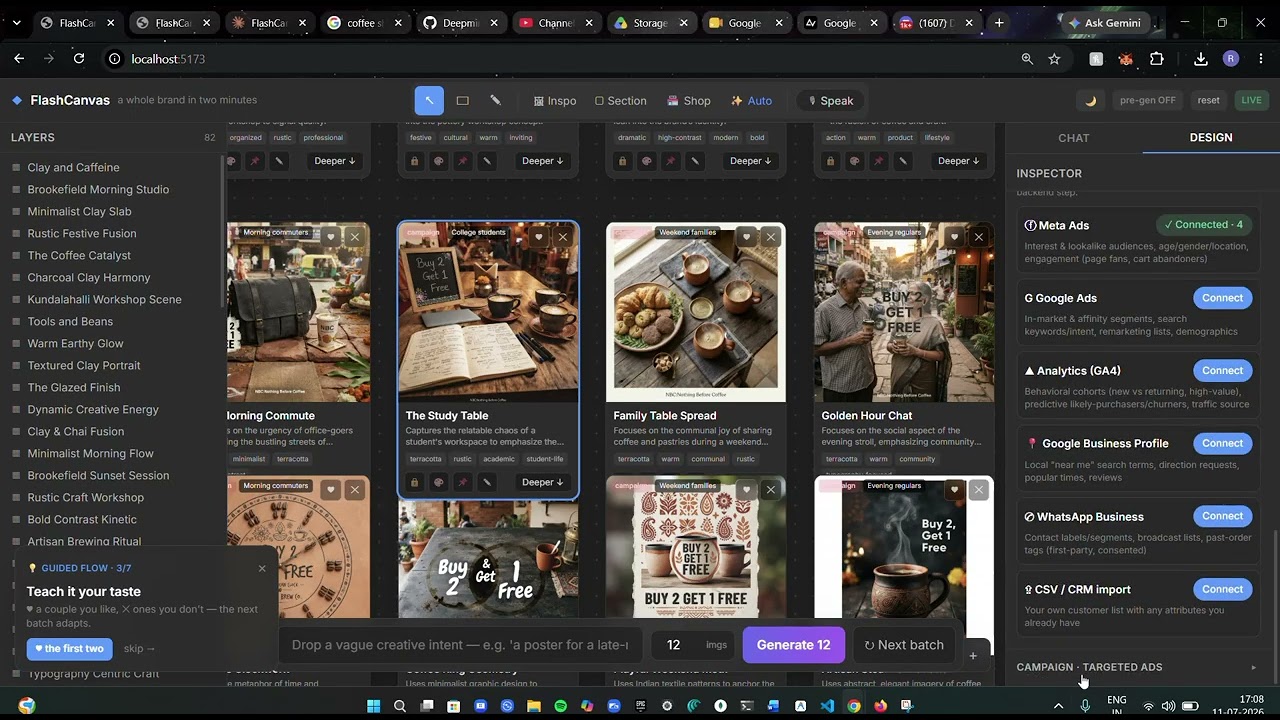
FlashCanvas project preview
0

JustDoIt

StoryForge is a multi-agent AI pipeline that instantly turns a single text prompt into a cohesive, 60-second cinematic video. Powered by Gemini, Nano Banana 2 Lite, and Omni Flash, it orchestrates 10 specialized AI agents to handle scriptwriting, storyboarding, parallel rendering, and final stitching with a built-in human approval checkpoint. The Problem The 10-Second Limit: Advanced video generators (like Omni Flash) cap out at short 10-second clips, blocking long-form storytelling. Visual Discontinuity: Manually chaining short clips together results in jarring "seams"—characters, lighting, and environments completely change from shot to shot. Fragmented Workflow: Creators waste hours bouncing between separate tools for writing, storyboarding, generating, and editing. The Solution Parallel Rendering: StoryForge fires 6 Omni Flash agents simultaneously to render six 10-second clips at once, flawlessly stitching them into a continuous 60-second movie. Ironclad Consistency: Dedicated agents lock in character designs and cinematography rules before rendering, keeping the style identical across scenes. Speed & Control: Compresses a multi-hour production pipeline into under 3 minutes, featuring a quick "human checkpoint" to approve storyboards before final generation.

JustDoIt project preview
0

Shaktiman

Problem Statement: Developer onboarding and architectural knowledge transfer (KT) are massive bottlenecks in software engineering. Reading through thousands of lines of undocumented code or static diagrams is slow, tedious, and highly inefficient for new team members. Solution: Omni-Arch solves this by deploying a fully autonomous, multi-agent system that acts as a virtual senior engineer. It utilizes custom parsing techniques built on top of the Abstract Syntax Tree (AST) to natively comprehend the raw codebase. It then translates this deep architectural understanding into high-bandwidth, multimodal formats—including conversational podcasts, dynamic videos, and interactive diagrams. Multiple specialized agents (Analyzers, Scriptwriters, Reviewers) orchestrate this complex workflow, maintaining strict execution reliability by seamlessly falling back to local Gemma processing if cloud APIs fail. So the two folders that actually contain the fully completed, end-to-end correct output (with video, audio, and HTML) are for evaluation are : omni_arch_output ollama_local_gemma_4b they are in github (inside root these folders are there)

Shaktiman project preview
0

Necromancer

I ahve built a agentic fraud detection sysgtem which uses 3 agents to flag the chained fraud transaction which is the ost effective fraud trick. UPI Fraud Investigation Agents — a multi-agent system that investigates suspected UPI mule-account fraud, and is designed to distrust its own conclusions. Three agents run in a loop: Detector — an XGBoost model (trained on the public IBM AML dataset) flags suspicious account clusters. It's tuned recall-first: it catches ~75% of mule transactions, at the cost of about 1 in 4 flags being a false alarm. Investigator — a Gemini managed agent that writes and runs its own graph-traversal code in a cloud sandbox, tracing the fund flow hop by hop. Judge — a Gemini agent that critiques the trace against explicit evidence criteria. Weak traces get rejected and sent back for re-investigation (capped at 3 passes); genuinely ambiguous cases get handed to a human rather than guessed at.

Necromancer project preview
0

UnknownX

Ctrl + F for Videos and Creative Direction - Talk with agent about visuals on your mind and fetch them to convert int your product/character frames using NBlite and animation using Omni Flash.

www.loom.com/…
0

UnplugAI

Domo is an on-device AI agent built on Gemma 4 that commands a cloud fleet. A small Gemma model runs entirely on your machine as the orchestrator — it listens, reasons, remembers, uses tools, and dispatches background agents (research, code, image generation), escalating to the cloud only when it must. Everything works offline: when the network drops, Domo keeps reasoning, recalls from local memory, tells you plainly that it's degraded, and queues cloud work until you're back. What makes Domo different is the trust boundary. It sits as a membrane between you and the fleet: every result an agent brings back is screened for prompt-injection before it can touch Domo's context, so a poisoned web page can't hijack the agent — and only minimal, screened context ever leaves your device, so your private data isn't shipped off to cloud vendors. A cloud orchestrator structurally can't offer this; Domo can, because the brain lives on your device. Domo is role-adaptive — the same on-device brain becomes a developer, a PM, a marketer, or a researcher, reaching for the right skill. Hand it a photo and say "turn this into a launch ad," and it writes the copy and generates the image in seconds. Built for the real world: across regions with spotty connectivity, high data costs, or sensitive data in health, finance, and personal privacy, sending everything to a server is a non-starter. Domo's offline resilience and privacy aren't features bolted on — they're the architecture. Powered by on-device Gemma 4, a managed-agent fleet, a two-tier memory, and NB2 Lite for instant creative generation.

www.loom.com/…
0

HackOverflow

What if we give Gemini Live model the ability to annotate on screen? That's the idea we started with. The problem we thought of solving was every generation, there are so many traditional skills in India that die because they are undocumented on the internet. Through Heir, you can document all those traditional skills. In the local language, the craftsman can speak, and then you can create a guide in English for future generations and for AI training. The product can annotate on screen, and a human can also annotate on screen. It'll try to fully understand what the human says about the skill and then create a guide with images annotated and full length text guide at the end.

youtube.com/…
0

BongoBoltu

AgroSure is a next-generation, AI-powered agro-fintech platform built to give India's farmers access to credit, insurance, and agronomic guidance — regardless of whether they own a smartphone, have internet access, or can read. Most agri-fintech products silently assume a smartphone, a data connection, and literacy. AgroSure inverts that assumption. It is architected as a multi-agent system, where a set of specialized AI agents handle onboarding, scoring, verification, and conversation — and those same agents are exposed through two parallel front doors: a basic feature-phone call (IVR + DTMF + SMS) and a full web/mobile application. A farmer in Murshidabad with a ₹500 Nokia gets the same underlying intelligence as a farmer with a smartphone in Bengaluru.

BongoBoltu project preview
0

ciphers

Classic video generation is one-shot—you prompt, wait, and if the clip is slightly wrong you start over. MotionDesk turns that into an iterative loop: seed a still (NB2 Lite), have Gemini 3 Flash draft the motion plan and edit chips, animate it (Omni Flash), then keep refining with natural language (and optional style/element reference images) without regenerating from scratch. It mainly helps people who need short, directed motion clips and hate one-shot regen loops: Product / brand marketers — animate stills, swap materials or backgrounds, keep lighting consistent for ads and social Creators & short-form editors — iterate camera, mood, and props conversationally for Reels/Shorts (especially 9:16) Designers & art directors — explore style transfers and look variants from a locked seed without restarting the shot Indie filmmakers / storyboarders — build multi-shot narrative beats from planned takes, then refine each clip with chat Demo builders / hackathon teams — show a full NB2 → plan (Gemini 3 Flash) → Omni generate/edit pipeline end to end

ciphers project preview
0

Chronicle

Chronicle is an AI that builds a real model of a person's own decision history — not a generic advisor, but one that reasons from what someone actually chose, why, and how it turned out. When you bring it a dilemma, an Orchestrator Agent plans the response live, deciding which specialists to call: a Scout Agent researches real-world context on Google's Managed Agents (Antigravity), a Quant Agent runs the numbers only when the decision genuinely turns on arithmetic, and a four-agent reasoning chain — Pattern, Goal Alignment, Devil's Advocate, Synthesis — debates its way to a recommendation grounded in the person's own history, handed off via the real Interactions API. Every claim cites a specific past decision, so the advice is falsifiable against a real track record instead of sounding generically plausible. The system closes the loop too: when a recommendation plays out in real life, the outcome becomes new grounding data, so Chronicle's advice literally gets better calibrated to that one person over time. The MVP scopes this to career decisions for the hackathon demo, but the architecture — orchestration, specialist dispatch, and a growing personal decision record — is domain-agnostic by design.

Chronicle project preview
0

Flash128

SCARO Assist is a privacy-split supply-chain risk assistant for India's MSMEs and farmers, who currently fly blind because the risk platforms that could warn them require uploading sensitive supplier lists and purchase records to someone's cloud. Cloud-side Managed Agents (Antigravity) continuously gather and verify public disruption intelligence — export bans, port congestion, weather, trade-route blockages — while an on-device Gemma 4 agent reads the user's private business documents locally, builds their supply dependency graph, and silently matches public threats against it entirely offline; only a coarse domain/region/language ever leaves the device, so the sensitive question "does this affect me?" is answered without the business ever exposing what it actually buys, sells, or depends on.

drive.google.com/…
0

Arvyo

Chowki is an offline-first AI-powered trail safety network that transforms traditional forest checkpoints into intelligent autonomous ranger stations. Using on-device Gemma AI, Bluetooth-based store-carry-forward networking, and a LoRa-inspired emergency mesh, Chowki enables trekker tracking, hazard reporting, and emergency coordination without internet connectivity. At the ranger station, iAPI Managed Agents orchestrate triage, communication, and weather analysis to support explainable, multi-step decision-making for search and rescue operations in remote areas.

Arvyo project preview
1

SURAKSHA AI

Suraksha AI is an intelligent multi-agent crowd safety and stampede prevention system that addresses the critical danger of lethal crowd crush and panic at massive public gatherings across India by analyzing live CCTV/RTSP streams using Google's multimodal Gemini 3.5 Flash models to automatically detect hazards, immediately broadcast context-aware bilingual (English & Hindi) safety guidance over local loudspeakers, and instantly dispatch tailored briefings, public maps, and automated voice calls to police, hospitals, and organisers.

SURAKSHA AI project preview
0

Otis

Otis is your macos second eyes and ears which protects you from scams and phising attacks - (especially for indian customers)

youtube.com/…
0

OmniMind.AI

OmniMind.ai is an Operating System for Autonomous Organizations. Instead of interacting with a single AI agent, every user request becomes a Mission that automatically creates a CEO-led AI organization with specialized departments that plan, collaborate, execute, learn, and evolve. Key Features Mission-first architecture with dynamic AI organizations (CEO → Departments → Workers) Autonomous planning, delegation, conflict resolution, and parallel execution using Google Managed Agents (iAPI) Real-time multimodal interaction across text, voice, images, documents, and code High-throughput creative workflows powered by NB2 Lite Autonomous code generation, execution, testing, debugging, and self-healing Persistent organizational memory, dynamic skill evolution, and continuous learning Replayable Mission Graph with explainable, auditable decision making Fully offline autonomous execution using Gemma Edge with persistent local memory and seamless cloud synchronization Built with: Google Managed Agents (Antigravity), iAPI, Gemini, Gemma, NB2 Lite, Google Search, Vertex AI, Cloud Run, and Google Cloud.

drive.google.com/…
1

Icarian

A child sits down and tells a story — in Hindi, Tamil, whatever feels like home — and watches an Amar Chitra Katha comic draw itself, page by page, as she speaks. She keeps the pages she loves, redraws the rest, and it all becomes her own cute little film.

www.loom.com/…
0

Data Builders

Agriculture is the backbone of India's economy, supporting over half of the country's population, yet millions of farmers continue to face critical challenges such as delayed crop disease diagnosis, limited access to agricultural experts, unpredictable weather conditions, language barriers, fragmented supply chains, and low awareness of government support programs. These challenges often result in reduced crop yields, increased production costs, and significant financial losses. AgroCare AI is a real-world, multimodal AI-powered smart farming assistant designed to address these challenges by helping farmers make faster, more informed agricultural decisions. The platform combines AI-powered crop disease diagnosis from images, natural voice interaction, real-time weather intelligence, Google Maps-powered supplier discovery, multilingual support, community-driven knowledge sharing, and access to government schemes within a single, easy-to-use application. Built using Google's Gemini ecosystem, AgroCare AI leverages Gemini Vision for crop disease detection, Gemini for conversational AI, Google Search Grounding for reliable agricultural information, Google Maps Grounding for location-aware recommendations, and Firebase for secure authentication and data management. By integrating vision, voice, language, and location into one intelligent platform, AgroCare AI delivers expert agricultural guidance directly to farmers' smartphones, making modern farming knowledge more accessible, reducing crop losses, improving productivity, and promoting sustainable agriculture across India. Our vision is to transform every farmer's smartphone into an intelligent agricultural assistant capable of delivering timely, reliable, and AI-powered support, empowering farming communities with technology that solves real-world agricultural problems.

www.loom.com/…
0

Sahayak-AI

In India, filling a form assumes you can read and write. Hundreds of millions can't — not the form's language, sometimes not any script — so a pension, a bank account, or a ration card depends on trusting a stranger to fill it for them. Sahayak changes who does the reading and writing. Prop a phone on the table, tap Start, and talk. A live Gemini session greets you in your language, reads the form aloud, and fills it field by field: for a name or date of birth, it asks you to show your Aadhaar/PAN to the camera and reads it off the card (printed text, far more reliable than handwriting); for a nominee, it simply asks and takes your voice. Every value appears on screen and the agent confirms it back in your language.

Sahayak-AI project preview
1

sinisterchill

Forge is a 100% offline, fully autonomous, local software engineering agentic platform built as a native Android application. It allows users to input natural language development goals or capture/attach hand-drawn layout sketches, and translates them into fully functioning, beautifully designed mobile web applications compiled, validated, and rendered entirely on-device, with zero cloud dependencies.

youtube.com/…
0

Anchor

Anchor is a dignity-preserving memory companion for people with mild cognitive impairment or early dementia. Entirely local and private, it lives on a single device and requires no internet connection—you talk to it naturally by voice, and it answers by voice, remembering your medications, routines, the people in your life, where things are, and what happened when. Every conversation is written into long-term memory (both structured facts and episodic memories), so it surfaces context you've forgotten: "Did I take my morning pills?", "Where are my keys?", "When did Priya last call?". No data ever leaves your device unless you explicitly trigger the cloud enhancement for richer reasoning.

www.loom.com/…
1

Orbit

Orbit — Autonomous Founder Operating System From Idea to Startup, Powered by an AI Co-Founder Team Building a startup requires founders to handle dozens of complex functions — market research, product planning, engineering, finance, legal, branding, marketing, and customer feedback. Today, these workflows are fragmented across multiple tools and require expensive teams. Orbit is an AI-native Autonomous Founder Operating System that brings an entire startup team into one intelligent platform. Instead of using isolated AI assistants, Orbit provides specialized AI departments that collaborate like a real founding team. Each department understands the complete startup context through a shared Context Engine, allowing knowledge to flow continuously from one stage to another — from validating an idea to building, launching, and scaling a company. AI Departments Working Together Orbit operates through specialized AI agents representing different startup functions: Research Agent — analyzes markets, competitors, customer needs, and validates opportunities. Product Strategy Agent — converts ideas into product requirements, user flows, and MVP roadmaps. Finance Agent — creates financial models, projections, budgets, and investor-ready worksheets. Legal Agent — generates essential startup documentation, compliance checklists, and agreements. Brand & Design Agent — creates brand identity, UI concepts, marketing assets, and product visuals. Marketing & Sales Agent — develops go-to-market strategies, campaigns, and customer acquisition plans. Analytics Agent — monitors product performance and provides growth insights. Every department works with shared memory, creating a continuous startup-building workflow instead of disconnected AI outputs. Startup Forge — Autonomous AI Engineering Team At the core of Orbit is Startup Forge, an autonomous software engineering system powered by Google Antigravity AI models. Startup Forge transforms validated product requirements into fully functional applications — without requiring the founder to write code. Instead of relying on a single AI coding model, Startup Forge uses a collaborative multi-agent engineering workflow: 1. Coordinator Agent Manages the complete development lifecycle and coordinates all AI engineers. 2. Planner Agent Analyzes requirements, selects the optimal technology stack, creates architecture plans, and divides work into independent development tasks. 3. Builder Agents Multiple specialized coding agents work in parallel, creating different parts of the application: UI components Backend services Database models Authentication systems API integrations Deployment configurations 4. Critic Agent Reviews generated code automatically and identifies: Broken imports Missing dependencies Configuration issues Runtime errors Architecture problems 5. Fixer Agent Automatically resolves detected issues, updates the codebase, and prepares the application for deployment. The founder can watch the complete development process through a live agent activity dashboard, seeing how their product is being created in real time. Continuous Improvement Through AI Feedback Loop After deployment, Orbit continues improving the product through real user feedback. Users can submit bugs, feature requests, and improvement suggestions through integrated feedback channels. Startup Forge's Fix Center automatically: Collects user feedback Understands issue severity Prioritizes improvements Sends tasks back to AI engineering agents Generates fixes Tracks approvals and deployment history This creates a continuous autonomous development cycle where products evolve based on real-world usage. Complete Startup Creation Platform Beyond software development, Orbit enables founders to create: Investor pitch decks Financial planning models Legal documents Brand identities UI prototypes using Google Stitch Marketing campaigns Product images and advertisements using Nano Banana Gemma provides a secure private memory layer, allowing founders to keep sensitive business knowledge and documents protected while AI agents collaborate through Managed Agents. Orbit Vision A world where anyone with an idea can build a company. Orbit combines strategy, execution, and continuous improvement into one autonomous AI ecosystem. One idea. One AI team. One complete startup. This version positions Orbit as the platform and Startup Forge as the autonomous engineering engine, which is a stronger story for judges/investors.

Orbit project preview
0
+1

SafePath AI

SafePath AI predicts road accident risk and warns drivers via Google Maps overlay, proactive voice alerts, hands-free Ask AI, on-device Gemma, and Fastest vs Safest route recommendations — plus a dashboard for governement and police. XGBoost predicts; Gemma explains; Maps shows. Future scope: Gemini Live API for conversational, interruptible driving guidance + Live Translate for Kannada/Hindi/Tamil/English.

www.loom.com/…
0

ZeroTrace

Every year in India, over 98,000 children are reported missing, leaving them highly vulnerable to trafficking as manual tracing methods fail when a child's appearance changes over time or when they are moved across state lines with different regional languages. MissingMesh solves this critical identification bottleneck through an AI-powered, multi-agent orchestration framework designed to instantly automate child recovery. When a parent reports a missing child via voice in their native language, our system instantly generates age-progressed photorealistic images and automatically dispatches translated, multi-lingual missing posters to regional railway networks and police stations. When a child is found, our strict forensic facial-matching AI cross-references their invariant facial geometry—bypassing superficial age or clothing differences—and automatically emails the family with a high-probability match, effectively replacing slow paperwork with an instant, intelligent recovery network.

ZeroTrace project preview
0

LLMao

TradePilot AI is an AI-native investing and trading copilot designed to make Indian stock-market participation less intimidating for beginners. Users can describe their investment budget, loss tolerance, goals, and risk appetite in natural language; the app converts this into a personalized risk policy and provides simple, explainable market and portfolio guidance. A bounded multi-agent system analyses live and historical market signals, portfolio exposure, relevant news sentiment, and F&O risk factors such as option Greeks. Instead of giving black-box tips, TradePilot AI explains why an opportunity is suggested, what could go wrong, and whether it fits the user’s limits. It defaults to paper trading, requires explicit approval before any order workflow, and uses deterministic risk validation to block trades that exceed configured loss, allocation, or F&O-risk limits. Built with Gemini for reasoning and structured agent orchestration, and Gemma for lightweight on-device AI tasks, TradePilot AI aims to turn complex financial data into safe, beginner-friendly actions.

LLMao project preview
0

Rygtus

KARYA Node is a Windows-native, local-first autonomous agent for document-heavy government/office workflows. It perceives the screen, drives desktop and browser apps, processes documents, writes code, trains computer-vision models, validates databases, and escalates ambiguous cases to humans — with a full audit trail and a policy guard on every action. # ⚡ KARYA Node — Problem Statement & System Specification ## 1. Executive Summary **KARYA Node** (from the Sanskrit *Karya* meaning duty or work) is a Windows-native, local-first autonomous operations agent designed for document-heavy workflows in Indian government offices, public sectors, banks, and small businesses. Unlike conventional automation tools or generic LLM chatbots, KARYA Node runs the core **Sense → Decide → Act → Check → Recover** loop on-device to operate legacy Windows applications, spreadsheets, and web browsers. It protects sensitive data by keeping it local, functions seamlessly during network blackouts, automatically verifies its own work, and escalates ambiguous decisions to human officers. --- ## 2. Context & Background (The Bharat Office Challenge) Public administration and commercial operations in developing regions, especially in India (Tier-2/Tier-3 districts and rural talukas), are governed by highly repetitive, manual, and document-heavy processes. These environments present unique operational challenges: ### 2.1 Low and Unstable Network Connectivity Offices frequently lose internet access. Stalling operations due to lack of network is unacceptable. Cloud-only agents or software-as-a-service (SaaS) products that fail when the internet is disrupted cannot be deployed. ### 2.2 Legacy Desktop Applications A significant portion of national record-keeping is locked behind 10-to-20-year-old desktop software (built on Win32, VB6, Java Applets, or custom forms) that lack APIs. Traditional Robotic Process Automation (RPA) tools are highly brittle, breaking whenever the application UI changes by even a single pixel. ### 2.3 Sensitive Personal and Citizen Data Citizen applications contain sensitive data, including Aadhaar numbers, bank account details, and land registry records. Under local sovereignty and data privacy laws, sending this information to foreign cloud servers for LLM inference is highly restricted or illegal. ### 2.4 Lack of Tech-Savvy Operators The operators of these legacy systems are not developers or IT professionals. They require intuitive interfaces—such as voice commands or simple natural language instructions—rather than complex configuration consoles. --- ## 3. The Core Problem Statement > **"How can we build an autonomous, resilient, and secure desktop operations assistant that operates legacy systems without APIs, respects local data sovereignty, handles network drops, and ensures 100% data entry accuracy without hallucinating or taking unauthorized actions?"** To solve this, we must replace two failing paradigms: 1. **The Brittle RPA Script:** Traditional macro-recorders fail when UI layouts shift, validation errors occur, or applications crash. 2. **The Passive Chatbot:** Standard LLMs can discuss a spreadsheet or draft an email but cannot verify the results, navigate the screen, run terminal commands, or submit entries. --- ## 4. Key Design Objectives KARYA Node solves the problem using six core principles: ``` ┌────────────────────────────────────────────────────────┐ │ KARYA │ │ Sense → Decide → Act → Check → Recover │ └────────────────────────────────────────────────────────┘ │ │ │ │ ▼ ▼ ▼ ▼ 👁️ Vision 🔒 Policy ✅ Verifier 👤 Human Perception Guard (Independent) Escalation ``` ### 4.1 Local-First Reasoning The primary brain is **Gemma 3** running locally on-device. Sensitive information stays inside the office. A cloud path via the **Gemini API** is utilized only as a secondary fallback for complex multi-modal analysis. ### 4.2 Screen Perception (Computer Vision) Rather than relying on static coordinate clicks, the agent utilizes a visual perception loop. It takes screenshot captures, feeds them to a vision-language model, understands the current active application/state, and computes the exact keyboard/mouse actions required. ### 4.3 Safe by Design (Policy Guard) A local guardrail module enforces safety by intercepting every action. It blocks destructive commands (`rm -rf`, disk formatting), restricts folder paths, and enforces explicit human approval for any transaction that has real-world consequences (e.g., submitting an application online, making database changes). ### 4.4 Self-Correction & Verification An independent verifier module double-checks every entry by comparing the source document against the output database or screen state. If an error is detected, the agent attempts to fix it. If the application crashes, the system uses durable checkpoints to resume from the last clean state without duplicating operations. ### 4.5 Human-in-the-Loop Escalation The agent does not guess. When faced with handwritten documents with low confidence, conflicting details (e.g., mismatched name and ID), or policy violations, the task is paused. It is escalated to a human queue with a clear explanation and supporting evidence. --- ## 5. System Architecture & Modular Agent Ecosystem KARYA Node is divided into 15 interconnected modules, allowing a single operator or IT administrator to toggle features as needed. ``` ┌────────────────────────────────────────┐ │ React Glassmorphism UI (Port 5173) │ └───────────────────┬────────────────────┘ │ (REST / WebSockets) ▼ ┌────────────────────────────────────────┐ │ FastAPI Orchestrator (Port 8765) │ └──────────┬───────────────────┬─────────┘ │ │ ┌───────────────────┘ └───────────────────┐ ▼ ▼ ┌─────────────────────────┐ ┌─────────────────────────┐ │ Agent Core │ │ Modular Engines │ │ ─────────────────────── │ │ ─────────────────────── │ │ • LangGraph Runtime │ │ • Desktop Vision Agent │ │ • Gemma Local / Gemini │ │ • Playwright Browser │ │ • Policy Guard │ │ • Code Agent (Git/CLI) │ │ • Independent Verifier │ │ • Server Manager │ │ • Audit Logger │ │ • StratifyLabs (CV) │ │ • Offline Sync Queue │ │ • ValETL (DB Validation)│ │ • SQLite Database │ │ • Creators Hub (Video) │ └─────────────────────────┘ └─────────────────────────┘ ``` ### 5.1 Work Queue Manager (`manager.py`) Maintains the state machine for all operational cases (Pending, Processing, Completed, Failed, Human Review, Waiting). It persists state to SQLite, allowing it to survive system reboots or power outages. ### 5.2 Document Extractor & Validator - **Extractor (`extractor.py`)**: Uses local PDF parsing and Tesseract OCR to convert scans, images, spreadsheets, and Word documents into structured JSON. - **Validator (`validator.py`)**: Checks for complete fields, formats (e.g., Aadhaar and phone verification), and flags duplicates or database conflicts. ### 5.3 Desktop Vision Agent - **Screen Perception (`screen_perception.py`)**: Captures screenshots and uses Gemini Vision to detect active windows, buttons, input fields, and potential error dialogs. - **Windows app controller (`controller.py`)**: Executes actions via `pywinauto` or PyAutoGUI, automating inputs into legacy applications with automatic crash recovery. ### 5.4 Playwright Browser Agent (`automation.py`) Performs web operations in a sandboxed Chromium session. It records full video sessions of web actions, allowing managers to replay web submissions for security audits. ### 5.5 Coding Agent (`coding_agent/agent.py`) An autonomous software engineer that writes Python/JS scripts, runs terminal commands, executes tests, and commits code to local Git repositories. It automates repetitive coding chores and handles local bug fixes. ### 5.6 StratifyLabs Integration (`stratify_bridge.py`) An automated bridge to the StratifyLabs vision training platform. The agent translates natural language instructions (e.g., "Train a ResNet model on my vehicle detection dataset") into configuration parameters, starts the PyTorch/FastAPI server, monitors metrics, and runs inference. ### 5.7 ValETL Integration (`bridge.py`) A database validation bridge. It handles database schema discovery, translates natural language questions into secure PostgreSQL queries, and validates data migrations (comparing source database values against target database values). ### 5.8 Creators Hub (`video_generator.py`) Powered by **Gemini Omni Flash** via the Interactions API. It supports stateful, multi-turn conversational video editing, enabling non-technical users to generate, modify, and swap visual elements in videos using simple natural language feedback. --- ## 6. End-to-End Validation Suite (The Demo Case) To prove KARYA Node meets true enterprise requirements, it includes a simulation testbed: 1. **Synthetic Data**: Generates a set of 50 disaster-relief case documents containing a mix of complete files, blurry images, incomplete forms, conflicting IDs, and duplicate entries. 2. **Legacy App Simulation**: Runs a custom-built desktop application representing typical government data entry screens. 3. **Test Flow**: - The operator instructs the agent: *"Process today's relief cases, enter valid ones, flag conflicts, and alert me to exceptions."* - KARYA extracts the cases, enters them into the simulated app, and recovers from deliberate app crashes using LangGraph checkpoints. - It queues web checks during simulated network drops and syncs them once online. - It flags mismatched records for human review. - The independent verifier checks the final DB state and generates a compliance audit report.

Rygtus project preview
0

PARADOX

Keller — a voice-first agentic browser for low-literacy Indians. Speak a task in Hindi ("fill my pension form on the Jan Seva portal") and an on-device AI agent drives a real web browser for you — reading the page, clicking, and filling forms — while narrating each step back in simple Hindi. A built-in privacy firewall keeps sensitive IDs (Aadhaar, PAN, mobile) on the phone: the cloud AI only ever sees placeholders like [AADHAAR_1], and the real values are filled locally after a spoken confirmation. Documents like ration cards are read by on-device OCR (ML Kit Devanagari), never leaving the device. Built as a minimal Android WebView shell (com.keller.browser), powered by Gemini (Live API for voice, function-calling for the browser agent), with a local offline mock government portal so it works even with no venue network.

PARADOX project preview
0

Team Loci

Loci — a local, offline coding agent Loci is a fully offline coding agent built on Gemma 4 (E2B). Describe an app you want — say, tic-tac-toe — and Loci asks the minimum clarifying questions needed, then writes a complete, working single-file app. Unlike a typical code-generation chatbot, Loci closes the loop itself: it runs the generated code in a real headless browser, checks for errors, and if something's broken, feeds the failure back into the model and rewrites it — no user intervention required. If it can't resolve an issue after two attempts, it stops and explicitly hands the decision back to the user (simplify the feature, or inspect the code directly) rather than looping indefinitely. Every part of this — generation, execution, testing, and retry — runs entirely on-device, with zero network calls at any point. That makes Loci viable in offline environments, on unreliable connections, or wherever sending code or data to a cloud service isn't acceptable. Built with Flask, vanilla JS, Selenium for self-testing, and Ollama running Gemma 4 E2B locally, leveraging the model's native speculative decoding for faster on-device inference.

www.loom.com/…
1

waypoint

Waypoint is a two-agent cargo-custody system designed for deliveries through connectivity dead zones. A cloud dispatcher prepares the mission and later reconciles field activity, while a Gemma-powered field agent assists operators with cargo inspection and evidence capture when connectivity is unavailable. Manifest counts, seal hashes, and expected-versus-actual differences are verified by deterministic code rather than an LLM. Every observation is stored as an append-only custody event using the pre-existing FluctlightDB 0.5.10 dependency, with isolated memory for field activity, dispatcher context, and synchronization operations. When connectivity returns, Waypoint appends reconciliation results without overwriting the original field evidence. The current Android demo connects to the Python FluctlightDB backend through a USB reverse tunnel, while native Android persistence remains the next deployment step.

youtube.com/…
0

Invisible

Katha Studio is an interactive, real-time conversational film director built for the Google DeepMind Bangalore Hackathon. It orchestrates cloud AI and local models to create a resilient, high-velocity creative pipeline.

Invisible project preview
0

flow.ad

flow.ad eliminates the user interface entirely, replacing complex dashboards with a single, live, fluid conversation. Pointing a camera at an item and talking naturally triggers a secure backend multi-agent swarm that aggregates local context, handles creative asset design, generates localized video, and coordinates nearby delivery drivers.

flow.ad project preview
0