Pls let me win
Built at Built with Claude: Life Sciences · Jul 7, 2026 · Remote
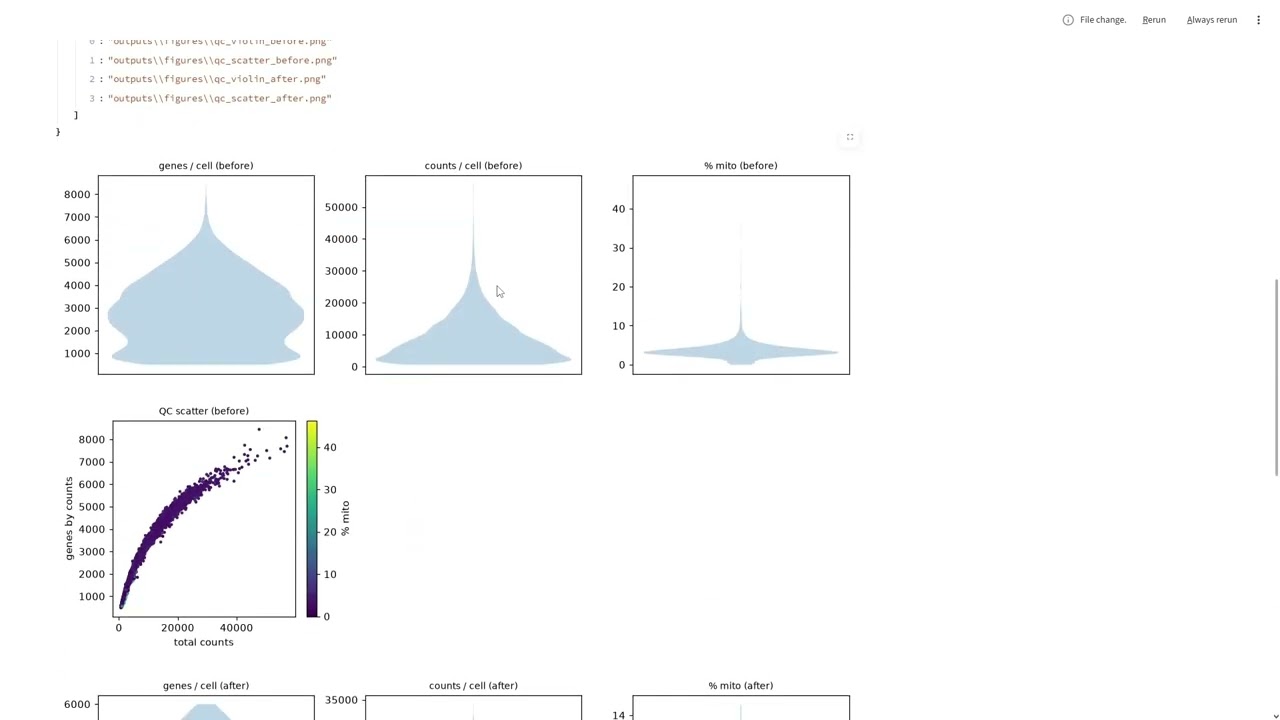
What I built. Perturb-seq Copilot — a no-code web app that takes a wet-lab immunologist from a processed single-cell CRISPR Perturb-seq count matrix to a ranked shortlist of high-impact gene perturbations and grounded, testable hypotheses in about two minutes. You upload a file (or click "Try the example") and it runs the full pipeline — quality control, donor-aware pseudobulk differential expression, pathway and transcription-factor activity, and an E-distance effect-size ranking — then produces a grounded Claude interpretation and a one-click, self-contained HTML report. It was built end to end with Claude Code: the scientific pipeline, the Streamlit interface, the Dockerized deployment, and an interpretation layer that sends Claude only computed facts and passes a grounding check. What I found. On real published T-cell CRISPR screens, the biology validates. In Shifrut 2018 (primary human T cells), CBLB — a known brake on T-cell activation — ranks #1 by effect size with a coherent chemokine/effector program; in Datlinger 2017 (Jurkat CROP-seq), the top hits are the core TCR-activation transcription factors: EGR1, ETS1, NFATC1, NR4A1, and ZAP70. But the most important result is methodological. When there are too few donors, gene-level significance cannot honestly be established — so the tool says so: it labels the run exploratory, refuses to promote any target to a "confirmed regulator," and in one case Claude flagged that its own #1-ranked hit was dominated by a guide-construct artifact rather than real biology. What I built. Perturb-seq Copilot — a no-code web app that takes a wet-lab immunologist from a raw single-cell CRISPR Perturb-seq count matrix to a ranked shortlist of high-impact perturbations and grounded, testable hypotheses in about two minutes. Built end to end with Claude Code: QC, donor-aware pseudobulk differential expression, E-distance ranking, a grounded Claude interpretation, and a self-contained report. What I found. The biology validates on real T-cell screens — CBLB tops Shifrut 2018, and the core TCR transcription factors (EGR1, ETS1, ZAP70) top Datlinger 2017. More importantly, when donors are too few the tool refuses to overclaim: it labels the run exploratory and even flags when a top hit is a technical artifact. Why it matters. It puts rigorous, honesty-first Perturb-seq analysis in the hands of the biologist who generated the data — every output a testable hypothesis, never a false discovery.
