INTEGRITY
Built at Built with Claude: Life Sciences · Jul 7, 2026 · Remote
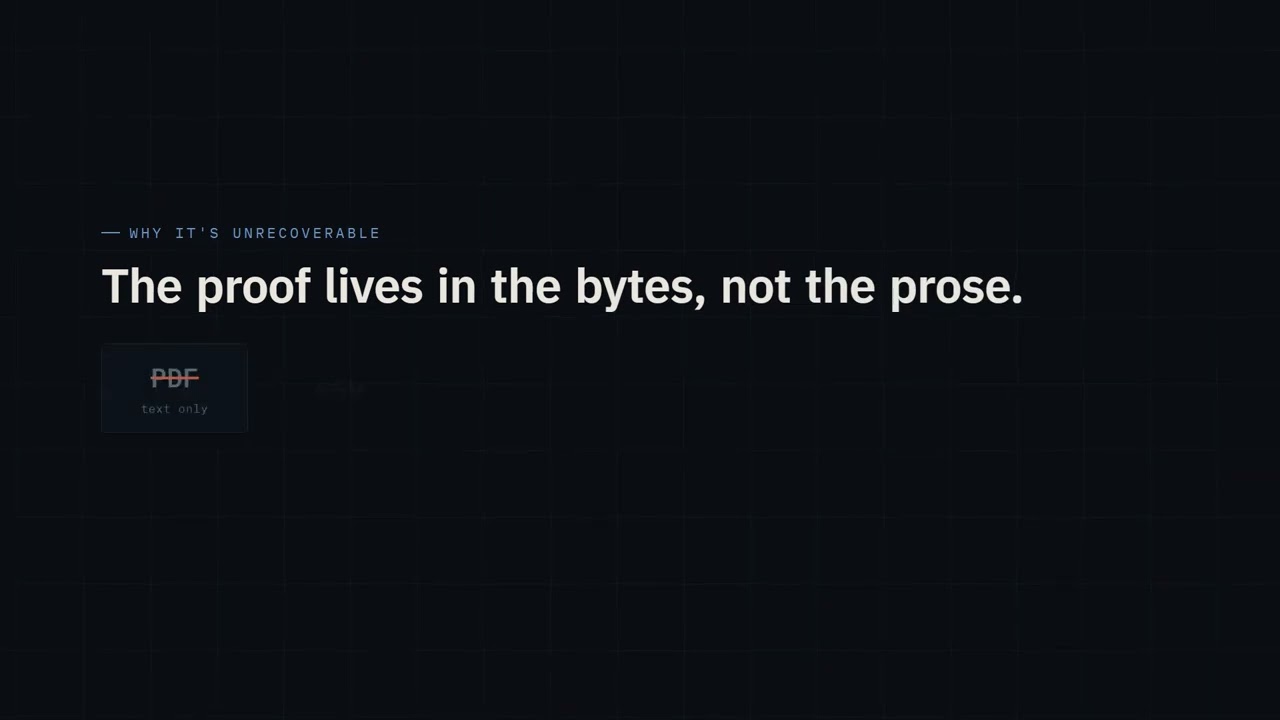
INTEGRITY is a forensic scanner for life-science manuscripts. It validates every biological entity a paper names - gene symbols, cell lines, antibody RRIDs - against authoritative registries (HGNC, Cellosaurus, SciCrunch) and reports only what those registries actually say. It never reasons about biology and never accuses an author: every finding is labeled REVIEW, never ERROR. The core insight: when Excel silently converts a gene symbol like SEPT2 into a date, it does not store the text "2-Sep" - it stores a typed date cell (data_type='d'). That evidence is destroyed the moment the sheet is exported to CSV and was never in the manuscript PDF, so no model reading the paper can recover it. INTEGRITY reads the raw spreadsheet bytes instead. Run on the real 2016 Ziemann supplementary file - the paper that first documented this corruption - it finds exactly 1213 corrupted cells across 128 distinct registry lookups, and refuses to flag registry-vindicated symbols (Oct-4 resolves to POU5F1 and SEPT2 to SEPTIN2, both PASS). Only genuine corruption is flagged. When a registry is unreachable it fails safe with a distinct exit code rather than reporting a false clean. It ships as three surfaces: a CLI, a live web app with streaming results (https://integrity-lemon.vercel.app), and a Claude Code Stop hook that blocks an agent from ending its turn if a registry disagrees with a biological claim it just made. Why it matters: 30.9% of papers carrying supplementary Excel gene lists were corrupted by 2021 (up from 19.6% in 2016), the errors are silent and cheap to catch, and today nobody catches them.
