Most locally advanced rectal cancers are mismatch-repair proficient and have no molecularly-guided treatment. We asked whether drugs that already exist could help, guided by the biology that makes these tumors resist chemoradiation. Anchoring to the chemoradiation-resistance gene program (GSE209746), two independent engines — one by drug target, one by measured kinase binding — nominated 287 clinically-available drugs. A permutation test confirmed the anchor is non-arbitrary (p=0.001 vs 1,000 random gene sets). FDA-label safety filtering distilled this to two ranked shortlists of 44 drugs, ready for patient-derived organoid testing. Claude drove the full scientific method: planning, building both engines, integrating eleven public databases, reasoning through methodology, drafting the manuscript, then acting as a critical peer reviewer that exposed weak claims — which we revised into a stronger, defensible result. One researcher, the complete arc of science.
More from Built with Claude: Life Sciences
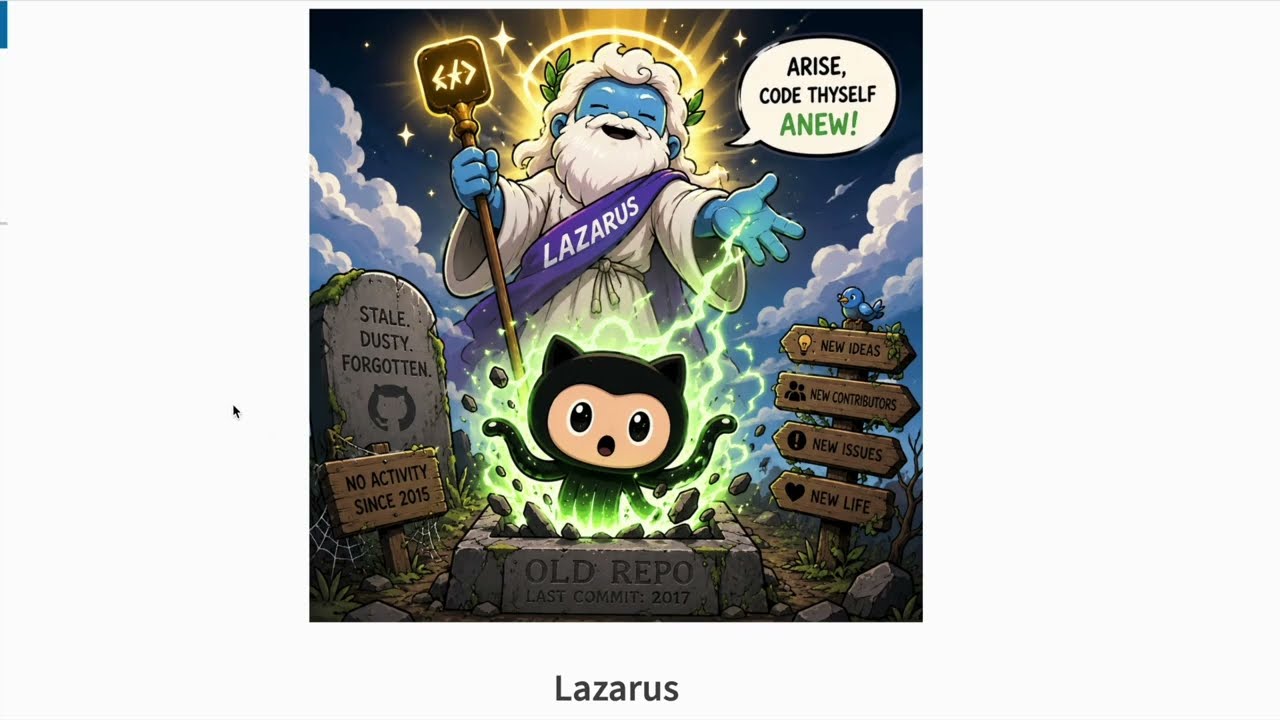
What I built. Lazarus is an agent that takes a dead research repository that is open, cited, and no longer runnable, and turns it back into a callable…
Diffuse midline glioma is a paediatric brainstem cancer that is almost uniformly fatal: about ninety percent of children die within two years, and the first…

Hippocampus AI is the memory and reasoning engine for scientific discovery. Every experiment generates valuable knowledge, but that knowledge becomes…


I used Claude to train a protein language model that can generate an extremophilic version of any enzyme, maintaining its function, while allowing it to…


Many primates are sexually dichromatic — males and females are different colors. I wanted to know how that trait is built genetically, and how it evolved…

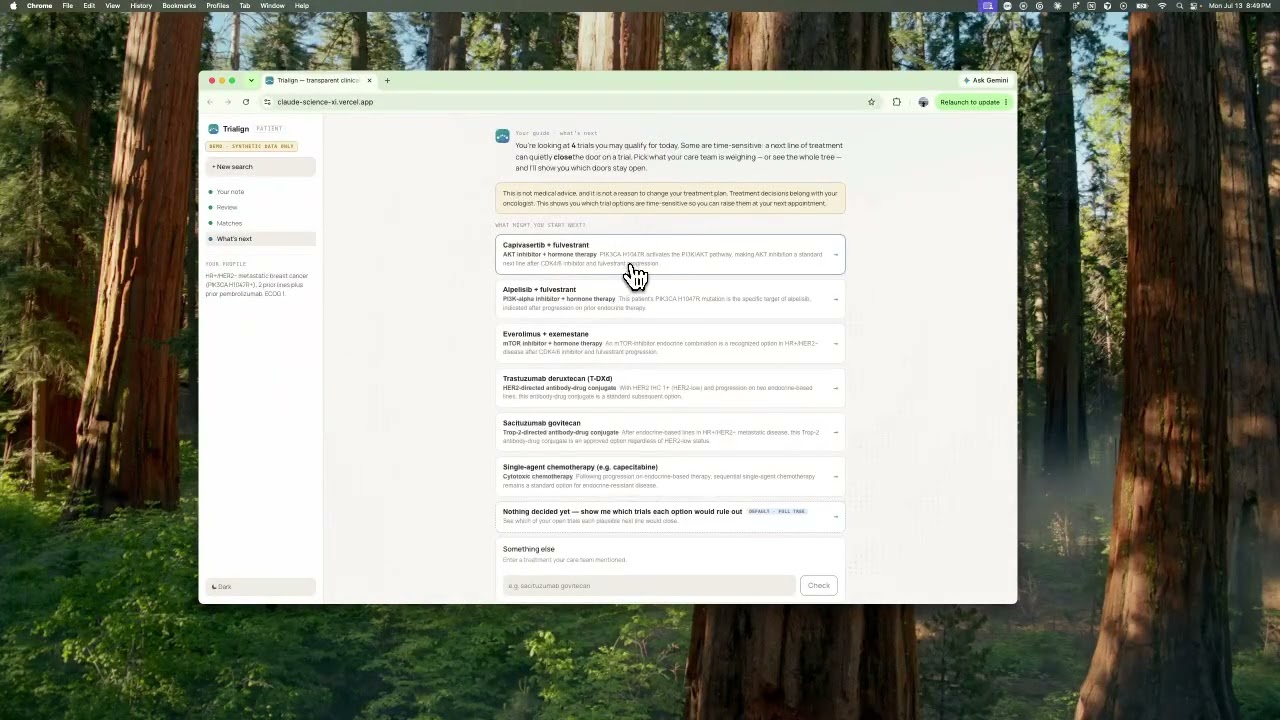
About Trialign is a patient-facing clinical trial matcher for oncology. A patient pastes a clinical note, uploads a record, or connects their EHR via SMART on…