e-nios
Built at Built with Claude: Life Sciences · Jul 7, 2026 · Remote
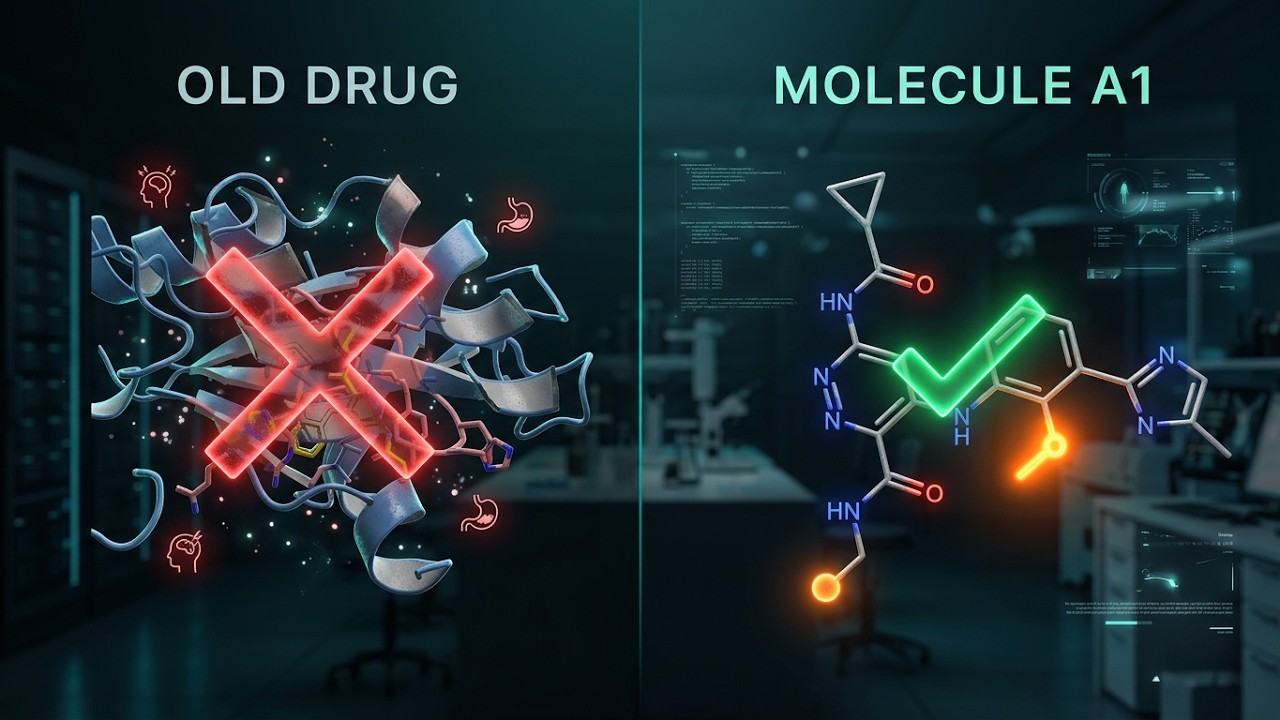
I carried out a research study, written up as a manuscript, on one of the hackathon's suggested datasets: a genome-scale atlas of what happens inside human immune cells when each gene is switched off. I asked whether it can be taken from patients all the way to a drug molecule, and built a computational tool from the answer. The method takes a patient's disease signature and finds genes whose silencing pushes cells the opposite way; only those surviving a battery of evidence checks count as targets. They go into molecular design, where molecules are judged not on binding strength but on how cleanly they hit the intended protein while sparing its close relatives — the usual source of side effects. It also enables precision medicine: grouped by disease mechanism rather than diagnosis, patients reveal a drug class whose effect is strong in one subgroup and disappears when the cohort is pooled — precisely the stratification a clinical trial would need in order to see it. Across several immune diseases it rediscovers approved drugs unprompted, proposes new targets, and designs molecules predicted to be more selective than an approved drug. CRUCIBLE, the tool, runs the pipeline end to end for any disease with adequate patient data and withholds a result rather than produce one the data cannot justify. It matters because it delivers a framework to turn a descriptive atlas into a reusable engine for precisely targeted therapies in immune and autoimmune disease.