Filipe Burmester
Built at Built with Opus 4.7: a Claude Code hackathon · Apr 21, 2026 · Remote
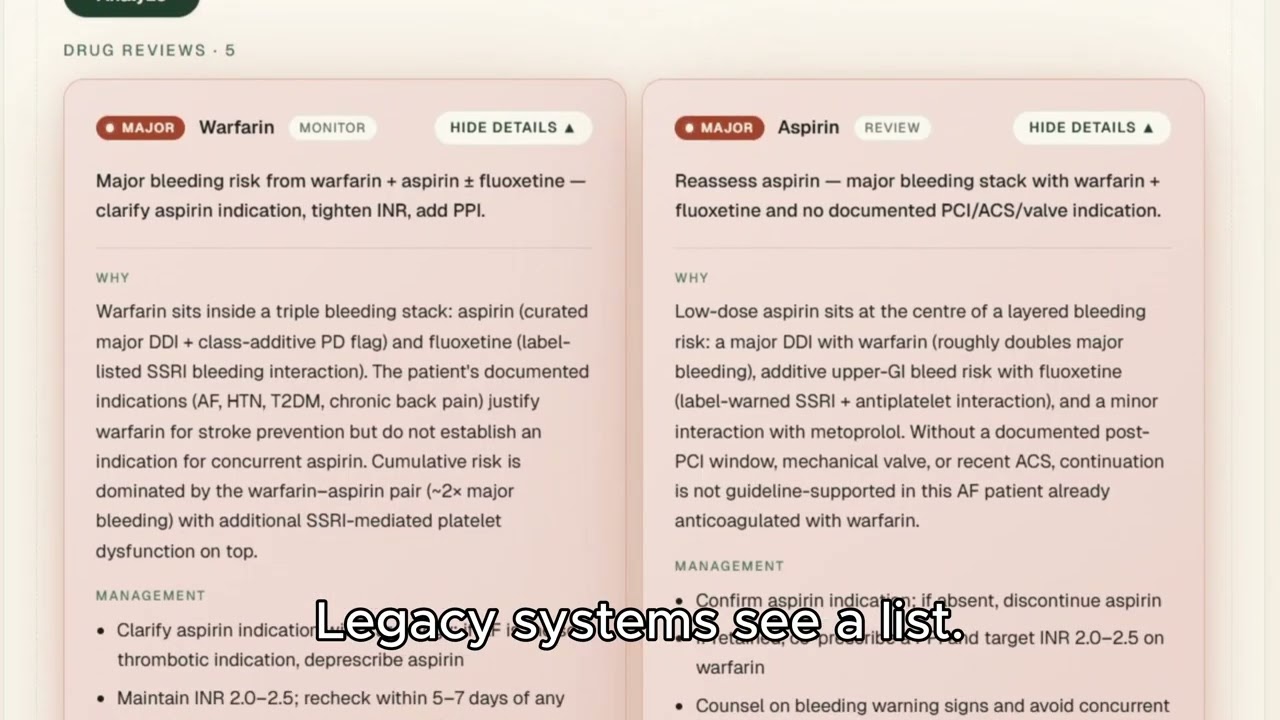
Modern medicine is prescribing more drugs to the same patient than ever before. ~42% of U.S. adults aged 65+ take five or more prescriptions, and adverse drug reactions are a top-six cause of preventable death — the JAMA estimate is ~106,000 fatal ADRs per year in U.S. hospitals alone. Two failure modes drive most of that harm: the cytochrome P450 enzymes (which metabolize ~75% of clinical drugs and vary genetically between patients), and drug–drug interactions that compound silently across a regimen. Pharmacyp is a clinical decision support tool that catches both. A clinician enters a patient's drug list and CYP genotype; Pharmacyp returns a structured risk report through three layers: a deterministic rule engine over CPIC pharmacogenomic guidelines and curated DDI data (DDInter 2.0), two graph-neural-network microservices that predict interactions and CYP behavior from chemical structure when no curated data exists, and a Claude Opus 4.7 explainability layer that annotates every finding with a citation back to the underlying clinical literature. Every output is labeled by source — RULE-BASED, ML-PREDICTED, or INSUFFICIENT DATA — so uncertainty is never hidden behind a confident tone.