Jan 10, 2026 · San Francisco, CA
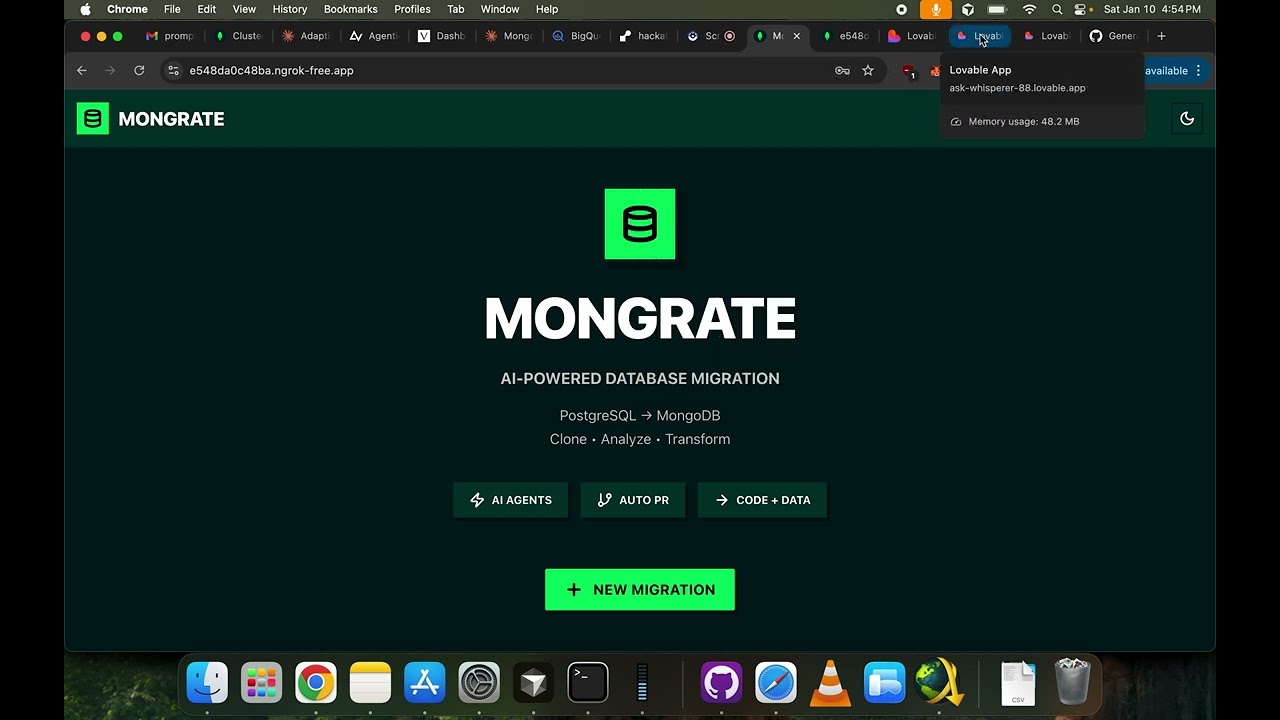
Mongrate is a multi-agent coding system that migrates an app end-to-end from Postgres to MongoDB by having specialized agents analyze schema + code, design a MongoDB model, refactor queries/services, generate migration/backfill scripts, run tests, and produce a migration report — all coordinated via MongoDB “context workspaces”.

SOGA: Smart Orchestration Glasses Agent Voice-controlled AI agent orchestration through smart glasses. Spawn specialized agents (Scout, Analyzer, Implementer, Tester) via voice commands - agents execute on desktop while you monitor through glasses. PROBLEM: AI agents require laptops/keyboards. Can't access agents when walking, in meetings, or working hands-free. SOLUTION: Smart glasses as primary interface. Say "SOGA, debug the auth system" - agents spawn and work autonomously. Check progress by glancing at glasses. Hands-free agent control anywhere. MONGODB ATLAS: Bridges mobile glasses ↔ desktop agents with real-time sync (<50ms). Handles conversation persistence, offline resilience, cross-device state. Optimized for battery-constrained wearables. STACK: Claude Sonnet 4, desktop daemon, SSE streaming, Mongoose ODM, React dashboard. Built by smart glasses developers for hands-free AI access.
A multi-agent system that processes real-time video, builds 3D models to simulate the problem using depth estimation, and computes optimal paths for first responders to improve safety and outcomes in building fire and active-attacker scenarios.
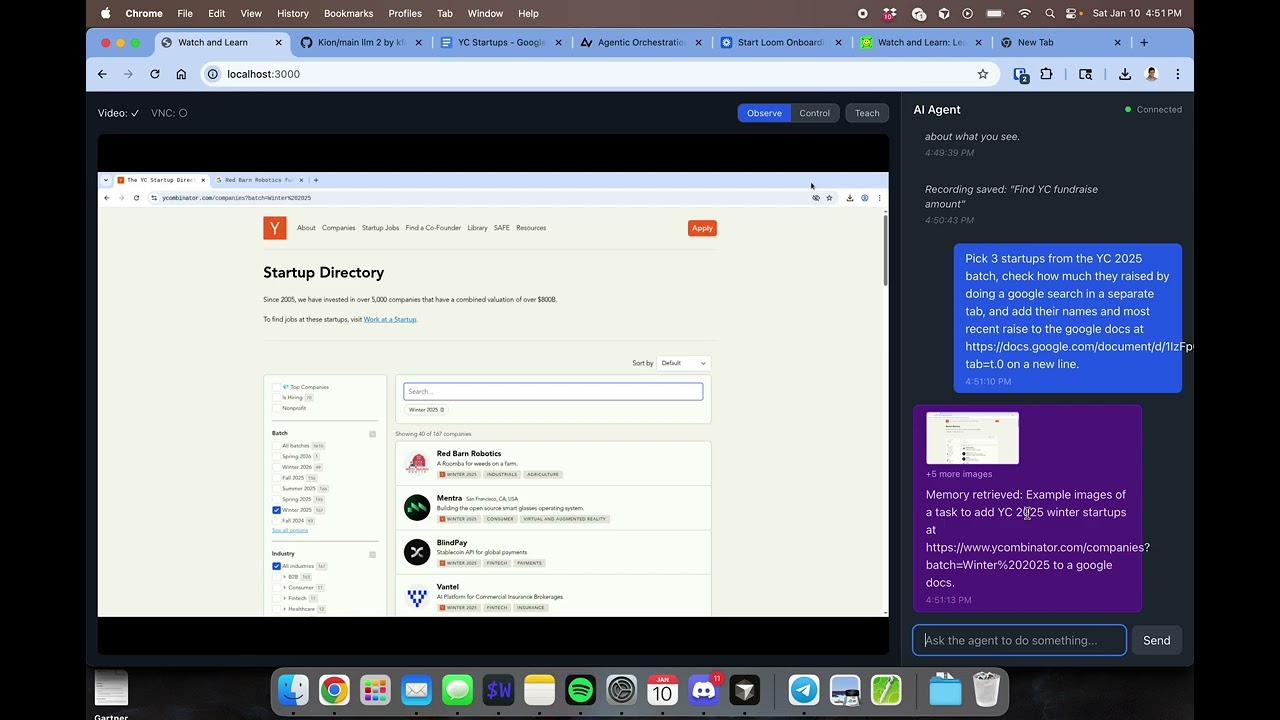
Long running browser agents struggle when dealing with custom workflows in complex UIs. Watch and Learn is a multi-modal context engine which allows agents to learn from user and agent demonstrations. Each user query is converted to a VoyageAI embedding and queried against existing demonstrations from MongoDB. These demonstrations are then passed into the agent's context. The result is reliable, long-running agents.

We built Polaris, an open source threat intelligence system that keeps agent workflows aligned with current vulnerabilities. It uses a static 2025 BERT classifier as a baseline, then stays current by pulling live CVEs, generating adversarial tests, and learning new patterns in seconds. It seamlessly lives within production workflows and secures the multi-trillion dollar agentic economy.