GPT-6 Astra Hackathon NYC
Sep 10, 2026 · New York, NY
Astra HQ makes you the CEO of a team of AI employees working 24/7. Set the goal, watch them collaborate, and approve their work. You are the CEO!

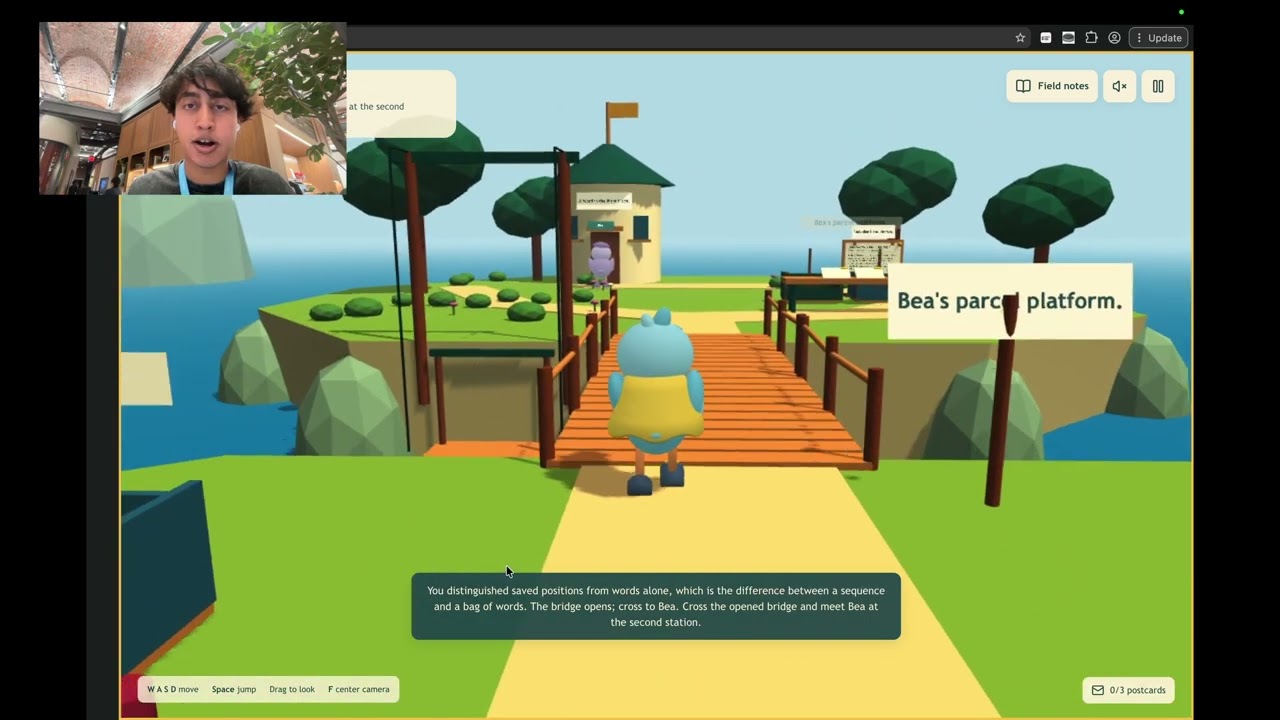
I shipped Counterfactual Worlds, a public web application that uses GPT-6 Astra to turn readings and museum objects into interactive, teacher-guided investigations. Teachers can start with 30 prepared lessons across 10 worlds or bring their own reading; students explore a 3D setting, examine sources, discuss their reasoning, and revise an explanation. My motivation is simple: a student's access to engaging education should not depend on their school's budget. Reusable lessons and shareable teaching materials are the starting point for that mission. The experience is simple: explore a world, examine evidence, defend an idea, and reconsider it with a teacher's guidance. In our Alexandria demo, a practice learner begins with “The library will definitely close.” After reading Strabo and considering a teacher's question about another patron, the learner revises to “Closure is possible, not inevitable.” The teacher can inspect both explanations and the feedback behind the revision. The distinctive interaction connects Astra's reasoning to both the student's work and the world they explore. Astra examines museum photographs alongside saved observations, discusses the learner's evidence and explanation, and helps a teacher shape the next challenge. Native mid-turn steering lets the teacher redirect a supported change while it is being generated, preview it privately, and decide what reaches the class. In Alexandria, that can change existing harbor, market, and scholarly activity under an explicitly hypothetical scenario. Across the reading worlds, teachers can direct supported lighting, atmosphere, and viewpoints while preserving the assigned text and student work. The project brings together: - **30 lessons across 10 worlds:** Alexandria, The Odyssey, Pride and Prejudice, Macbeth, Frankenstein, A Christmas Carol, The Tempest, Philadelphia and the Declaration of Independence, Frederick Douglass's Narrative, and Seneca Falls and the Declaration of Sentiments. Each world has three prepared lessons with bounded readings, activities, and teacher challenges. - **Reading-to-lesson authoring:** Paste an excerpt, upload a PDF or text file, or provide a public PDF link. Astra prepares places, characters, evidence, and activities for teacher review. Changes to reviewed content require renewed approval before launch. - **Immersive, source-linked exploration:** Detailed Alexandria landmarks, ships, markets, homes, and everyday objects; distinct coastal, garden, and archive settings; scenic viewpoints; optional ambient sound; and animated reading companions with work-specific wardrobes. Characters respond to saved arguments and evidence. Clothing, scenery, and dialogue retain clear interpretive labels. - **Museum investigations across the curriculum:** The collection connects all ten topics to 60 attributed objects from Cleveland Museum of Art and The Metropolitan Museum of Art. Students zoom, compare, and record observations, interpretations, and questions. Astra vision examines curated photographs alongside saved field notes to challenge unsupported inferences. Ten guided object-pair investigations include direct share links and printable worksheets. - **Resources that travel beyond the app:** Reusable saved worlds, student invitations, 30/45/60-minute teaching guides, source packets, printable worksheets, and downloadable writing, field notes, and teacher reports. A searchable library of 69 CC0 models provides 3D previews, available animation playback, GLB downloads, asset links, and placement code. Original assets include editable Blender files and regeneration scripts. Code and original models are MIT-licensed; third-party licenses are retained. Teachers review sources, inspect explanations, preview AI suggestions, and decide what reaches the class. Model outputs are checked against structured contracts and source references. Hypothetical changes remain labeled assumptions, and AI feedback remains provisional. My access strategy starts with reusable lessons and shareable materials that teachers can adapt. Downloaded text packets and worksheets work offline; live AI requires connectivity. Affordable delivery and improved classroom learning are goals to validate through real use. **Try it:** https://counterfactual-worlds-henry.handeche49.chatgpt.site/try — public student entry, no teacher code required. **Browse resources:** World Library: https://counterfactual-worlds-henry.handeche49.chatgpt.site/worlds · Museums: https://counterfactual-worlds-henry.handeche49.chatgpt.site/collections · Models: https://counterfactual-worlds-henry.handeche49.chatgpt.site/model-catalog **Teacher access for judges:** https://counterfactual-worlds-henry.handeche49.chatgpt.site/studio Teacher code: `VjW2zJTPUwKsbeObpT8e25fIFnDhHdey` The public site includes learner-aware dialogue, museum-image feedback, and teacher-directed scene controls, with limited AI usage during the pilot. The video demonstrates the core teacher/student investigation. The live site also includes the expanded museum catalog, scene improvements, and optional ambient audio added after the demo was recorded.

Using Astra to beat Astra. Continuous policy search for long-horizon tasks. I used Astra to design a strategy to play factory that runs faster and more accurately on repeated iterations than just prompting Astra. View results here https://method-ai-hq.github.io/method-factorio/ My goal is to use this to make vertical ai (AI for X) faster and more accurate, especially in tough to verify domains. that's what my startup is doing (hill climbing in hard to verify domains, withmethod.ai).

Mixtape — The Booth is a DJ instrument you perform in, built in the browser with Web Audio and Three.js. Two CDJ-style players or two turntables share one live mix, and switching rigs mid-set keeps every track, blend and stem exactly where it was. A practice exercise scores one real skill, bringing the second track in on bar five and owning it by bar nine, then restores the exact starting point so you can try again. GPT-6 Astra is the companion behind the decks. It never hears audio. It reads the instrument's measured state, positions, tempo with provenance, gains, filter, EQ, stem routing and your last eight moves, and answers through the Responses API with strict Structured Outputs: one grounded observation, one next action. Change the brief and the plan changes. The domain layer rejects every model command, so your hands stay authoritative. Built with Codex on GPT-6 Astra, including a Blender-authored mixer wired to live audio and a test suite that caught timing bugs the tolerance refused to forgive.
When people attempt a task for the first time, they often rely on tutorials that may be difficult to find or poorly suited to their specific situation. Astratorial provides personalized, hands-on guidance by analyzing the user’s surroundings, understanding the task, and generating an interactive 3D tutorial tailored to their environment. Voice assistance then guides users through each step in real time. Once completed, tutorials can be saved for future reference or shared with the wider community.
Under the Roof helps homebuyers see beyond a polished listing and understand what to verify before making an offer. Powered by GPT-6 Astra, it investigates public property records, analyzes floor plans and images, and creates an interactive 3D spatial model. Spatial observations can prompt follow-up permit research, connecting what a home appears to show with what public records actually support. It also calculates assessment-based property tax estimates and turns evidence into clear buyer findings and recommended next steps. Our Philadelphia prototype combines live municipal records with clearly labeled synthetic demo imagery analyzed live by Astra. Findings preserve uncertainty and link back to their sources, helping buyers ask better questions without mistaking incomplete records for proof of a problem.
Emilia is an ongoing autoresearch project aiming to build a state-of-the-art detector for AI-generated audio. For the past few weeks, Codex and OpenAI’s latest models have helped direct experiments, evaluate results, and iterate on the detector. For this hackathon, I built and shipped a native Mac app that brings the current Emilia detector into live conversations. It listens through the microphone or system audio and displays a click-through amber indicator when it detects synthetic-voice evidence. OpenAI Whisper or Realtime transcribes the conversation, and GPT-6 Astra combines the transcript with recent voice evidence to identify scam warning signs. Suspicious context triggers a red border and a warning grounded in the caller’s words. The distinction matters: an automated appointment reminder can produce amber without red, while a synthetic voice claiming to be your daughter can prompt a warning to verify the caller. The app, source code, and signed, notarized download are public. Emilia’s research predates the hackathon; the native app and live integrations were built during the event. Because the research uses rights-restricted data, we are not distributing the Emilia checkpoint. The public download instead includes a clearly labeled AASIST-L baseline; the demo uses actual Emilia v8.
This AionGuard project uses a custom Astra-made MacOS Safari extension in combination with Sandboxing techniques to secure every link click a user makes. With logging and evidence capturing to support future IT reviewers, this tool can diagnose the potentially compromised device and give security teams a head start in their investigation.

OkayFluent is a small 3D Italian cafe for people who do not yet know what to say. Walk up to Luca, start a live conversation, and practice a useful cafe phrase with English support. GPT Live handles the voice, GPT-6 Astra proposes contextual teaching actions, and the app validates those actions while tracking the lesson and current attempt. The goal is to help a complete beginner keep talking without memorizing special commands or leaving the scene.

New York has a line problem, and the small businesses that make this city so great are suffering because of it. There's a handful of viral restaurants pulling huge crowds while a Peruvian bakery open since 1994 sits empty a block away. Bite Quest is the game that makes sure these stories get the visibility they deserve. Think of Bite Quest as the Pokemon Go for restaurants. It turns New York into a city sized board where you explore one cuisine at a time and every first bite unlocks a badge for that country, one of hundreds. Each listing centers the business around the story: who owns it, where the family is from, how long they have held that corner, the dish they are known for, all written on the fly by GPT-6 Astra from NYC open data, permit filings, and storefront photos. The payoff is more neighborhoods seen, more cultures tried, and more small businesses still open next year because people finally walked in.
Parallax is an interactive investment research terminal that compares source evidence with market expectations. It uses data sources from pdf, images, and videos with data also from alternative sources like polymarket.

Stratograph uses GPT-6 Astra and trained machine learning to investigate overlooked gold exploration opportunities in Western Australia. Select an area, rank the ground, and have Astra investigate historical drilling reports and geological evidence. Explore the findings in 3D, trace observations to their original sources, and identify what to test next.
Crowd rehearses your event before the doors open. Describe the event, watch simulated guests move through your room, and ask GPT-6 Astra to propose changes within your constraints. Our demo uses a schematic of the Puck Building's third floor: 120 guests arriving over ten minutes, with two volunteers serving. Moving the queue into the south corridor reduced walkway conflict by about 40%, but increased mean wait from 128 to 174 seconds. A third volunteer reduced mean wait to 79 seconds; a fourth reduced it to 28 seconds. These verified runs completed all 120 guests through actual exits. Crowd shows measured trade-offs instead of declaring every change an improvement. Astra interprets briefs, lists assumptions for confirmation, proposes permitted changes, and explains results. JuPedSim moves people; a deterministic engine measures waits, walkway conflicts, overflow, and completion. Layout comparisons reuse the same presampled people, while changes in arrival are explicitly labeled. The interface includes a 3D room editor, playback, a guided demo, and a staffing comparison. Built solo today. The verified demo uses arrival mode; dense dinner-call simulation remains experimental. This is an exploratory planning tool, not a safety certification.
Chip Loops is an autonomous silicon research lab run by GPT-6 Astra. Five Astra researchers propose RTL optimizations, share measured results, and explore different hardware ideas while an Astra director chooses what to test next. Every design goes through a fixed external lab: 2.6M deterministic BF16 correctness tests, Yosys synthesis, ABC timing, and OpenROAD physicalization. Astra found a design with 33.2% lower estimated critical-path delay and 6.5% less area than our baseline. After place-and-route, it retained a 34.2% lower post-route delay. Astra chooses what to try. Deterministic tools decide what is true.
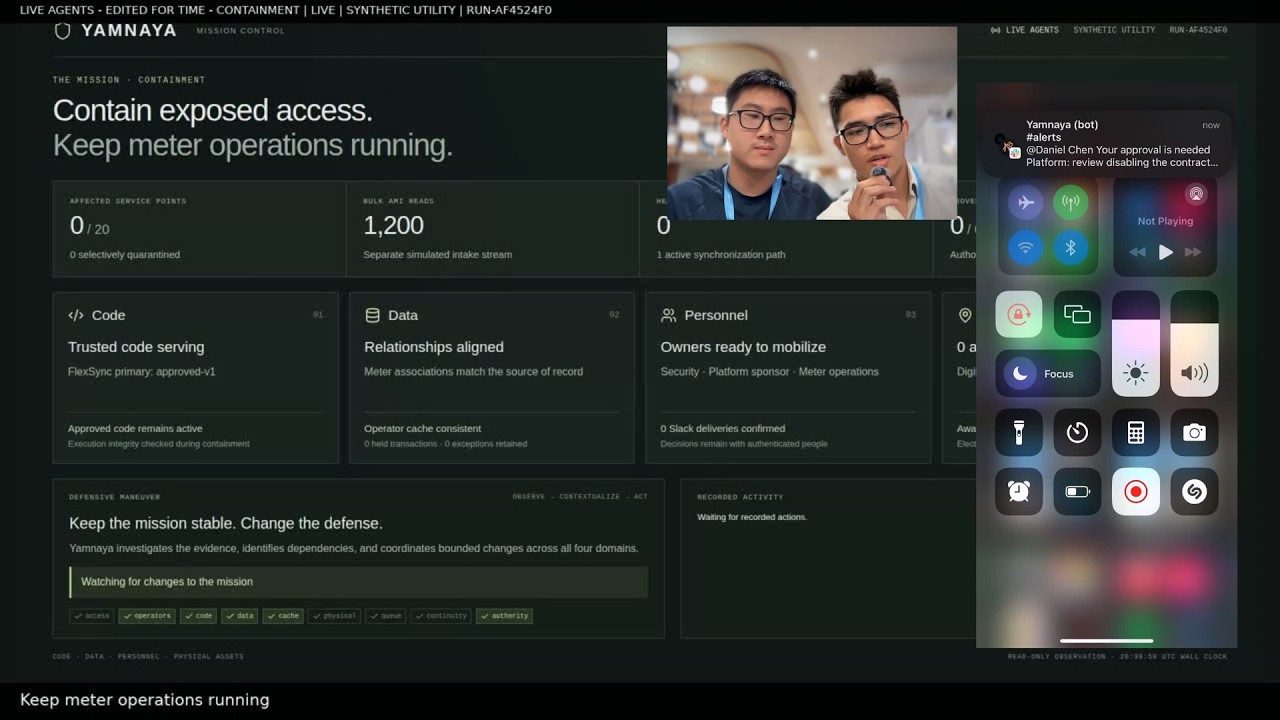
Yamnaya brings maneuver to cyber defense by coordinating responses across code, data, personnel, and digitally managed physical infrastructure. In a simulated energy utility, it investigates leaked credentials, mobilizes employees through Slack approvals, disables compromised access, and quarantines affected work while healthy operations continue.

A good teacher can change the course of someone’s life. A chatbot is not a teacher. Mystery School explores how teachers could build interactive learning sandboxes around what moves a student: music, boxing, or stories. Play a piano, explore movement through a camera-based boxing mirror, and enter a walkable story world where discoveries become writing and reflection. The teacher remains the human guide. AI helps create and adapt the experience. Our aim is to cultivate courage, passion, and imagination by making learning something students do, not just something they read.
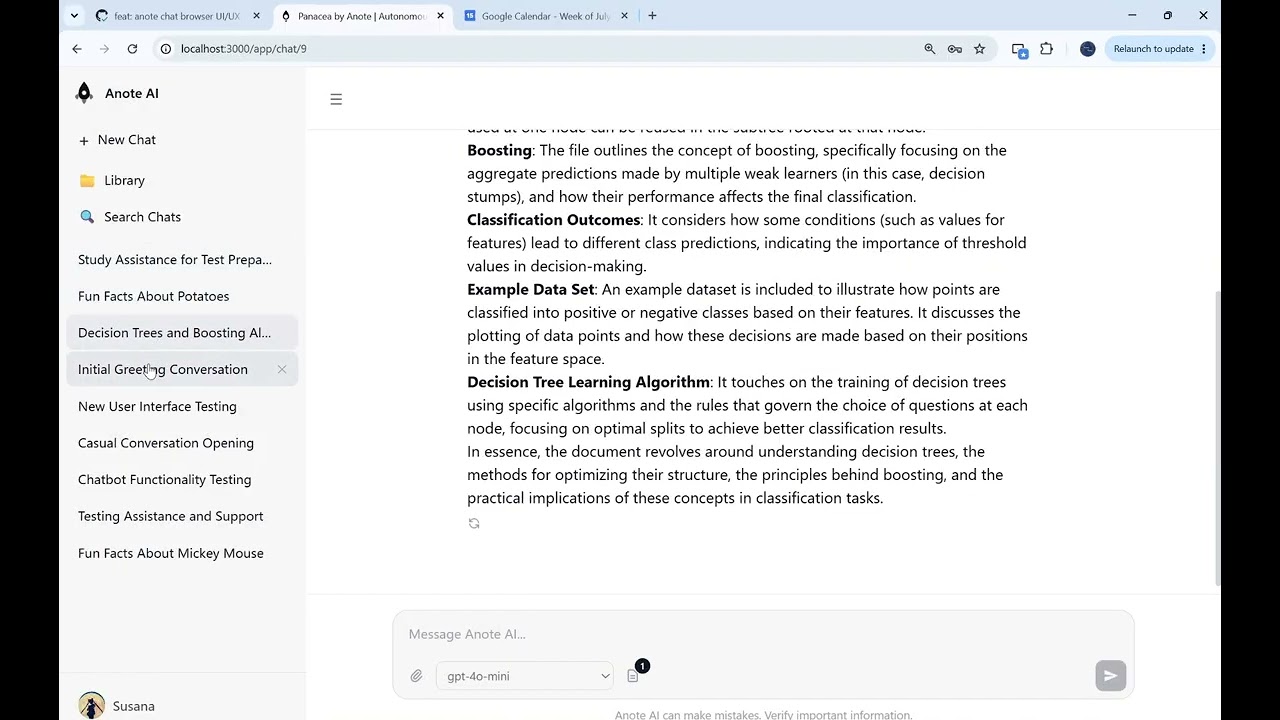
Ourogen is a recursive self-improvement platform for AI agents. Rather than treating an AI system as a static model or fixed workflow, Ourogen enables agents to continuously evaluate their own performance, identify weaknesses, propose improvements, implement changes, and evaluate the resulting system again. Ourogen builds on our Panacea multi-agent framework, which uses an orchestrator to decompose objectives and coordinate specialized agents with their own roles, tools, memory, and state. For software engineering, for example, agents can inspect a repository, identify an improvement, modify the code, test and review the change, and create a pull request. The improved repository can then become the starting point for the next iteration. The same architecture generalizes beyond coding. Ourogen combines agent orchestration, evaluation, feedback, memory, tool use, and recursive criticism and improvement into a continuous loop: Act → Evaluate → Critique → Improve → Re-evaluate Our goal is to make AI systems that don't simply complete tasks, but systematically learn how to complete those tasks better over successive iterations.

Gestalt is a visual workspace for steering AI coding agents and understanding the software they build. AI can generate code faster than people can review it line by line. Gestalt connects the running application, its implementation, and the agent’s work so you can guide changes through visible outcomes and architecture. The application runs beside an interactive code map. You can point at the interface, annotate a screenshot, select an architectural region, and send that context to Astra in one prompt. The agent receives the images alongside structured information about the selected code and dependencies. You can move from “make this less squiggly” to “show me where this is implemented,” then explore how that implementation connects to the rest of the system. You can prompt directly on the code map itself and send both the visual representation and the dependencies as context to the coding agent. Gestalt also records the session so you can review its decisions, changes, checks, and remaining uncertainty. The code map follows agent activity, while history lets you revisit how the application evolved. This makes architectural impact and the reasoning behind changes easier to inspect, with source code and diffs available for detail. Base of the code galaxy (dependency analyzer and architecture generation) was built at a previous hackathon, everything else was built today (total ~10h with astra)

A Mars survival game where players create disasters and GPT-6 Astra tries to keep 42 colonists alive until rescue. Astra manages limited supplies, repair crews, and competing resource needs, with visible consequences for every action.
Jeeves is the research system we’re building for an AI-native hedge fund at Berkeley Street Capital Middle East, a $500 million digital-asset hedge fund based in Abu Dhabi. Portfolio managers need to understand why an investment idea deserves capital. Jeeves connects the hypothesis, agent research, underlying data and evaluation evidence so they can inspect that reasoning. GPT-6 Astra agents work across Chief Investment Officer, Portfolio Manager and Quant Researcher roles. They develop signal and regime candidates: signals express trading conviction, while regime models identify changing market conditions. Deterministic code evaluates candidates, and graph memory preserves relationships between data, hypotheses, findings and failures. During the hackathon, we built a native Rust terminal CLI over our existing research engine to enable observability, added Research, Results and Graph views, and developed a shared agent development and integration workflow. The terminal lets a portfolio manager inspect research output, component definitions, strategy reports, and steer future research decisions for trading. Our ambition is to build an AI-native hedge fund where research scales beyond human bandwidth, and every investment decision remains grounded in evidence.
an interactive astrophysics adventure where you work with astra to find your way back home. think "geoguessr" but in space, with finite budget. dropped into the middle of a constellation - you have to work with astra to solve problems and decide how to get home. Astra does computer use and is your ideal companion.
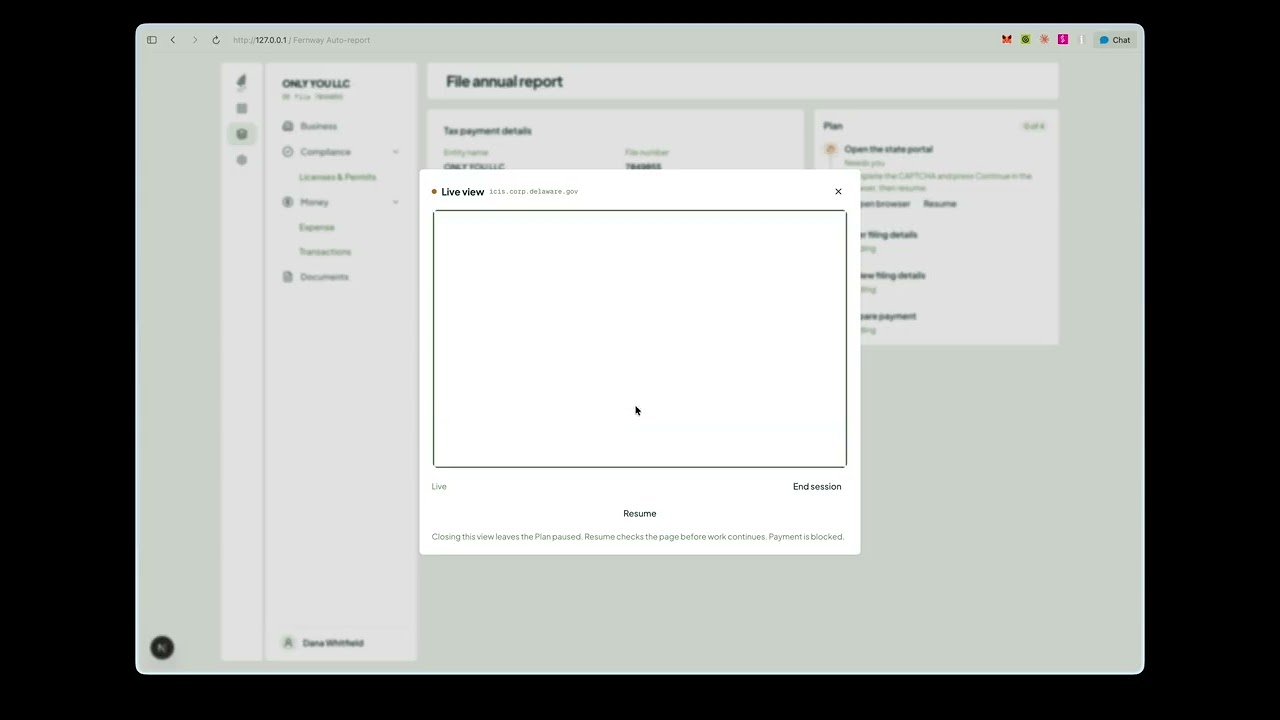
Biz Bot is an embedded agent in the Fernway app. Fernway helps people manage multiple LLCs in any of the 50 states. This management often requires involves reports and fees that are filed annually. The report portals are different and often have anti-bot measures. The agent is used as an assistant to help the user fill and pay their fees acting as a human-in-the-middle. This allows the user to do things such as fill out captcha and authorized payment. Heres a chatgpt generated video because I ran out of time: https://www.youtube.com/watch?v=O0tJo-WvJ4Y

A benchmark score tells you how often a model fails. It doesn't tell you what causes the failure, or whether the cause is real or noise. So I built a system that answers that question specifically targeting Astra. We run Astra as a software-engineering agent on real GitHub repositories and measured its solve rate at 0.48. Then a second adversary model (Qwen as we needed open-weights) scans through the repo to find possible things to change. It proposes a small executable generator that changes exactly one condition changed. A stale tool spec. A flaky test. An underspecified issue. A truncated observation. etc If a separate Astra model deems this a valid change (doesnt fundamentally change the objective / make it impossible) we then run evaluate Astra on the original example and the adversarially modified one. We reward the adversary based on if Astra was able to solve it originally but not with the modification and encourage diverse changes in the loss. Overall, we produce a mapping showing which perturbations Astra typically struggles with and which it succeeds on. With the goal that this could be used to better understand the model + train a better successor.

I've just recently moved. One of the best and worst things about moving is furnishing your new place. I'm using Astra to make this experience a bit more fun, efficient and multiplayer. Homey lets you turn a video of your space into a fully modeled 3d space, with every item cataloged, sourced and priced. It can also find cheaper alternatives of your furniture for you, or even let you drop in a photo or a link and get int modeled, sized, priced and integrated into the space. Multiplayer lets you collaborate with others invested in your space. Astra also sits in the product as a personal space assistant - its 3D understanding and generalization has crossed the threshold to use your catalog and set up tasteful preset spaces for you.

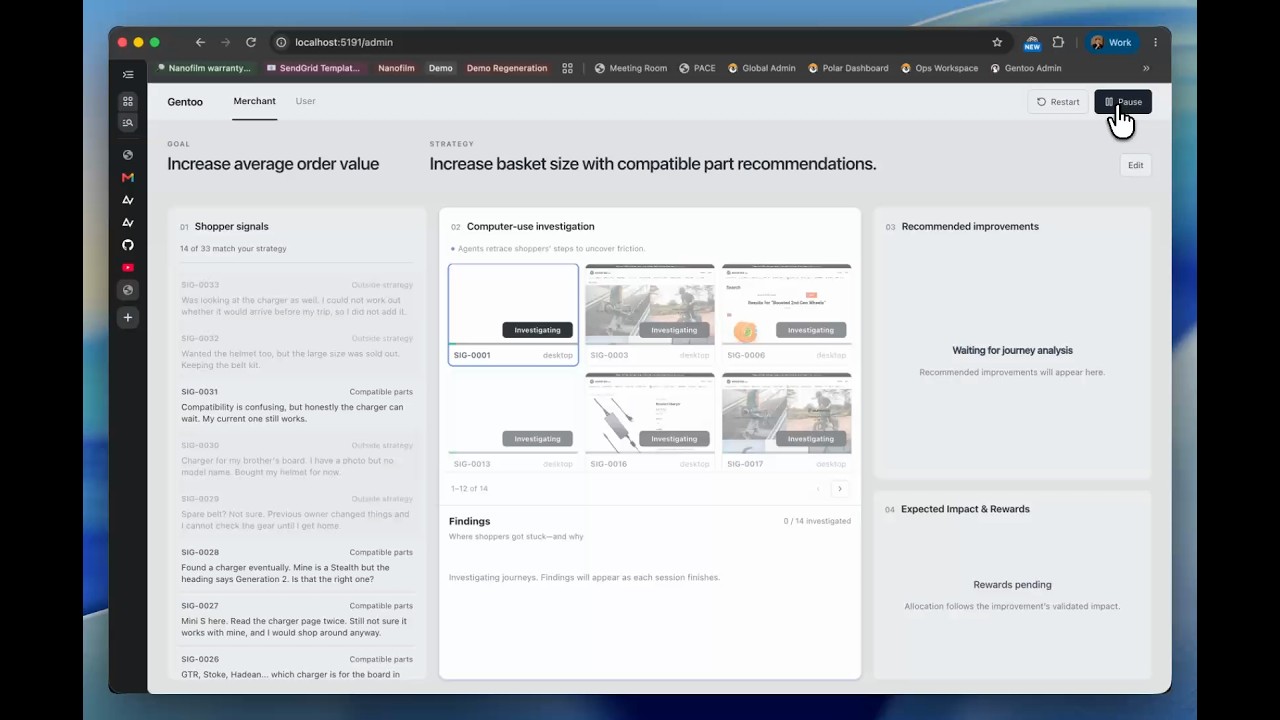
Your next store improvement is hiding in a shopper’s frustration. Give them a reason to share it. Every day, shoppers discover what’s broken in online stores. Most leave without telling anyone. Merchants are left asking: “What should I fix to sell more?” “Pay with feedback” turns those silent frustrations into rewarded contributions. Astra helps shoppers explain what went wrong, then uses computer use to investigate the root cause and build improvements aligned with the merchant’s goals. In our demo, Astra and Blender turn confusion about compatible parts into an interactive 3D shopping experience. A share of the estimated value goes back to the shoppers who helped. Don’t just listen to your customers. Build with them.

Grand Theft Astra is a multiplayer 3D game prototype set in Moscow’s famous Red Square, where players explore, drive vehicles, complete missions and interact with characters with optional AI-powered dialogue. Built using Astra, Blender and Higgsfield, it explores how AI can make immersive game creation more accessible, with a public codebase and guide for adapting it to your own city.
Board Studio is an AI board-game builder: describe an idea, refine it with Astra, and play the result in your browser. The demo builds an original Catan-like island game, revises its terrain and cottages through conversation, then imports a detailed Astra-authored visual refinement into the same playable game. Astra generates editable 3D components and structured rules; changes are validated and previewed before applying. Guided gameplay supports island settlement, routing and rescue games, with legal actions, resource production, scoring and a local computer opponent. Printing and dimensioned STL component export are optional. Built solo by Eric Ko using Codex with ChatGPT sign-in. Human balance testing and physical print validation remain future work.
Times Square becomes your creative playground. Explore a detailed 3D slice of the city in your browser, choose a character, and turn its billboards into a canvas for images and AI-generated videos. Type a prompt, generate a clip, and display it on a billboard, with updates shared across connected visitors. The project brings generative media into an explorable world, letting creators experience their ideas at architectural scale instead of inside a small preview window. Built with Blender, Babylon.js, and Cloudflare. Play the game in your browser: https://infinitevideo.lol — no installation required.

MeMedia powered by Astra2UI

Astra Industries is an AI-native workspace for designing physical systems. Built on Forma-OSS, it connects hardware designs, STEP models, components, equipment, and physical spaces into one machine-readable environment. Teams can plan manufacturing cells, laboratories, robotics setups, and fabrication workflows instead of juggling disconnected CAD files, spreadsheets, and documentation. Astra is free to self-host, available as a managed cloud service, and can be deployed privately with consulting and integration support for labs and manufacturers.

Fireground decides how water reaches a fire. Which hydrant, which side of the road, how many tankers. It keeps the road open while it does, because a supply line laid across a lane closes that lane. GPT-6 Astra proposes. Code measures. A second model challenges the answer before the incident commander sees it.
Astraloute is a personal agent designed to be reachable through FaceTime and Messages. You can talk to an animated avatar, ask it to operate a Mac or connected iPhone (invented phone use for IOS), and delegate longer coding or research tasks to Codex. The system combines conversational voice, visual computer and phone control, and a persistent task broker that tracks requests, progress, cancellation, and results. Our goal is to make delegating digital work feel as natural as calling or texting someone.

Agent Qualification Lab helps developers evaluate an AI agent before trusting it with consequential actions. A helpful answer can hide an unauthorized tool request, so the lab measures attempted actions, blocked requests, committed transactions, and successful task completion separately. The application runs an adapted open-source support agent in a synthetic billing environment, investigates behavior through controlled experiments, and compares a frozen mitigation against the baseline. In its small development comparison, the baseline followed policy in all three cases, while the proposed retrieval filter passed only two. Both completed every task. The lab correctly rejected the candidate, demonstrating why task completion alone is insufficient evidence of safe behavior. Built with Cloudflare Workers and D1, it includes an investigation interface, transaction safeguards, cancellation controls, and exportable evidence.

apartment hunting means jumping between listings, floor plans, maps, and building records to make sure there's no problems trying to be covered up. i built ElseWhere to bring those together for anyone apartment hunting in NYC: explore the neighborhood, preview an estimated 3D interior, check building complaints, and compare commutes before booking a viewing

I love photography, but revision turnaround can get in the way of shooting small jobs. Roundtrip turns feedback into native Lightroom edits while the photographer still directs the look. I built it around my own photographs that needed editing for Figmates. A submitted request from a public photo gallery launches Astra to inspect the photograph, adjust white balance, crop and masks in Lightroom, save a named version, and return a verified JPEG to the review gallery. It uses no image-generation model: the real photograph, original RAW and earlier versions remain available. The demo shows a real local revision from feedback through Lightroom to the returned image. The goal is faster turnaround for hobby and working photographers without losing the human touch. This submission is the roundtrip/ project in our shared Token Party repository.

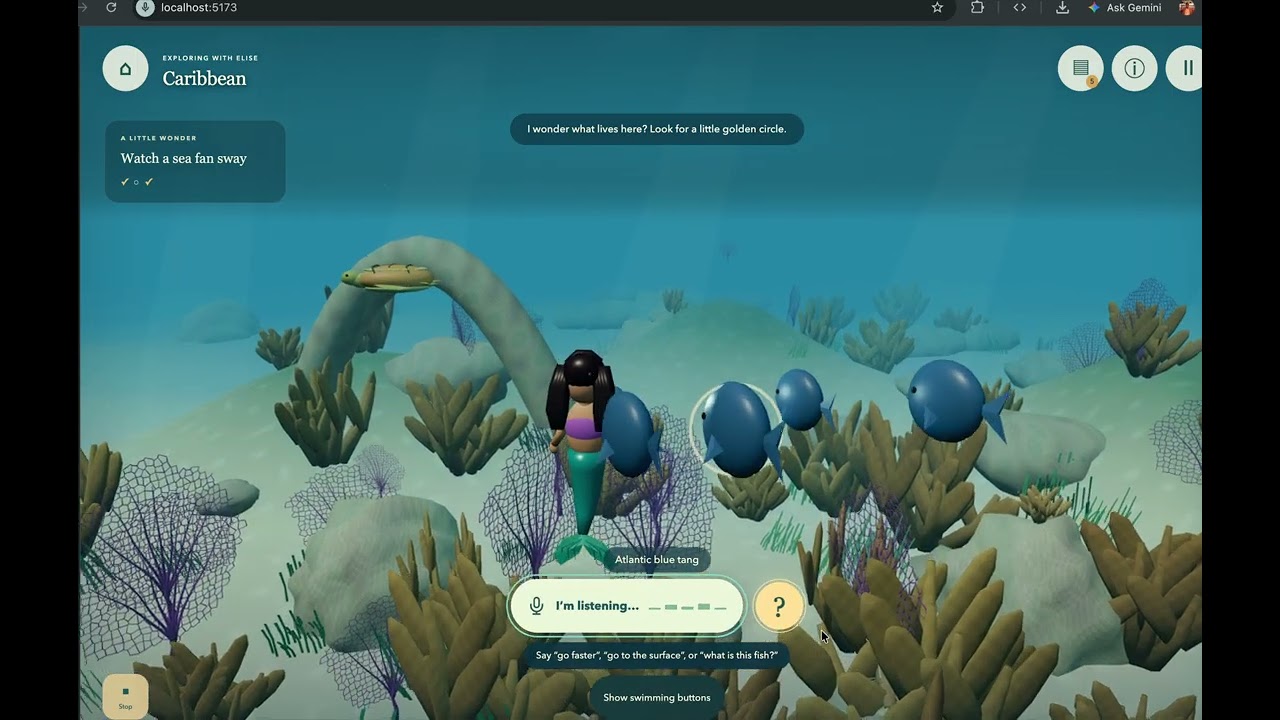
Interactive app for children to learn about sea life
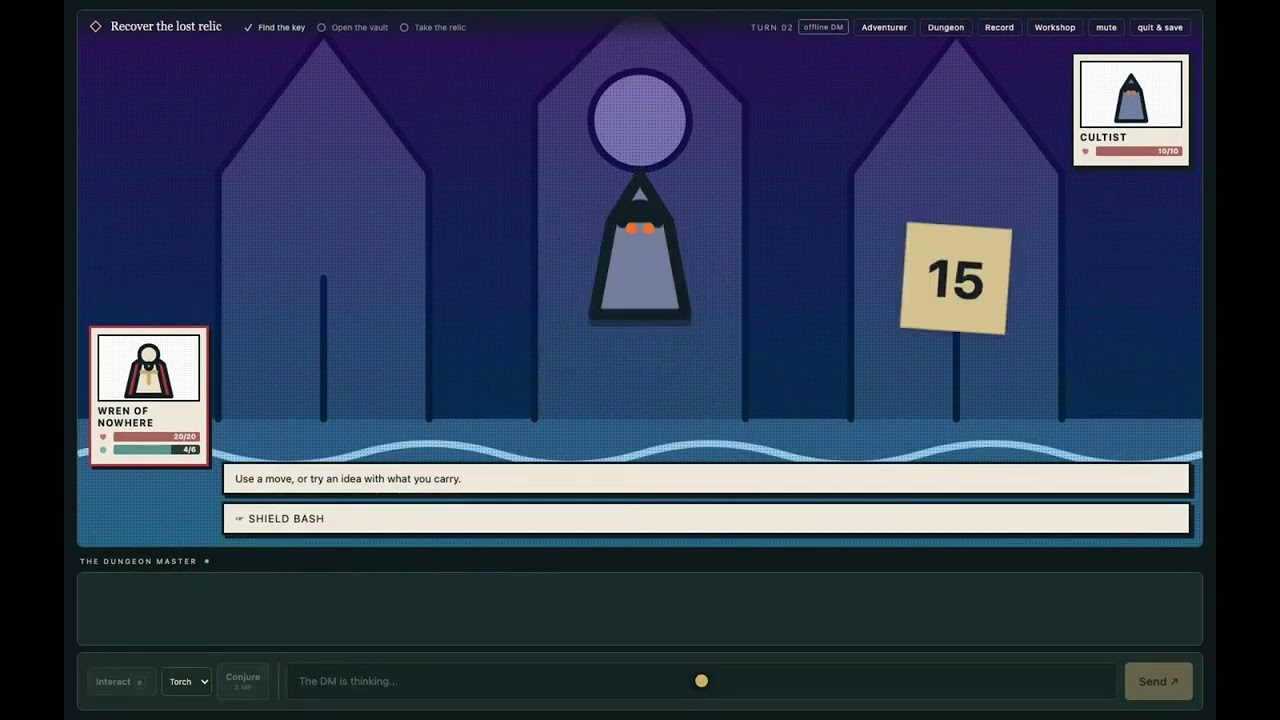
The DM Is Real Most "AI game" demos are a chat window with a fantasy skin. The model says a door opened, but nothing opened. The DM Is Real is built around the opposite rule: the server owns the world, and the model has to convince it. Anything is a legal action. Free text in. Pick up the key, conjure a torch, set the tapestries alight, throw your cloak at the cultist, talk your way past the warden. The DM rolls a d20, narrates the outcome and proposes changes to the world. The world is authoritative. Every proposal from the model passes through a closed command vocabulary (move, inspect, pickup, drop, open, close, use, toggle, spawn, destroy, wait) and a deterministic reducer that checks range, collision, possession, locks, capacity and cost. A batch applies atomically or not at all. If the DM invents something impossible, the world does not change, the narration still plays, and the rejection reason is fed back into the next prompt. Consequences persist. Rooms, objects, fire, reputation, inventory, quests and the event log are saved per world. Quit, come back, and the burned tapestry is still ash. A "story so far" chronicle is written from what actually happened, not from a script. Direct interaction is engine-owned. Arrow keys and WASD move you. Click an object to walk to it and interact. Movement, pickup, locks, consumption and objective completion never need a model call. Dialogue, NPC behavior and combat keep the DM's narration and dice. Every world has an objective. Find the Warden's key, unlock the final reliquary, recover the lost relic. One optional side thread at a time. Quests are puzzle objects with hidden solutions, solved by the right action or object rather than by grinding. The DM draws. Rooms, tokens and loot are SVG assets the model can generate, plus an asset workshop of twelve deterministic vector recipes with three palettes for a consistent look without an image model. Each turn is one round trip: the server rolls, the model streams prose followed by a structured scene, narration is parsed sentence by sentence into per-speaker voice as it arrives, the scene is validated against the world, applied, persisted, and streamed back to the browser, which animates the result.

TopDown provides immediate visibility into the key decisions and datapoints that shape agentic work, and provides agents a framework for navigating the hardest long-horizon, ambiguous, and complex problem-solving tasks.

Attune is a collaborative 3D concept-prototyping tool for product designers. Powered by ChatGPT’s Astra model, it transforms product requirements and brand guidelines into 3D models in Blender. Designers can quickly explore and share versioned concepts, collect feedback from teammates, and choose which comments to incorporate. Based on the selected feedback, Attune regenerates the design while maintaining consistency with the brand’s design guidelines.
YardAgent turns a photo of your backyard into a costed landscape design. Upload one photo, set a budget, and say what you want. It estimates the yard's dimensions by finding reference objects in the image, generates a layout, then browses Amazon, Home Depot and Lowe's to source each item at real prices with real links. You get a before/after render built from your original photo, a 3D scene you can walk through, and an itemized budget that tells you the truth. Ask for a pool on $5,000 and it says you're $40,000 over rather than quietly designing something cheaper. A chat model designs your yard with invented prices; this one goes and looks them up.

Astraified visualizes lessons in the form of games. You can input textbook chapters, websites, class notes, and files. Astraified will take this content and create lessons in either a 3D world or a 2D point-and-click game using Codex and GPT-6 Astra. Elements of the game are generated on-the-fly by Codex/Astra through code generation and headless Blender.

HeadStart - The marketplace for Boilerplate on games - to remix open source games, share them, and monetize them. HeadStart gives AI-assisted game builders a starting point instead of a blank canvas. Point your coding agent at HeadStart and it grounds your build in real, working examples instead of guessing from scratch. It's a coding-agent plugin (works with Codex) that indexes real playable games and their reusable building blocks, engines, mechanics, world systems: with sourced evidence and creator/model attribution. The catalog currently has 72+ researched entries and 145+ candidate building blocks. Longer-term: an optional base-plate for the hard infrastructure every game needs (accounts, monetization, ad platforming), the ability to remix existing games' building blocks into new ones, and a royalty system that pays original creators a proportional share when their work is reused and monetized downstream.
Symplex is an AI-native platform for investigating complex systems under uncertainty. It turns a problem into competing evidence-grounded hypotheses, compiles them into executable mathematical and computational models, and uses simulation, inference, and verification to evaluate their consequences. A meta-reasoning controller chooses the next best investigation action—such as gathering data, testing a rival model, or running an experiment—while preserving uncertainty and provenance. Symplex also supports bounded recursive self-improvement, allowing its investigation workflow to improve only through protected, auditable evaluation on fresh tasks.

Tessera is a verified self-optimization loop for AI inference. Give Astra a PyTorch workload, a GPU, and a fixed formal specification. It profiles the model, writes optimized Triton kernels, constructs and repairs Lean proofs, benchmarks candidates, and keeps an optimization only when its proof checks, numerical tests pass, and it is actually faster. In our demo, Tessera optimizes RMSNorm across SmolLM2-135M-Instruct, improving full-model prefill from 6.35 ms to 5.48 ms (1.16×). The goal is to make verification scale alongside AI-generated optimization: as models increasingly improve the software underneath AI, incorrect improvements should be rejected automatically rather than discovered after deployment.
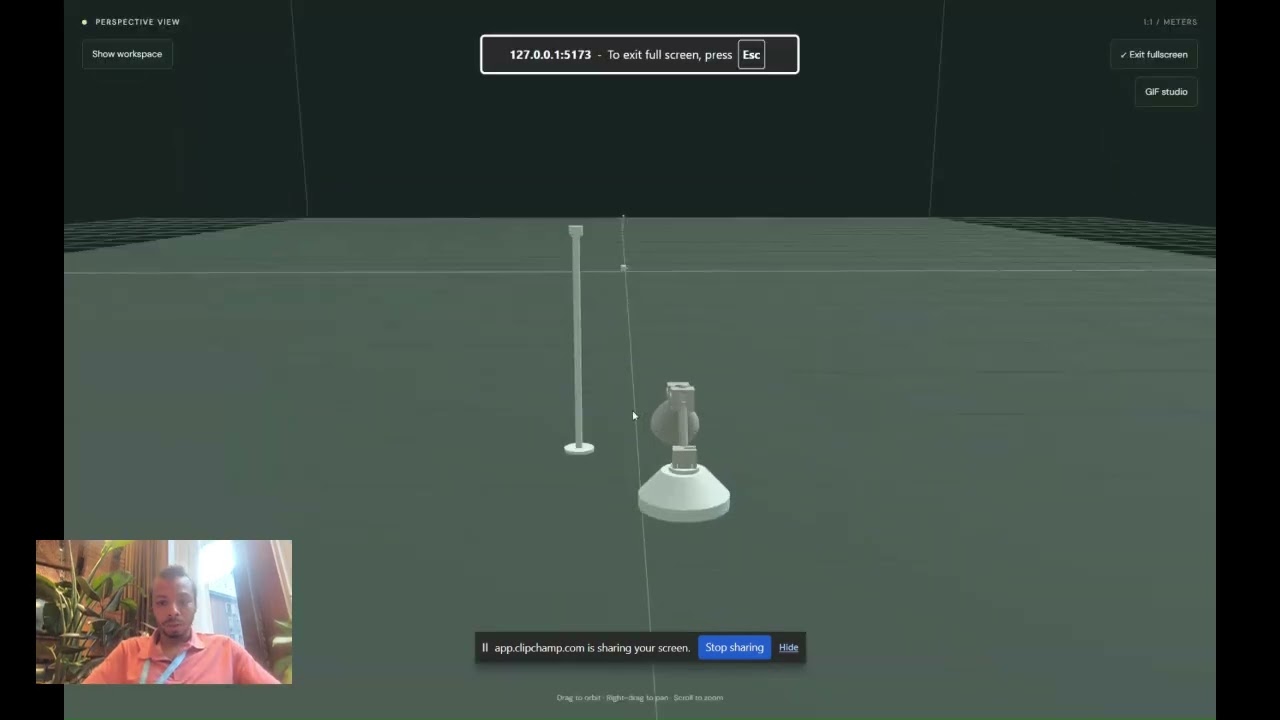
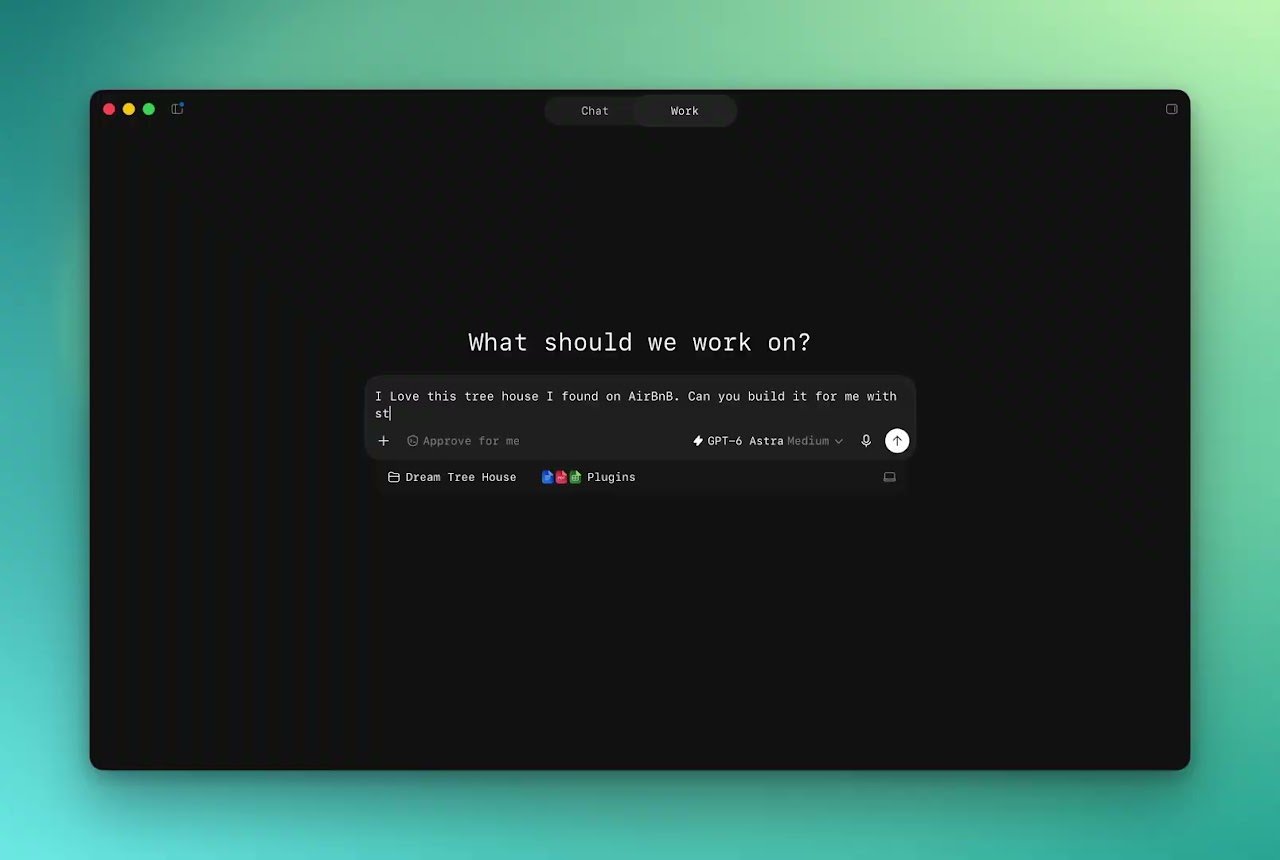
stud gives your agent a construction design tool by writing python. Astra is fully capable of Computer Aided Design, and stud gives it a native way to build and inspect designs. Users can ask their agent to design a tree house, a house, bike jumps, or anything else that someone wants to build but can't find custom plans for. stud uses ChatGPT for desktop's in-app browser to extend the functionality of the app to include a design viewer, and the viewer exposes WebMCP tools that GPT can use to collaborate with the user.
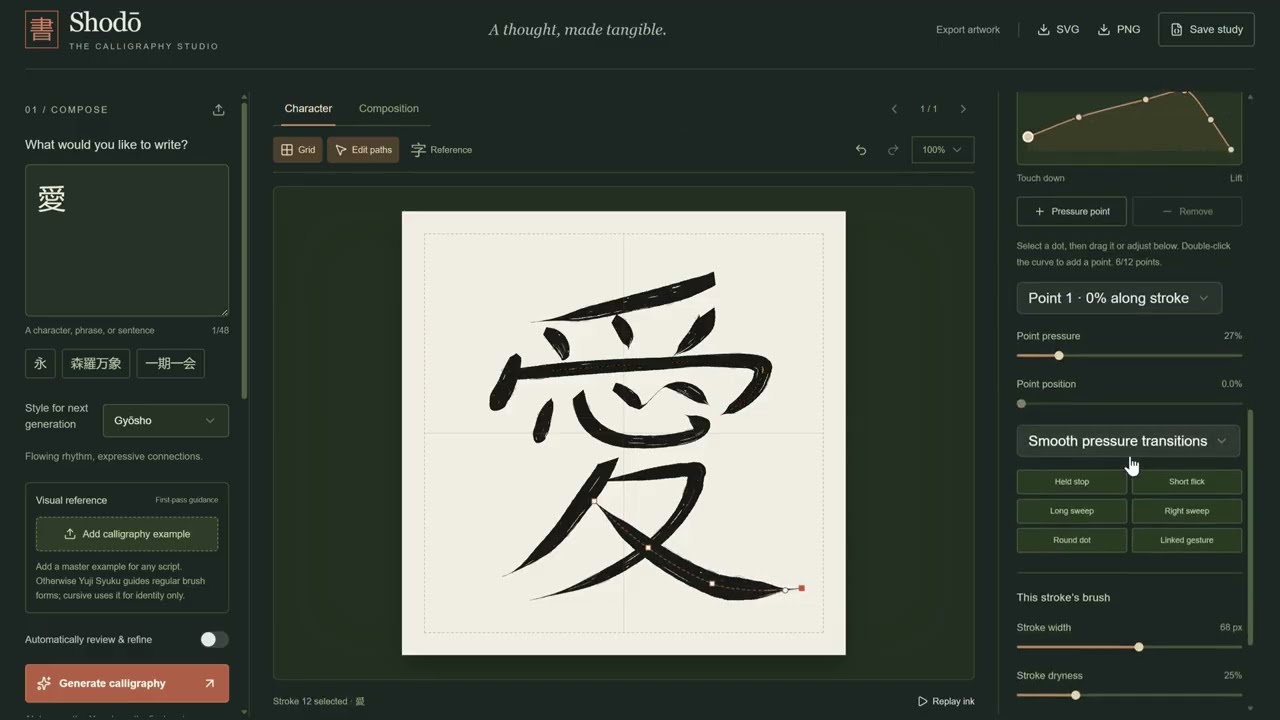
Shodō is an AI calligraphy studio that turns text and optional visual references into editable calligraphy. This demo shows the working application: brush strokes rendered on paper, interactive curve and pressure editing, multi-character composition, and SVG/PNG export.

Koody AI is a standalone prototype of an AI employee that takes responsibility for the administrative work between earning money and getting paid. It helps business owners check what they can invoice, create the documents, and deliver them without manually moving between customer portals and email. It lives in WhatsApp and has access to the browser and the Koody back end. In this submission, Koody visits two customer portals, discovers approved commissions and billing requirements, and asks for approval. It then generates the invoices live, submits one through a portal, emails the other, and returns both PDF copies to WhatsApp. The owner can change instructions while Koody is working, pause a customer, change priorities, or resume a held invoice. Animated browser actions make its work visible, with a smooth handoff from WhatsApp to the browser and back. Saved progress, receipt verification and duplicate prevention support recovery when something goes wrong.

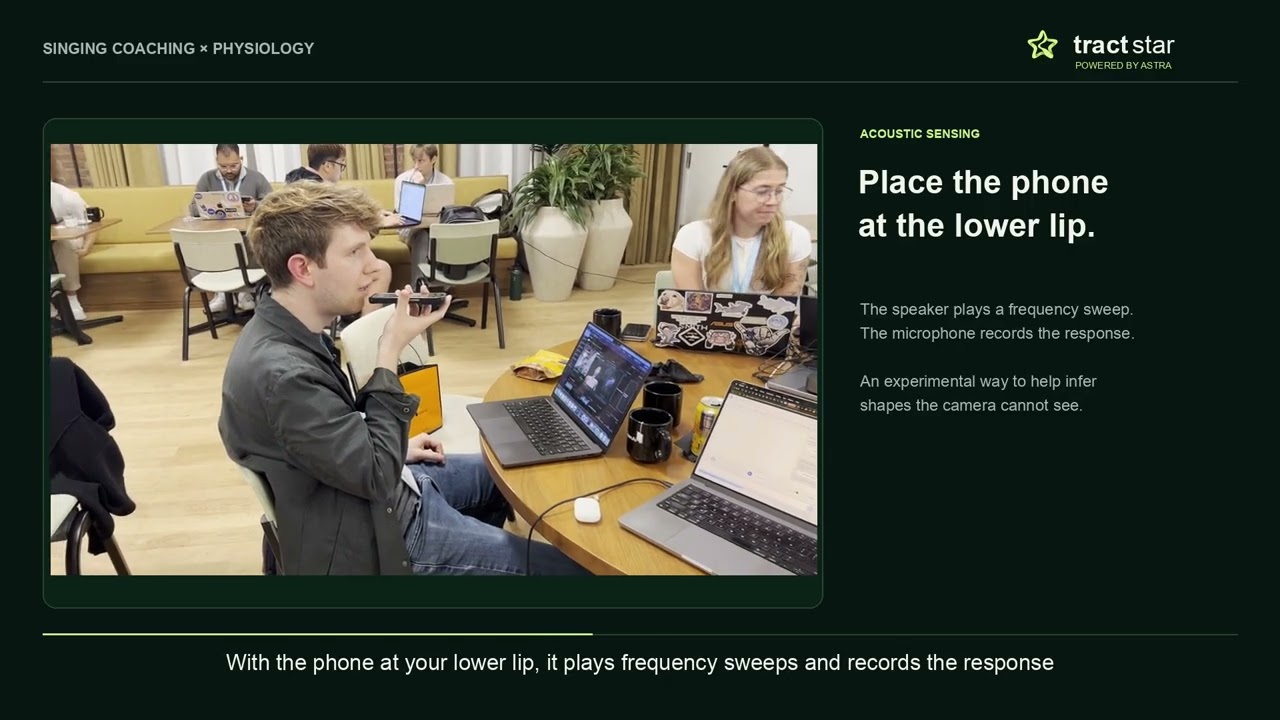
Tract Star: Discover the physics of your voice Your voice is an instrument unlike anyone else’s. Your singing coach should understand how it works - but even the best human singing coaches rely on what they hear, and what they can see on the outside. They can't look under the hood. Tract Star combines iPhone LiDAR, active acoustic probing and physical simulation to build a personalized model of your vocal instrument - with Astra as its scientific brain. Most singing apps measure pitch and tell you to try again. Tract Star investigates why your voice sounds the way it does, then uses that understanding to guide your next experiment. We turn your phone into a vocal research lab. LiDAR captures visible geometry that helps distinguish anatomical hypotheses. Our sound-sweep method sends a known acoustic signal and analyzes its response, adding information that ordinary singing recordings alone cannot provide. A native vocal-tract simulator then tests competing explanations for how anatomy, articulation and sound production interact. Astra closes the loop. It examines the evidence, chooses an informative next exercise, explains what to try and incorporates the results. Predictions are frozen before the next recording, so each attempt becomes a real test of the model—not a story invented afterward. The technical challenge is connecting fundamentally different signals: depth measurements, acoustic responses, recorded voice and simulated physiology. We bring them into one experimental system that can compare alternatives, update its understanding and make the mechanics of singing tangible. We’re not using Astra to put a chatbot on a pitch detector. We’re using it to orchestrate a personalized physics lab for the human voice.

We used GPT-6 Astra through the OpenAI Responses API as Tilth’s dungeon master. Astra generates structured adventure content and interprets players’ free-form actions using the current scene, party state, and recent history. Structured outputs connect its decisions to the game engine, which validates actions and controls movement, dice, damage, and progression. This lets players express creative ideas while keeping multiplayer outcomes consistent. We also used Codex throughout development to build and refine the game engine, multiplayer rooms, pixel-art rendering, interfaces, and automated tests.

Create photorealistic interior design through natural language. Iterate on your 3d interior in the browser and get a photorealistic renders at the end.

bobo — Learn with bobo bobo is a learning-first personal trading assistant designed to make market research understandable. Rather than offering unexplained stock picks, it helps people explore a trading idea, understand how it is tested, and examine whether the evidence supports it. At its core is an AI-assisted quantitative research engine. Astra proposes market hypotheses and translates them into structured mathematical formulas. A deterministic evaluation system then tests those formulas against frozen historical market-data snapshots, measuring predictive relationships, comparing performance with a benchmark, checking known factor exposures, and calculating portfolio returns after simulated transaction costs. The model proposes and explains; the code produces the measurements. Every experiment is recorded in an auditable research ledger, including rejected ideas, data limitations, and corrections. Strict formula validation, bounded research budgets, restricted access to held-out data, and replay checks help keep the research process accountable. The research assistant cannot place trades. The user experience is built around “Learn with bobo”: a clear, light-mode interface designed to explain market ideas, research findings, and the reasons a formula passes, fails, or needs more evidence. The longer-term goal is to connect sufficiently validated formulas to current-market ticker screens, with the supporting evidence visible—not simply display a “buy” label. The prototype has completed a live Astra research run on real historical market data. After measurement corrections, the reviewed campaign produced no promotion-ready formulas. That outcome is preserved rather than presented as a profitable discovery: learning why an idea fails is part of the product. bobo’s purpose is to turn market curiosity into informed, evidence-based learning—not to promise returns.
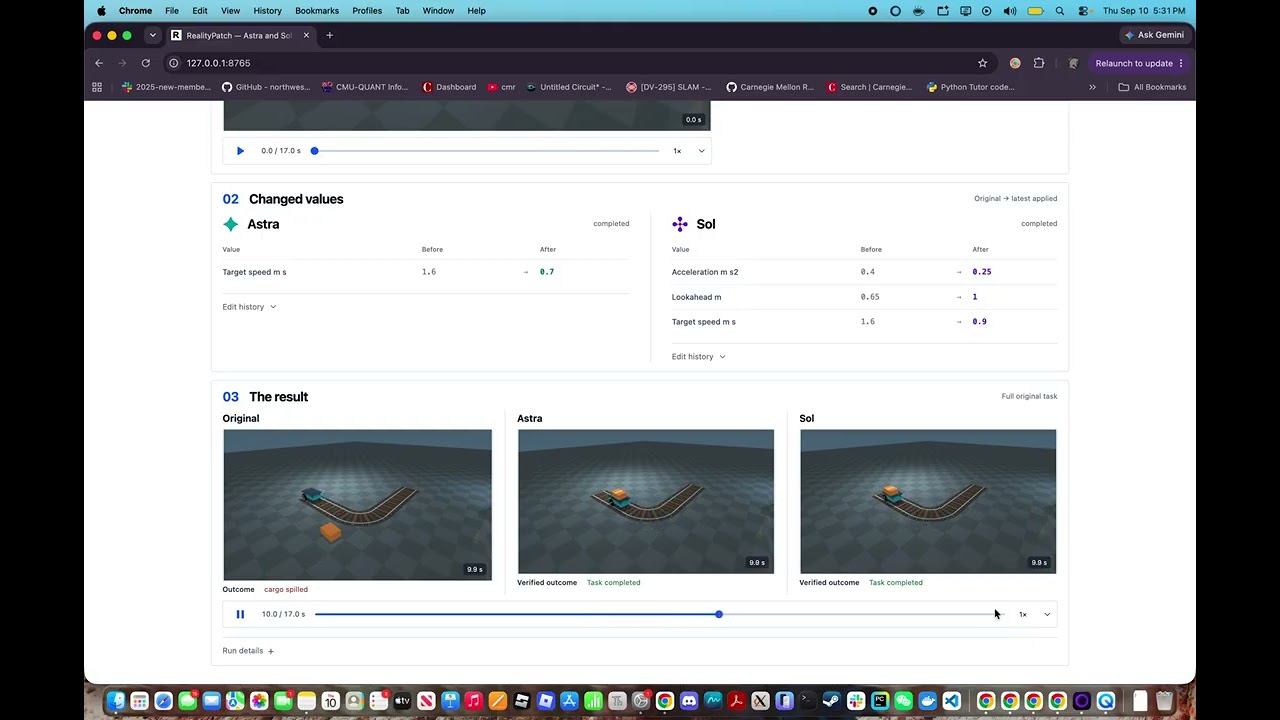
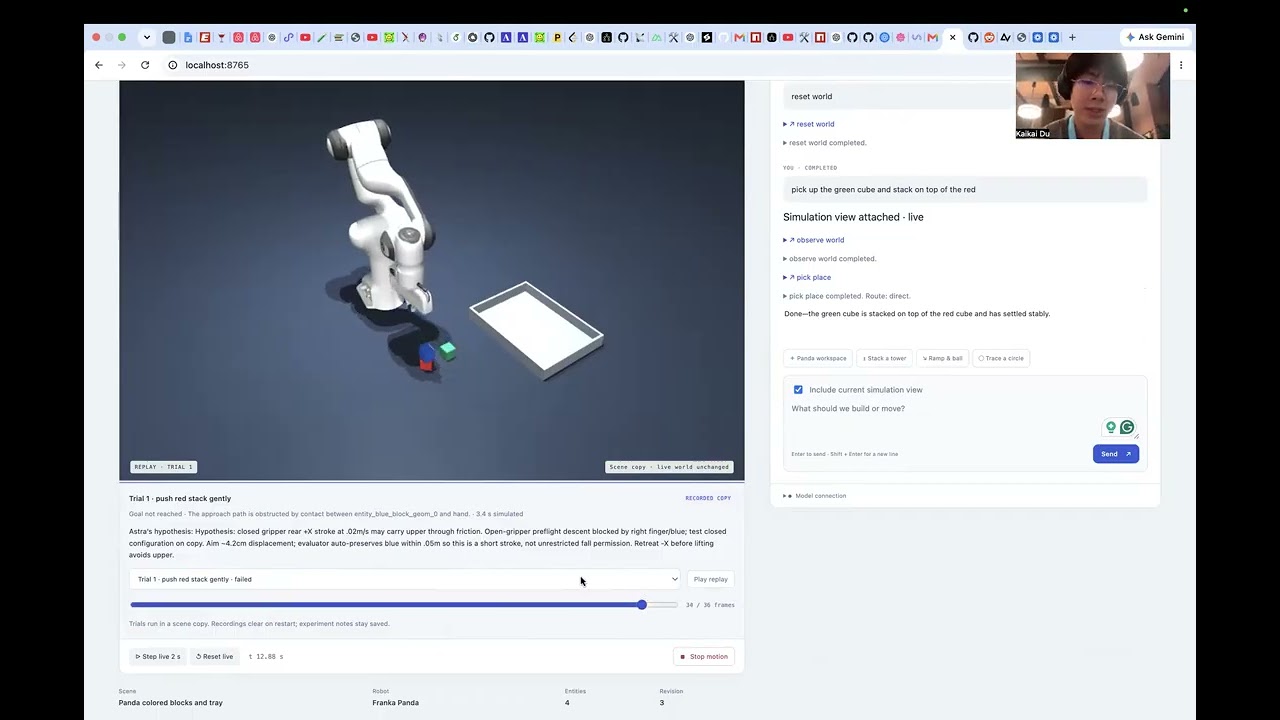
RealityPatch is an AI-powered platform that diagnoses and repairs robot control failures in physics simulations. AI agents inspect video and sensor data, modify controllers, and rerun tasks across robot dogs, drones, warehouse trolleys, and cars. An interactive dashboard compares their changes and measures whether each machine successfully completes its mission.

Natural language driven robotics simulations in Mujoco
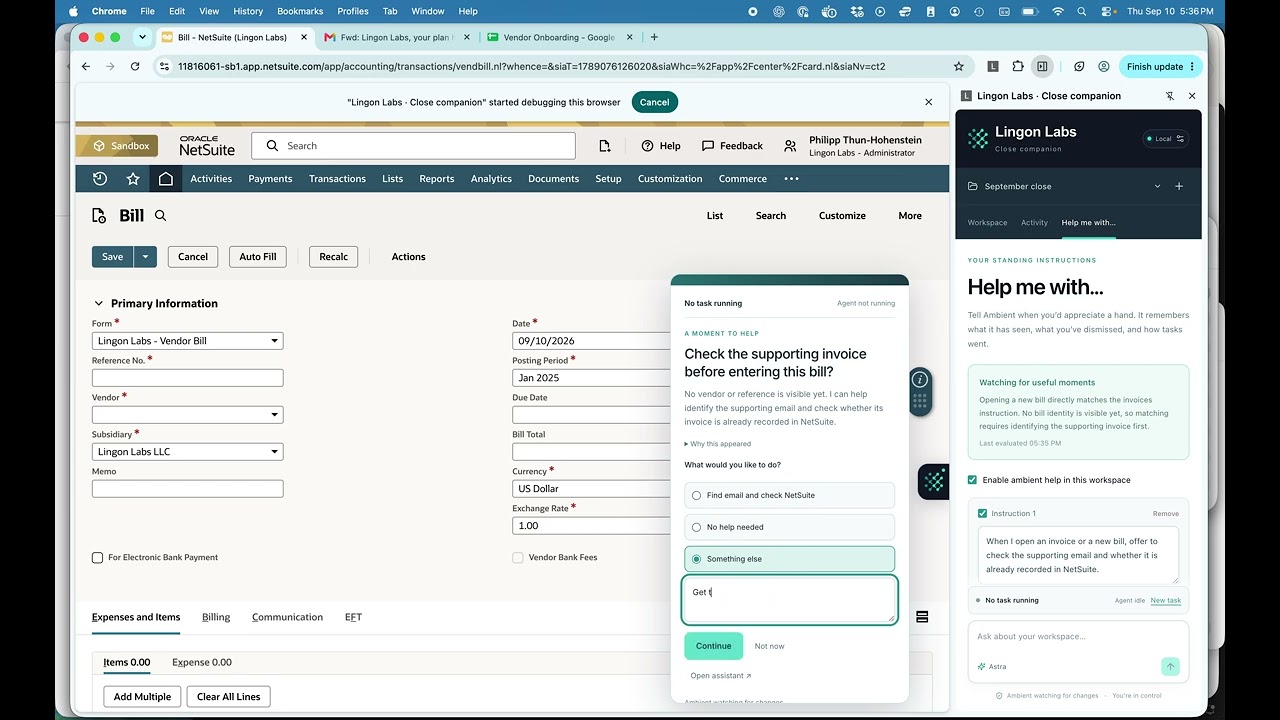
Lingon Labs Close Companion is an ambient finance assistant that works alongside you in Chrome. You select your Gmail, NetSuite, and Google Sheets tabs, and GPT-6 Astra watches for relevant changes and offers help where you’re working. When you accept, Astra investigates invoice evidence across those tabs, checks for existing records, and presents findings with sources. If it encounters a blocker, it asks for help and can continue the same task afterward. You can update or stop it at any time, and you retain control over the final save.

Approval Radar is an Astra-powered research agent that helps biotech investors understand what could support or derail a new medicine’s FDA approval. Astra chooses research tools, queries regulatory and clinical-trial databases, reads original documents, and tests whether the evidence supports the approval case. It connects to FDAgent’s existing data tools and produces a cited brief covering clinical results, safety, manufacturing and regulatory risks. In one case, Astra found that a reassuring inspection covered research practices and did not resolve the drug’s manufacturing concern. It identified the exact evidence still needed. We completed 35 real Astra runs across 33 drug cases. Users can inspect the research trail, challenge conclusions and export findings.

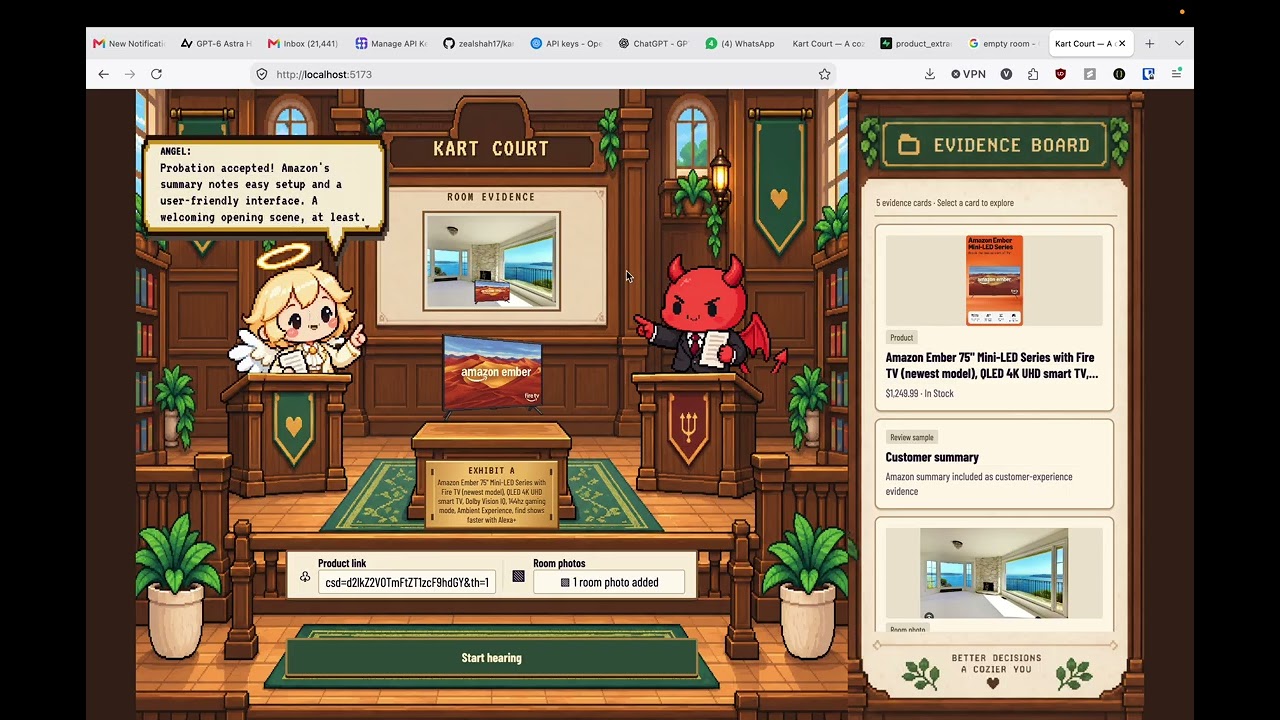
Kart Court puts your next purchase on trial. It turns shopping research into a playful pixel-art courtroom, where an angel advocate and devil skeptic debate whether a product belongs in your life and your room. The experience brings together an Amazon link, room photos, product information, and review evidence. Users explore a room preview, hear competing arguments, raise objections, and answer questions before a judge delivers a recommendation with trade-offs and unresolved concerns. We’re tackling the gap between “this looks great online” and “is this actually right for me?” Rather than another product ranking, Kart Court makes the reasoning visible, personal, and fun. Generated previews are illustrative, not proof of physical fit.

Airlock is an open-source, cryptographic context broker for AI agents. Airlock lets you ask useful questions about sensitive data while controlling which answers can come back. It keeps source files encrypted, evaluates requests against natural-language policies, and releases only the information the broker determines is appropriate for the task. Every response has an access and provenance record showing what was disclosed, to which agent, on whose claimed behalf, and under which policies.
We replace $30k+ ophthalmic hardware with software on minimal iPhone setup. Using GPT-6 Astra and 15x macro lens capture, we let non-specialists collect anterior segment data at the point of care to expand access to eye health.
Immigrant Friend AI - From “I just landed” to “I am settled.” Moving to a new country means navigating unfamiliar systems while managing classes, money, housing, and everyday needs. Immigrant Friend turns an international student’s situation into a personalized settlement plan. My First 24 Hours prioritizes practical steps such as getting connected, confirming housing access, arranging transportation, and finding food. What Am I Forgetting? surfaces overlooked needs from the same profile and initial AI response. Ask Anything → Turn It Into Action researches questions about housing, banking, campus jobs, transportation, and student paperwork, then provides concrete next steps with source links. Built with Python, Streamlit, GPT-6 Astra, and the OpenAI Responses API, the prototype combines web research, structured action plans, progress tracking, and downloadable checklists in a welcoming, mobile-friendly interface. It prepares actions for students to complete; it does not submit applications or make purchases.
DreamBid turns a residential address and a homeowner’s idea into a visual, scoped, feasibility-aware home-improvement project with contractor bids that can actually be compared. A homeowner enters an address, uploads optional photos, describes what they want, and sets a budget. GPT-6 Astra reasons over the homeowner brief, property imagery and structured site context to generate renovation concepts and a persistent ProjectSpec. The homeowner can then interactively customize the design by adding features such as pools, pavers, outdoor kitchens, pergolas and putting greens; moving and resizing them; and seeing preliminary budget and feasibility impacts update in real time. DreamBid uses deterministic geometry and Blender rendering to keep the visual plan connected to the underlying scope. Astra can then revise the project from natural-language instructions and audit three contractor bids against the exact project specification, identifying exclusions, allowances and missing scope. The long-term vision is an AI pre-construction platform that takes homeowners and contractors from address → idea → feasible design → scope → bid → build.
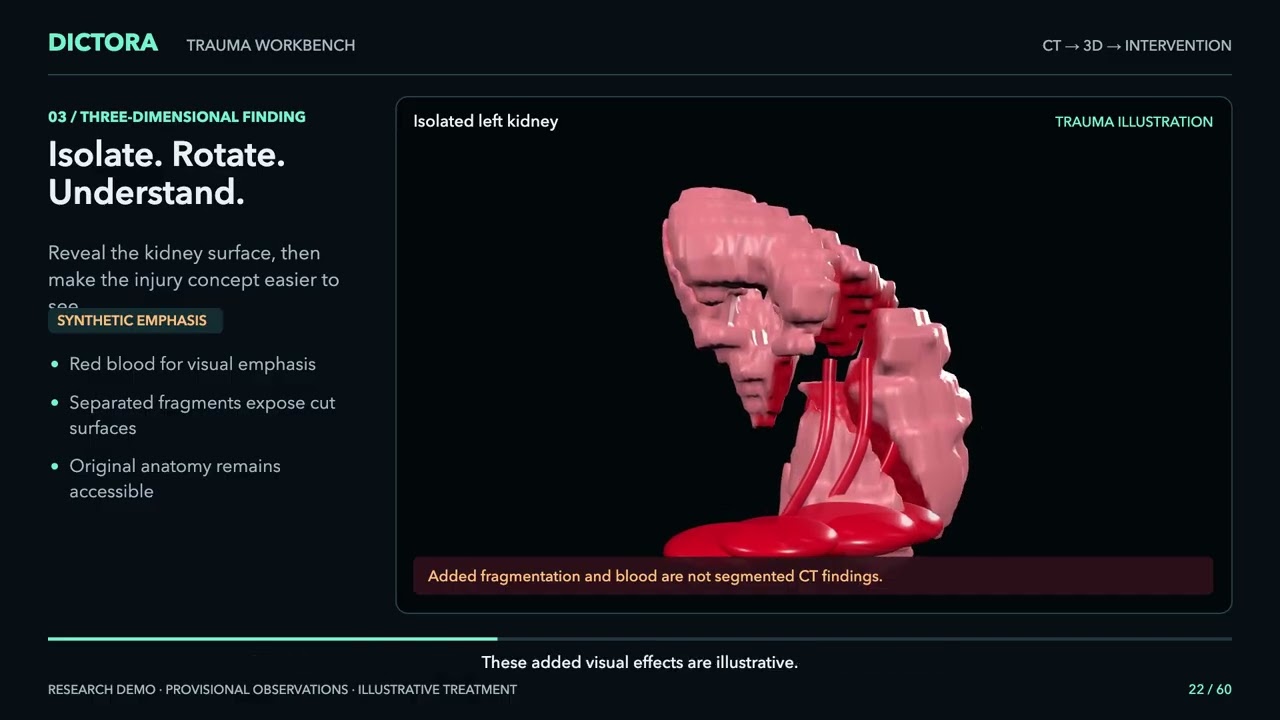
This project uses publicly available anonymized ER CTs of abdominal traumas and uses Astra 3D capabilities to create a 3D rendering of the trauma. It also detects the site of trauma and describes the findings. Using those detected abnormalities, it suggests a treatment method using interventional methodology, which is the standard of care. Further, it suggests a toolkit that describes the exact tools needed, from catheters to needles to wires to embolization tools such as coils, gels, and particles, showing them in 3D rendering and showing the name, part number, and manufacturer. This project demonstrates to the emergency physician that this condition is treatable with embolization methods, allowing the emergency physician to send the patient immediately to the interventional suite. It allows the interventional radiology OR staff to have the toolkit ready so that when the on-call interventionalist arrives, there is a decrease in time to treatment of approximately 1 to 2 hours using this ablation.

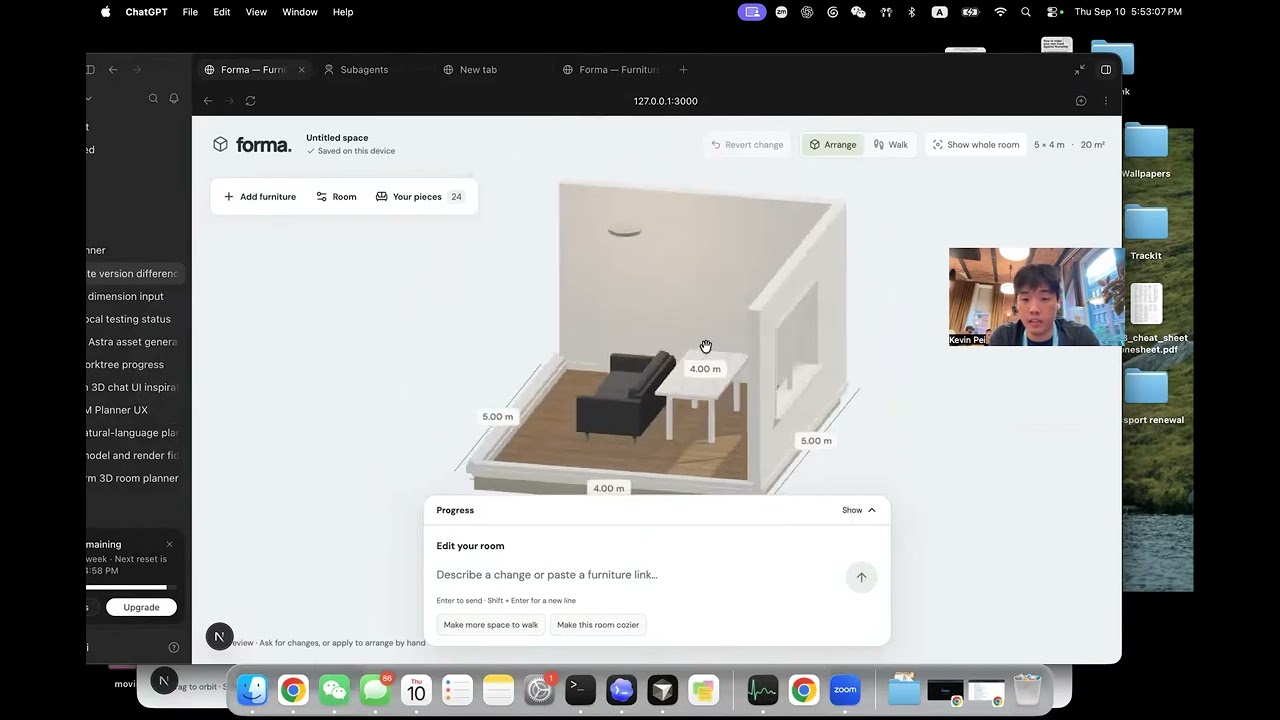
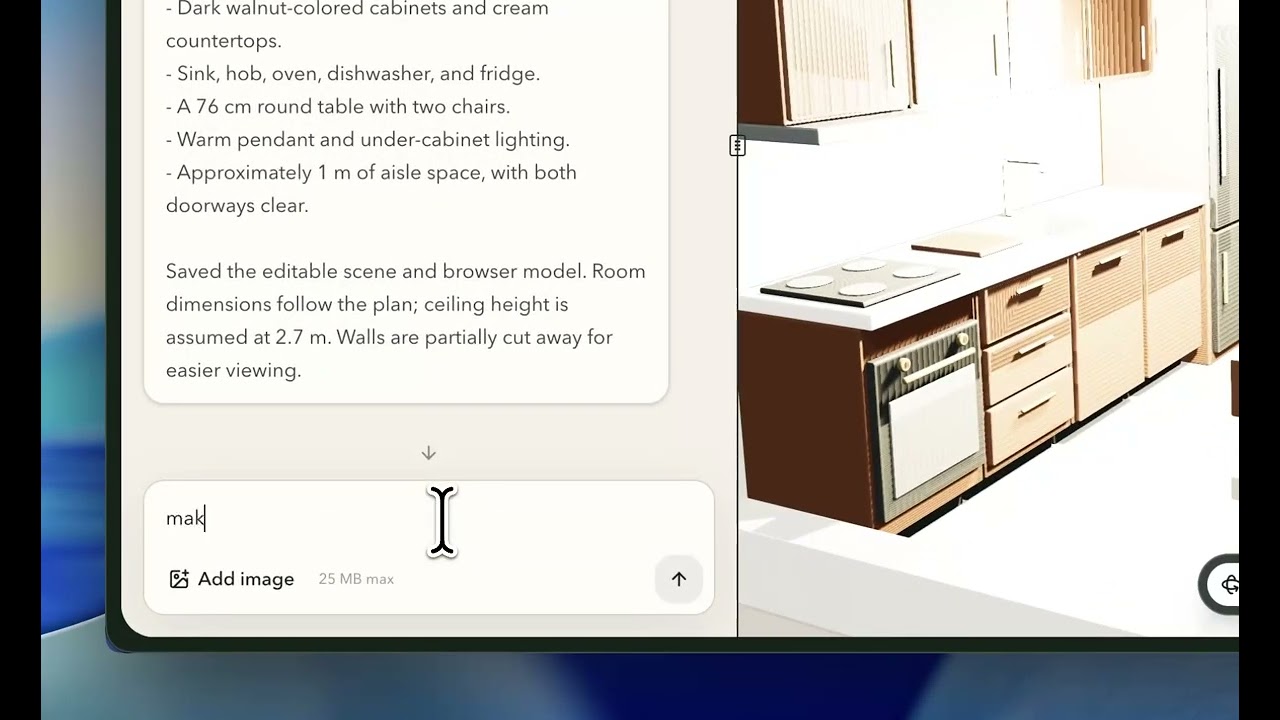
Forma is an AI room planner that lets you design your space through conversation. Upload room photos, provide one known measurement, and create an editable 3D room. Bring in furniture from product links or photos, or describe an original piece and watch it appear in your room. The core experience is simple: type “create a wooden chair” or “add a warm table lamp,” and Astra generates a movable 3D object with geometry, materials, and lighting. Arrange pieces, compare finishes, and walk through the room to explore your ideas.

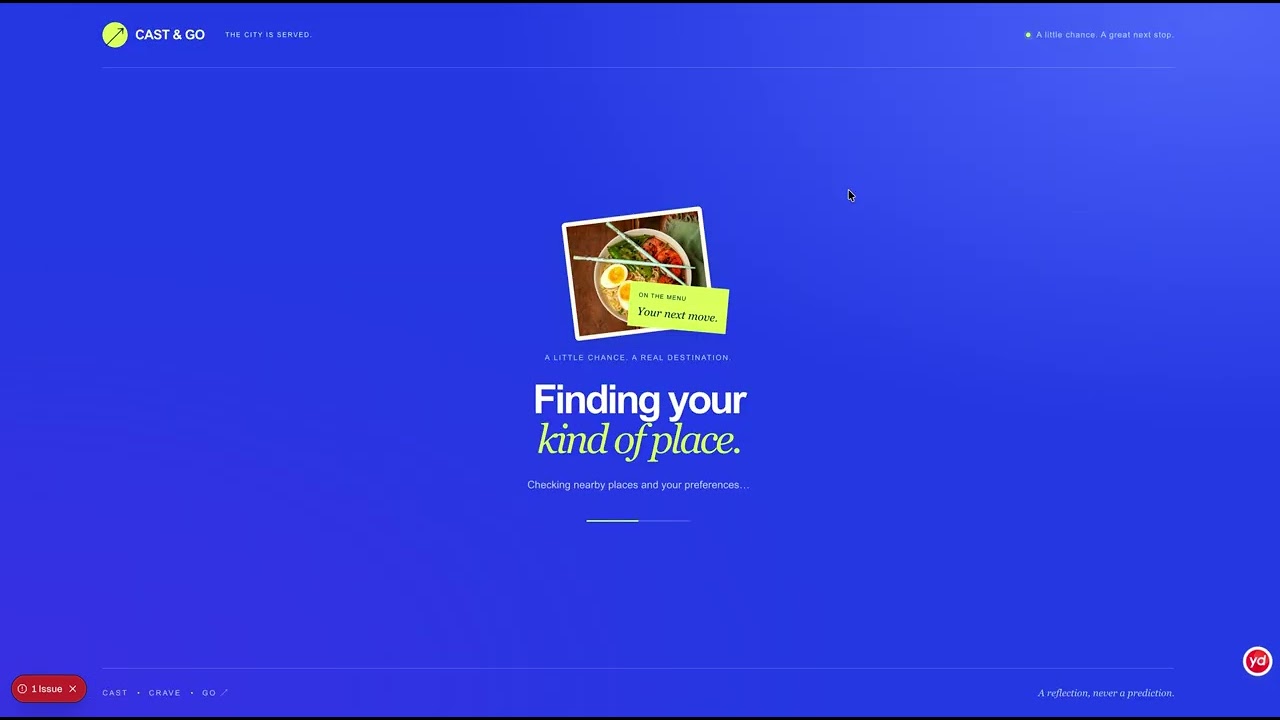
Cast & Go helps people stop overthinking where to eat. Users shake their phone six times to cast three virtual coins and generate a triagram with metaphor which can be deciphered thru Astra 6 in a food way. Based on the trigram it'll ask a short question to better understand user's current mood - want to close, want something cheap, or just something fancy. Then it'll web saech based on user's current location and shows the restaurant with main dish picture displayed, to make user jump out of the hesitation and just go.

Family is where our story begins. Yet our family’s memory is often scattered across old photographs, handwritten notes, WhatsApp conversations and stories that only one relative remembers. Over time, names lose their faces, photographs lose their context, and stories disappear before the next generation can hear them. Osmy Roots helps families bring those fragments together into a family history they can keep building. It combines family notes, photographs and recollections into a family tree and an illustrated book. GPT-6 Astra helps interpret memories and turn reviewed evidence into stories, while family members confirm connections, correct details, and leave unanswered questions open. Our vision is to make preserving family history part of everyday life, so what one generation remembers becomes something the next can carry forward.
Worlds Together is multiplayer AI for finding the pieces you’re missing, and starting something together. People bring knowledge, interests, ambitions, images and sounds into a private world, then choose what others may discover. AI looks for complementary contributions, not just similar profiles: your community knowledge might connect with someone else’s research experience. Both people approve before selected context enters a shared workspace. They can refine a first task, ask an agent to prepare a practical draft, review its sources and build on each other’s contributions. A separate creative path lets fans and artists combine words, images and sound into evolving shared worlds. The prototype includes opt-in matching, shared rooms, human-approved AI proposals, multimedia composition and source attribution

MIRROR lets you try on clothes from any shopping site, even though the site knows nothing about us. You can do everything online except the part that actually makes you buy, which is trying it on. Right now you're looking at a product on someone else's body and guessing. You upload a photo, we build one clean full-body shot of you, and a Chrome extension takes over from there. Browse Nike or Zara like normal and the product photos turn into you wearing them. Click one to flip between their photo and yours. Because the pieces can come from anywhere, a jacket from one store and trousers from another end up on the same body. You can add other people too, like your kids or a friend you shop for, and each gets their own photos and measurements. Any look you build becomes a link you can send them, no account needed.
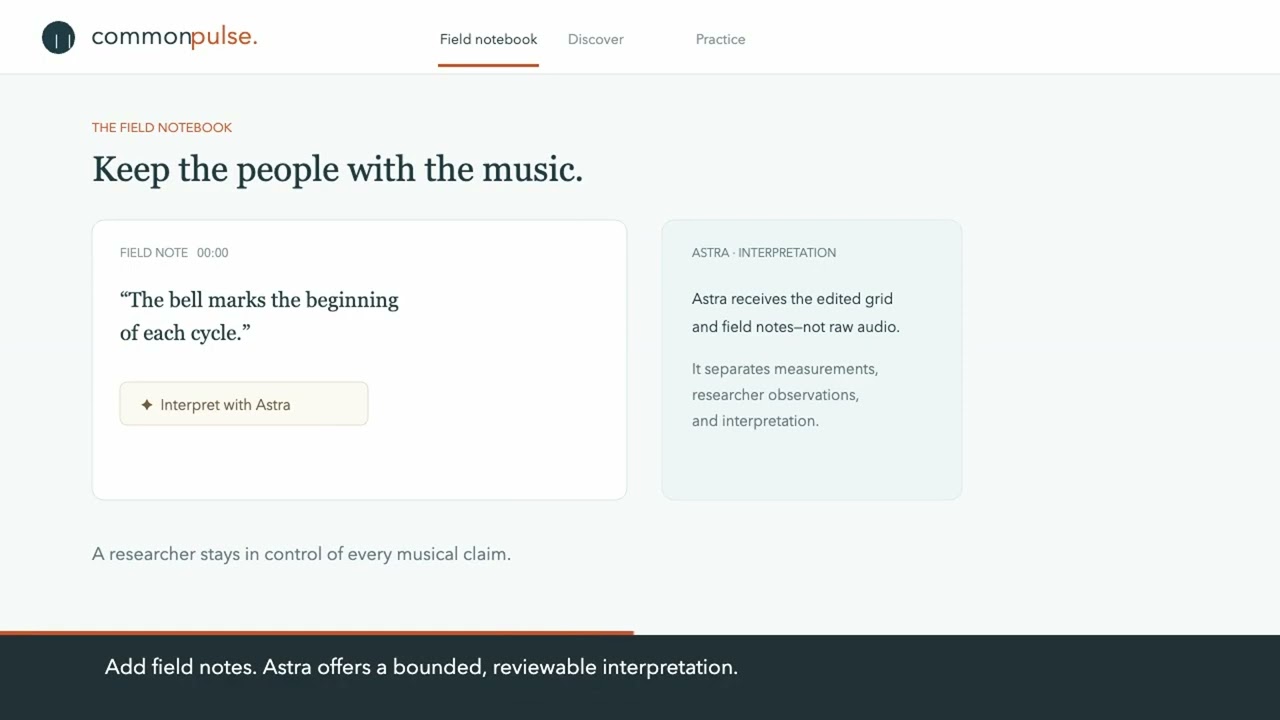
Common Pulse is a musical field notebook that helps people move from a short recording to an editable, participatory understanding of rhythm. A researcher, educator, or learner can record clapping, voice, or an isolated instrument; review detected sound events in a Time Unit Box System (TUBS) grid; edit the cycle and tempo; see equivalent unpitched Western rhythmic notation; and export MusicXML. They can attach time-linked observations, practice a part by tapping or clapping, and save the notebook locally. The project treats automated transcription as a draft, not an authority. The recording stays available alongside the quantized grid, and the app makes clear what is measured, what a researcher has named, and what is an interpretation. It does not infer cultural origin or instrument identity from a rhythm. With Astra connected, Common Pulse turns field notes into a research conversation. An ethnomusicologist can dictate a note, ask Astra to explain an edited pattern or make a bounded correction, and search for cited performance examples—including YouTube when available. Astra is instructed to distinguish documented sources from possible comparisons and to avoid unsupported cultural claims.