RacedayInsurance
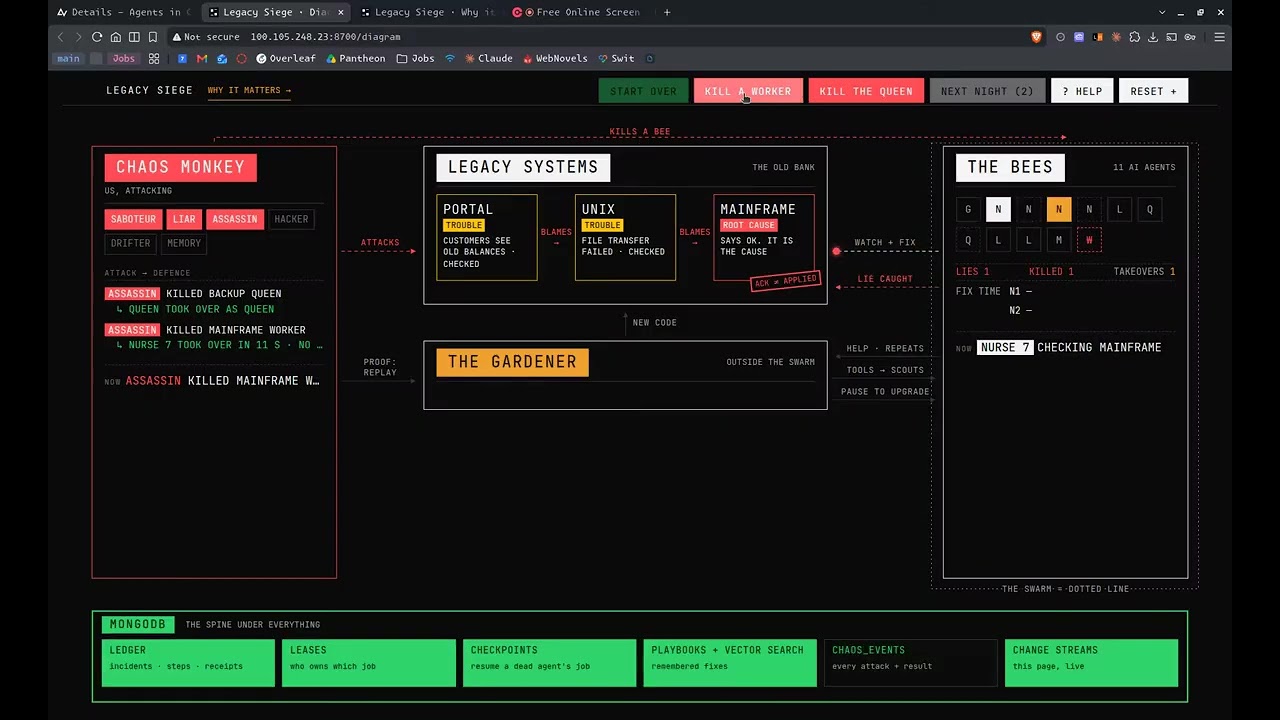
Agents in Context Toronto: a MongoDB HackathonRaceday Cover Agent makes sure every racehorse is insured before it leaves the stable. Buying raceday cover is a manual chore today, so owners miss it, and if the horse dies in that race the money is gone. The owner gives one standing instruction, "cover my runners", and the agent handles every declared runner. For each horse, the agent: - Investigates like an underwriter. The model chooses what to check, one step at a time, and says why. A long break from racing sends it to the health records, a very high owner valuation to the sales history, a past "not fit" to the declaration history. It can't price until the insurer's required checks are done. If no health history is on file, the owner adds it through a form and the agent treats it as unverified. - Prices the cover with the insurer's rules: the owner's value or a standard one for the race and rating, Flat or jumps rates, risk loadings, add-ons and tax, with pre-existing conditions excluded. The model explains the price in plain English, but code sets every number and checks every number the model writes. - Knows when to step back. A value above the insurer's limit, a worrying answer, or an answer that contradicts the horse's history goes to a human underwriter with a one-page summary. Nobody is charged. - Gets the one answer only the owner can give: is the horse fit to run today? The model decides per owner whether to call, send an app reminder or wait, based on their preferences and the time left. Code blocks calls in quiet hours, after two attempts, or once the horse has left. The call is real (an ElevenLabs voice agent over Twilio) and the spoken yes or no is recorded straight away. An unclear answer counts as no answer. - Takes payment, issues the policy, reports it to the insurer and tells the owner, checking with each system that every step really happened. - Handles cancellations: a refund before the horse leaves, none after. What sets it apart is that a crash can't break it. Kill it right after it takes the owner's money and, when it restarts, it first asks every system what actually happened, so it never charges twice: one payment, one policy, one insurer record, zero duplicates. If a step can't be confirmed, the model picks the safest way forward (check again, retry with the same ID, refund or hand to a person) and code decides what it's allowed to do. If a partner system renames its fields, the agent works it out once, and Atlas Vector Search fixes it in one step next time. The model decides what to do next. Code decides whether it's allowed and whether it worked. MongoDB Atlas keeps the proof. All demo data is invented.