MemoryAgent aligns user intent with persistent AI memory using Hypernym compression to create relevance-sorted slices ordered by LLM-perceived importance. Combined with Voyage’s domain embeddings, it reaches 81% fact-preservation correlation versus 78% for general models, enhancing both MongoDB and Voyage AI. Its 3-layer architecture (episodic, semantic, compressed) enables real-time learning with 75–80% similarity scores. MongoDB now captures critical info regardless of document size, rendering context windows irrelevant through intelligent slicing. Unlike static RAG systems, MemoryAgent learns and adapts. The demo shows 23 persistent memories, semantic clustering, and fact-preserving compression. Built with MongoDB Atlas Vector Search, Voyage AI embeddings, and Hypernym API, it scales to millions of users with adaptive compression efficiency.
More from Agentic Memory & Context Engineering Hackathon
Our tool helps patients with dementia by surfacing real-time context on the person they are talking to.
- ContextScope Eval is an open-source evaluation and observability framework for agent-to-agent context sharing. It measures how effectively autonomous agents…
Ever struggled to find that perfect article you read last week? That tutorial video you can't quite remember the name of? WebBrain transforms your browser…

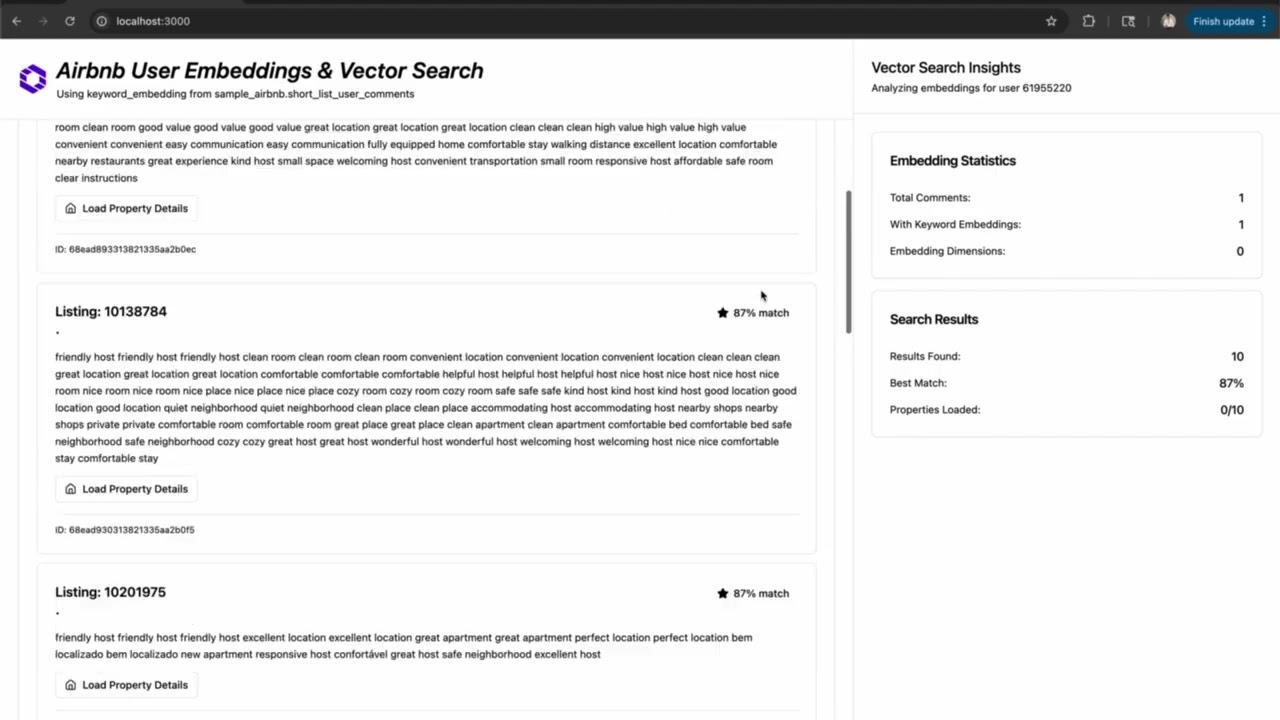
The Airbnb Travel Booking Assistant is a personalized AI concierge that curates stays based on each traveler’s unique style and past experiences. Instead of…

KitchenPal is an AI-powered cooking assistant that leverages multiple independent Retrieval-Augmented Generation (RAG) workflows to provide personalized…
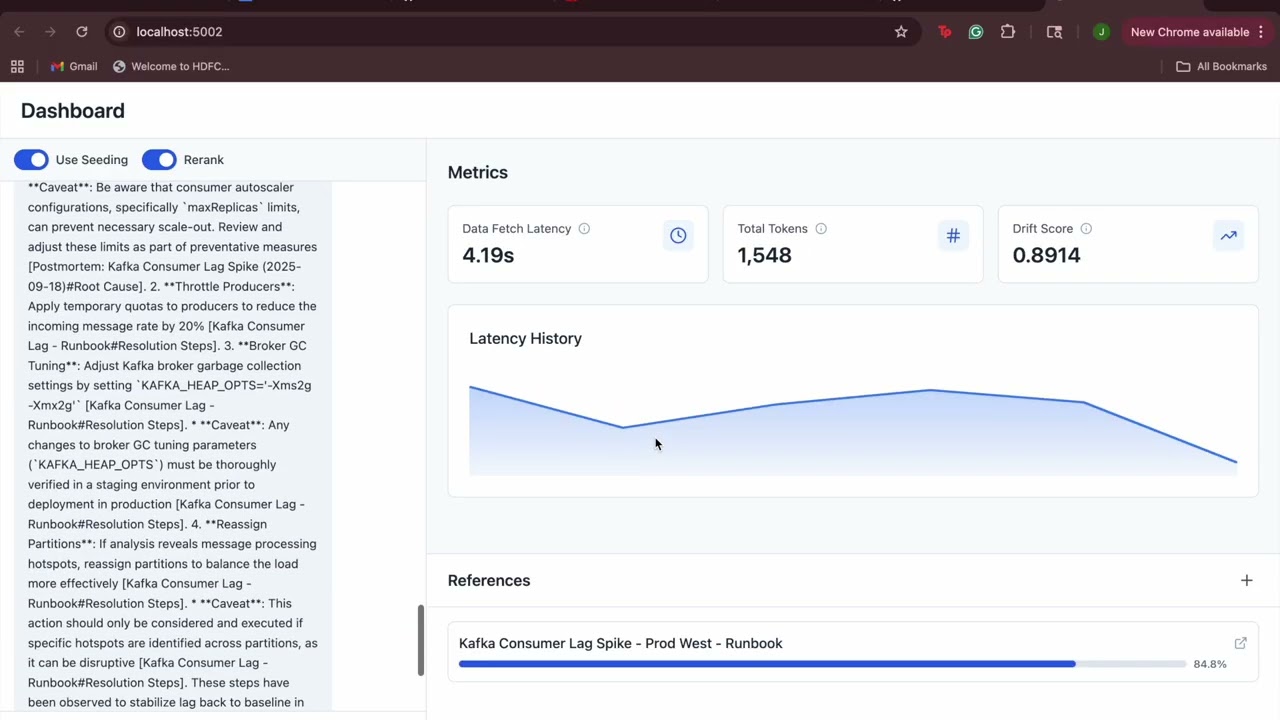
Incident Copilot is a seeded-RAG assistant for on-call engineers. It uses MongoDB Atlas Vector Search, Voyage embeddings with reranking, and Google Gemini to…