Our project is a compound AI model for playing the online video game slowroads.io. We experimented with various data representations for the game state and found that using the road’s left and right coordinates along with the car’s position and velocity gave the best results. A simple CNN with edge-detection kernels extracts the road boundaries, while another model detects the car’s velocity from the game’s display. This data is then fed into an LLM to decide actions like moving forward or turning. Beyond performance, we compared multiple data formats to identify the most effective structure for agentic reasoning and introduced agent-to-agent context sharing, allowing models trained on separate sessions to exchange learned patterns—leading to more cohesive, adaptive, and human-like driving behavior.
More from Agentic Memory & Context Engineering Hackathon
Our tool helps patients with dementia by surfacing real-time context on the person they are talking to.
- ContextScope Eval is an open-source evaluation and observability framework for agent-to-agent context sharing. It measures how effectively autonomous agents…
Ever struggled to find that perfect article you read last week? That tutorial video you can't quite remember the name of? WebBrain transforms your browser…

The Airbnb Travel Booking Assistant is a personalized AI concierge that curates stays based on each traveler’s unique style and past experiences. Instead of…

KitchenPal is an AI-powered cooking assistant that leverages multiple independent Retrieval-Augmented Generation (RAG) workflows to provide personalized…
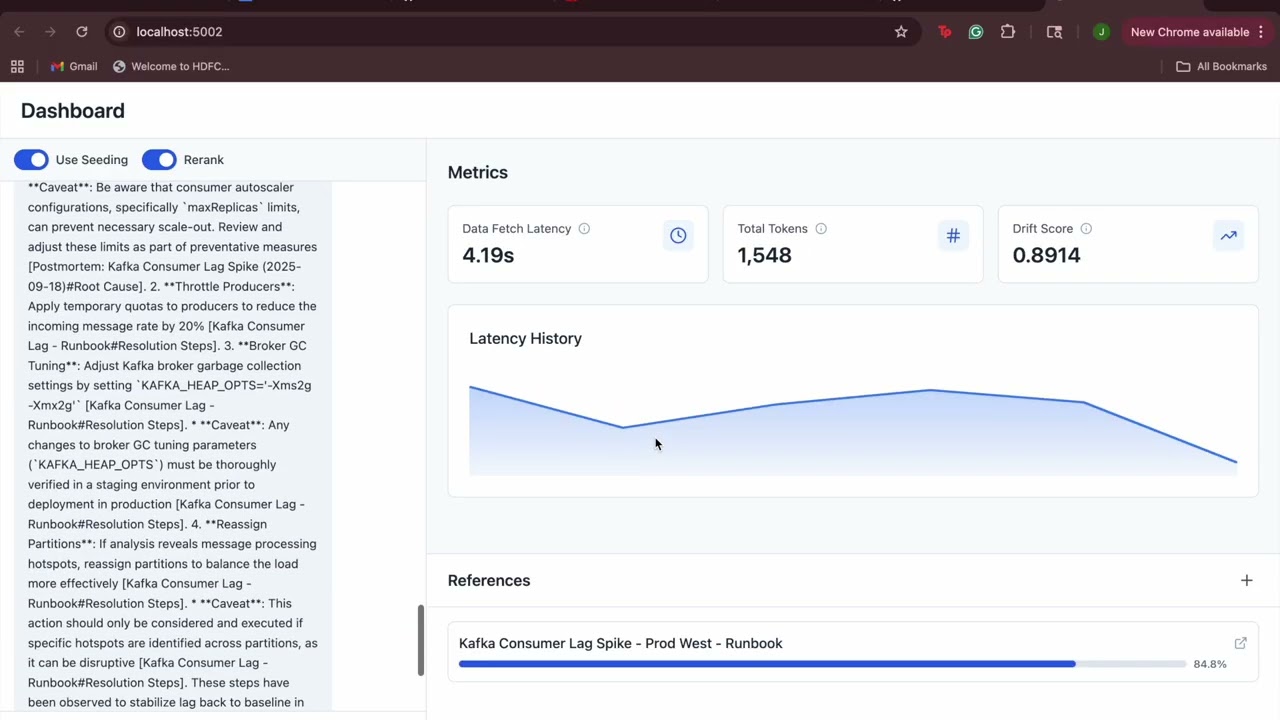
Incident Copilot is a seeded-RAG assistant for on-call engineers. It uses MongoDB Atlas Vector Search, Voyage embeddings with reranking, and Google Gemini to…