MuseZ Home
Built at Meta Global AI Developer Hackathon · Oct 26, 2026 · Remote
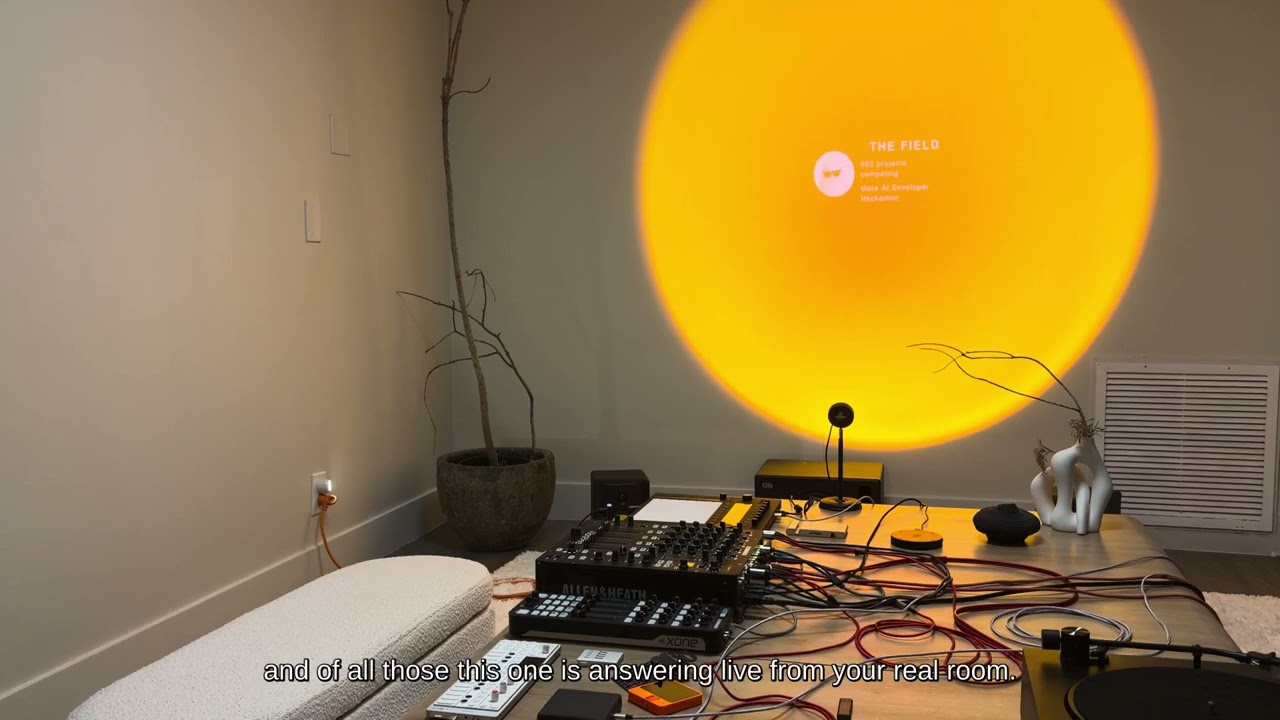
MuseZ Home is a voice bridge that gives a real room a brain. My assistant already lives on my phone and on my computer; this project brings her into my studio — a room with a projected ambient wall, a microphone array and a speaker, built as a long-running personal project. A small presence file — my routines and preferences, distilled from my assistant's memory and her persona notes — lives only on the Pi and is never published; it is why the room plans my Saturday instead of a generic one. During the hackathon I built the bridge: spoken requests are transcribed locally and sent to Meta's Muse models through the Meta Model API. Muse Spark answers the everyday turns, streaming, with function calls wired to the room's real tools — live weather, wall scenes, a day-plan infographic the wall draws from the real forecast. When a turn needs deeper reasoning, Spark escalates it to Muse Wonder. The room answers out loud in its own voice, draws the result on the wall, counts this hackathon's live field from GitHub's public search — and can even dispatch a household robot to bring me a bottle of water. The four turns in the demo are examples, not a feature list — the same bridge answers open-ended spoken requests on any topic, and new room abilities are added as tools, not rebuilds. Every stage of every turn is timed and logged, and the measurements are published in the repository. I should say plainly: I'm not a programmer — I'm an AI enthusiast playing at being a maker, obsessed with good design. The ideas in this room had been in my head for a long time; what changed is that the technology finally caught up with them. I directed Muse to write the code with me, decision by decision. The twist is that the assistant who built it with me is the one now living in it.