Rangrez Labs
Built at Meta Global AI Developer Hackathon · Oct 26, 2026 · Remote
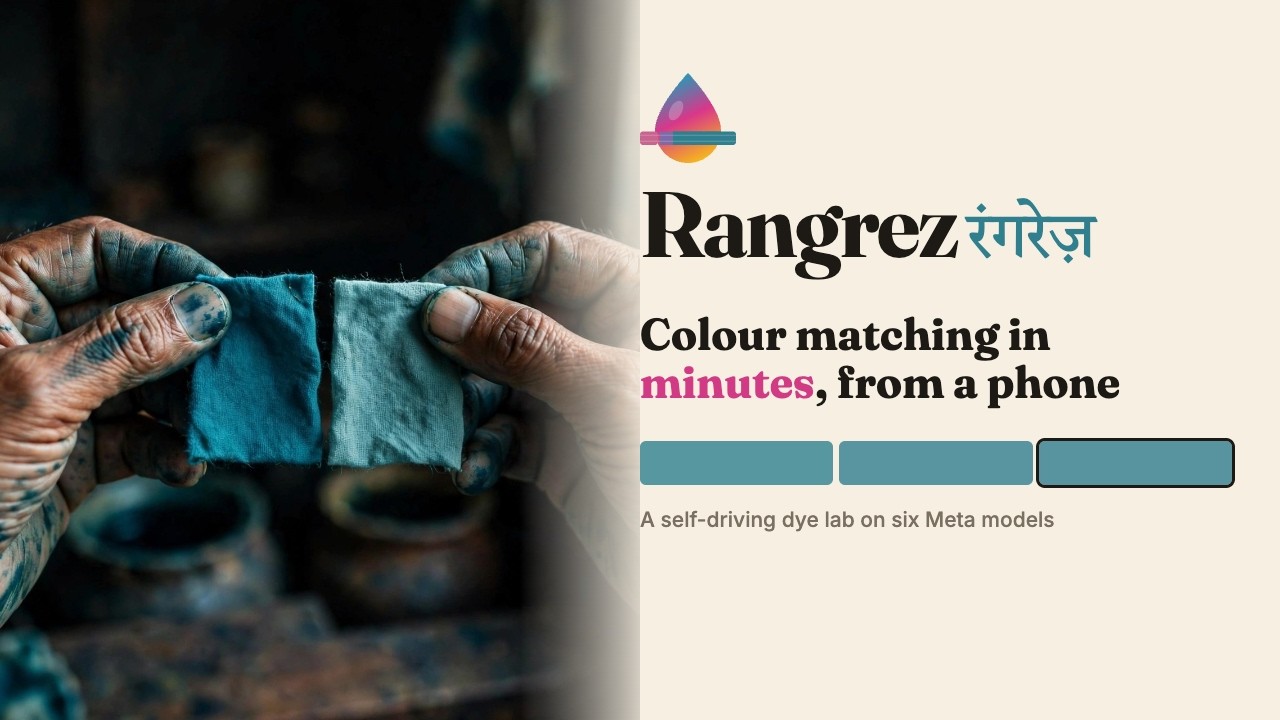
Every colour you wear was matched by someone, by eye. Before a garment order is dyed, the dye house dyes a small sample, a "lab dip", and couriers it to the buyer. Rejected? Correct and try again: 2 to 4 rounds of several days each. Big mills use spectrophotometers and colour-matching software; thousands of small dye houses in India still work by eye. Rangrez (रंगरेज़, "the dyer") is a self-driving dye lab that needs only a phone and a printed colour card. It picks a recipe, a cotton strip is dyed (by a $100 ESP32 rig, or by a person with a dropper), a phone photographs it, SAM 3.1 turns the photo into a calibrated colour measurement, and Muse Wonder corrects the recipe until the cloth matches the buyer's tolerance. It reads the buyer's WhatsApp order, produces a buyer-ready lab-dip report with a production plan, previews the garment in the shade, and drafts the reply in the buyer's language. Results (simulated chemistry, real-looking photos, live Meta models): 0.66 ΔE00 median measurement error from a phone photo with the card; 24/24 shades matched in a median of 2 dips; Muse Wonder matched 8/8 live campaigns where a fixed policy with the same tools matched 5/8; lab memory cut first-dip error from 3.81 to 1.40. The model never drives a pump: a deterministic safety gate, repeated in the ESP32 firmware, sits behind an e-stop. Honest status: not yet run with real dye on real cloth; that is the next step.