Leaf Doctor
Built at Meta Global AI Developer Hackathon · Oct 26, 2026 · Remote
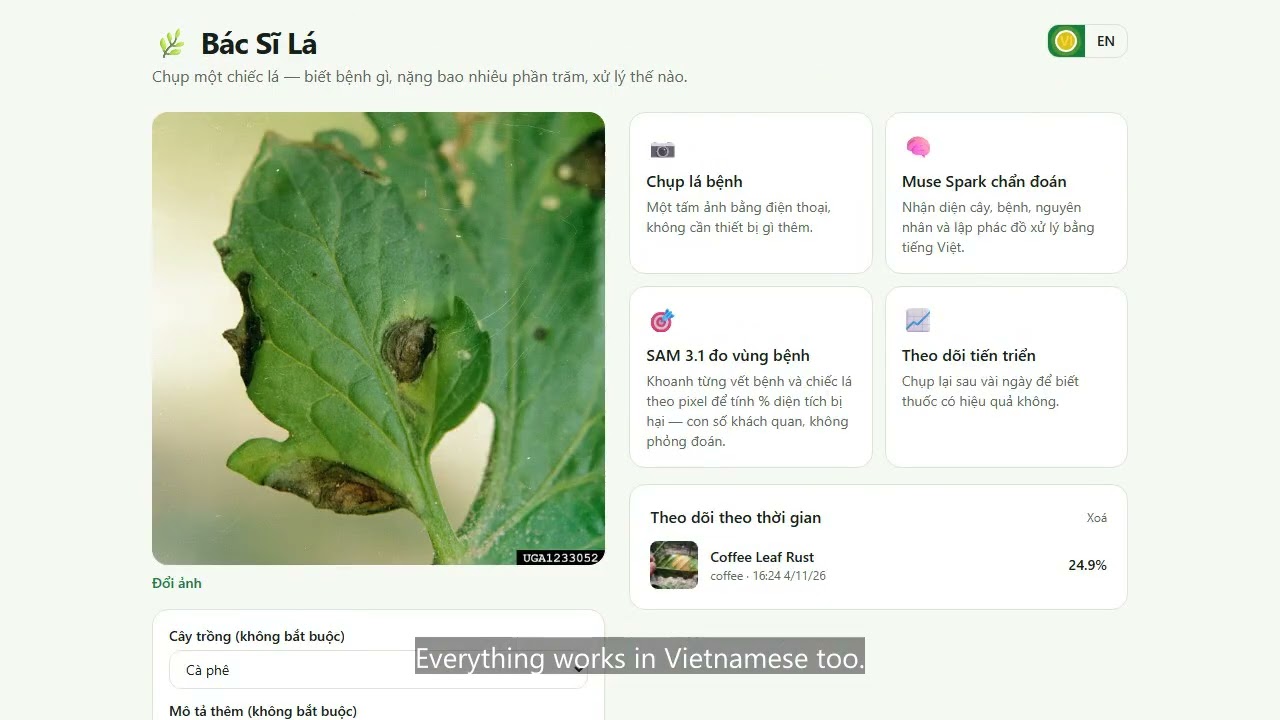
Leaf Doctor turns one phone photo of a sick leaf into a diagnosis, a measured severity and a treatment plan, in the farmer's own language (Vietnamese or English). The problem: Vietnam has millions of smallholder farming households, most working very small plots. When coffee leaf rust, rice blast or durian leaf blight appears, farmers usually guess, ask the person selling the pesticide, or wait days for an extension officer. Late or wrong treatment costs harvests and leads to over-spraying. And nobody can say objectively how bad the infection is or whether the treatment is working. How it works: 1. The farmer takes a photo, picks the crop if they know it, and can describe the problem by voice. 2. Muse Spark reads the image and returns a structured diagnosis: crop, disease, pathogen, cause, an ordered treatment plan with active ingredients and dosage per 16-litre sprayer, organic options, prevention and urgency. 3. Muse Spark also writes the visual prompts for SAM 3.1 (e.g. "orange spot"). SAM 3.1 segments the leaf and every lesion pixel by pixel. We combine the masks and compute the percentage of leaf area affected, which is the standard severity measure in plant pathology, from an ordinary phone photo. 4. The damage is drawn on the photo. Every scan is saved, so re-scanning the same plant a few days later shows whether the infection is growing or shrinking. 5. Farmers can ask follow-up questions ("when should I spray?") by text or voice. Answers are grounded in the current diagnosis and measurement. On a coffee leaf rust photo it identifies Hemileia vastatrix at 97% confidence and measures 24.8–24.9% of the leaf affected (42–52 lesions) in about 14 seconds, consistently across runs. The full pipeline costs about one to two US cents per scan.